Transforming a compact lavatory into a spacious sanctuary requires strategic design choices that fool the eye and maximize every inch of available space. Smart decisions regarding color palettes and lighting can instantly push back the walls to create a feeling of openness. The right fixtures and layout adjustments turn a cramped area into a functional and airy retreat without changing the actual square footage. Even small details like grout lines and hardware finishes play a significant role in altering the perception of size. These forty-five methods offer practical solutions for expanding the visual footprint of any small bathroom.
Install Floating Vanities
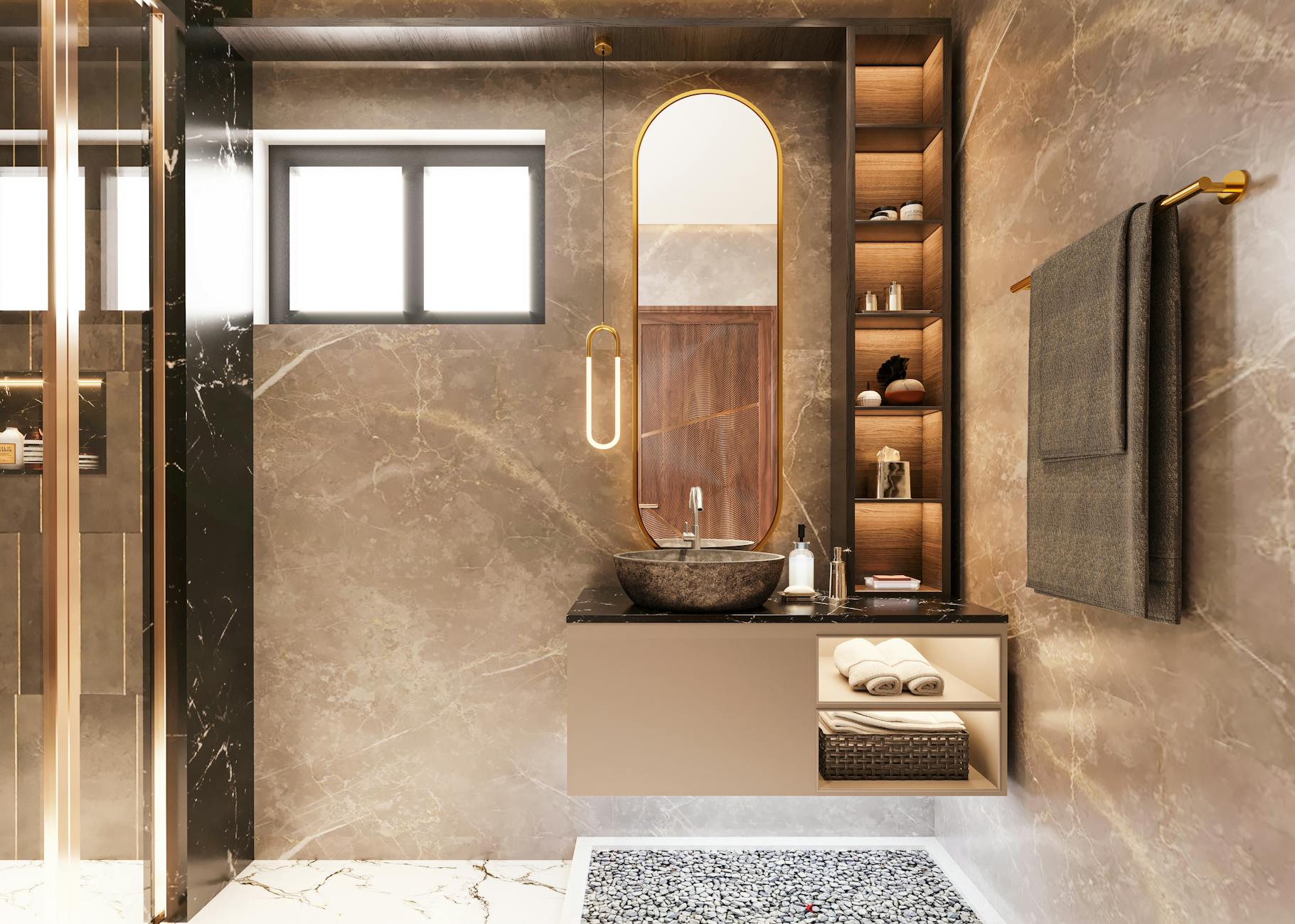
Mounting a vanity directly to the wall exposes more floor area and creates an immediate illusion of openness. The continuous view of the flooring underneath tricks the eye into perceiving the room as much larger than it actually is. This modern fixture style provides essential storage without the visual bulk found in traditional floor-standing cabinetry. Keeping the floor clear simplifies cleaning routines and maintains a consistently airy atmosphere in tight quarters.
Utilize Large Mirrors
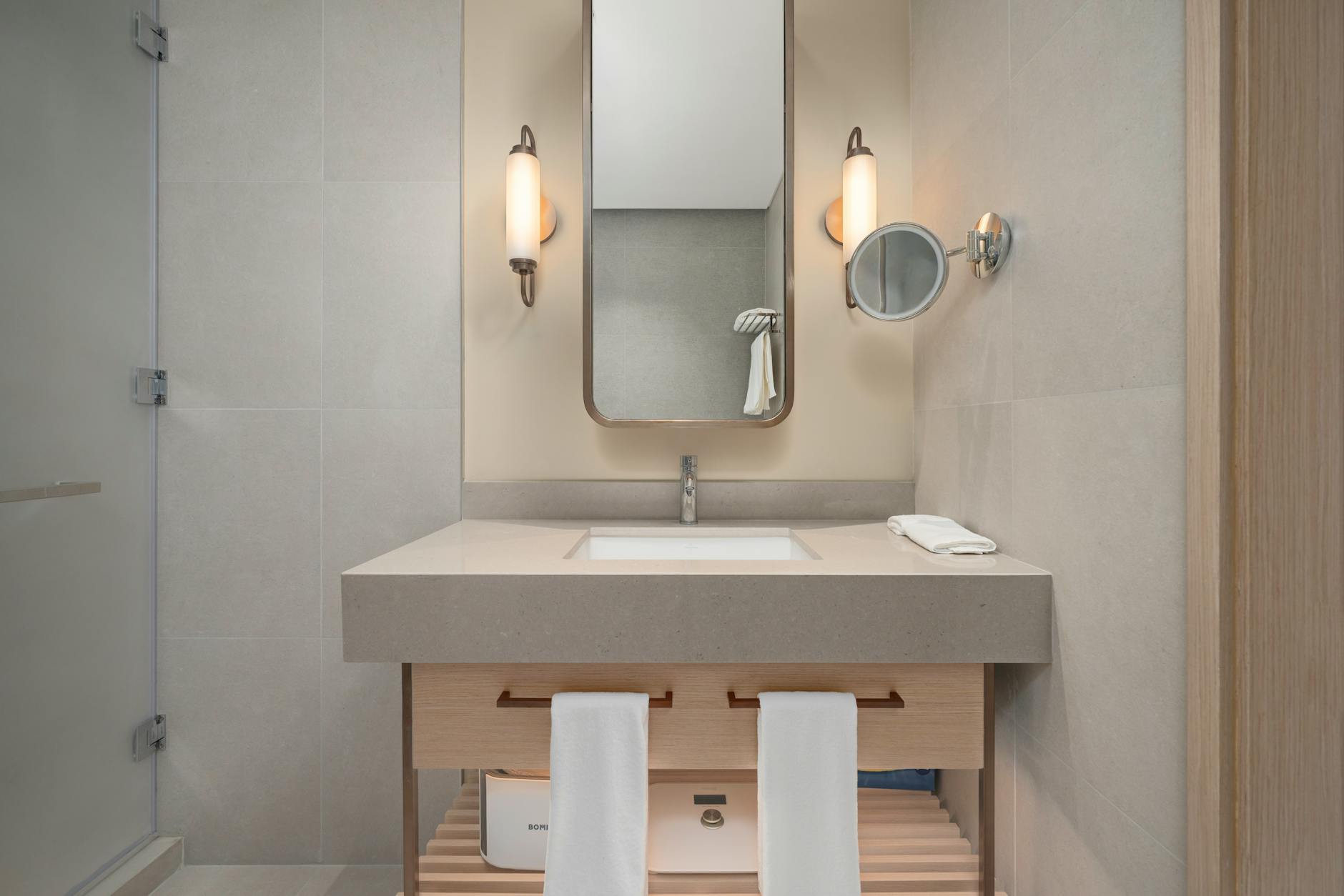
A wall-to-wall mirror effectively doubles the visual space by reflecting light and the opposite wall. Placing a large reflective surface over the vanity or along a side wall eliminates strict visual boundaries. This technique bounces both natural and artificial light around the room to brighten dark corners. The expansive reflection creates depth where a solid wall would otherwise stop the eye.
Choose Light Color Palettes
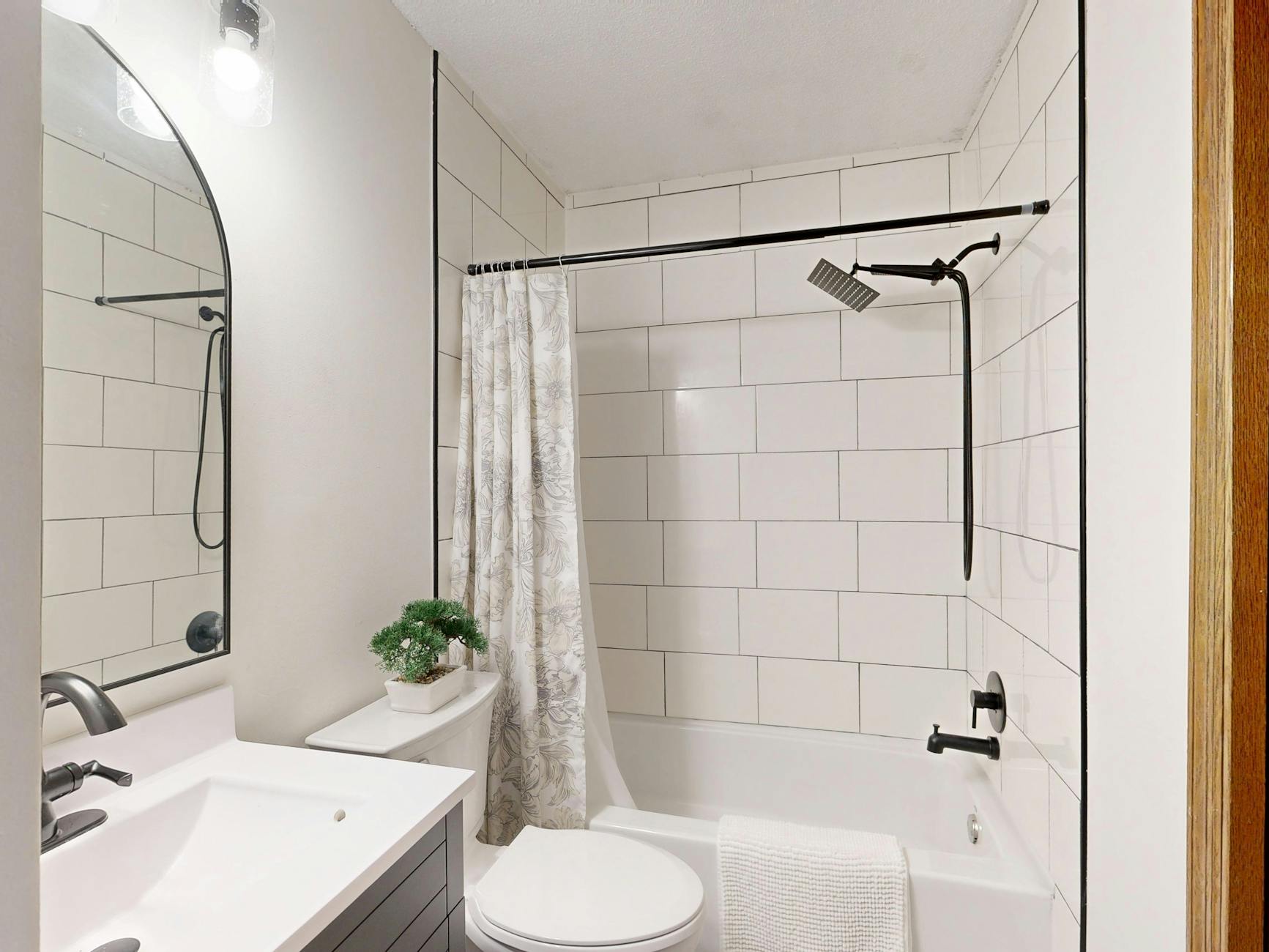
Soft whites and pastels reflect light rather than absorbing it to make the room feel expansive. Utilizing a monochromatic scheme blurs the lines between various elements and creates a seamless look. High-contrast colors often chop up a small space and make it feel enclosed or cluttered. Light tones on walls and fixtures keep the atmosphere fresh and open.
Opt for Glass Shower Doors
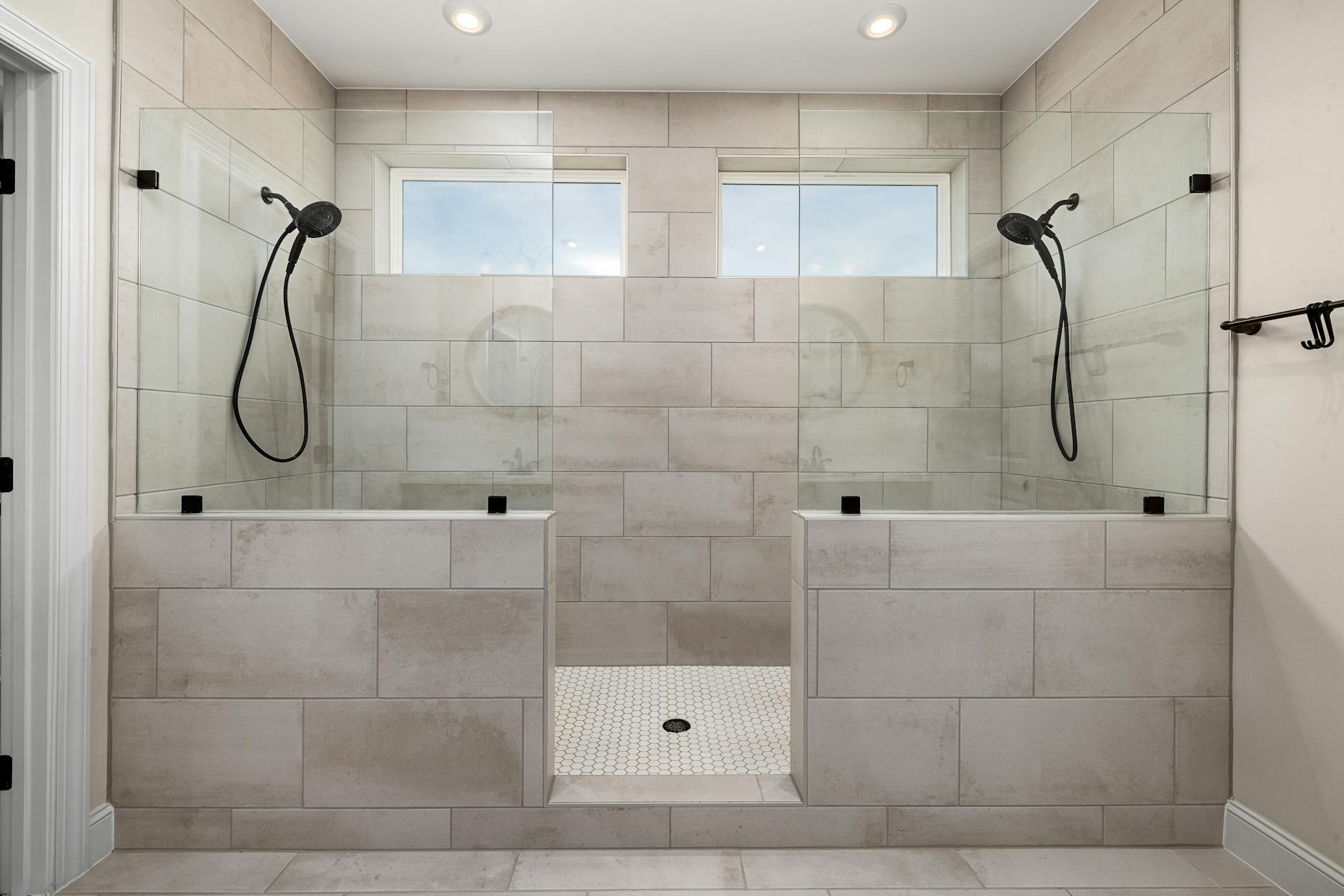
Removing opaque shower curtains removes a significant visual barrier in the center of the room. Clear glass doors allow the eye to travel all the way to the back wall of the shower area. This uninterrupted line of sight adds several feet of perceived depth to the bathroom. Frameless glass options are particularly effective because they lack heavy metal borders that can define tight spaces.
Use Large-Format Tiles
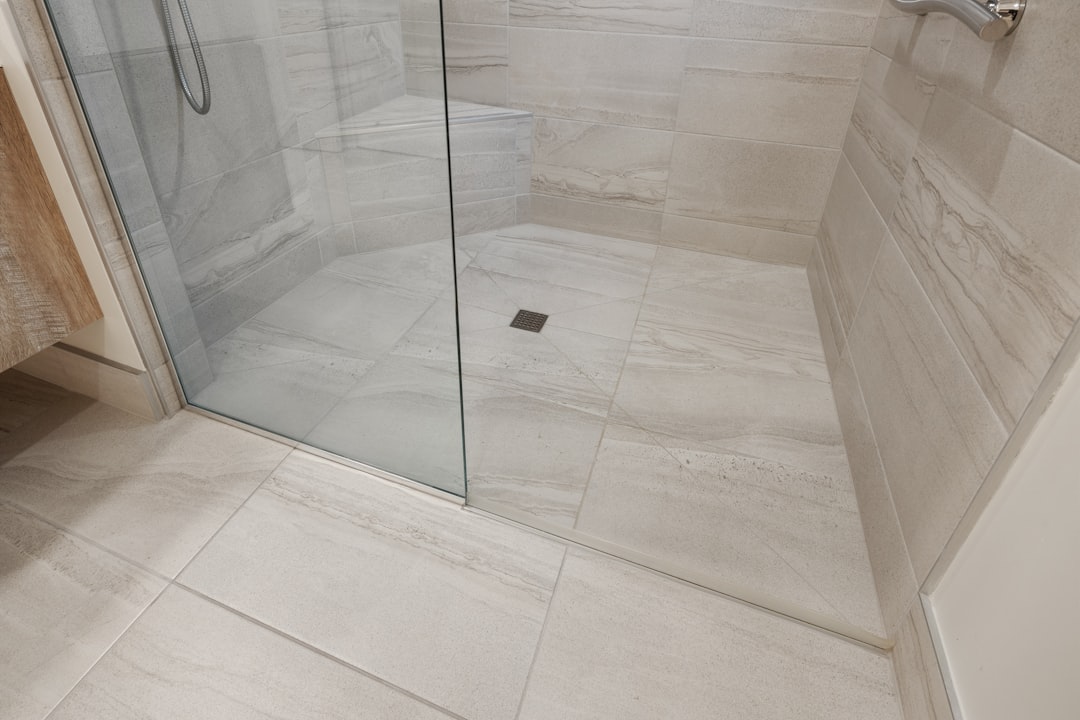
Fewer grout lines create a cleaner and less cluttered visual appearance on both floors and walls. Large tiles reduce the grid pattern that often makes a surface look busy or constricted. Laying these tiles in a specific direction can also guide the eye to elongate the room. The seamless look of substantial stone or ceramic pieces mimics the aesthetic of larger luxury bathrooms.
Select Glossy Finishes
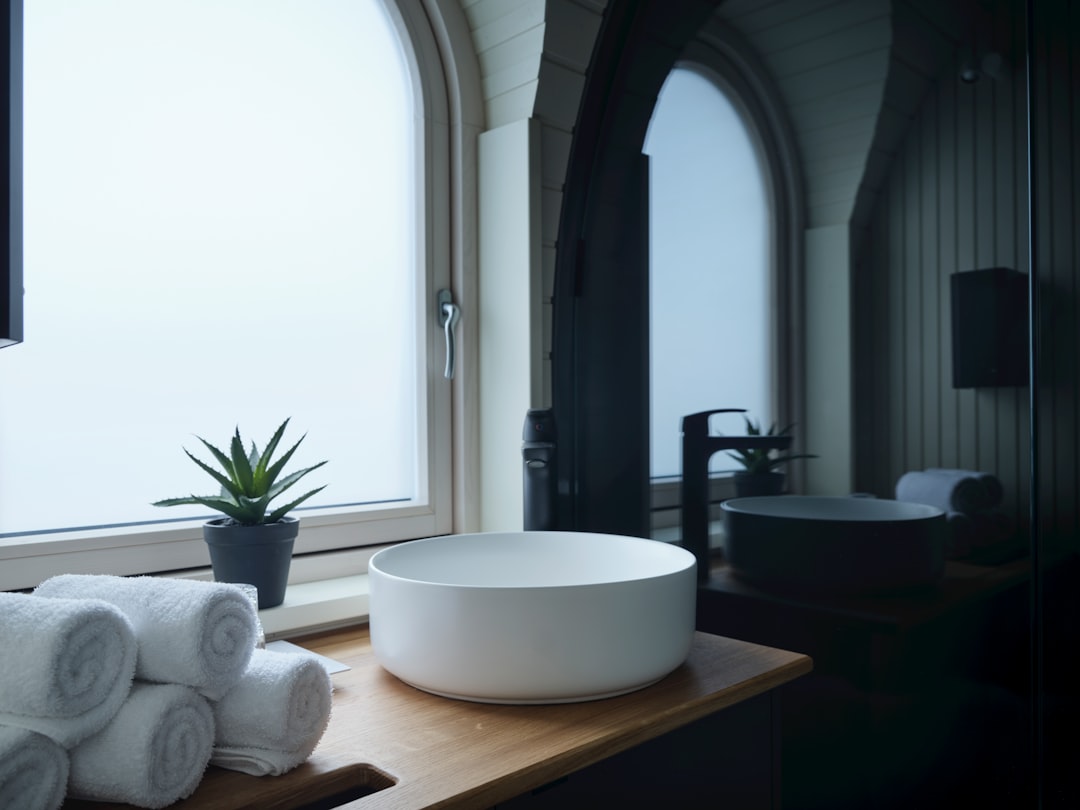
High-gloss paint and glossy tiles act like miniature mirrors to reflect light throughout the space. Surfaces with a sheen bounce illumination into shadowed areas and enhance the overall brightness. This effect works particularly well on cabinetry or subway tiles in compact shower stalls. Matte finishes tend to absorb light and can sometimes make a small room feel flat or smaller.
Incorporate Wall Niches
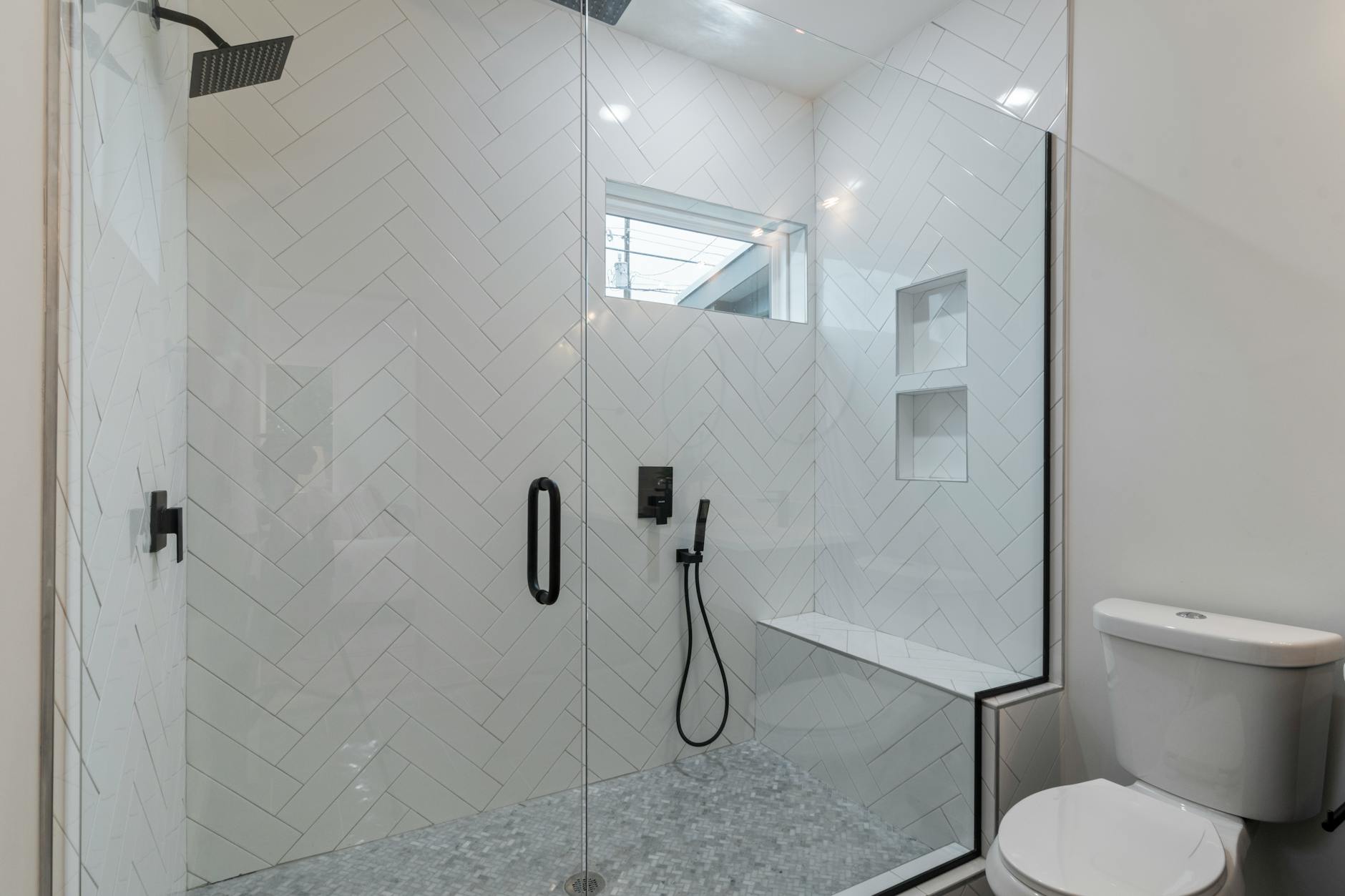
Recessed shelving in the shower or above the vanity saves valuable room by utilizing the space between wall studs. Keeping bottles and toiletries flush with the wall prevents them from intruding into the usable area. This streamlined approach eliminates the need for protruding caddies or bulky hanging organizers. A clean line along the wall contributes significantly to a sense of order and spaciousness.
Install a Pedestal Sink
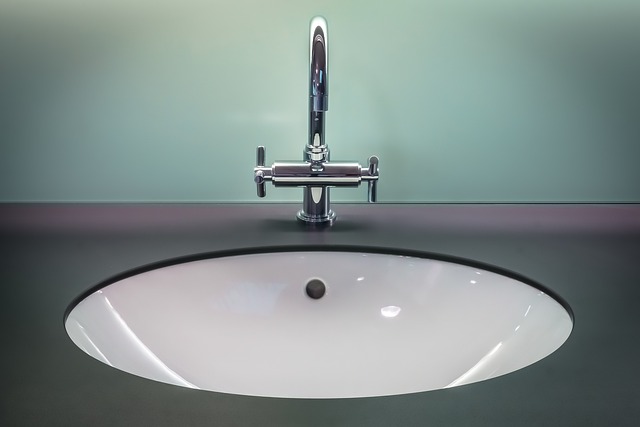
Pedestal sinks have a much smaller footprint than bulky vanity cabinets and reveal more of the floor. The slender profile of the base adds a classic elegance while physically freeing up standing room. This choice is ideal for powder rooms where extensive under-sink storage is not a necessity. The open space around the base allows for better circulation and visual flow.
Maximize Vertical Storage
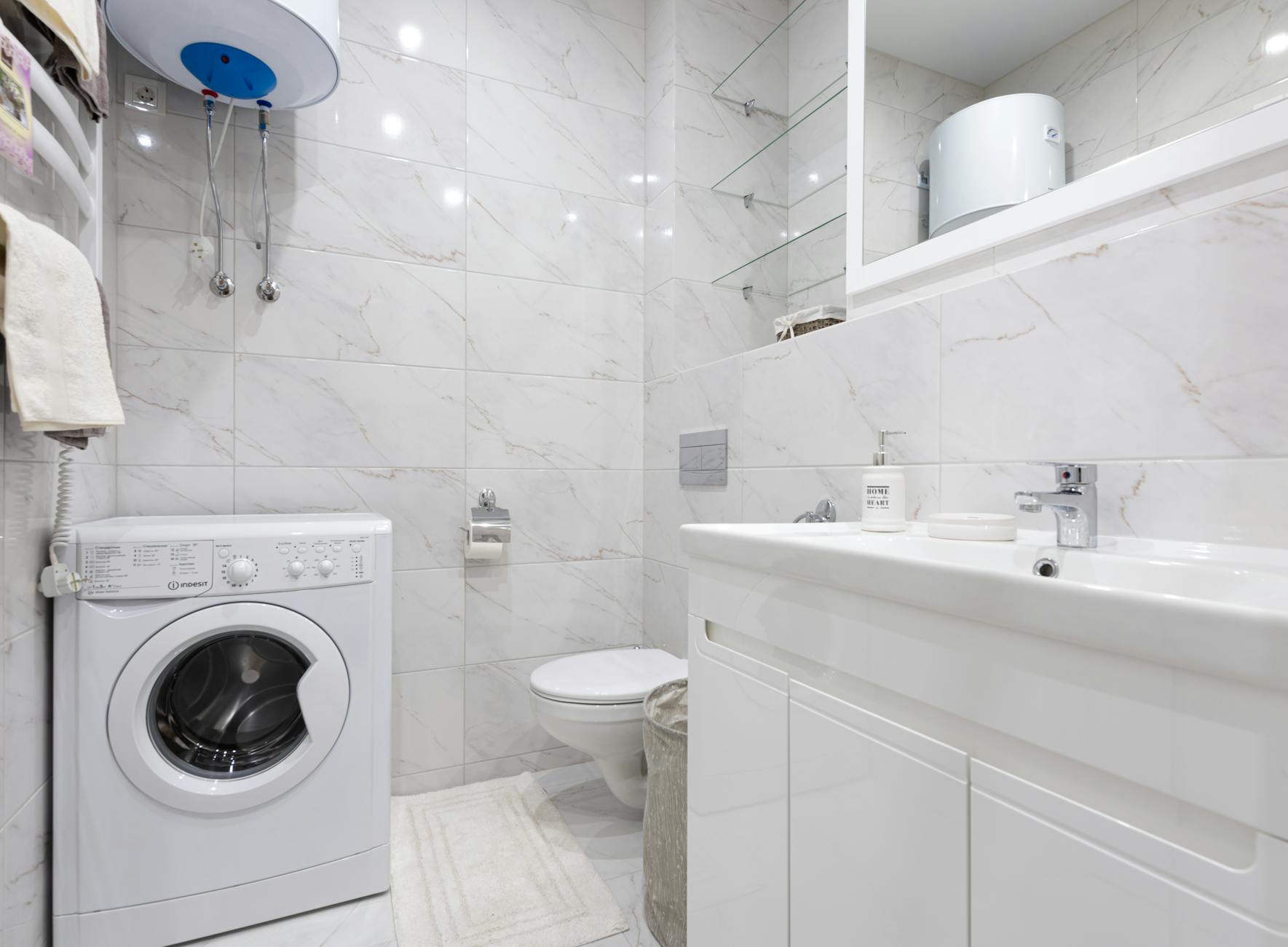
utilizing the height of the room draws the eye upward and makes the ceiling appear higher. Tall and narrow cabinets provide ample storage for towels and supplies without taking up much floor space. Shelving units installed high above the door or toilet make use of often overlooked areas. This strategy keeps daily essentials organized while leaving the main living zone uncluttered.
Keep Counters Decluttered
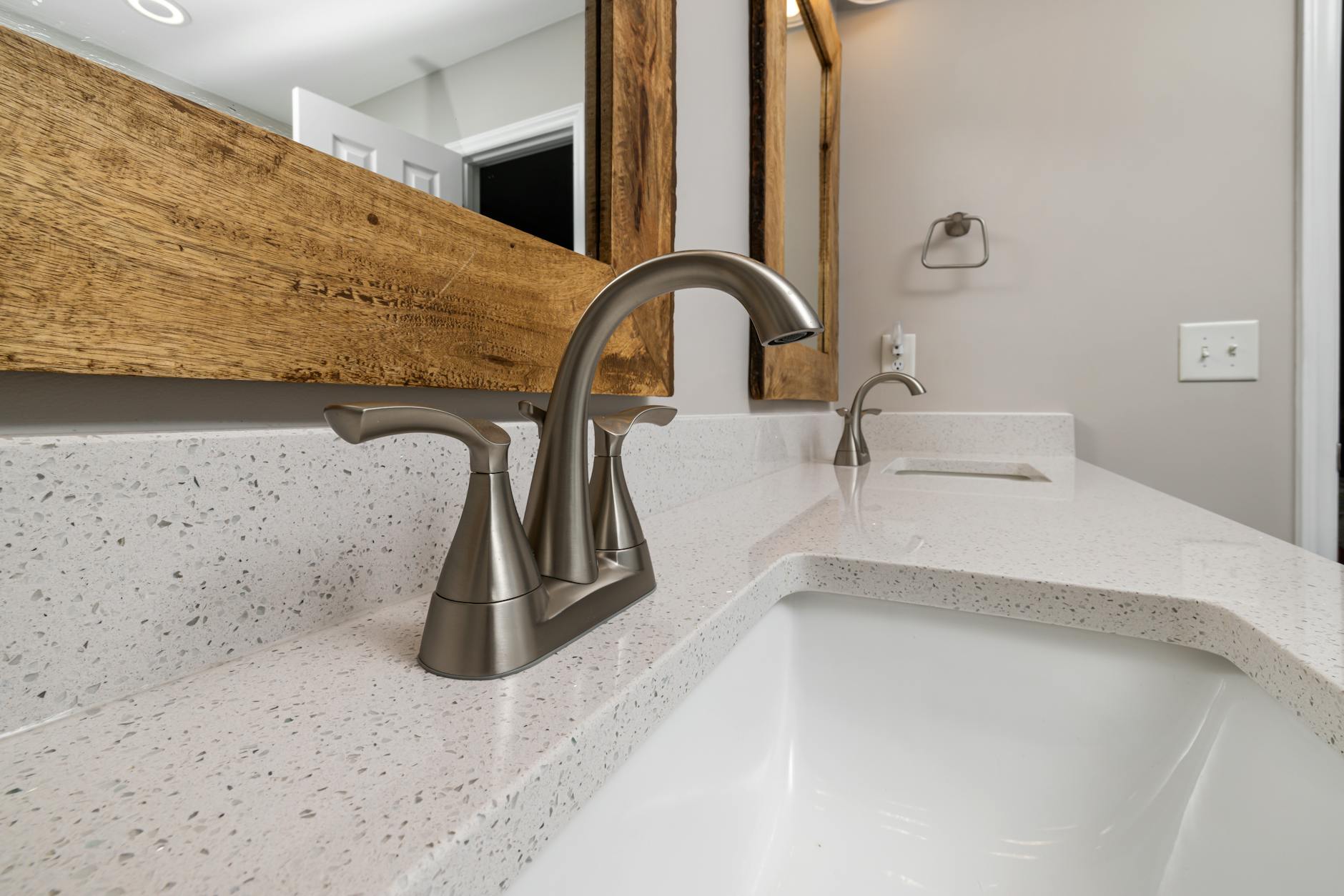
Clear surfaces create a calming environment and prevent the room from feeling closed in by personal items. Storing toothbrushes and cosmetics in drawers or cabinets maintains a sleek horizontal line. Visual noise from too many products disrupts the flow and makes the space feel smaller than it is. A minimalist countertop reflects light and enhances the feeling of cleanliness.
Prioritize Bright Lighting
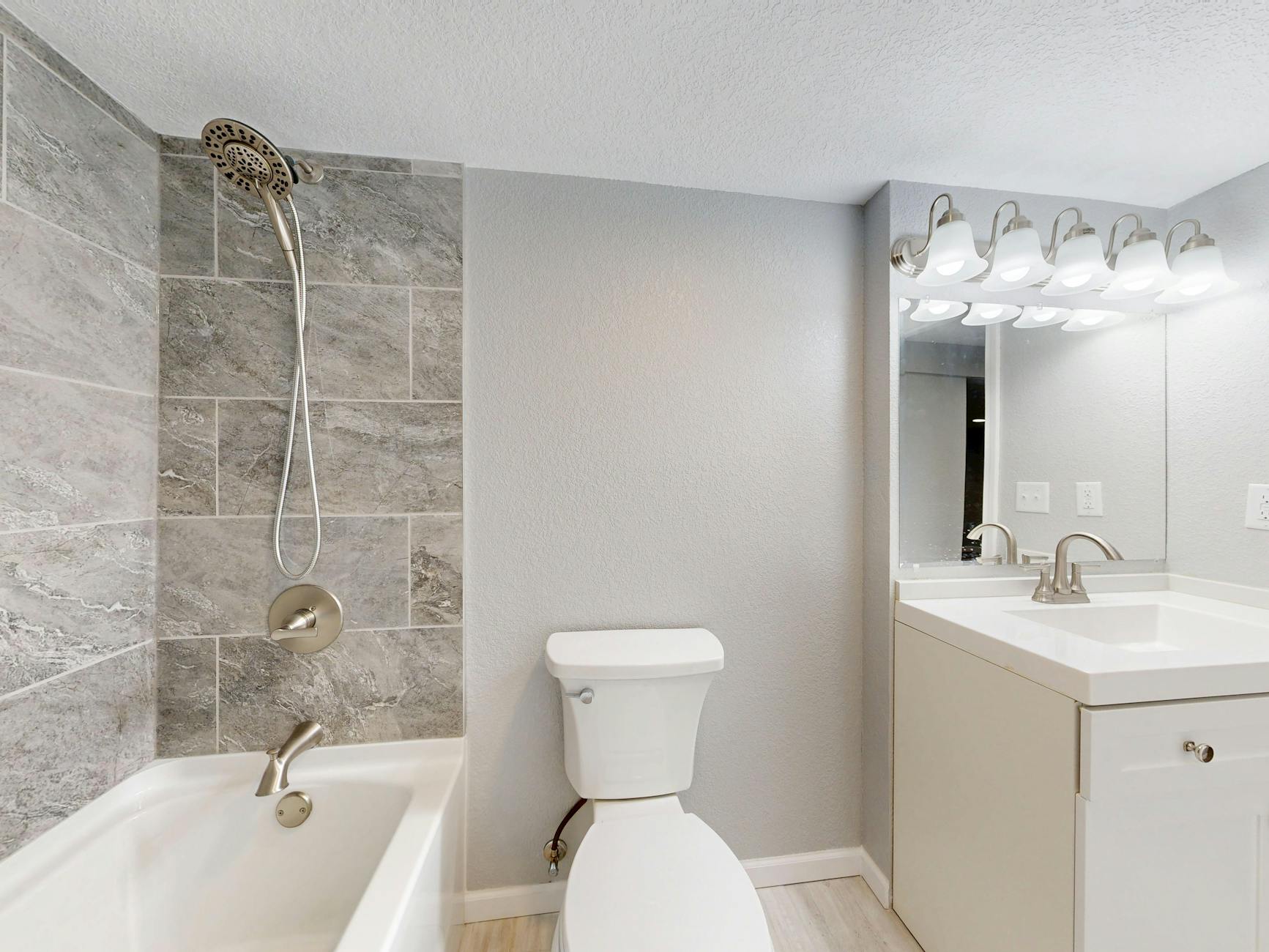
Shadows in corners can shrink a room visually so ample illumination is necessary. Layering different light sources such as recessed cans and sconces ensures even coverage throughout the space. Bright white bulbs mimic natural daylight and open up the environment more effectively than yellow tones. A well-lit bathroom always feels more spacious and inviting than a dim one.
Install Pocket Doors
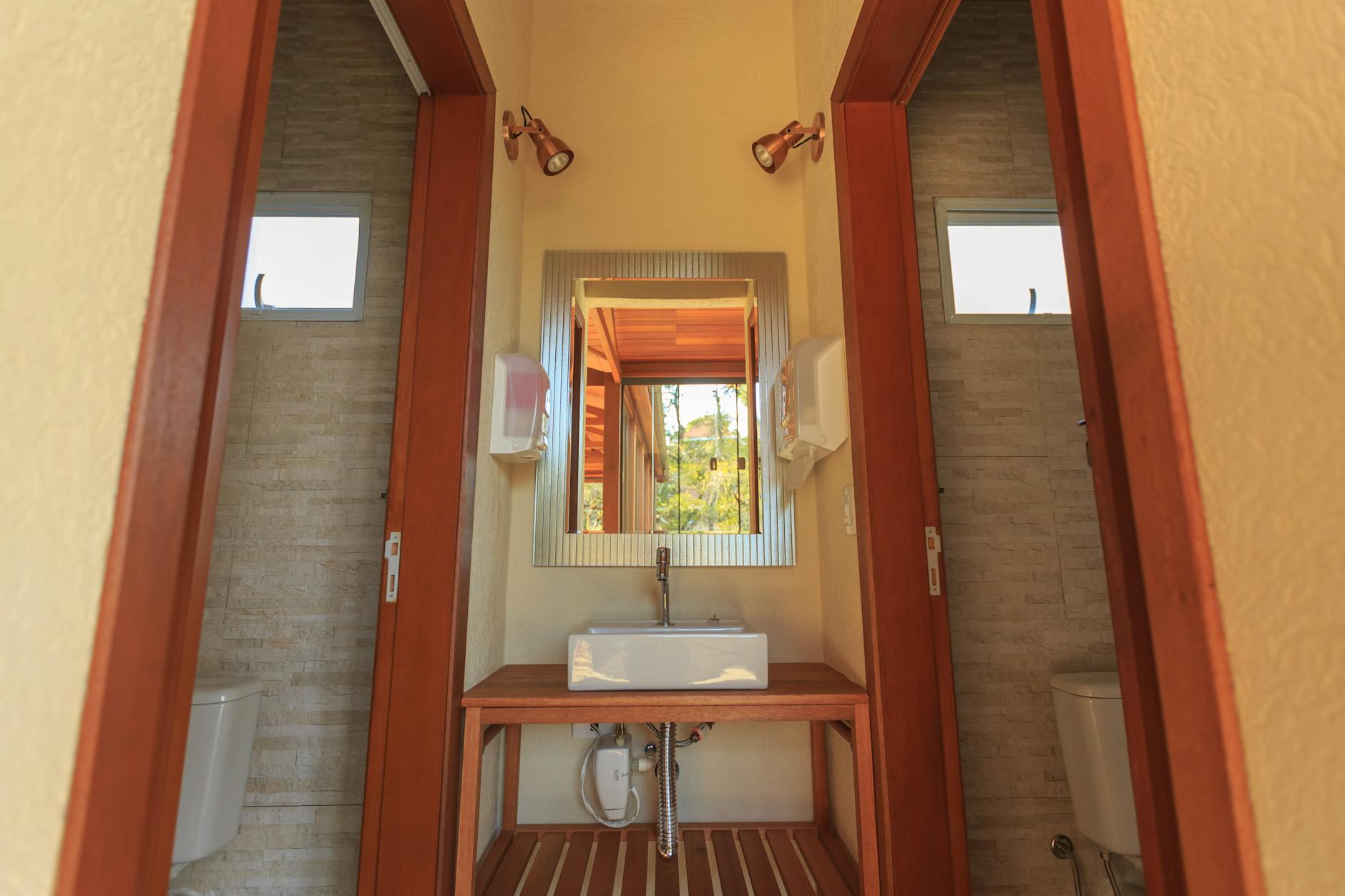
Traditional swinging doors require a clear radius for opening and closing which eats up usable floor space. A pocket door slides neatly into the wall to free up that valuable area for other functions. This architectural change allows for more flexibility in placing fixtures or storage units. The absence of a door swing immediately makes the room feel less cramped and more accessible.
Match Floor and Wall Tiles
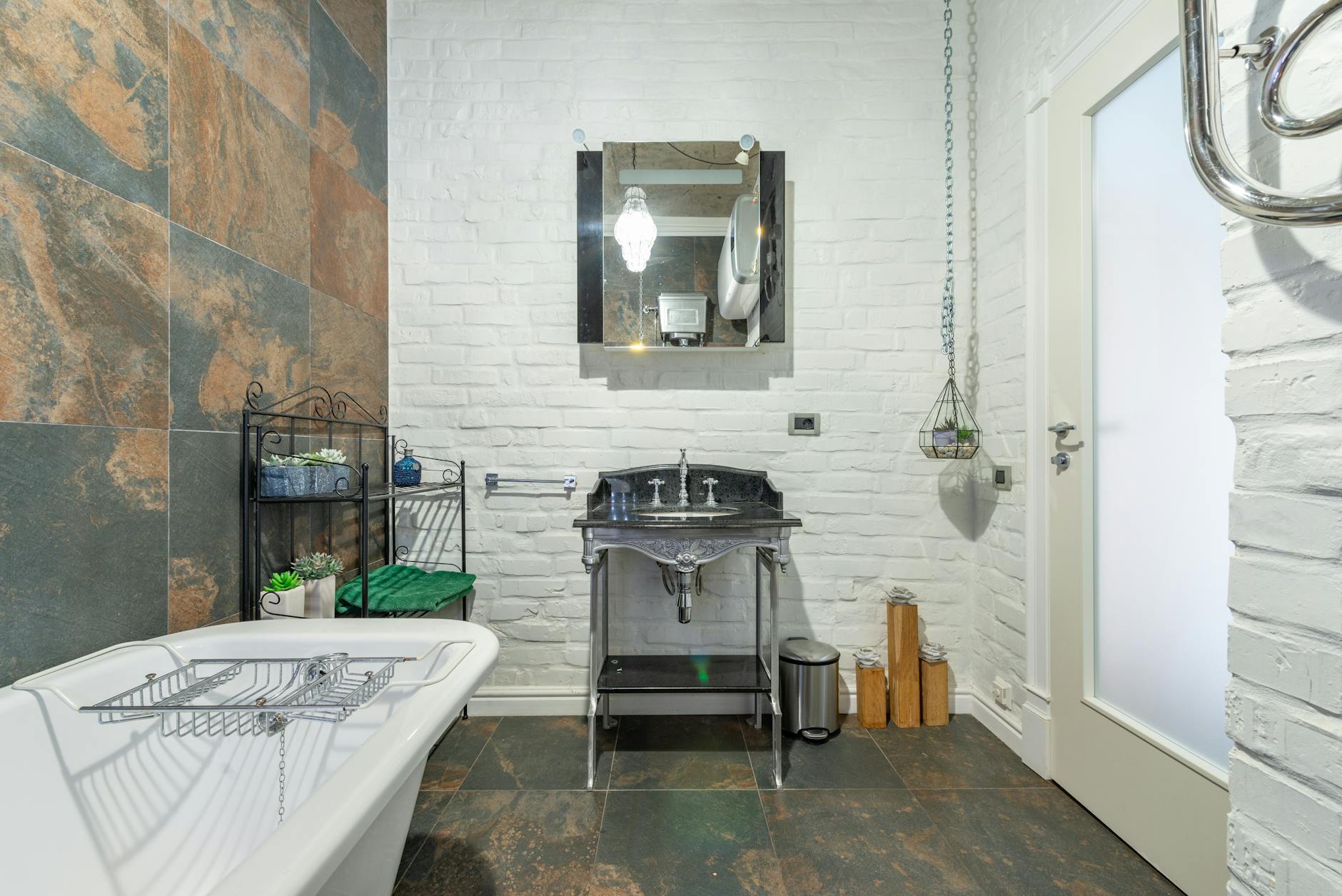
Using the same tile material for both the floor and the walls creates a continuous look that defies boundaries. The eye does not stop at the junction where the floor meets the wall. This seamless transition tricks the brain into seeing one large surface rather than two distinct small ones. It creates a cohesive and enveloped feel that is often found in high-end spas.
Use Clear Storage Containers
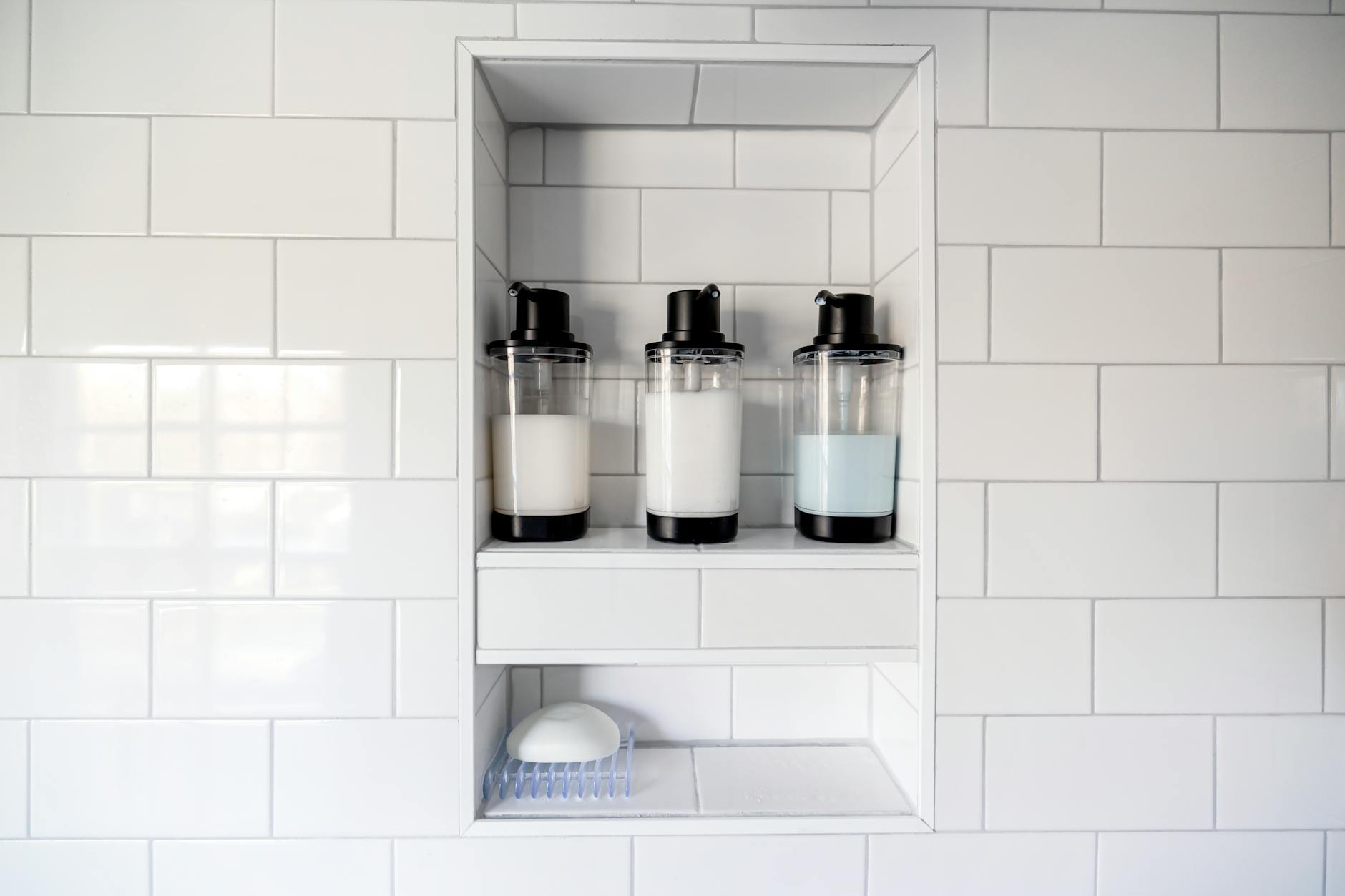
Transparent bins and jars allow light to pass through them rather than blocking it like opaque boxes. Seeing the wall or shelf surface behind the object reduces its visual weight in the room. This approach keeps necessities organized without adding heavy blocks of color or texture. The airy aesthetic of glass or acrylic maintains the overall lightness of the decor.
Add a Skylight
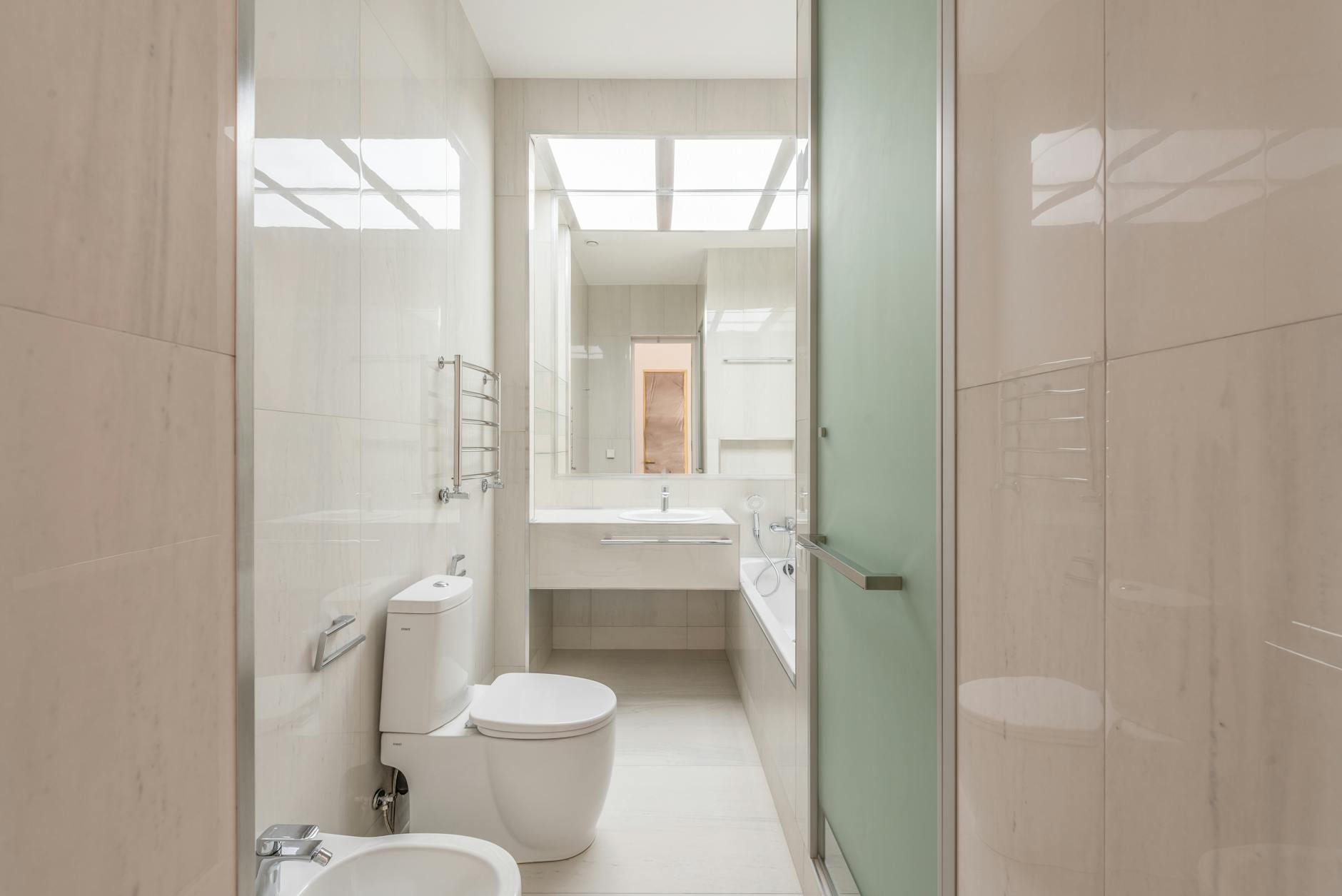
Natural light from above floods the room with brightness without sacrificing wall space for windows. A skylight draws the eye upward to emphasize the height of the room. This architectural feature eliminates the need for privacy blinds that block light in traditional windows. The influx of sun makes the bathroom feel airy and connected to the outdoors.
Use Recessed Lighting
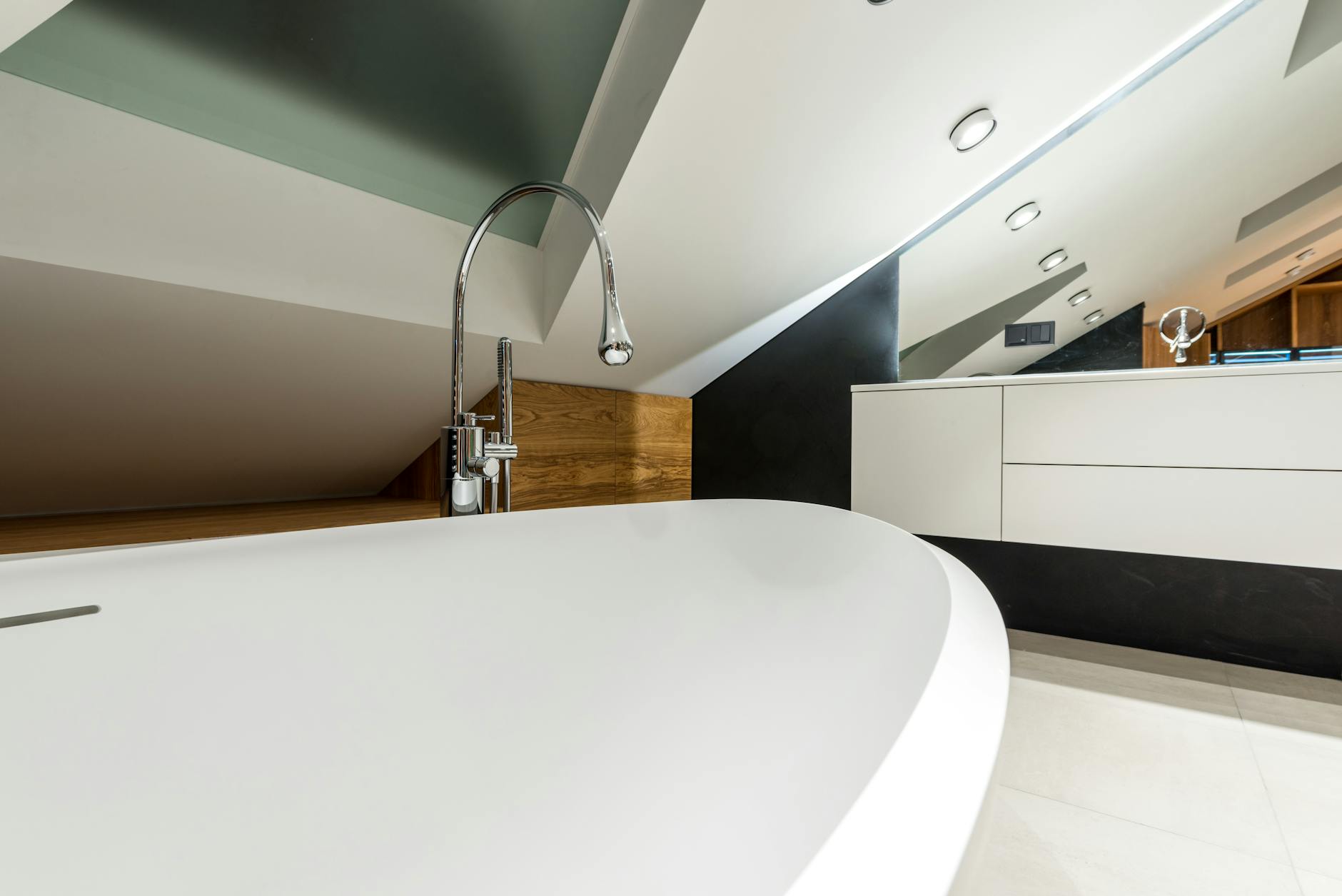
Fixtures that hang down from the ceiling can visually lower the overhead plane and make the room feel shorter. Recessed lights sit flush with the ceiling to maintain a clean and unobstructed surface. This lighting style provides excellent coverage without adding visual clutter to the upper portion of the room. The result is a streamlined ceiling that helps the room feel taller.
Choose Minimalist Hardware
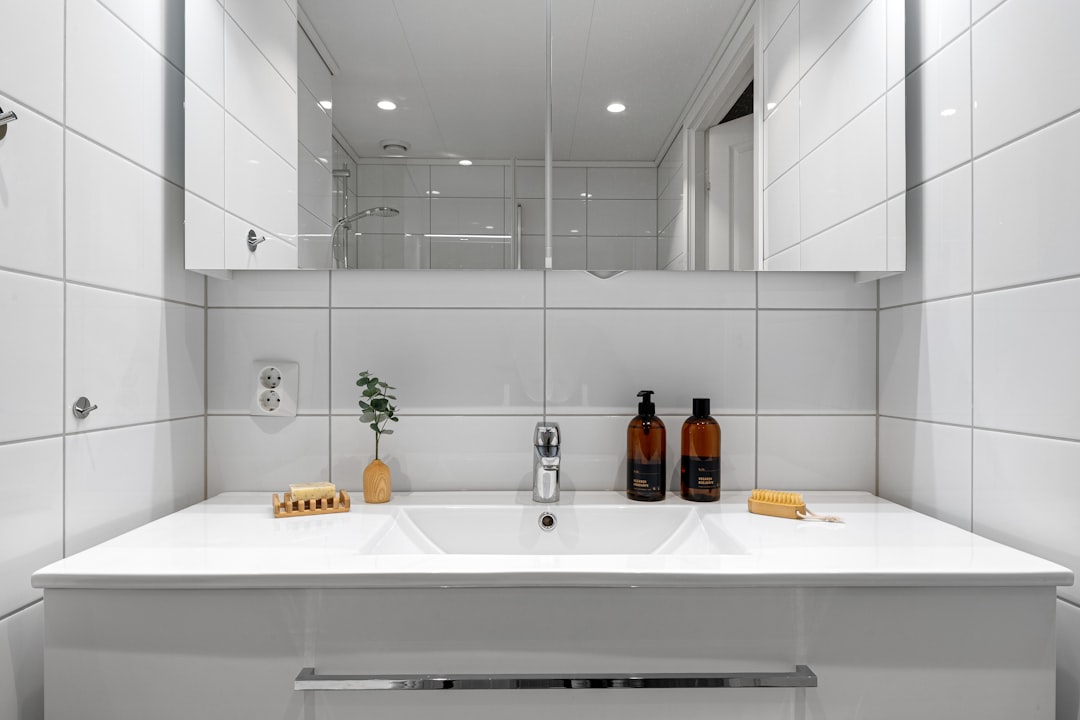
Streamlined faucets and cabinet pulls reduce visual noise and contribute to a sleek aesthetic. Bulky or ornate hardware can overwhelm a small space and catch on clothing in tight quarters. Simple geometric shapes or integrated handles blend in rather than standing out. Keeping hardware subtle allows the eye to focus on the open spaces rather than the details.
Consider a Corner Sink
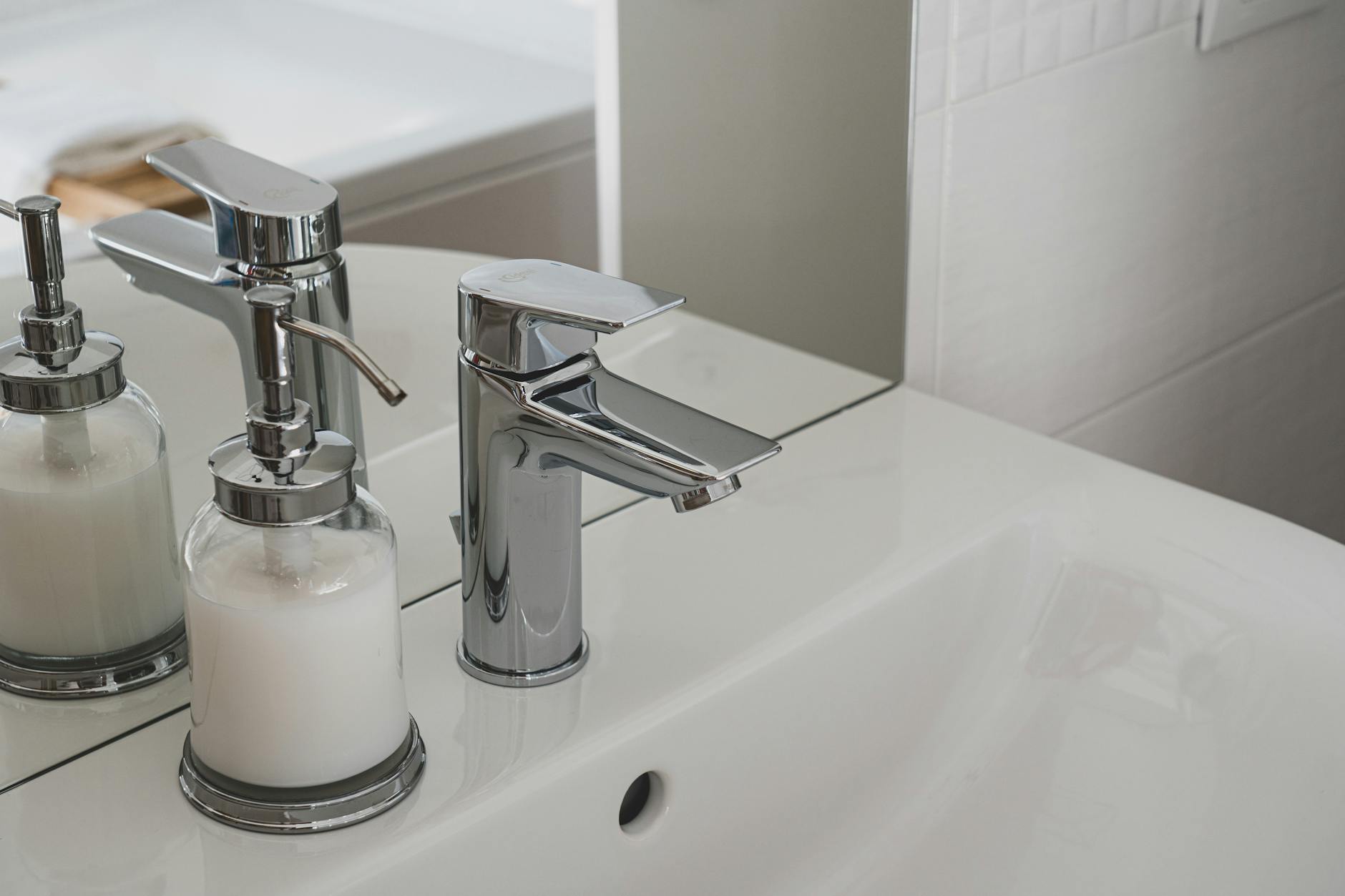
Placing the basin in a corner utilizes a typically dead space and opens up the center of the room. This layout change creates new traffic lanes and allows for smoother movement within the bathroom. Corner sinks come in various styles from pedestal to wall-mounted to suit different needs. It is an effective solution for extremely narrow or oddly shaped bathrooms.
Install Wall-Mounted Faucets
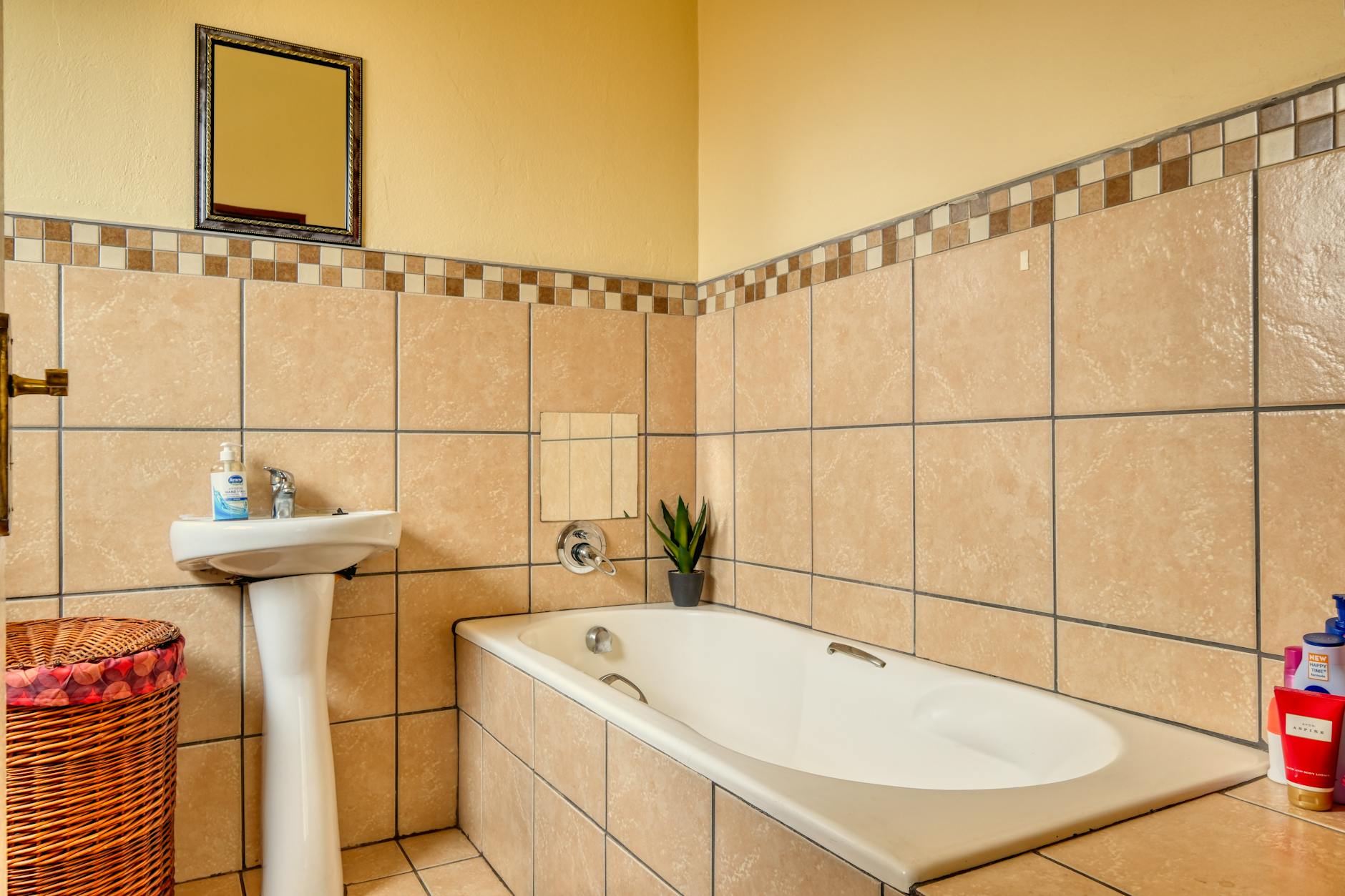
Mounting the faucet on the wall frees up counter space on the sink deck for soap or other essentials. This setup allows for a narrower sink or vanity which saves precious inches in depth. The plumbing is hidden behind the wall for a cleaner and more modern look. It creates a custom feel that elevates the design of a small bathroom.
Raise the Shower Curtain
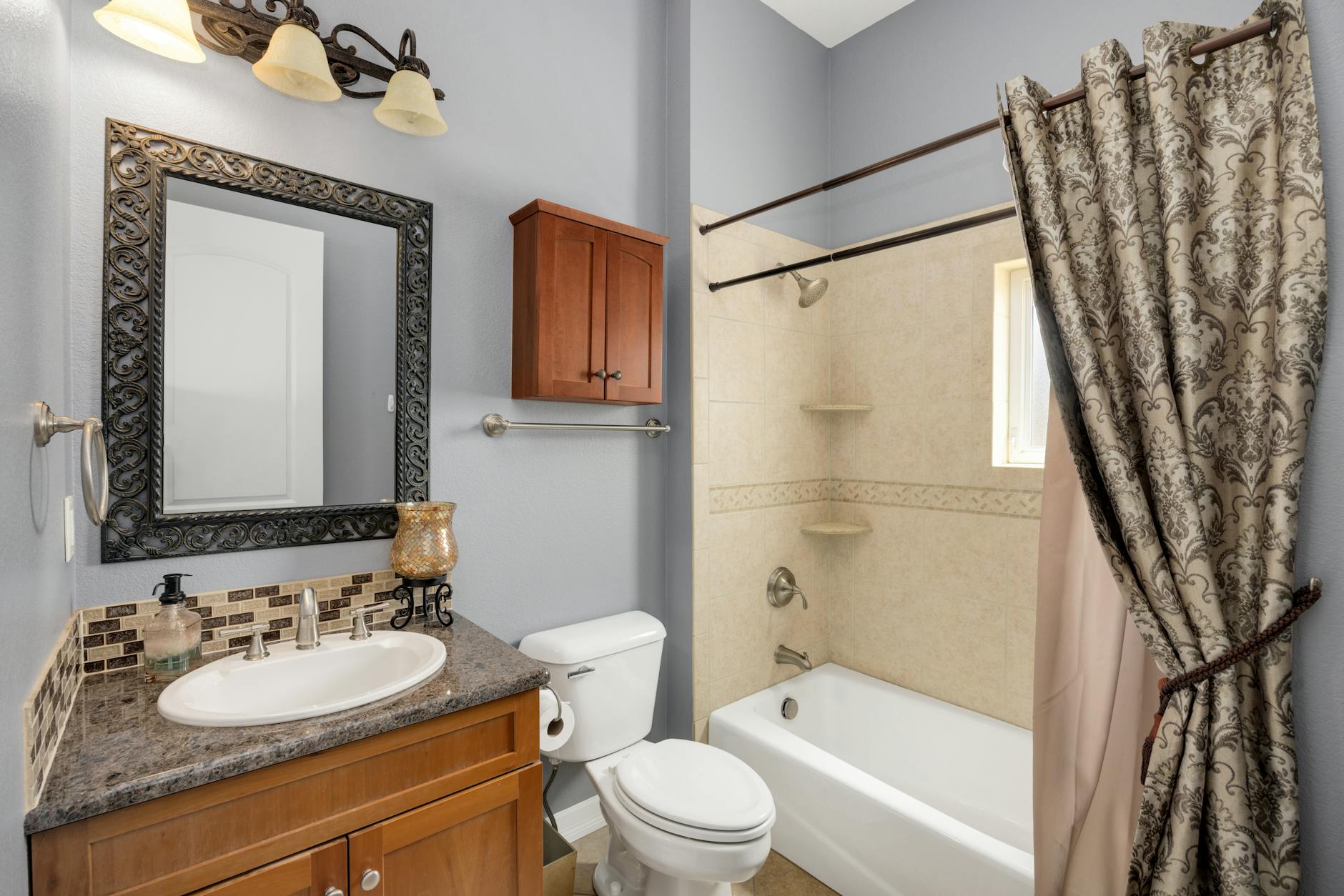
Installing the curtain rod as close to the ceiling as possible elongates the visual line of the wall. This simple trick makes the ceiling feel higher and the room more grand. A longer curtain creates a vertical stripe that draws the eye up and down. It avoids cutting the wall in half visually which can make the room feel squat.
Use Vertical Stripes
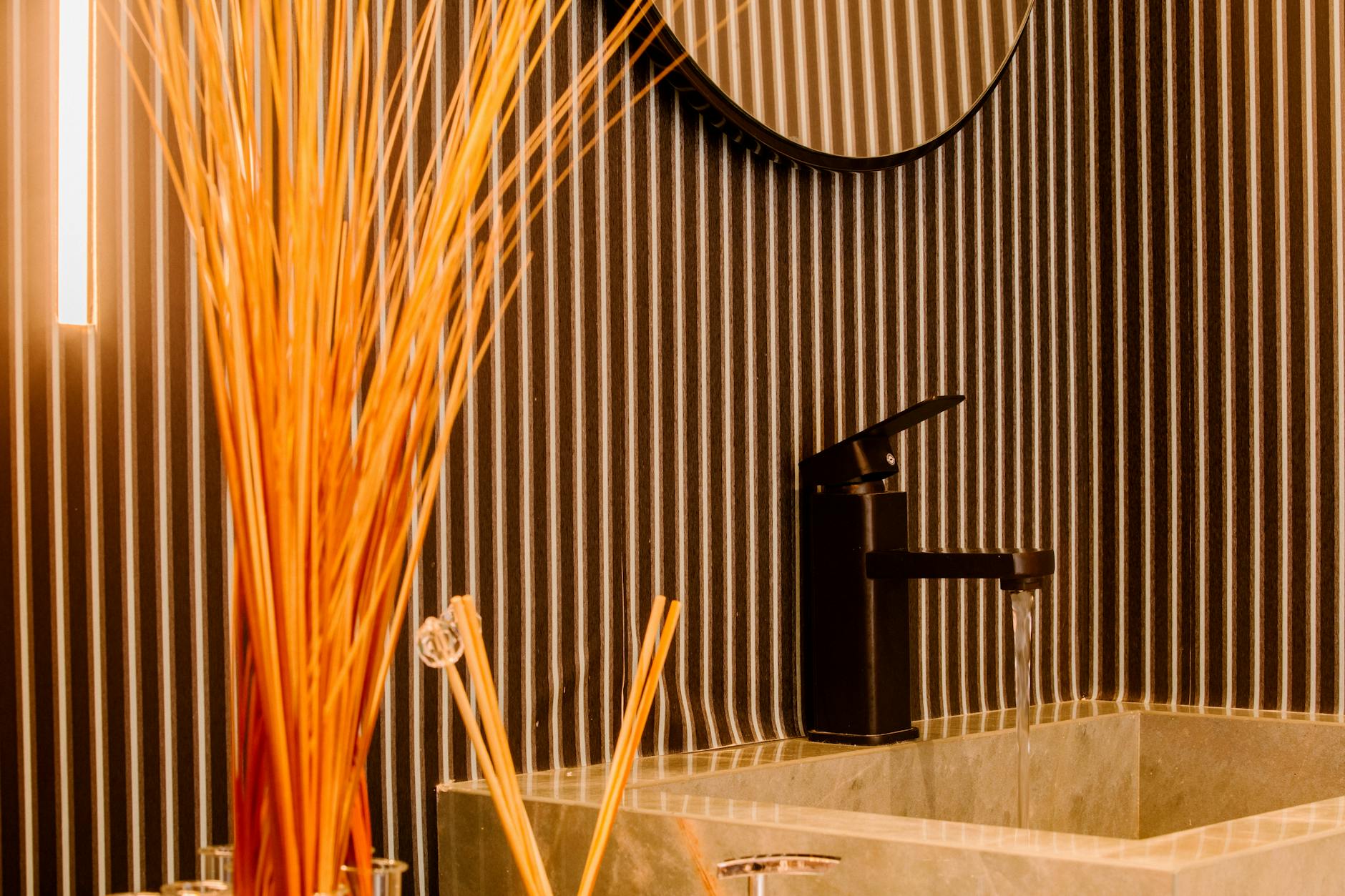
Wallpaper or paint with vertical lines guides the eye upward to reinforce the height of the room. This pattern acts like an optical illusion to stretch the walls visually. Subtle tone-on-tone stripes offer the benefit of height without overwhelming the space with bold patterns. Vertical orientation is a classic technique for combating low ceilings in compact areas.
Select Round Mirrors
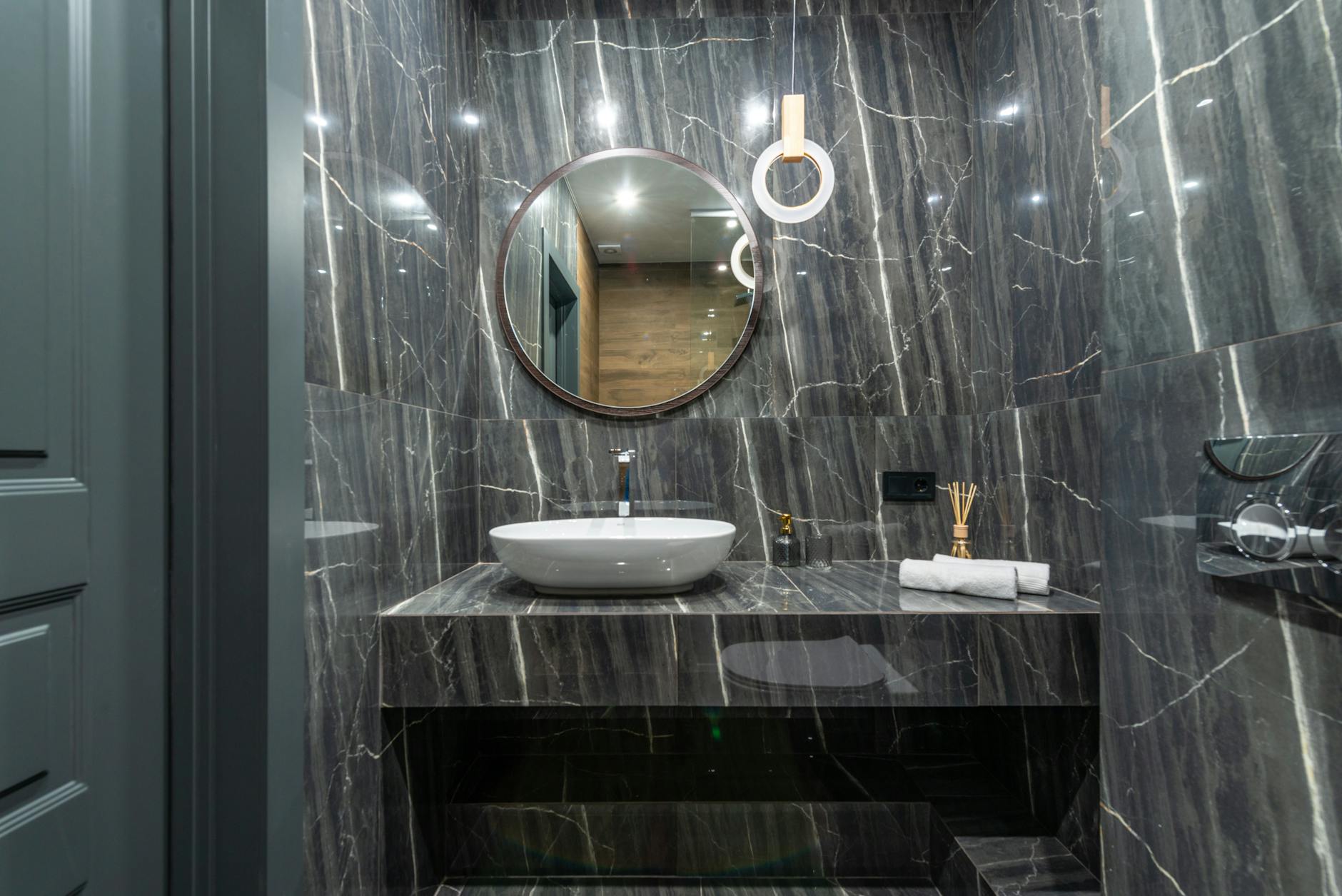
Curved shapes soften the hard angles and straight lines typical of bathroom tiles and fixtures. A round mirror leaves more wall space visible at the corners compared to a rectangular one. The organic shape creates a focal point that feels less rigid and imposing. Seeing more of the wall behind the mirror contributes to the sense of openness.
Install Glass Shelves
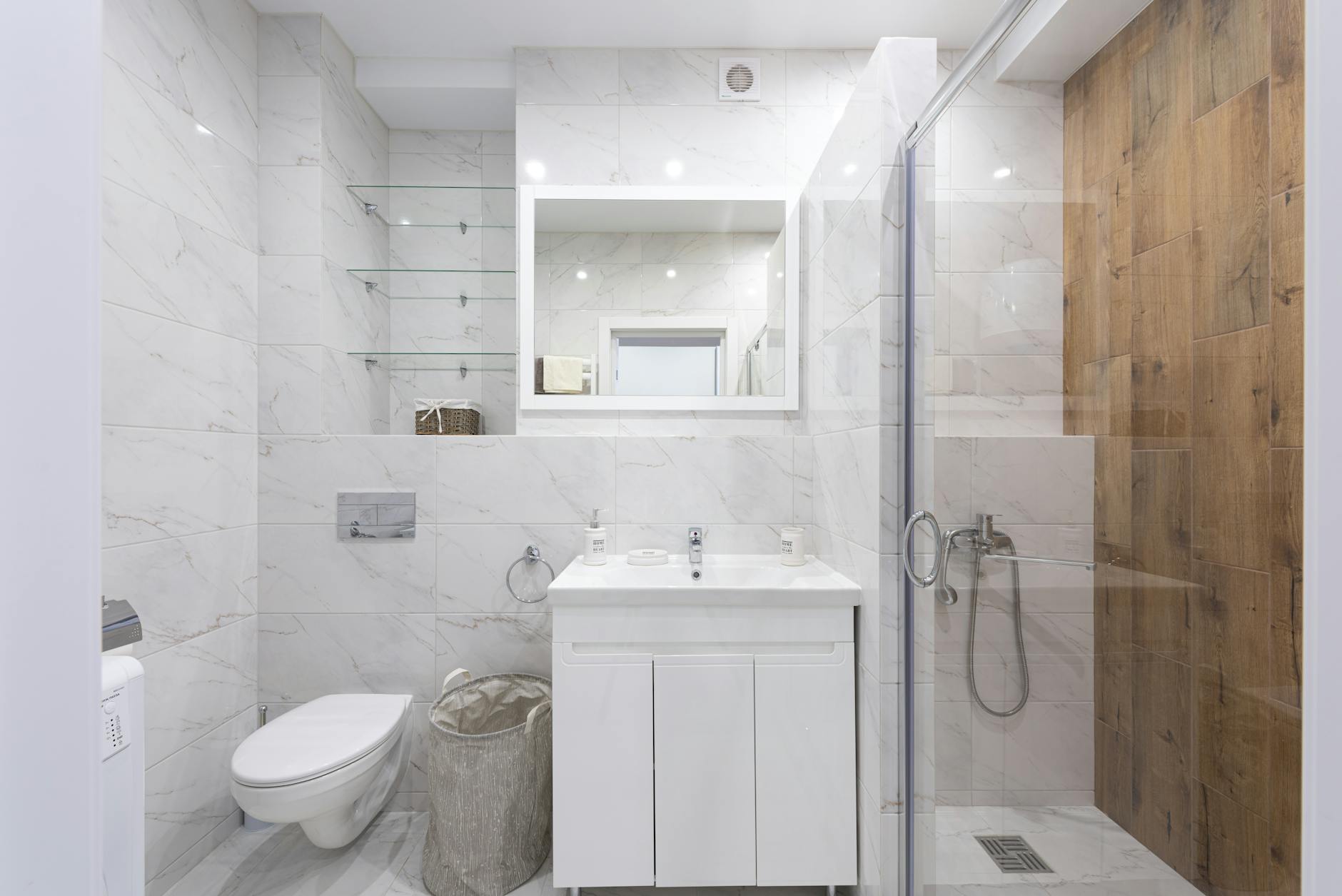
Glass shelving offers storage functionality without the visual weight of wood or metal boards. Items placed on glass shelves appear to float and do not block the view of the wall behind them. This material reflects light and blends seamlessly into any color scheme. It is an excellent choice for maintaining an airy feel while organizing toiletries.
Stick to Monochromatic Palettes
Using varying shades of a single color creates depth without causing visual chaos. A unified color scheme allows the eye to move smoothly across the room without interruption. This approach creates a serene and harmonious atmosphere that feels less cluttered. Complex patterns and contrasting colors are avoided to maintain a sense of calm.
Use a Hidden Tank Toilet
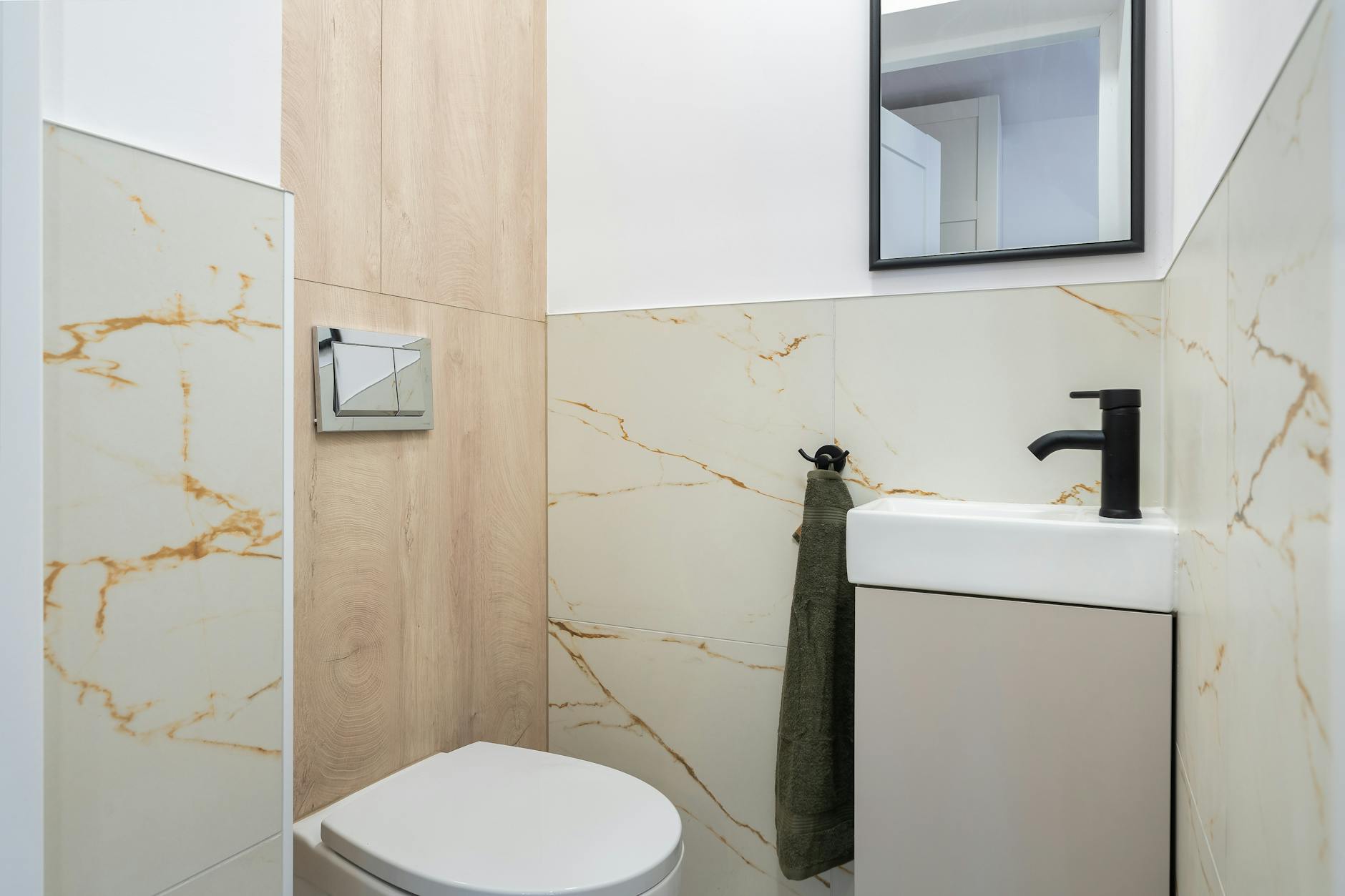
Toilets with tanks concealed inside the wall save valuable inches of depth in a small bathroom. The visible portion is only the bowl and the flush plate which reduces the fixture’s visual dominance. This streamlined look is modern and makes cleaning the floor much easier. The space above the bowl becomes available for shelving or cabinetry.
Utilize Backlit Mirrors
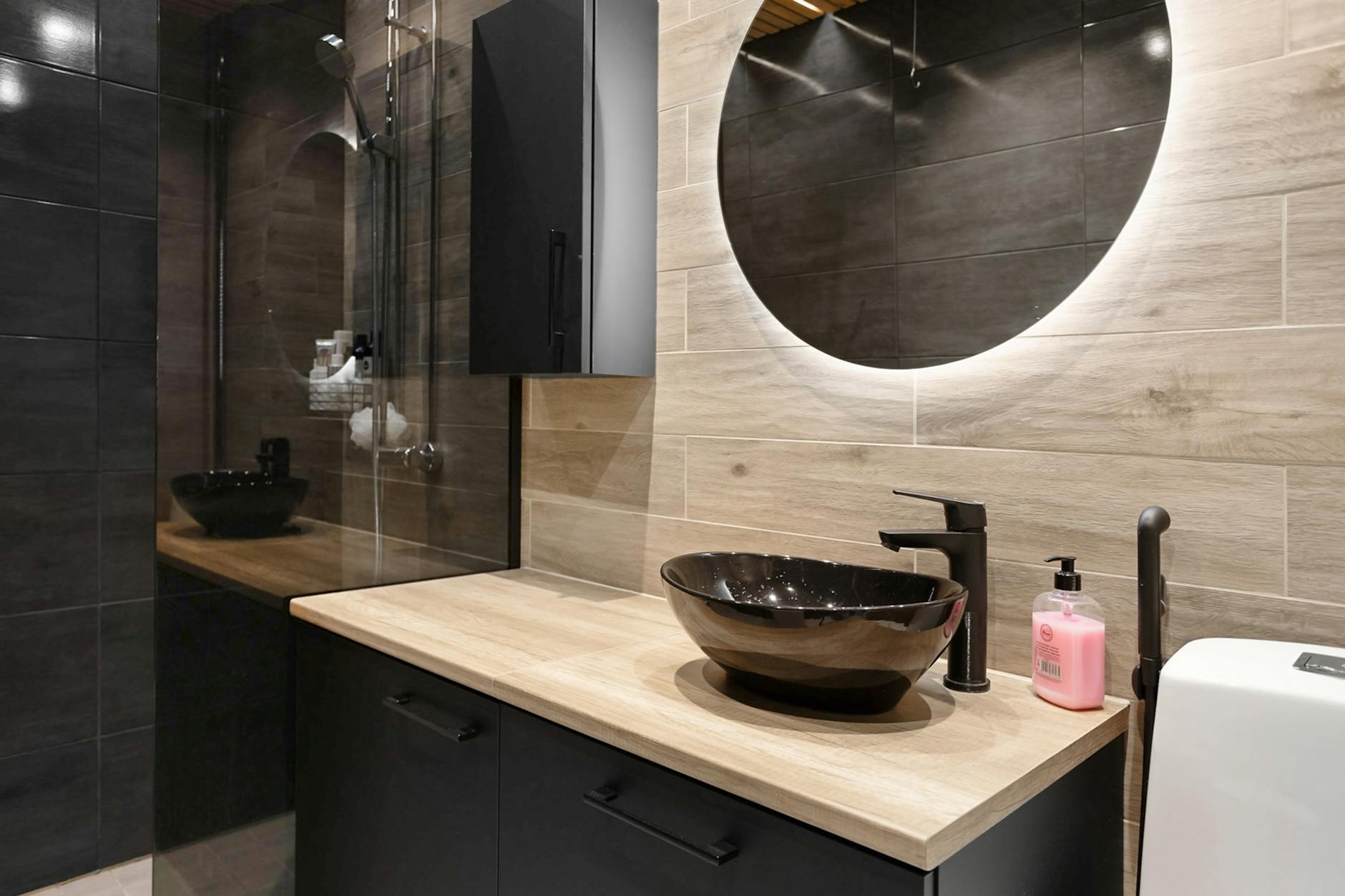
Backlighting pushes the mirror away from the wall visually and creates a sense of depth. This soft glow provides flattering illumination without the need for bulky vanity lights. The halo effect adds a layer of sophistication and dimension to the wall. It eliminates harsh shadows that can make a small space feel gloomy.
Install Ledge Shelving
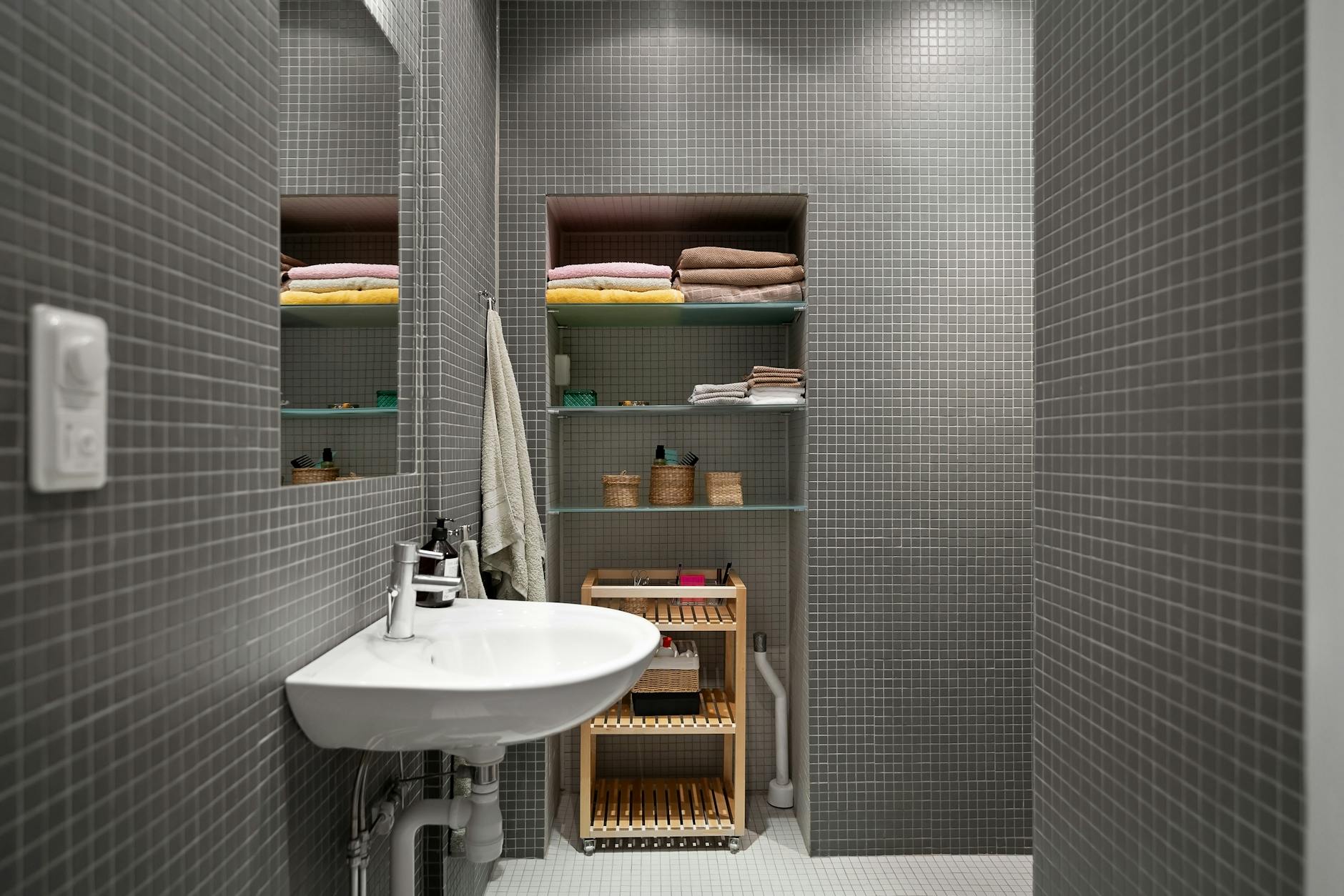
A narrow ledge running along the wall provides a surface for essentials without protruding into the room like a deep shelf. This linear storage solution keeps items organized in a single row for easy access. It can be placed above the sink or along the length of a bathtub. The clean horizontal line can also help elongate the wall visually.
Place Towel Racks on Doors
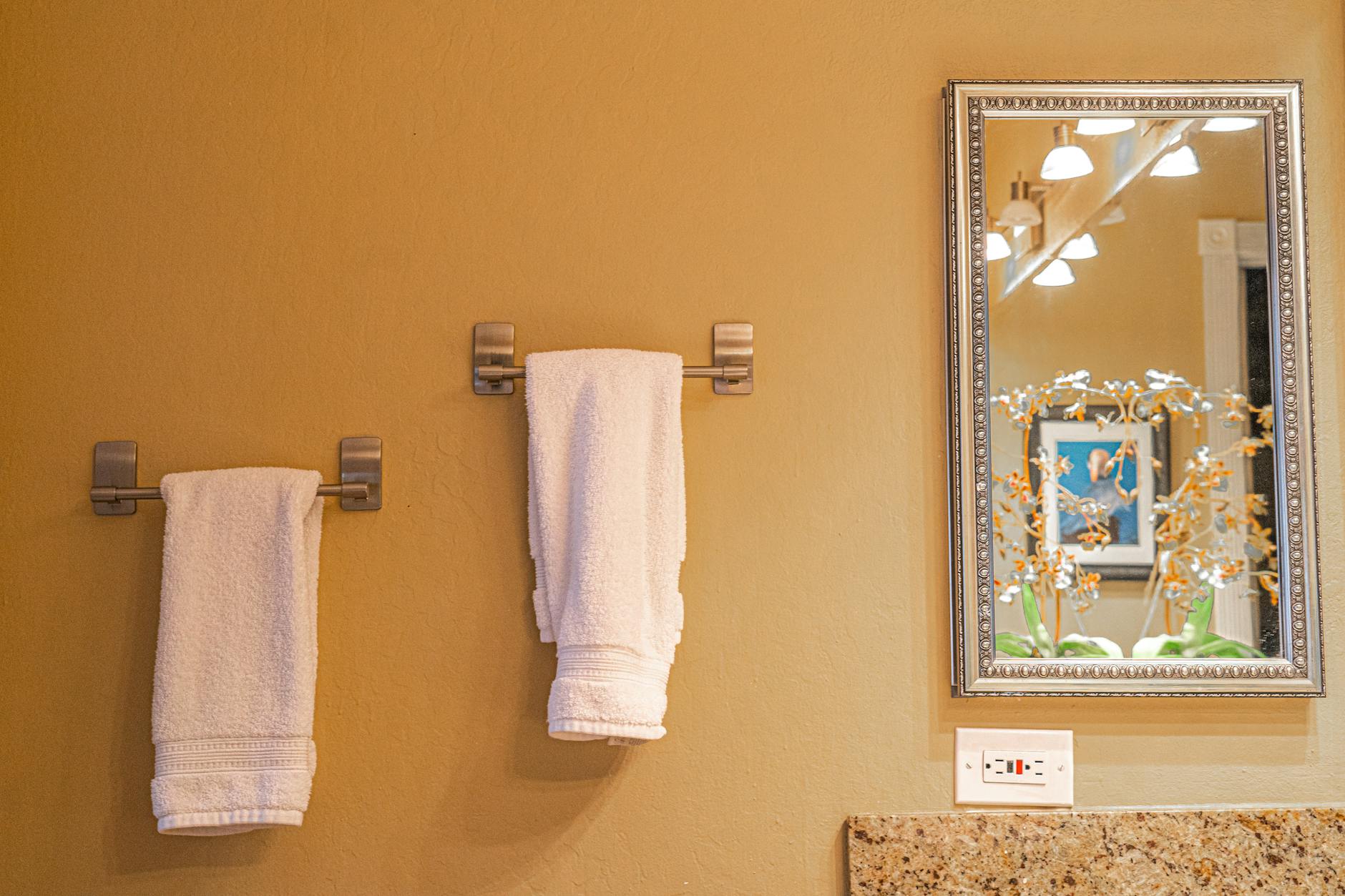
Mounting bars or hooks on the back of the entry door utilizes space that is otherwise wasted. This keeps damp towels off the floor and away from the vanity area. Removing wall-mounted racks from the main walls leaves them open and uncluttered. It is a practical solution for shared bathrooms with limited wall space.
Choose Transparent Furniture
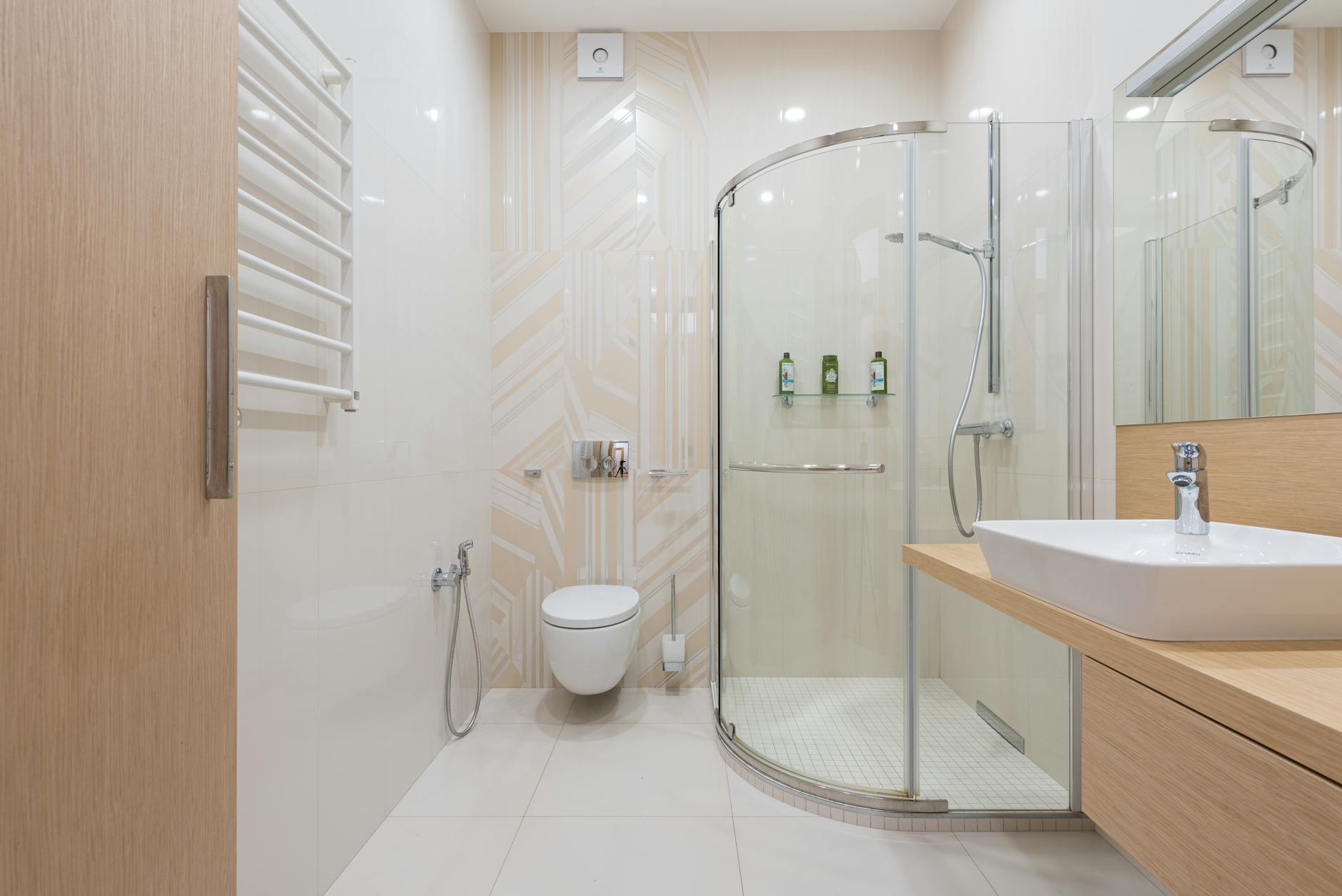
Acrylic chairs or stools provide seating or surface area without blocking the view of the floor. These “ghost” pieces offer functionality while remaining virtually invisible in the design. They maintain the open flow of light and space within the room. This modern furniture style works well in contemporary small bathrooms.
Lay Flooring Diagonally
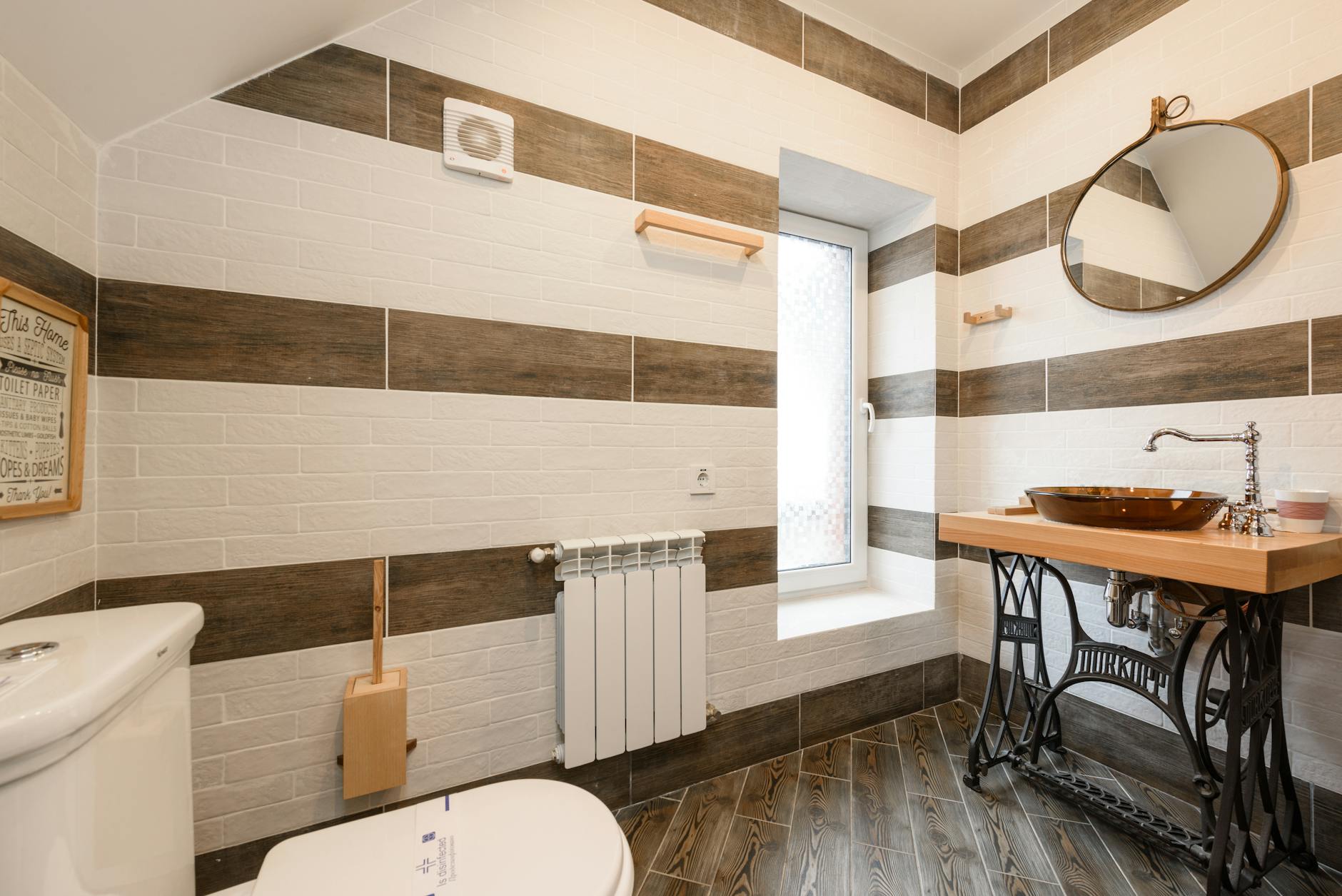
Placing floor tiles on a diagonal creates the longest possible lines across the room. The eye follows these lines which creates an impression of greater width and length. This pattern breaks up the boxy feel of a standard square bathroom. It adds visual interest without the need for complex patterns or colors.
Use Light Grout
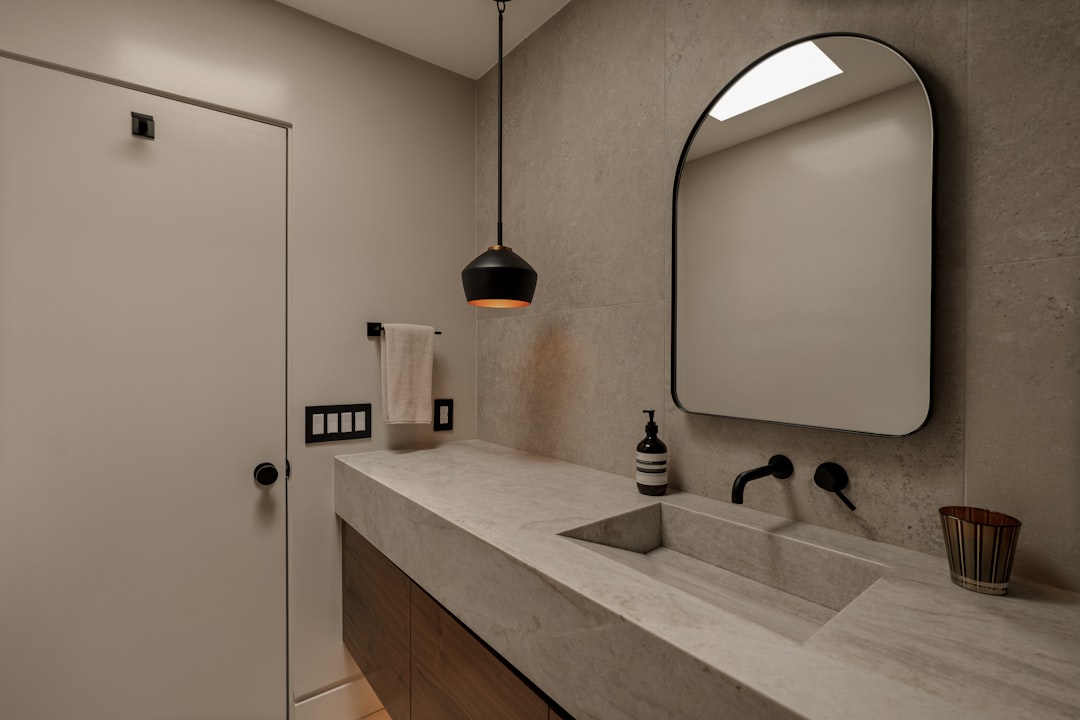
Matching the grout color to the tile color minimizes the grid pattern on walls and floors. A high-contrast grout emphasizes every individual tile and can make the surface look busy. Blending the grout creates a monolithic surface that feels larger and more cohesive. This technique works particularly well with white or light gray tiling.
Opt for Open Shelving
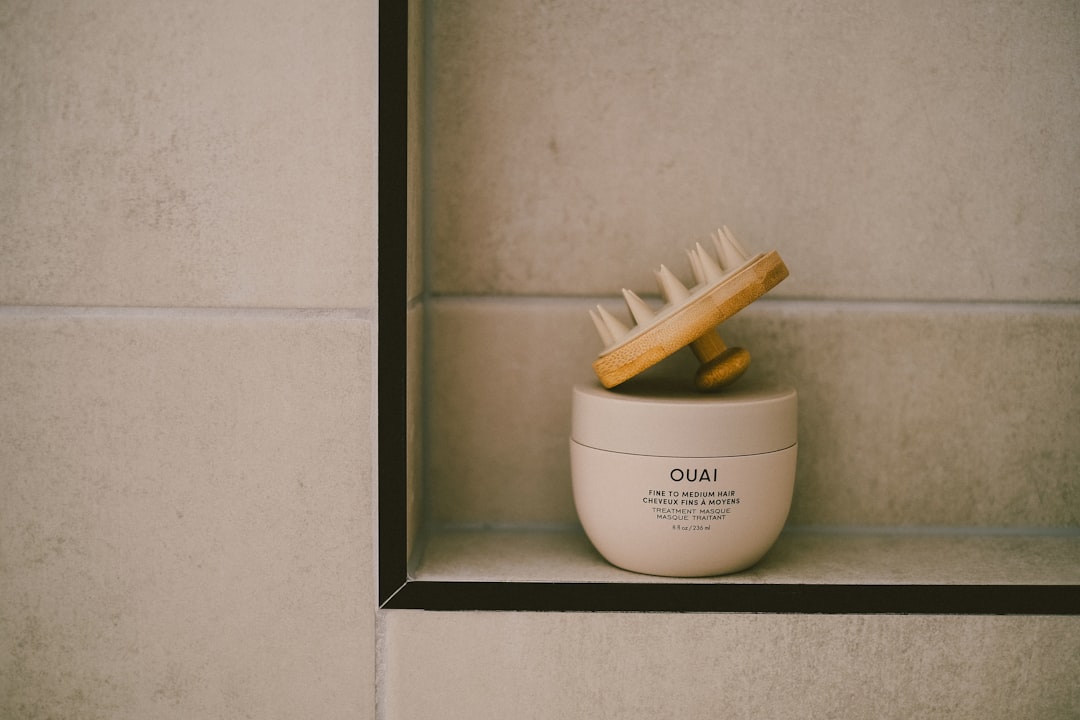
Open shelves prevent the closed-off feeling that solid cabinet doors can create in a small space. They encourage neat organization since the contents are always on display. The depth of the room is maintained because the eye travels to the back wall. Careful styling of these shelves adds personality without bulk.
Utilize Ladder Storage
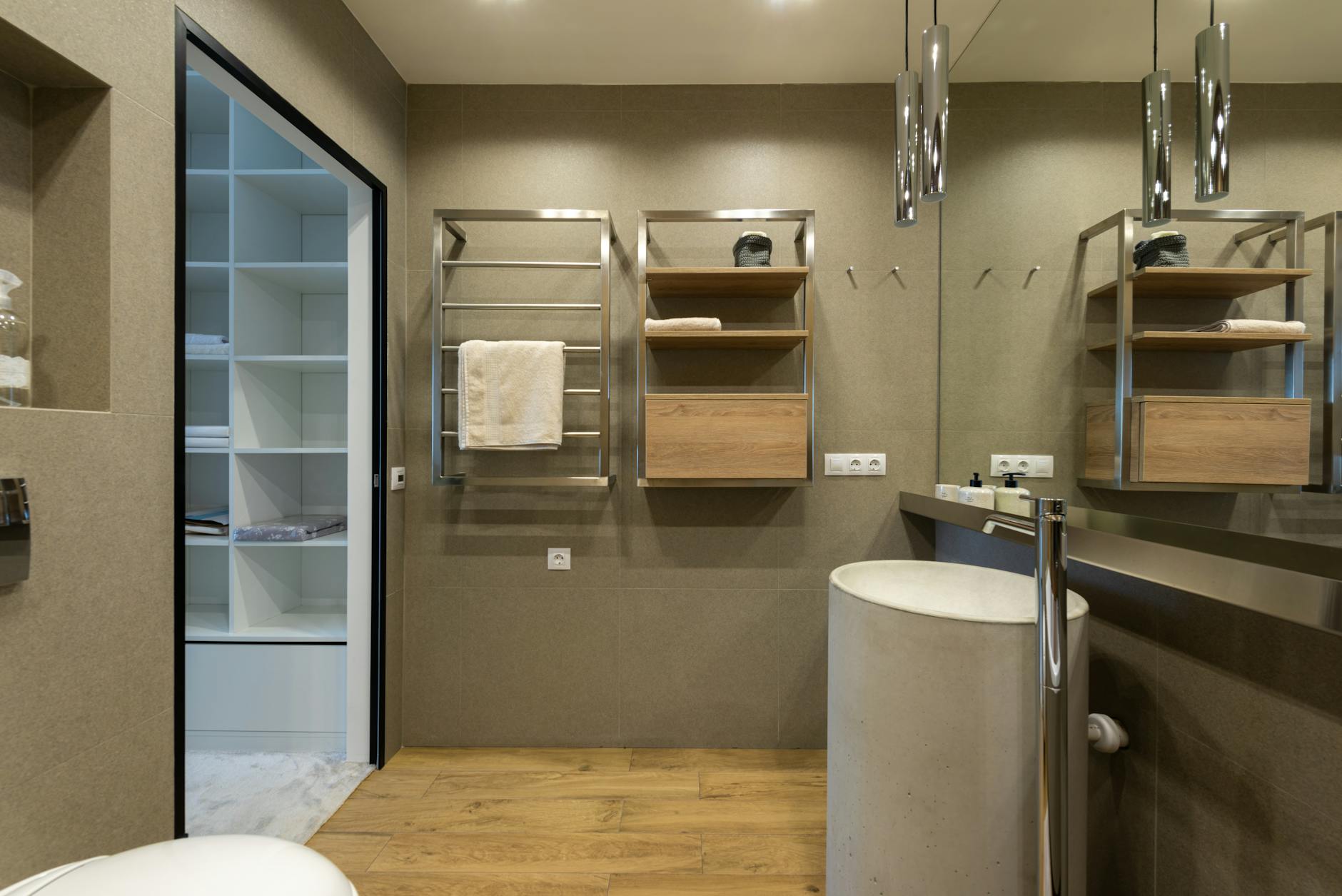
Leaning ladders provide vertical storage for towels and magazines with a very small footprint. The open structure of the ladder allows light to pass through and keeps the look airy. They can be easily moved or repositioned as needs change. This casual storage option adds a touch of warmth and style.
Create Continuous Flooring
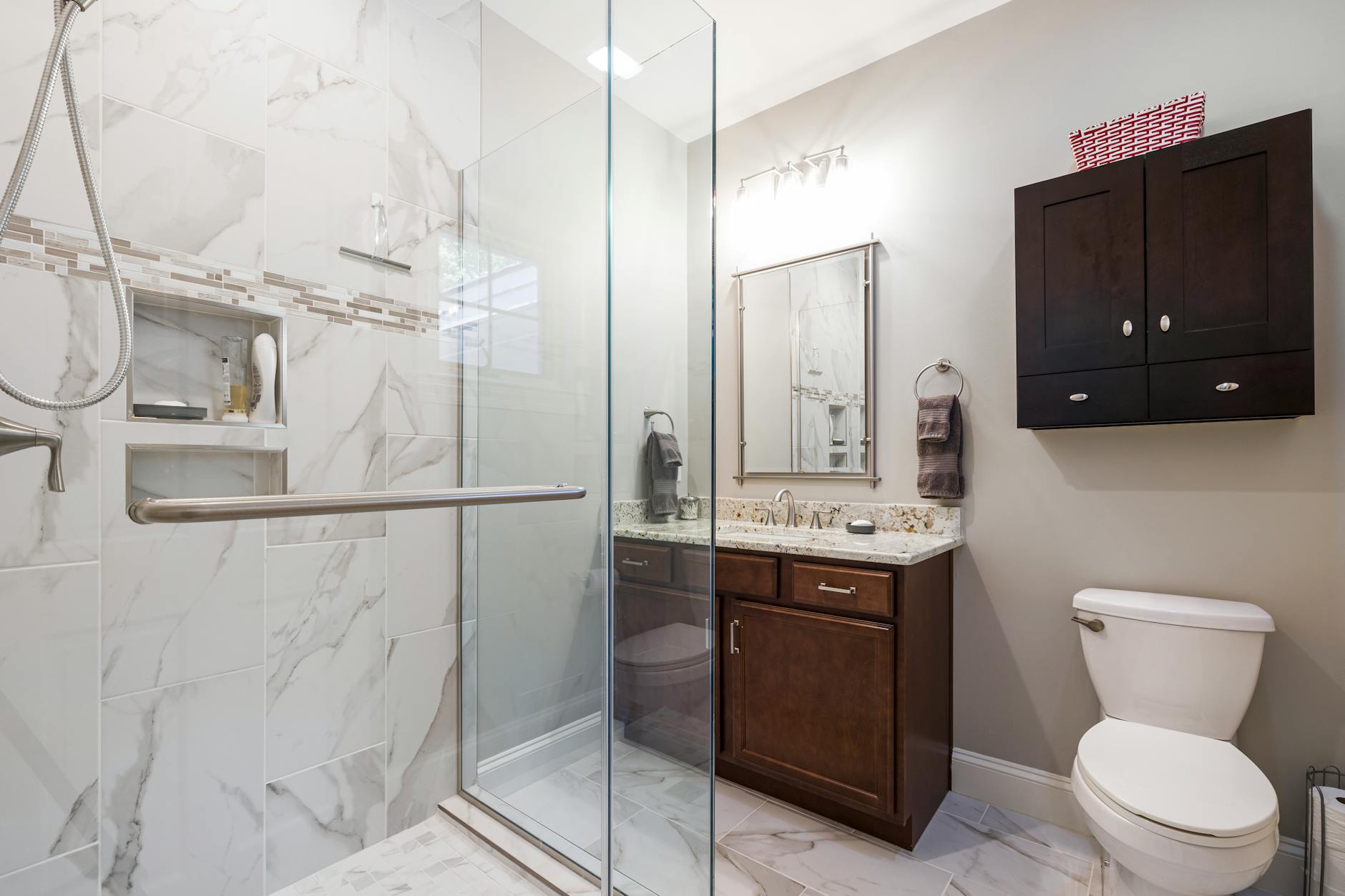
Extending the bathroom flooring into a curbless shower creates a seamless look. The absence of a shower curb removes a physical and visual barrier on the floor. This meaningful design choice makes the entire floor area visible and usable. It enhances accessibility while maximizing the perceived square footage.
Install Sliding Shower Doors
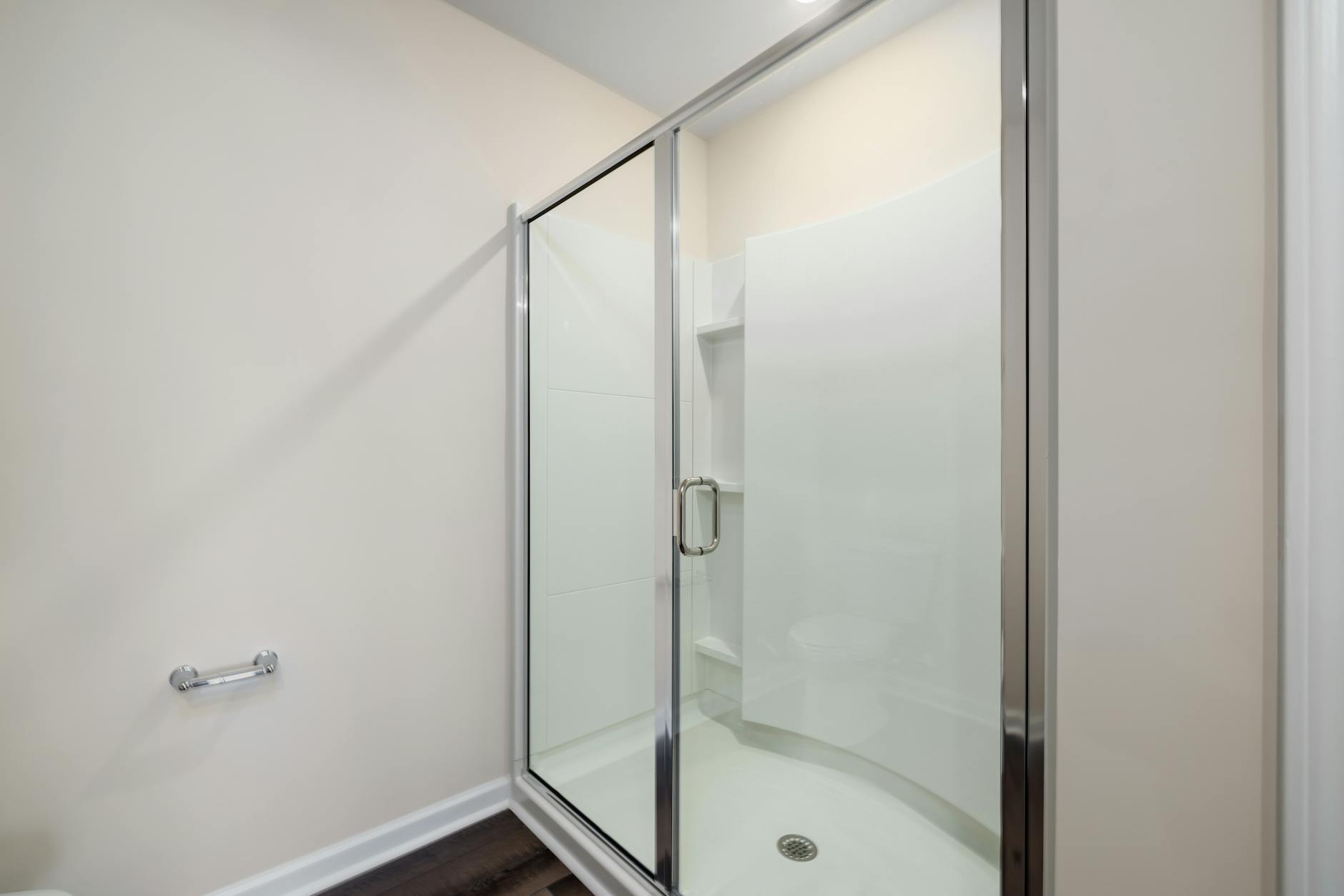
Sliding mechanisms eliminate the need for a door that swings out into the bathroom. This saves space and prevents the glass from hitting other fixtures like the toilet or vanity. The smooth operation is ideal for tight layouts where every inch counts. Modern sliding systems are sleek and minimal in design.
Minimize Decor
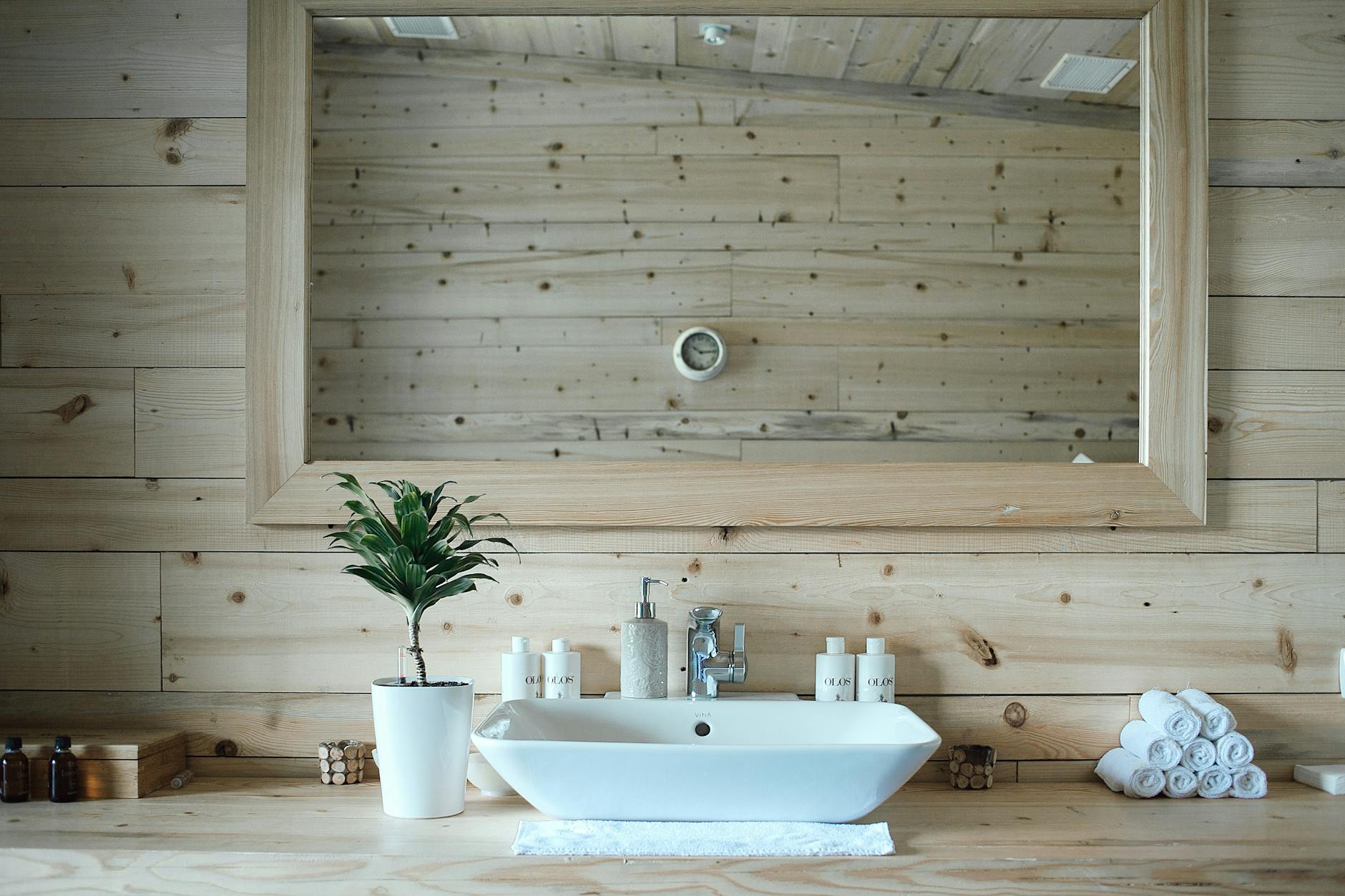
Restricting decorative items to a few impactful pieces prevents the room from feeling crowded. A single plant or a piece of art creates a focal point without overwhelming the senses. Too many knick-knacks gather dust and break up the clean lines of the space. A curated approach highlights the design features rather than the clutter.
Use an Undermount Sink
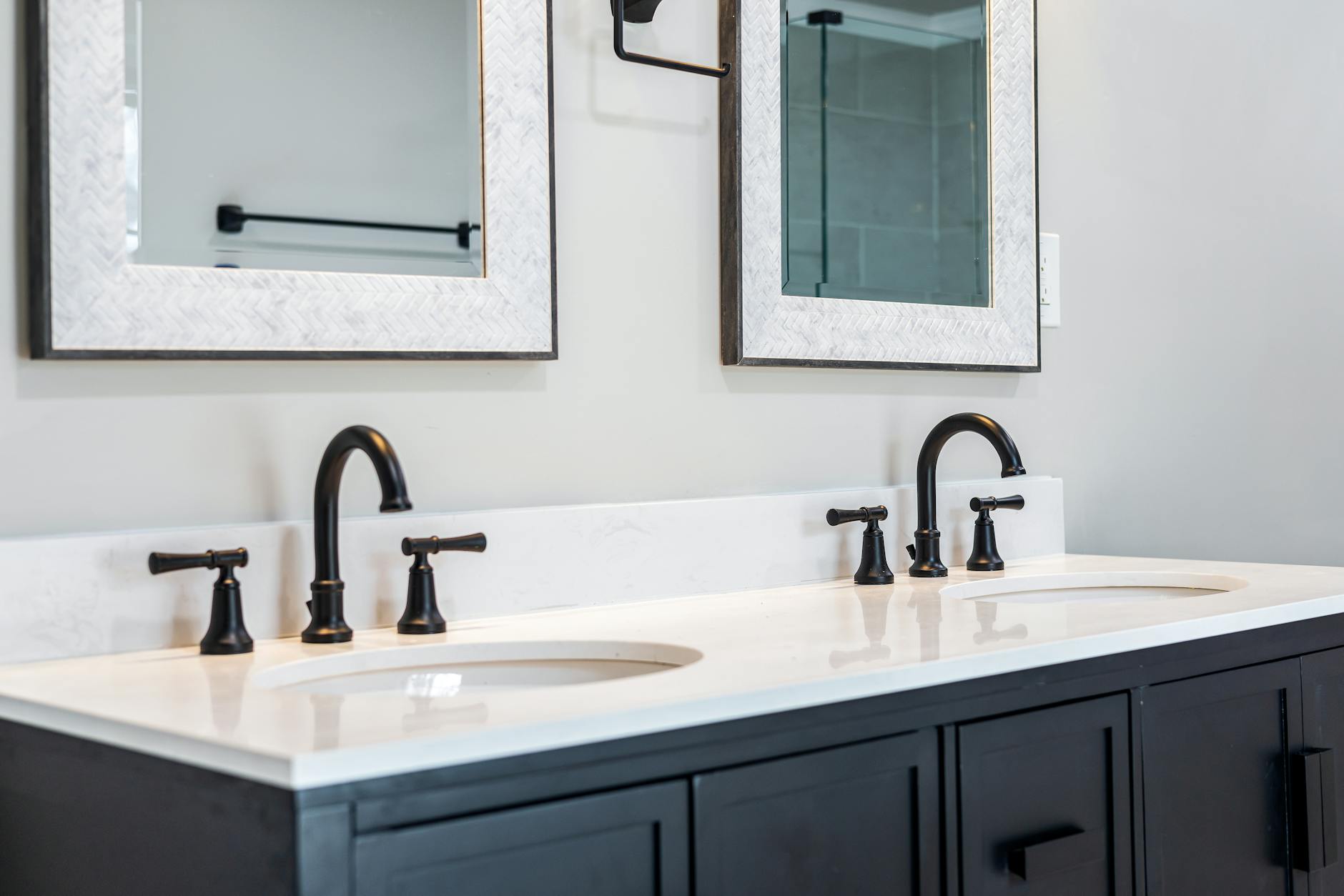
Undermount sinks are installed below the countertop to create a continuous and smooth surface. This eliminates the lip of a drop-in sink which can trap dirt and break the visual line. The seamless transition makes the counter feel larger and easier to wipe down. It contributes to a streamlined and custom appearance.
Select an Oval Bathtub
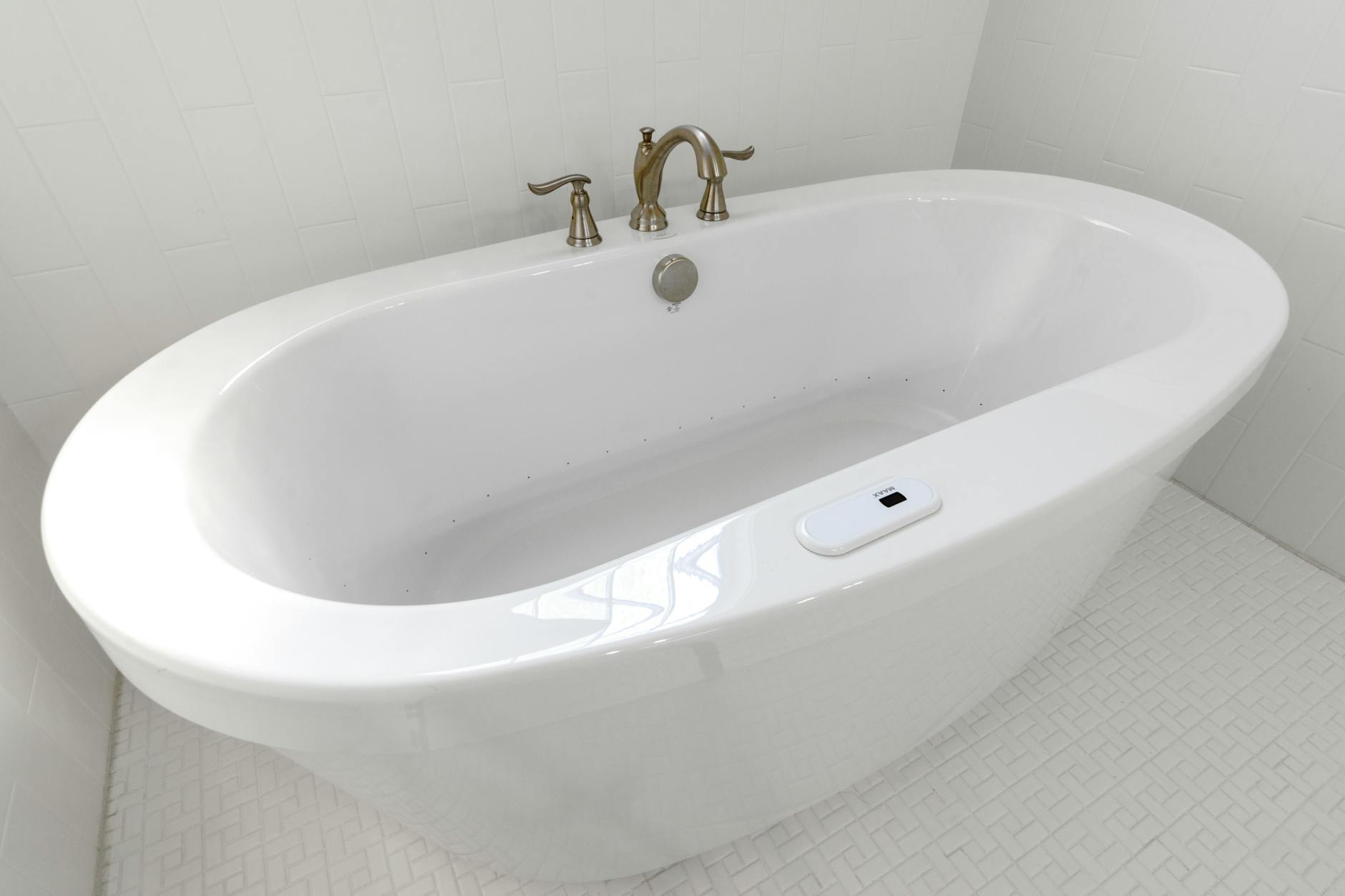
Curved bathtubs often take up less visual space than massive rectangular built-ins. The rounded edges improve traffic flow and reduce the risk of bumping into sharp corners. Freestanding oval tubs expose more floor area to enhance the feeling of spaciousness. They add a sculptural element that softens the room’s geometry.
Paint the Ceiling White
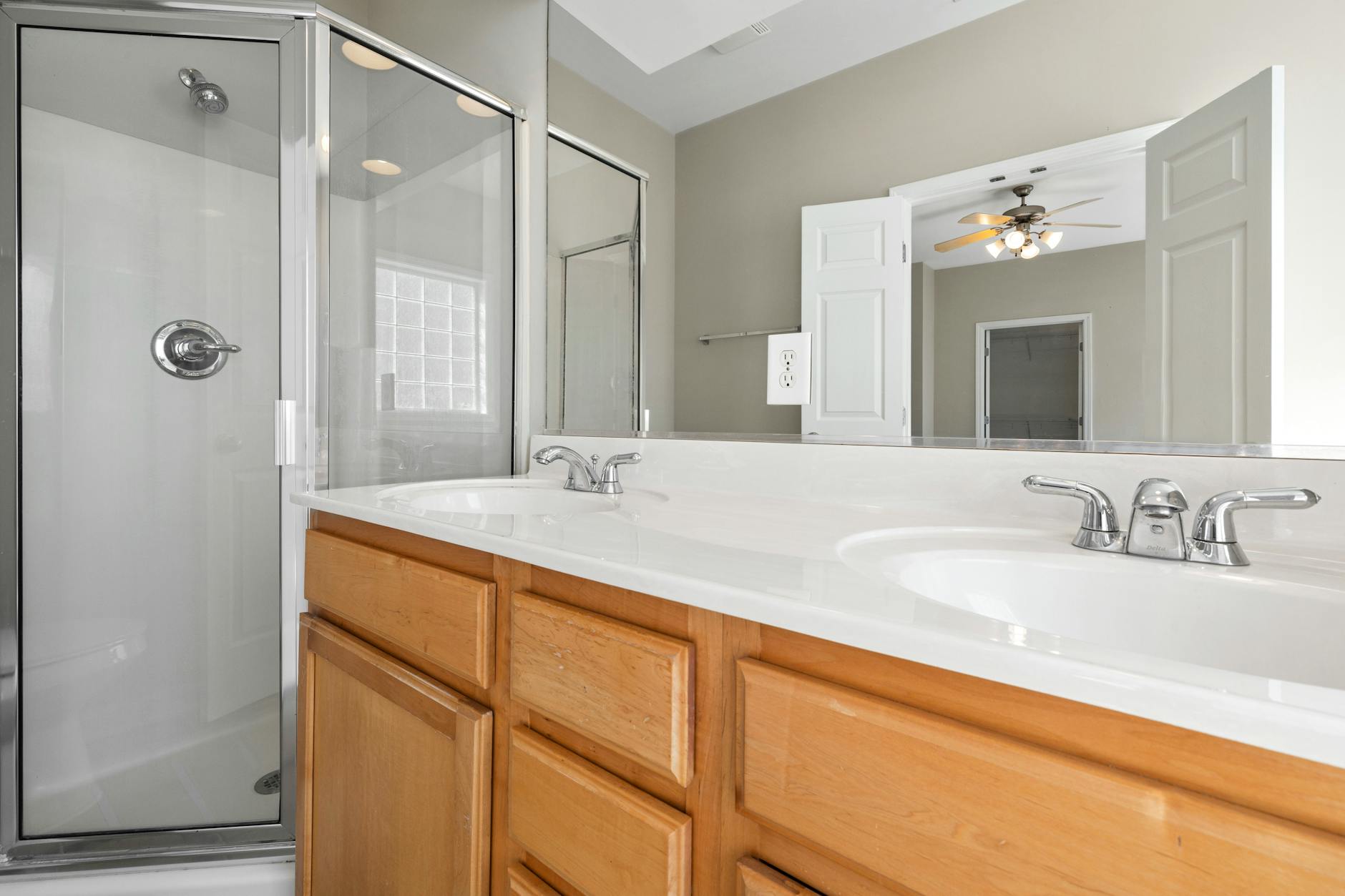
A bright white ceiling reflects light downwards and makes the room feel taller. Dark ceilings can bring the visual plane down and create a cave-like atmosphere. White paint blurs the boundary between the wall and the ceiling in light-colored rooms. This simple fix instantly lifts the mood and dimensions of the space.
Use High-Gloss Paint
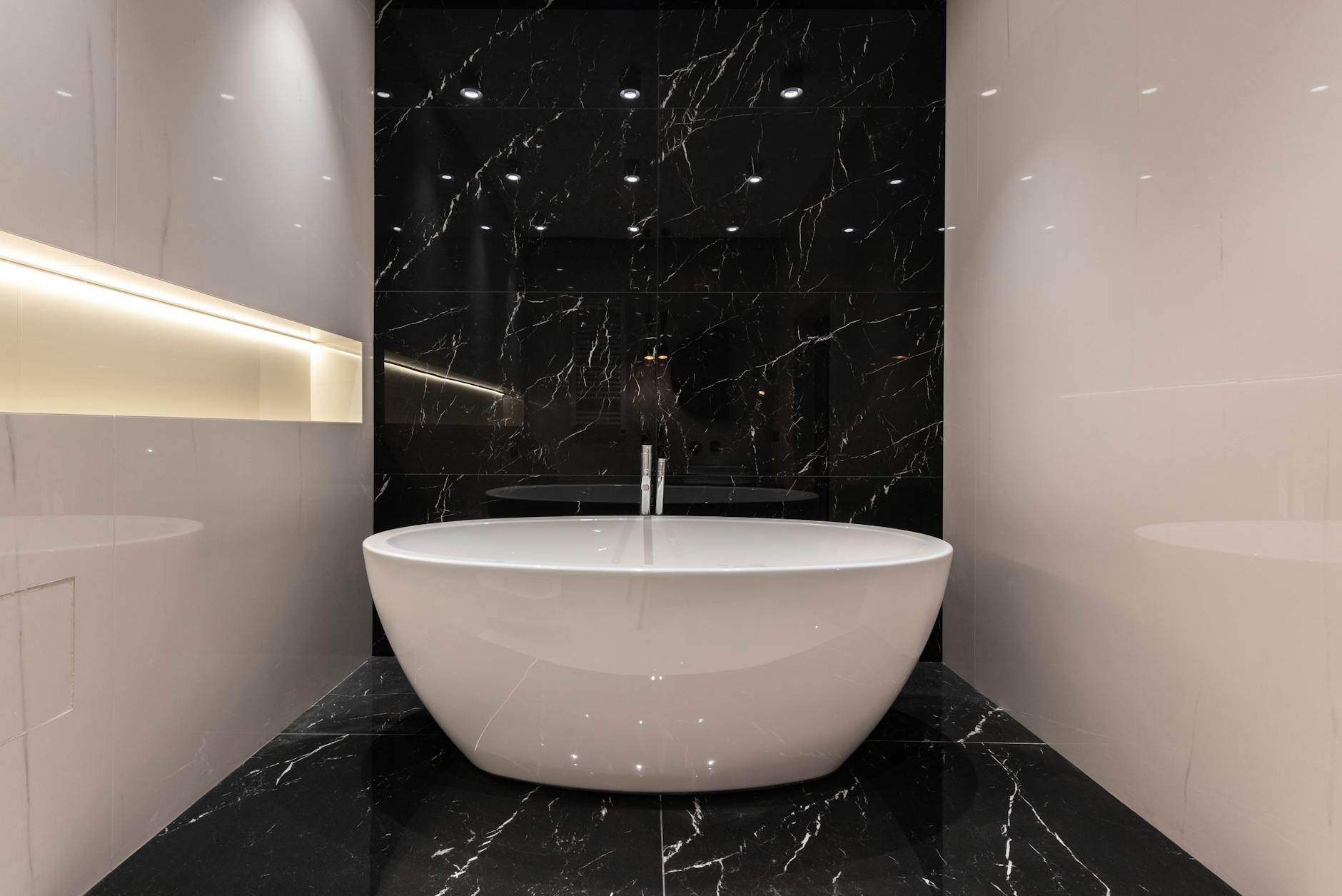
Applying high-gloss paint to the ceiling or walls reflects light in a way that matte paint cannot. The reflective quality adds dimension and sparkle to a small windowless bathroom. It is durable and easy to clean which is practical for moist environments. The finish mimics the effect of lacquer for a high-end look.
Install Mirrored Cabinets
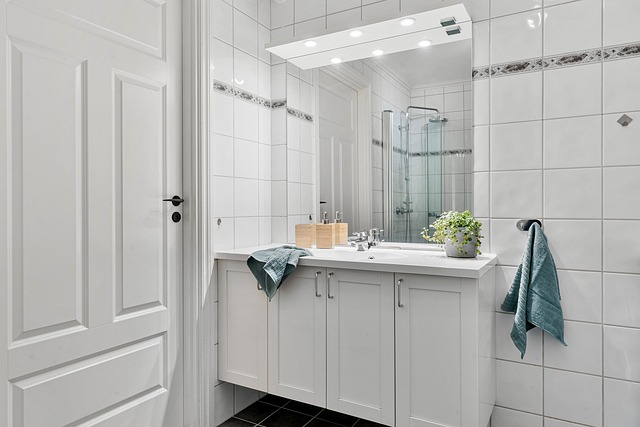
Recessed cabinets with mirrored fronts serve a dual purpose of storage and reflection. They hide clutter inside the wall while bouncing light around the room. The seamless look eliminates the need for a separate hanging mirror. This efficient use of space is a staple in compact bathroom design.
Optimize Natural Light
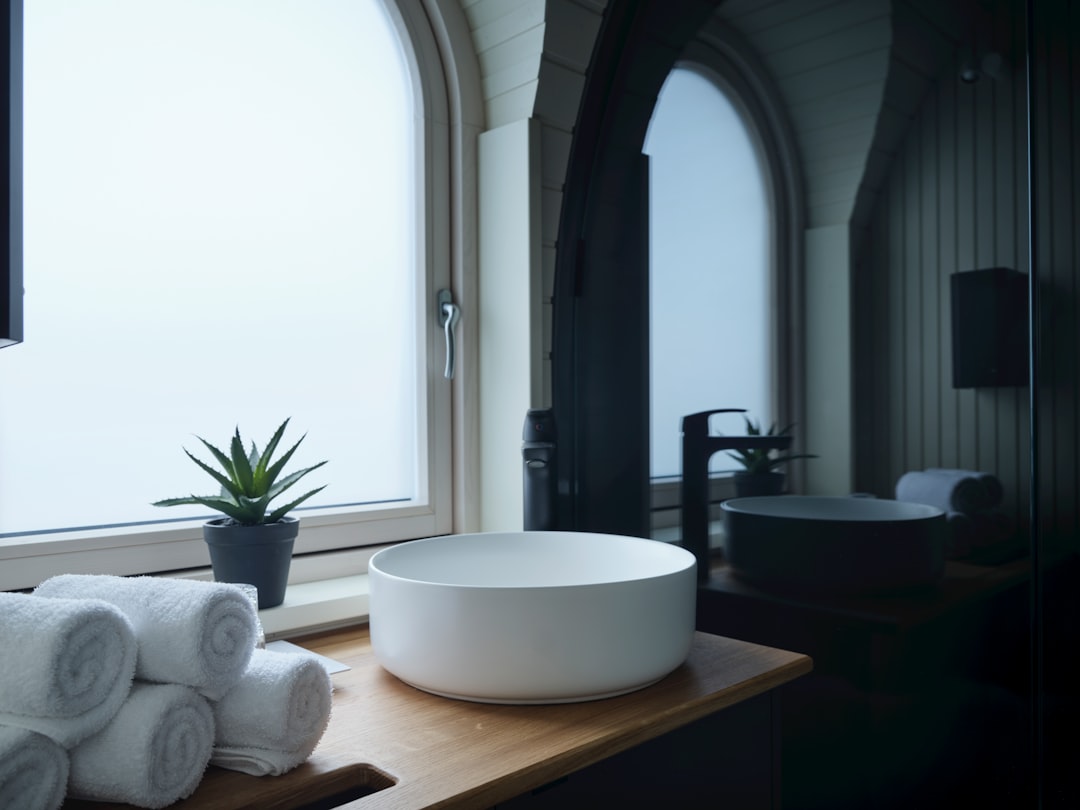
Keeping window treatments minimal maximizes the amount of daylight entering the room. Frosted glass or privacy film allows light in while maintaining necessary seclusion. Heavy blinds or curtains block the sun and make the window feel smaller. Sunlight is the best tool for making any space feel open and airy.
Place Rugs Strategically
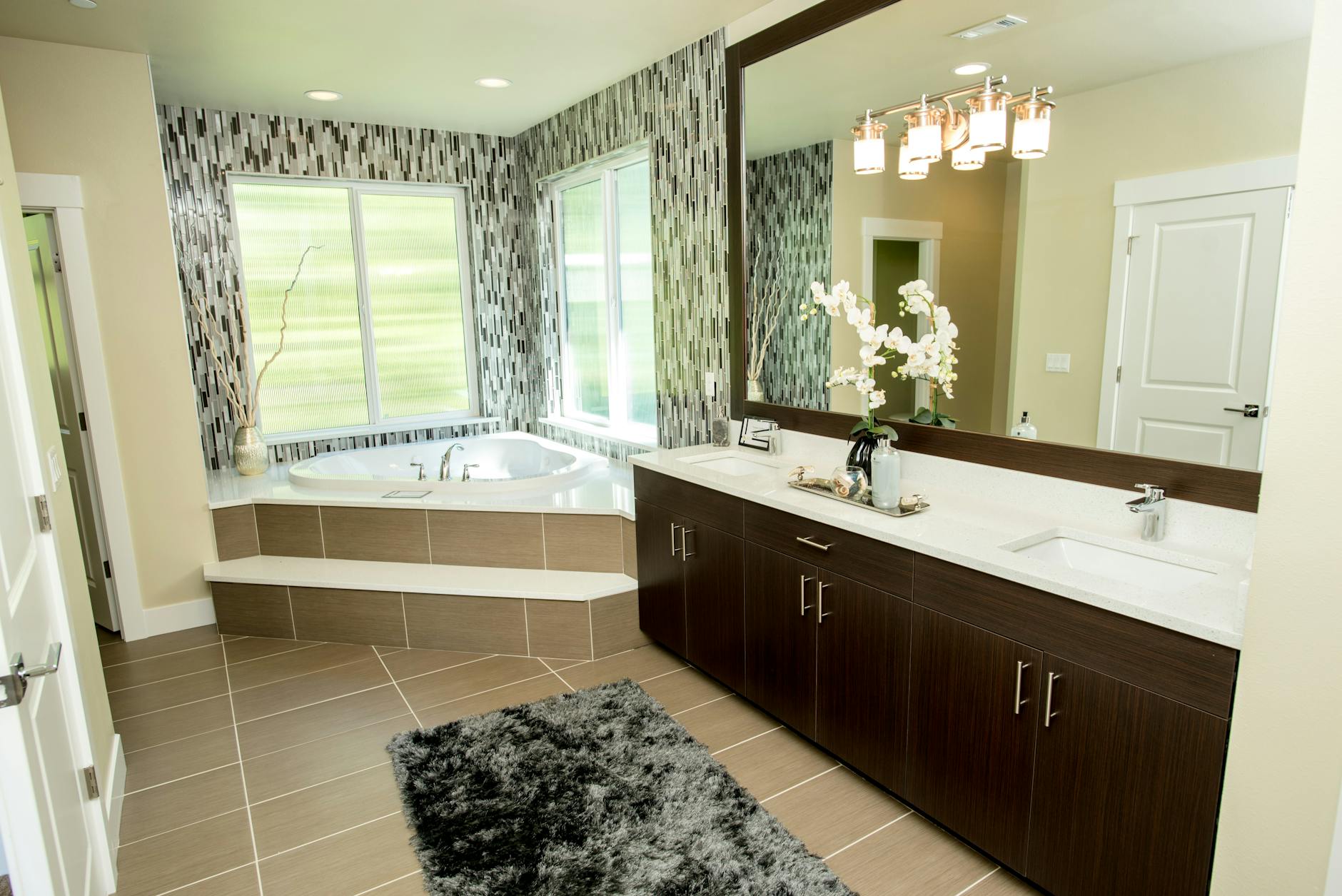
A single large rug can unify the space better than several small disjointed mats. Small bath mats can chop up the floor visually and make it look cluttered. A continuous textile draws the eye across the floor and adds warmth. Choosing a rug that blends with the floor color helps maintain continuity.
Keep Corners Clear
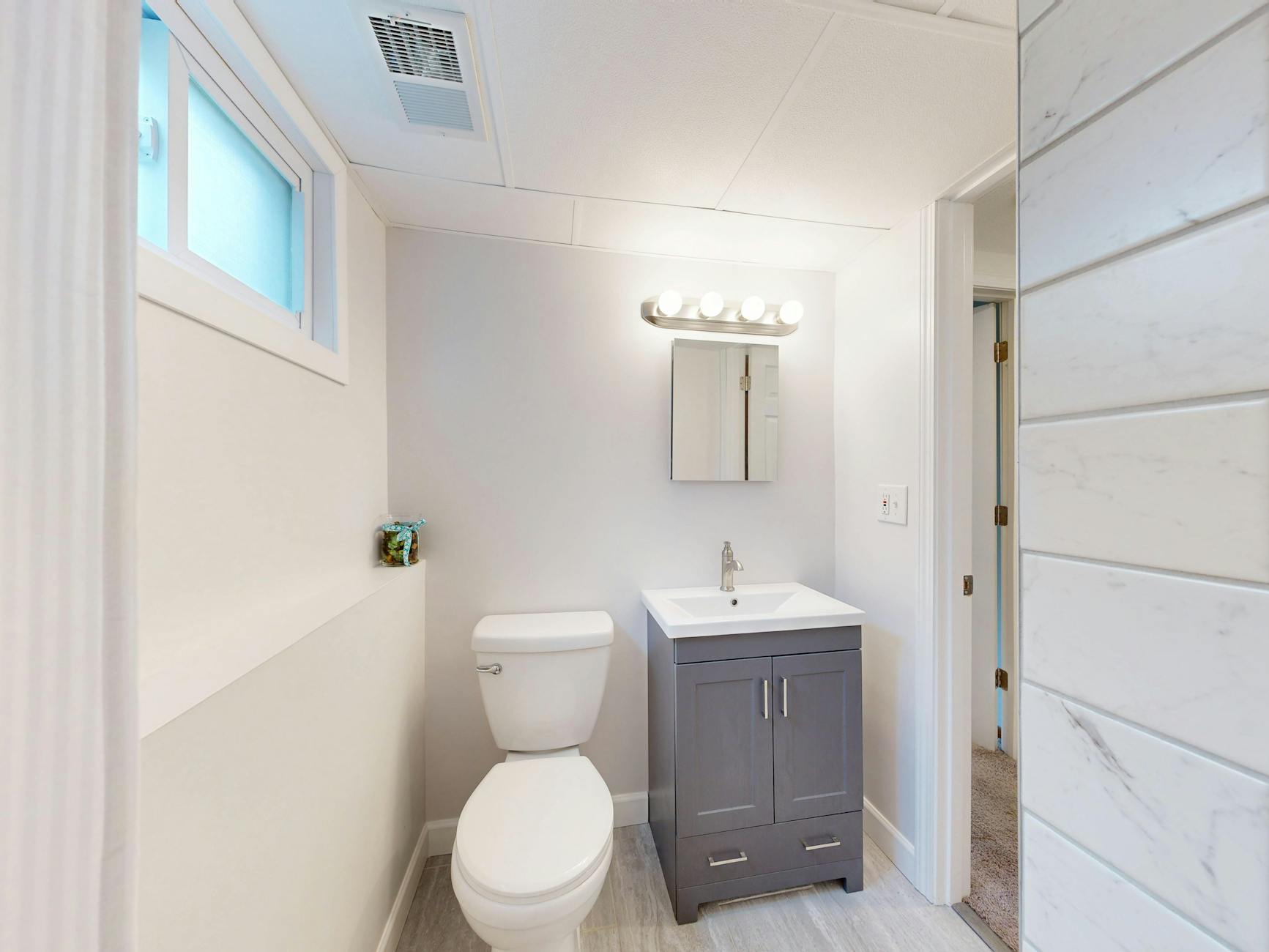
Avoiding heavy furniture or fixtures in the corners helps the eye perceive the full diagonal of the room. Shadows naturally gather in corners so keeping them open brightens the space. Placing a light source or a plant in a corner can activate the dead space. Open corners suggest that there is room to move and breathe.
Establish Visual Continuity
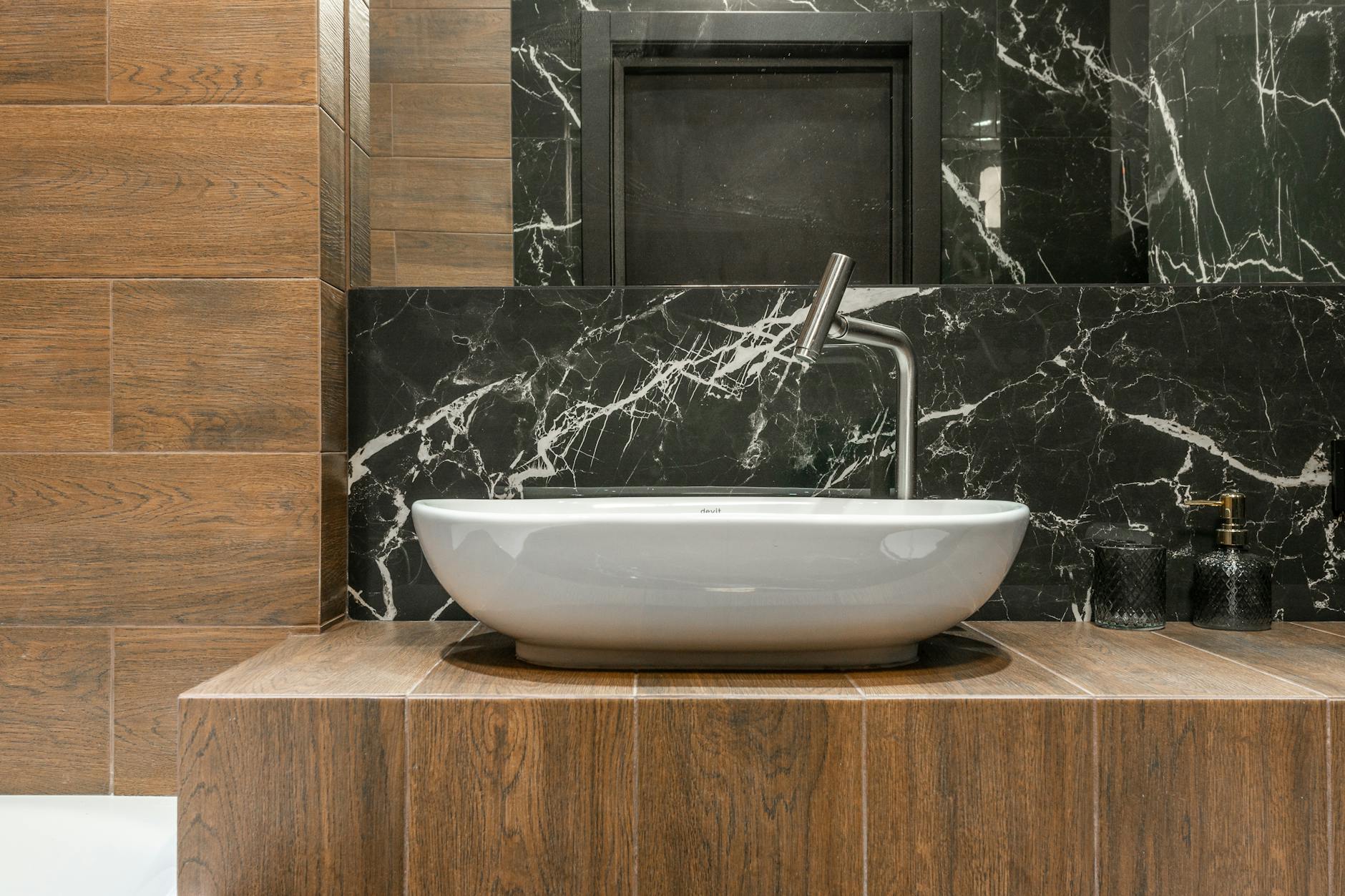
Designing with consistent materials and finishes creates a harmonious flow throughout the bathroom. When the eye does not encounter jarring transitions the space feels larger. Repeating metal finishes or wood tones ties the various elements together. A cohesive design language is essential for expanding the perception of a small room.
We would love to hear which of these design tricks you plan to use in your own home so please leave a comment.




