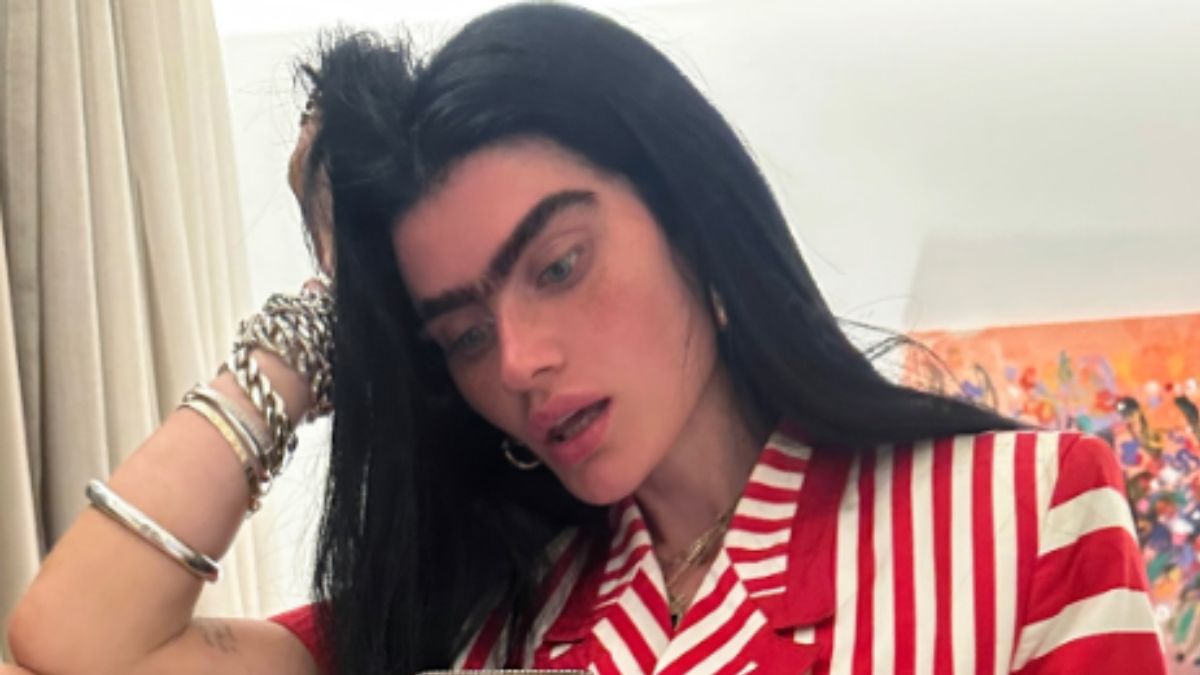
Sophia Hadjipanteli is a prominent figure in the modern fashion industry who has gained worldwide attention for her bold and distinctive facial features. She possesses a naturally thick unibrow that stands in stark contrast to the highly groomed and thin styles typically seen on runways or in glamour magazines. This specific look has made her a polarizing figure on various social media platforms where she regularly shares her work and daily life. Many of her followers find her appearance to be a breath of fresh air in an industry that is often criticized for its rigid and unreachable standards.
However her journey is not without significant challenges as she frequently faces a heavy barrage of negative comments from people across the globe. Some individuals go as far as to beg her to pluck the hair between her eyes so she can fit into a more conventional mold of beauty. These critics often post unsolicited advice on her photos suggesting that she would look much better if she conformed to traditional norms. Despite the overwhelming amount of pressure from strangers Sophia remains firm in her decision to embrace her natural self without any modifications.
The model has made it very clear that her appearance is a deliberate choice based on her own personal preferences and her sense of identity. She is not interested in seeking validation from those who believe that beauty must look a certain way to be considered valid. Sophia once explained her philosophy by stating that “I am not doing this to show people that they have to like it” which highlights her focus on internal satisfaction rather than external praise. This attitude has turned her into a powerful advocate for personal autonomy and the broader body positivity movement.
For Sophia the decision to keep her unibrow is about more than just aesthetics because it reflects her deep internal values. She believes that everyone should have the right to present themselves in whatever way makes them feel most comfortable and authentic. By staying true to her natural features she is sending a message that one’s worth is not determined by public opinion or fleeting trends. She frequently tells her fans that “I am doing it because I like it” and this simple conviction serves as the foundation of her public image.
Her family played a significant role in helping her develop the confidence to stand out in such a competitive and often critical environment. She often speaks about her grandmother who encouraged her to be proud of her heritage and her unique physical traits from a very young age. These early lessons in self love have provided her with a thick skin against the toxicity of internet culture and anonymous bullying. She remembers that “My grandmother always told me to be proud of myself” and she carries that advice with her as she navigates her high profile career.
This internal strength has allowed her to launch the unibrow movement which is a social media initiative aimed at celebrating facial hair diversity and natural beauty. The movement encourages men and women to stop feeling ashamed of their natural brows and to share their photos online using a specific hashtag. It has created a supportive community for thousands of people who previously felt marginalized by standard beauty advertisements and social pressures. Sophia uses her platform to show that you can be a successful professional model while still being yourself.
The global fashion industry has taken notice of her unique look and she has successfully booked high profile jobs with major international brands. This success proves that there is a growing demand for authenticity and diversity in the world of high fashion and retail marketing. Designers are increasingly looking for models who have a distinct personality and a look that stands out from the crowd of identical faces. Sophia is a pioneer in this regard and her career serves as an inspiration to aspiring models who do not fit the traditional mold.
Dealing with the constant stream of online hate is a reality that she has learned to manage with a great deal of grace and resilience. While she receives many positive messages she also has to navigate a digital world where people feel entitled to attack her appearance. She has noted that the negativity can be quite intense at times but she chooses to focus on the positive impact her visibility has on others. By remaining visible and unapologetic she provides a source of strength for those who struggle with their own body image issues.
Beyond her personal story there are many interesting facts about the history of eyebrows and how they have been perceived in different eras. In ancient civilizations such as Greece and Rome a unibrow was often considered a sign of high intelligence and great beauty among women. People would even use dark pigments or goat hair to emphasize the space between their brows to achieve this highly desirable look. This historical perspective shows that beauty standards are constantly shifting and are largely determined by the specific cultural context of the time.
In the modern era the beauty industry has become a massive economic force that is worth billions of dollars to the global economy every year. Every year Americans spend millions of dollars on eyebrow pencils and waxes and professional grooming services like threading or microblading. The pressure to have the perfect set of brows has led to a highly specialized market that caters to every possible grooming preference. This obsession with constant grooming makes Sophia’s decision to remain natural even more radical in the eyes of the general public.
The unibrow has also been a powerful symbol in the art world most notably through the iconic self portraits of the famous Mexican artist Frida Kahlo. Kahlo used her own unibrow and facial hair to challenge gender norms and explore themes of identity and personal pain and resilience. Her work continues to influence fashion and art today and she remains a quintessential icon of non conformity and creative expression. Like the artist before her Sophia is using her face to make a statement about the complexity of human beauty.
Modern psychology suggests that the way we perceive beauty is heavily influenced by the images we see repeatedly in the media and advertising. When we are constantly exposed to one specific type of look we begin to believe that it is the only way to be attractive or successful. This is why representation matters so much in television and fashion and digital advertising campaigns. When people like Sophia break the traditional mold they help to expand the collective definition of what is considered beautiful in modern society.
The rise of social media has changed how we interact with beauty standards by giving everyone a platform to share their own unique aesthetic. While this can lead to increased pressure to look perfect it also allows for the formation of niche communities that celebrate physical differences. Movements like the one started by Sophia are essential for counteracting the harmful effects of airbrushed and heavily filtered images. They provide a vital space where being natural is not just okay but is something to be celebrated and admired.
As the conversation around body positivity continues to evolve it is likely that we will see even more diverse faces in the public eye. Consumers are becoming more vocal about their desire for realness and the rejection of artificial perfection in marketing. Sophia’s journey is a testament to the fact that staying true to yourself can lead to both personal fulfillment and professional success. She continues to inspire others to look in the mirror and be proud of what they see regardless of what others might think.
Please share your thoughts on whether you believe natural beauty should be more prominent in the fashion industry in the comments.




