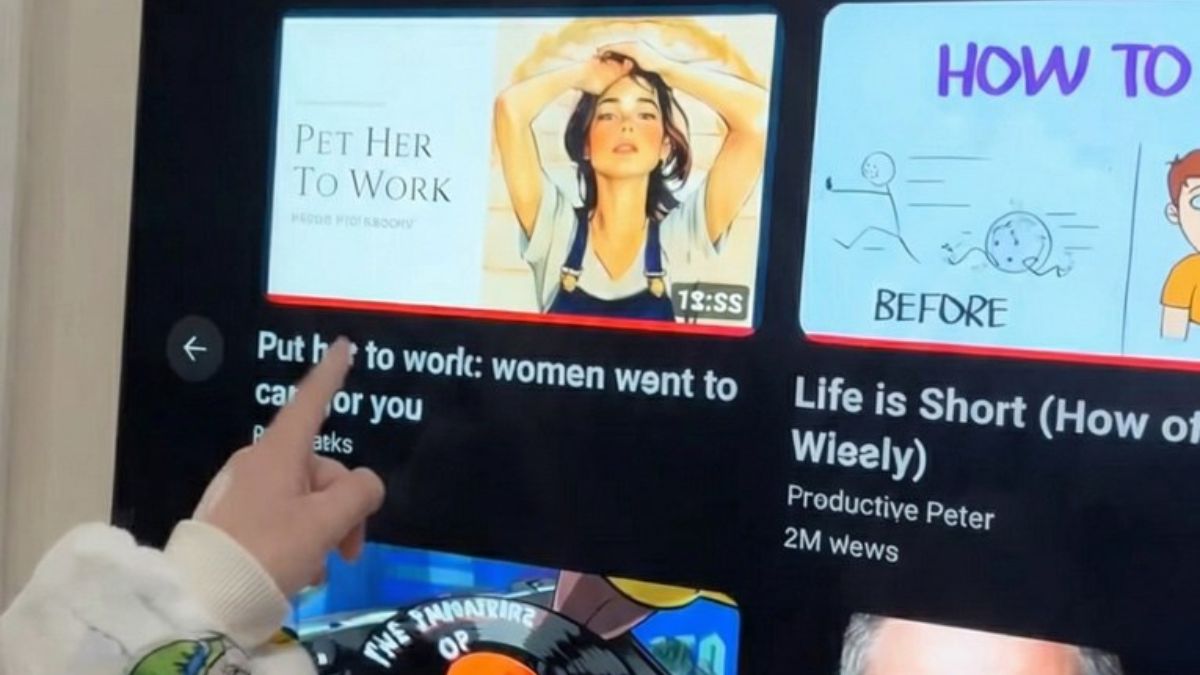
A TikToker named Shaely went viral after sharing her reaction to discovering what her boyfriend had been watching on YouTube, and the response from viewers was swift and overwhelmingly concerned. On February 20th, she posted a video capturing the moment she scrolled through his watch history and found content she never expected to see. The video quickly racked up 3.4 million views, with thousands of commenters weighing in on what she found. Standing in front of the screen showing the open watch history, she nervously laughed as she processed what she was seeing.
The titles of the videos her boyfriend had been watching were deeply troubling. Shaely described finding clips with names along the lines of “Make Her Work for You” and “Women Want to Take Care of You,” content that falls squarely into what is widely known as the manosphere. “When I looked at his YouTube history, I saw that he constantly watches videos about how to manipulate and control women,” she explained in text overlaid on the video. Her on-camera reaction said it all as she turned to the lens and said, “What is this? I need to get out of here. Guys, this is not good. I am in danger.”
In the video’s description, Shaely added a darkly humorous note, writing, “Honestly, I pray for his next girlfriend, haha.” Some viewers pushed back on her nervous laughter, suggesting she was being dismissive of a serious situation. She addressed those critics directly in a follow-up video posted the very next day, on February 21st, making clear that the reaction was not amusement but shock. “I wasn’t laughing because it was funny. I was laughing because I was in complete disbelief,” she said, adding, “Like, a girl can’t nervously laugh?” She also confirmed in that same video that she had ended the relationship, stating, “I am no longer with that man. We don’t live together, and I confronted him about it.”
@slimshaely i am actually praying for his next gf lmao
♬ Lucifer's Waltz – Secession Studios
The comment section of Shaely’s original video became a space where many viewers validated her alarm and her decision to leave. “This is worse than cheating,” read one widely shared comment. Others echoed the sentiment with responses like “You are in danger. This is not funny.” One commenter even took a firm stance on the broader act of checking a partner’s watch history, writing, “This is why I support women snooping.” While the idea of going through a partner’s browsing history can be a controversial topic in relationship discussions, many felt that in this case, it may have been a wake-up call worth having.
The story reignited a much larger conversation about the reach of the so-called manosphere on major video platforms. Research tracking how recommendation algorithms distribute content has identified what many researchers describe as a radicalization pipeline, where users are guided from mildly edgy content toward increasingly extreme material promoting misogyny, anti-feminist rhetoric, and so-called alpha male narratives. According to data from 2024 and 2025, this type of content can be served to young male users on YouTube Shorts within as little as 23 minutes of using the app, sometimes without those users ever actively searching for it. The pattern does not only affect men either, as women have also been shown to encounter this content through the platform’s recommendation system regardless of their viewing habits.
The manosphere is a loosely connected online ecosystem of communities and content creators that promote male-centered ideologies, often ranging from self-improvement messaging to outright hostility toward women. It includes overlapping subcultures such as men’s rights activists, pickup artists, and incel communities, the latter being a term derived from the phrase “involuntary celibate.” Researchers and psychologists have raised concerns for years about the way these communities can normalize controlling and manipulative behavior in relationships, particularly among younger men who consume this content during formative stages of their social development. YouTube, along with platforms like TikTok and Reddit, has faced repeated scrutiny over how its algorithm amplifies this kind of material even when users do not deliberately seek it out. The viral nature of Shaely’s video is a reminder that the consequences of this content are not abstract but play out in real relationships and everyday life.
If you’ve ever stumbled across something alarming on a partner’s phone or computer, share your thoughts and experiences in the comments.




