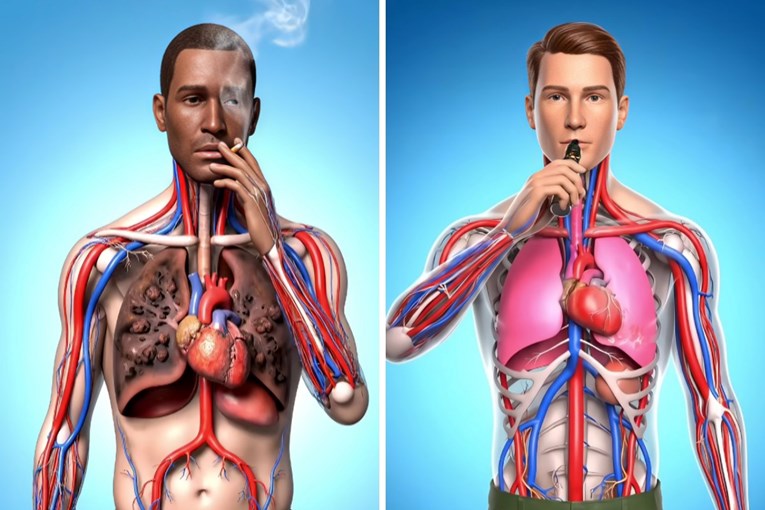
A recent viral simulation has sparked fresh discussion by visually pitting traditional cigarette smoking against vaping to reveal their effects inside the body. The demonstration illustrates how each habit delivers nicotine and other substances, making the differences strikingly clear through animated representations of chemical pathways and buildup.
Traditional cigarettes involve combustion that releases around 7000 chemicals with every puff. Among them are well-known carcinogens such as benzene, formaldehyde, and arsenic. Tar accumulates as a sticky residue in the lungs, carbon monoxide reduces oxygen transport in the blood, and tobacco-specific nitrosamines can trigger harmful DNA changes over time. These factors contribute to severe risks for cancer, lung diseases, and heart problems.
Vaping works by heating a liquid to create an aerosol rather than burning tobacco. This process generates far fewer toxic chemicals, with estimates suggesting up to 95 percent less harm compared to cigarette smoke. Organizations like the UK’s National Health Service have highlighted that switching to vaping can substantially decrease exposure to toxins associated with cancer, serious respiratory issues, and cardiovascular events such as heart attacks or strokes in the shorter and medium term.
Nicotine stays the main addictive element in most vape products, raising heart rate and constricting blood vessels regardless of delivery method. Some e-liquids or the heating coils can still produce formaldehyde, which irritates tissues and links to elevated cancer risks in certain scenarios. While the simulation shows lighter visible traces from vapor compared to the heavy residue from smoke, experts emphasize that reduced immediate damage does not eliminate all concerns, particularly with prolonged use.
Health authorities including the World Health Organization point out that nicotine affects one in five adults worldwide, keeping addiction widespread. For smokers struggling to quit, vaping often serves as an effective harm-reduction tool to lower overall toxin intake. However, it remains far from risk-free, and non-smokers should avoid starting either habit under the false impression of complete safety.
Recent studies from Johns Hopkins Medicine reinforce that exclusive vaping connects to increased chances of chronic obstructive pulmonary disease and possibly higher blood pressure in some age groups. Traditional smoking shows much stronger links to a broader range of conditions including heart disease and diabetes. Dual use tends to mirror the higher risks of cigarettes alone.
The simulation’s visuals effectively underscore why many experts view vaping as a less damaging option for those unable to stop nicotine through other approaches. Public understanding sometimes lags, with misconceptions persisting that vaping equals or exceeds smoking’s dangers. Clear messaging from physicians and health bodies helps align perceptions with the evidence.
What are your experiences or thoughts on choosing between smoking and vaping for harm reduction in the comments?




