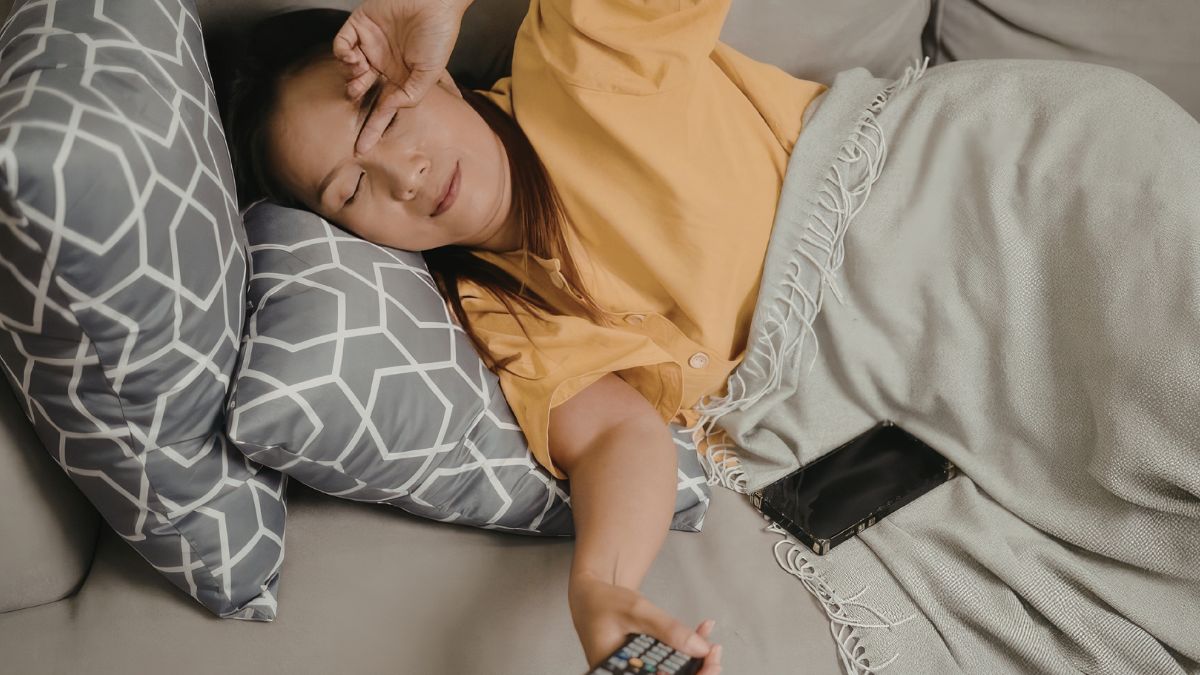
Falling asleep with the television running is one of those habits that enormous numbers of people share but rarely examine too closely. It feels harmless enough — the familiar noise fills the silence, the glow provides a kind of ambient comfort, and before long you drift off without the restless quality that sometimes comes with a completely dark and quiet room. Sleep experts, however, have a fairly consistent view on the matter, and it is not particularly encouraging for anyone who has built their bedtime routine around a running television. The research points to several real costs, though it also acknowledges that the picture is nuanced enough that a blanket verdict would be too simple.
The most immediate problem is that television makes it easy to stay awake longer than intended. Adults generally need around eight hours of sleep per night, and shortfalls accumulate over time into what researchers call sleep debt — a deficit that affects concentration, mood, cognitive function, and long-term physical health. The television is specifically good at extending wakefulness because it is designed to be engaging. The promise of just one more episode is built into the medium, and even when you are not actively watching, the sound of dialogue and changing audio levels keeps the brain partially engaged in a way that postpones the deeper relaxation that quality sleep requires.
Blue light exposure is a second, well-documented concern. Television screens, like phones and laptops, emit blue light that suppresses melatonin production. Melatonin is the hormone that signals to the body that nighttime has arrived and sleep should begin, and reducing it makes the brain harder to switch into a restful state. The result is not just difficulty falling asleep but a reduction in sleep quality even when sleep does occur, since the body’s internal clock has been partially disrupted by the light cues it was receiving up until the moment of unconsciousness. The screen being further from your face than a phone or tablet does reduce the intensity of this effect somewhat, but it does not eliminate it.
Beyond light and timing, there is the question of cognitive stimulation. Falling asleep requires the brain to gradually reduce its activity level, moving from wakefulness through lighter stages of sleep into the deeper, more restorative phases. Television works against this process because it continuously provides new input — changing sounds, sudden volume spikes, dramatic music, breaking news, or unexpected plot developments. Even with eyes closed, the brain continues processing auditory information, which can result in shallower, less restful sleep and, as some people have noticed, more vivid or unsettling dreams shaped by whatever happened to be playing while they were drifting off.
The health consequences extend further than just feeling tired. Poor sleep quality has well-established links to elevated blood pressure, weakened immune function, and impaired memory consolidation. A 2019 study found an association between sleeping in the presence of artificial light — including the light from a television — and an increased risk of weight gain. What made this finding particularly striking was that the association persisted even among participants who reported no significant reduction in the total amount or subjective quality of their sleep. In other words, the effect appeared to be linked specifically to the light exposure itself rather than simply to the disrupted sleep it causes, suggesting the body is responding to light signals in ways that influence metabolism independently of how rested a person feels.
That said, sleep experts also note that rigid rules need to be balanced against individual reality. Some people find television genuinely calming rather than stimulating — they do not follow the content but instead use the ambient sound as a kind of white noise that masks the environmental quiet they find anxiety-provoking. A television placed at a reasonable distance, tuned to something familiar and low-key rather than dramatic or news-heavy, may function similarly to the background noise machines that sleep specialists sometimes recommend for people who struggle with silence. A 2012 study suggested that inhabiting familiar fictional worlds can ease psychological stress and help people regain a sense of calm after difficult days, which provides at least some support for the intuition many people have about rewatching a comfortable old series at bedtime.
The cleaner resolution, for most people, is probably a sleep timer. Getting whatever settling effect the television provides during the falling-asleep phase and then cutting it off before the disruption it causes during sleep becomes the dominant factor is a reasonable middle path, rather than either insisting on complete darkness and silence or running content through the night.
The brain’s auditory system is actually one of the last to shut down during sleep — it continues monitoring sounds for potential threats even in deep sleep, which is why loud noises can wake you from a dead sleep while your eyes and other senses are essentially offline. Melatonin was only isolated and identified as a distinct hormone in 1958 by Aaron Lerner at Yale, meaning everything we now know about its role in sleep regulation has been discovered in the last few decades. And the television industry has long known that late-night programming with monotonous pacing keeps people watching longer, not because they are engaged but because the low-stimulation format prevents them from fully waking up enough to turn it off — which is either a fascinating design insight or a mildly unsettling one, depending on how you look at it.
Do you fall asleep with the TV on, and do you think it affects how well you sleep? Share your thoughts in the comments.




