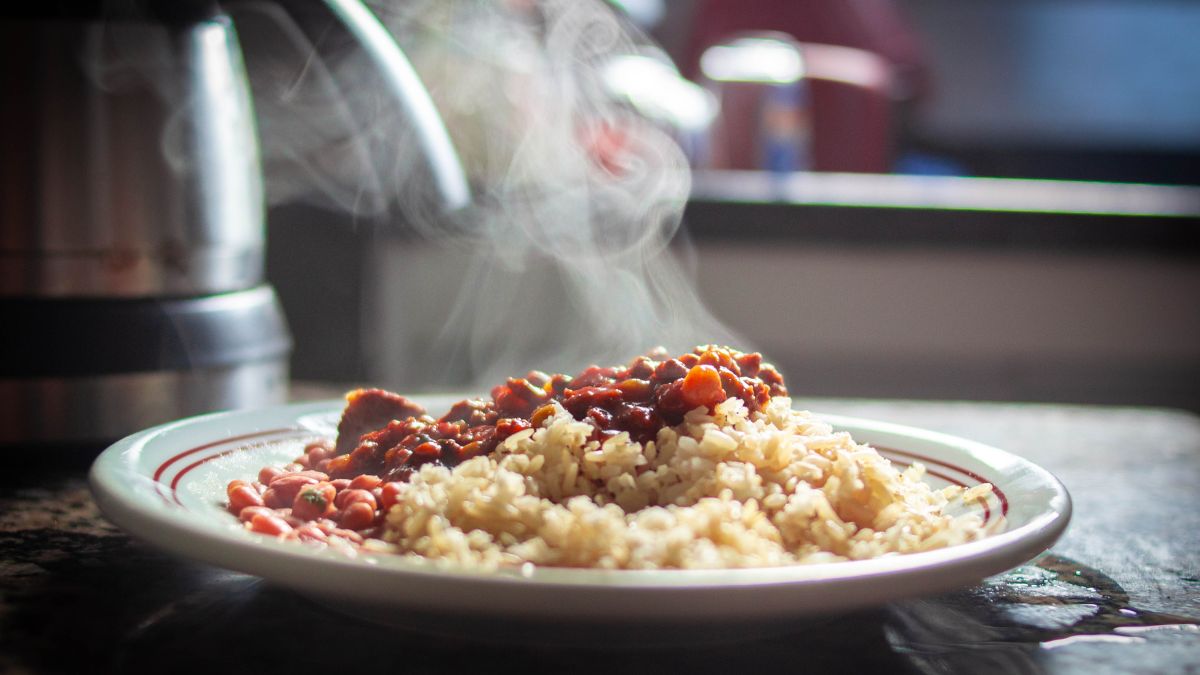
Many people have heard the old warning that reheating rice can lead to food poisoning, and it often gets passed down as a firm kitchen rule. The concern is real, but the danger does not come from the reheating step itself. Instead, problems arise when cooked rice sits out too long at room temperature, allowing certain bacteria to thrive and create toxins. Understanding the science behind this helps clear up the confusion and lets you enjoy leftovers safely.
The main culprit is a bacterium called Bacillus cereus, which is naturally present in raw rice. These bacteria form hardy spores that easily survive the boiling process during cooking. If you leave the warm rice on the counter for a couple of hours or longer, the spores can activate, multiply rapidly, and produce heat-resistant toxins. Reheating the rice later kills off active bacteria but does nothing to destroy those already-formed toxins, which is why symptoms can still appear even after the dish is piping hot again.
Symptoms from this type of food poisoning usually include nausea, vomiting, and diarrhea, often starting within a few hours of eating. In most cases, the illness passes quickly, within about a day, but it can feel quite miserable while it lasts. The risk grows higher if rice is left in a covered pot that cools slowly or if it gets reheated multiple times without proper storage in between. Quick cooling and refrigeration make all the difference in preventing bacterial growth.
To handle rice safely after cooking, spread it out in shallow containers so it cools faster instead of keeping it piled in the original pot. Aim to get it into the refrigerator within one hour of finishing cooking, and store it for no more than one or two days. When you want to reheat a portion, make sure it heats evenly throughout until steaming hot. Always check for any off smells or slimy texture before eating, and toss it if anything seems wrong. Dividing leftovers into smaller servings helps avoid reheating the whole batch repeatedly, which adds unnecessary risk.
Experts agree that proper food handling turns what seems like a risky food into a perfectly safe one. Rice is not uniquely dangerous compared to other starchy leftovers like pasta or potatoes, which can harbor the same bacteria under poor conditions. The key is speed in cooling and consistent refrigeration rather than avoiding reheating altogether. Following these simple steps lets you savor fried rice or rice salads without worry.
Have you ever had a bad experience with leftover rice, or do you have a favorite way to store and reheat it safely? Share your thoughts in the comments.




