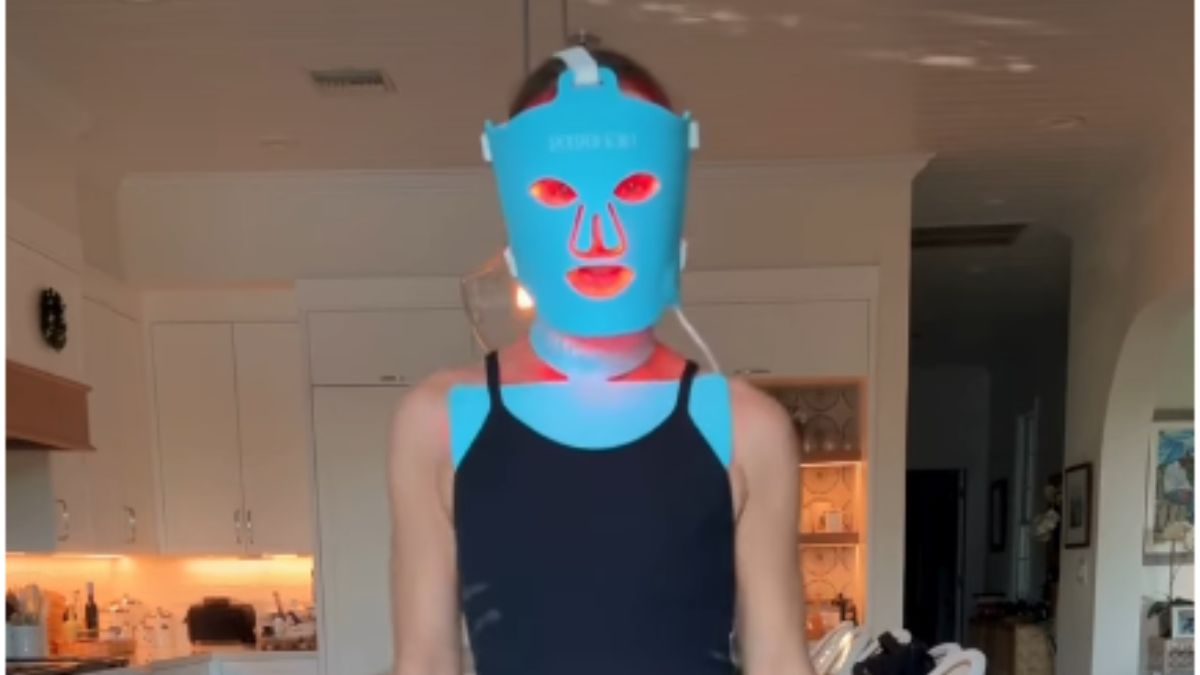
If you have spent any time on TikTok recently, you may have noticed your feed filling up with an increasingly intense brand of self-improvement content. First came the elaborate planning videos, complete with iPads, Apple Pencils, and color-coded spreadsheets mapping out personal transformation goals for the year. Then came the screenshot-heavy notes app posts detailing exhaustive to-do lists for physical and mental wellbeing that seemed to require at least five extra hours in the day. Now there is a name for all of it: wellnessmaxxing, and it has taken over social media in a big way.
At its core, wellnessmaxxing is the practice of maximizing time by stacking as many wellness-related activities as possible into a single moment, a concept also known as habit-stacking. In practice, it can look like wearing under-eye patches while answering emails, or hopping on a treadmill while wearing a red light therapy mask. As reported by Byrdie, the trend sits at the intersection of productivity culture and self-care, and its most enthusiastic advocates seem to require serious equipment worth several hundred dollars at minimum, along with the goal-obsessed mindset of a startup founder.
What is striking about the language surrounding wellnessmaxxing is how closely it mirrors corporate productivity culture. The vocabulary tends to blend the tone of a human resources manager with the fervor of a motivational speaker, and in a society where a growing number of people already feel burned out from work, applying that same framework to personal wellbeing raises some pointed questions. The original concept of habit-stacking, as a behavioral model, was actually far simpler: the idea was to build new routines by anchoring them to existing ones, so that one habitual action becomes a trigger for another. That relatively modest approach has since evolved into something closer to what project managers might call task compression, cramming as many simultaneous functions into as little time as possible.
The roots of this trend can be traced back to the post-pandemic wave of remote work, when suddenly it became possible to blur the lines between professional and personal tasks throughout the day. Taking a work call from a grocery store or slipping out early to make a 4 p.m. gym session became normal for many people, and what started as a practical response to a new way of living gradually expanded into a broader philosophy that treats every free moment as wasted potential. The social media dimension then layered a performance element on top of everything, turning personal wellbeing into something to be displayed and optimized rather than simply experienced.
Mental health professionals have raised concerns about where this trend can lead. Dr. Sanam Hafeez, a neuropsychologist based in New York, notes that while dedication to self-improvement can be genuinely positive, it risks sliding into compulsive territory. “It’s clearly unhealthy when it starts replacing hobbies, work, socializing, or obligations,” she explained, adding that the moment the pursuit stops feeling enjoyable and starts generating anxiety, a line has been crossed. Psychologist Dr. Nona Kocher echoes this concern, pointing out that no level of physical optimization guarantees happiness, security, or success in other areas of life. “Regardless of how objectively attractive someone is, that doesn’t guarantee a happy marriage or partnership, material comfort, health, a life free of worries or tragedies, or career success,” she said.
There is also a financial dimension worth considering. When you factor in the gadgets, supplements, skincare tools, and courses that wellnessmaxxing content tends to promote, the pursuit of optimal health becomes a surprisingly expensive undertaking. The trend connects closely to the parallel rise of looksmaxxing, a more openly appearance-focused movement, and both share a tendency to treat the body as a project whose visible results serve as evidence of discipline and commitment. Critics argue that wellness has shifted from something people experience to something people perform, and that ironically, the relentless pursuit of self-care may itself be a significant source of stress and burnout.
The concept of habit-stacking as a wellness strategy has its academic roots in behavioral psychology, particularly in research on habit formation and cue-routine-reward loops popularized by scholars like B.J. Fogg, whose work on tiny habits influenced a generation of productivity and self-help thinking. The broader wellness industry, which encompasses everything from supplements and fitness technology to mindfulness apps and sleep tracking, was valued at over $6 trillion globally in recent years and continues to grow rapidly. TikTok’s role in accelerating niche wellness trends is well documented, with the platform’s algorithm making it unusually effective at turning fringe self-improvement practices into mainstream phenomena within weeks.
Have you tried wellnessmaxxing or habit-stacking in your own routine, and do you think it genuinely helps or just adds more pressure? Share your thoughts in the comments.




