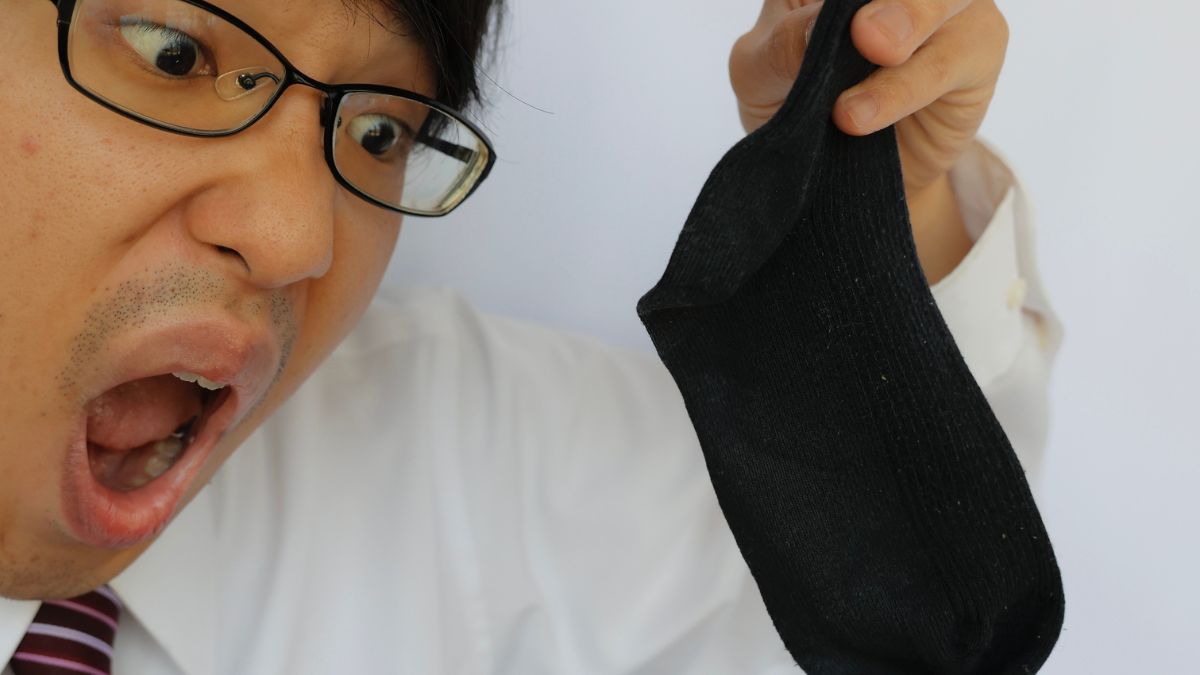
Most travelers think carefully about what to pack, but far fewer give much thought to what they put on their feet before boarding. Kris Major, a British flight attendant with 25 years of experience working flights ranging from short hops to 14-hour long-haul routes, has issued a surprisingly specific piece of advice for anyone flying at night: skip the black socks. What sounds like a trivial style suggestion turns out to have a genuine practical reason behind it, and it is one that most passengers would never think to consider.
The issue comes down to visibility in a dimmed cabin. On overnight and long-haul flights, passengers frequently stretch out and let their feet drift into the aisle as they try to sleep. In low lighting, crew members moving swiftly through that narrow corridor simply may not spot dark-colored feet and ankles until it is too late. Major notes that flight attendants are often moving quickly through the aisle, sometimes carrying hot beverages, squeezing past bags and outstretched arms, all while trying not to disturb sleeping passengers. Anything that blends into the floor in poor lighting becomes a tripping hazard, and the consequences of a crew member going down mid-flight, potentially with a tray of hot drinks, are obvious. The fix, according to Major, is straightforward: opt for lighter-colored socks that are easier to spot against the floor in a darkened cabin.
While that conversation was unfolding in aviation circles, a separate discussion on Reddit tackled another sock-related question that frequent flyers care deeply about. A user asked about the real benefits of wearing compression socks during flights, and the responses that followed were both enthusiastic and illuminating. One traveler shared a perspective that will resonate with many active people who assume they are not at risk: “I thought I didn’t need them because I’m a runner and in pretty good shape. And then I realized that runners are actually more prone to clotting when sitting for a long time. Apparently it has to do with larger blood vessels and blood flow slowing down significantly in those conditions.”
Clothes for wear on a international flight!
by u/Confusedmind75 in TravelHacks
That same traveler described what happened when he finally gave compression socks a proper try: “Recently I flew ten hours with compression socks. Complete game changer. I felt much fresher after landing and walked around the entire city that day. Normally I could never have done that.” Another Reddit user echoed the sentiment with a telling comparison: “Yes. I wore them on the way to London and felt great. I forgot them on the way back and could barely walk through customs.” These firsthand accounts reflect what medical professionals have long recommended, particularly for those on flights lasting more than four hours.
Long-haul air travel presents a unique set of challenges for the human body that many passengers underestimate. The combination of prolonged sitting, reduced cabin pressure, low humidity, and limited movement creates conditions that slow blood circulation, particularly in the lower legs. This can lead to discomfort and swelling, and in more serious cases, to deep vein thrombosis, a condition in which blood clots form in the deep veins of the legs. Medical guidance consistently recommends getting up and walking the aisle periodically, staying hydrated, and wearing compression garments on flights lasting longer than four hours. Compression socks work by applying gentle graduated pressure to the lower leg, encouraging blood to flow upward and reducing the pooling that causes swelling and clot risk. They are widely available in pharmacies and travel stores and do not require a prescription, though travelers with existing circulatory conditions are advised to consult a doctor before use. Flight attendants, who spend far more time on their feet in the pressurized environment of a plane cabin than any passenger, have long relied on compression garments as a professional staple.
Did you know about either of these sock rules before reading this, and do you have any other flight comfort tips that have made a real difference for you? Share your thoughts in the comments.




