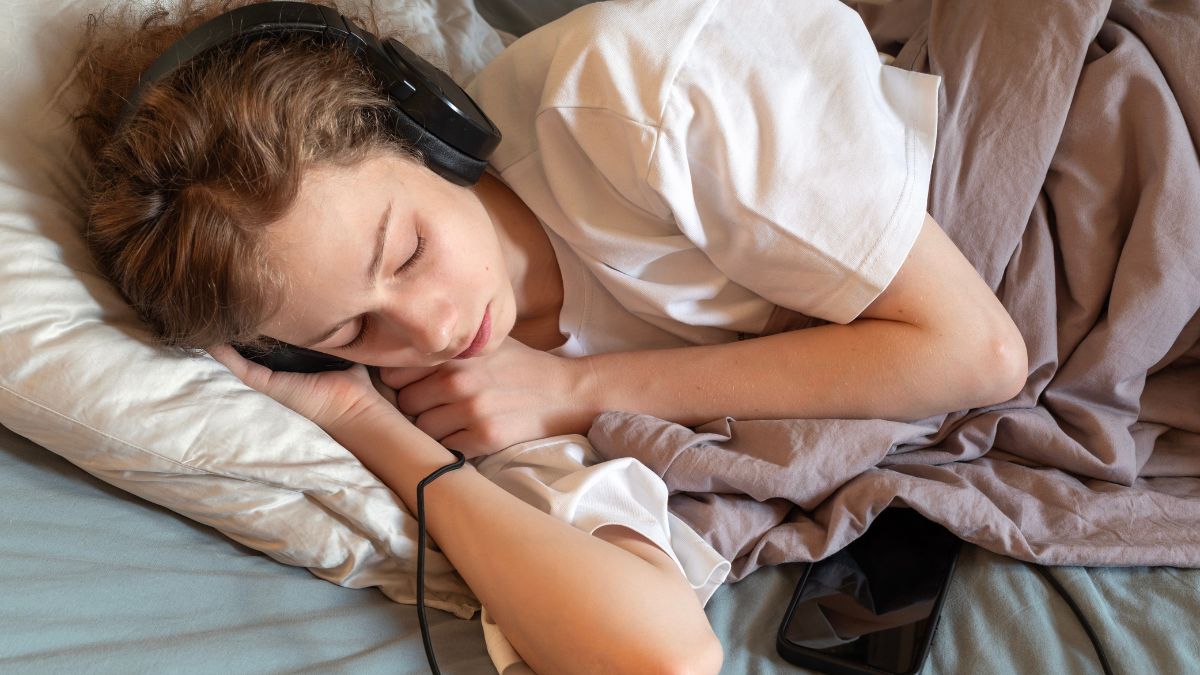
A growing body of evidence suggests that teenagers across the United States are getting far less sleep than they need, and the situation has been quietly worsening for nearly two decades. What many assume to be a straightforward problem caused by smartphones turns out to be far more complex. A new study has shed light on just how serious this issue has become, and its findings are raising alarms among pediatric health experts. The consequences of chronic sleep deprivation in adolescents range from anxiety and depression to long-term damage to brain function.
The study, published in the journal JAMA, tracked sleep data over a 16-year period and found that the share of students failing to get adequate nightly rest climbed from 69% in 2007 to nearly 77% in 2023. Researchers also noted a dramatic rise in the number of teenagers sleeping fewer than five hours per night. Dr. Courtney Bancroft, clinical director for digital behavioral health at Northwell Health, described the findings in stark terms. “The main news is that we’re experiencing a sleep crisis among teenagers and it’s getting worse,” she said, adding that “this has grown into a serious public health crisis.”
One of the more surprising revelations of the research is that screen time alone does not fully account for the problem. Adolescents who reported using phones or tablets for fewer than four hours a day were also found to have poor sleep quality. This finding challenges the widely held assumption that simply limiting device use would be enough to fix the issue. According to Dr. Bancroft, a range of everyday factors contribute to restricted sleep regardless of how much time a teen spends staring at a screen.
Long school days, demanding extracurricular schedules, and active social lives all eat into the hours that teenagers need for rest. But perhaps the most underappreciated factor is biological. “In adolescents, there is a shift in the circadian sleep rhythm, which means their brains start functioning on a different schedule than in childhood,” Dr. Bancroft explained. “Because of this, they don’t begin producing melatonin until around 11 PM, which means they simply aren’t sleepy until then.” This natural delay in the body’s sleep-wake cycle makes it genuinely difficult for teenagers to fall asleep at earlier hours, no matter how well-intentioned the rules at home might be.
The mismatch between teenagers’ biological clocks and the demands placed on them by early school start times is at the heart of the crisis. Dr. Bancroft put it plainly: “It all comes down to the biological needs of teenagers and the misalignment of social norms.” The American Academy of Pediatrics has long recommended that middle and high schools not begin classes before 8:30 AM, a guideline that many districts across the country have yet to adopt. Until school schedules are adjusted to better reflect adolescent biology, simply telling teens to go to bed earlier is unlikely to produce meaningful results.
The health fallout from this widespread sleep deprivation is substantial. Chronic lack of sleep in teenagers is linked to anxiety, depression, mood disorders, and even suicidal ideation. Researchers note that the problem affects teenagers across the board, including those who avoid risky behaviors like substance use. “This isn’t a problem that appeared overnight,” Dr. Bancroft said. “The data points to a crisis that slowly developed and accumulated over almost two decades.” Adolescents are recommended to get between eight and ten hours of sleep each night, a target that the vast majority are consistently missing.
While reducing evening screen time and encouraging healthier bedtime habits can certainly help, experts stress that individual behavioral changes are not enough on their own. Addressing this crisis requires changes at a structural level, particularly in how schools schedule their days. Parents, educators, and policymakers all have a role to play in creating conditions that allow teenagers to actually get the rest their developing minds and bodies require.
Sleep is regulated by two main biological processes in the human body: the circadian rhythm, which is the internal 24-hour clock that signals when it is time to sleep or wake, and sleep pressure, which is the accumulation of the chemical adenosine in the brain the longer a person stays awake. During adolescence, the circadian rhythm undergoes a well-documented shift known as sleep phase delay, pushing the natural sleep window later into the night. This is not a matter of laziness or poor habits but a genuine neurological change tied to puberty. The National Sleep Foundation recommends that teenagers between 14 and 17 years of age aim for eight to ten hours of sleep per night, while those aged 13 need slightly more. Insufficient sleep during adolescence has been associated in various studies with impaired memory consolidation, weakened immune function, increased risk of obesity, and poorer academic performance. The brain undergoes significant development throughout the teenage years, and quality sleep is essential for the processes of synaptic pruning and memory formation that take place during this period.
If you have a teenager at home or work in education, share your thoughts on what you think is really driving the sleep crisis among young people in the comments.




