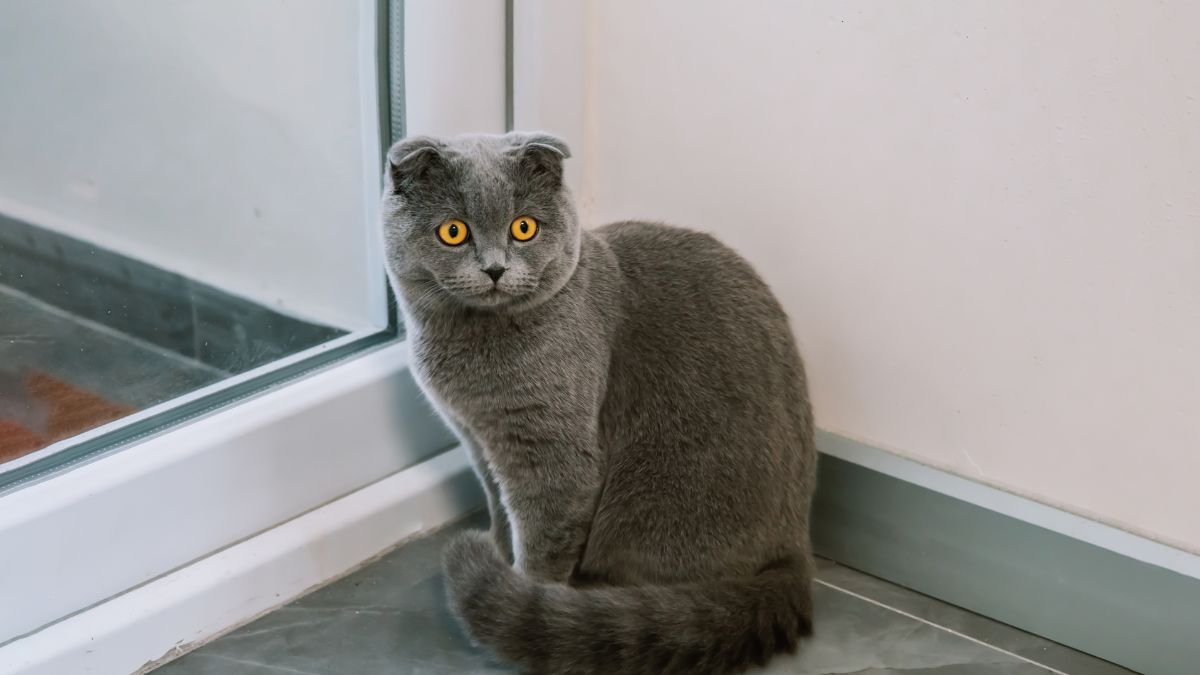
If you share your home with a cat, you have almost certainly witnessed the same dramatic scene play out more than once. The moment the vacuum cleaner roars to life, your cat vanishes from the room faster than you can finish plugging it in. This kind of reaction is far from unusual, as a fear of vacuum cleaners ranks among the most frequently observed stress responses in domestic cats. While it might seem overly dramatic or even amusing to us humans, there are several very real and well-grounded reasons why a cat experiences that machine as a genuine threat.
A major piece of this puzzle comes down to feline biology. Cats possess a far more refined sense of hearing than people do, capable of detecting a much wider range of sound frequencies. While humans typically hear sounds between roughly 20 and 20,000 Hz, cats can register frequencies reaching up to approximately 79,000 Hz, meaning they perceive sounds that are completely inaudible to us. Because of this heightened sensitivity, the noise produced by a running vacuum cleaner hits a cat’s ears with a completely different level of intensity than it does ours. The average vacuum operates at around 70 to 80 decibels, which is generally harmless to human hearing, but for a cat that same noise can feel overwhelming and deeply unpleasant.
Beyond the volume itself, there is also a deeply ingrained survival instinct at play. In the wild, sudden and powerful sounds typically signal danger, whether it is a predator approaching, something collapsing, or another immediate threat in the environment. This has left cats with a powerful fight-or-flight response that activates quickly in uncertain or startling situations. When a vacuum switches on and fills the room with a loud, continuous roar, a cat’s brain does not stop to evaluate whether the object is dangerous. Instead, the instinct kicks in automatically and the safest option becomes escape.
The way a vacuum cleaner moves also contributes to the problem in a significant way. Cats are creatures that deeply value predictability and a sense of control over their surroundings. A vacuum does not move in any consistent or readable pattern. It lurches forward, reverses, turns unexpectedly, and advances toward the cat with no clear logic, which can mimic the erratic movement of a large and threatening animal. On top of that, vacuums generate vibrations through the floor, adding yet another layer of physical discomfort that deepens a cat’s sense of disorientation and unease.
Early life experiences also shape how a cat reacts to household appliances later on. Cats that were gradually introduced to a variety of sounds and objects during the first weeks of their lives tend to adapt far more easily to new stimuli as adults. If a cat encounters a vacuum for the first time as a surprise, or has a particularly startling first experience with one, that negative association can become deeply embedded. A single moment of being cornered by or suddenly exposed to a loud running appliance can be enough for a cat to spend the rest of its life treating that device as something to be avoided at all costs.
It is worth emphasizing that this kind of fearful reaction does not mean anything is wrong with your cat. A fear of loud household appliances is genuinely common among domestic cats and other pets, and vacuum cleaners consistently show up alongside thunderstorms and fireworks as the most frequently reported triggers of stress in cats. In most cases, a frightened cat will simply retreat to a quiet hiding spot and wait it out until the noise stops. It only becomes a concern worth addressing with a veterinarian or animal behavior specialist if the fear is extreme, prolonged, or significantly affecting the cat’s daily quality of life.
On a broader level, understanding feline behavior and sensory capabilities helps pet owners become more attuned to what their animals experience on a daily basis. Domesticated cats, known scientifically as Felis catus, have lived alongside humans for thousands of years, yet many of their instincts remain closely tied to their wild ancestors. Domestic cats retain the same basic nervous system structure as their wild relatives, which is why stimuli that seem harmless to us can still trigger hardwired survival responses in them. Animal behaviorists generally recommend a process called desensitization for pets with strong fears, which involves slowly and positively introducing the feared object at a low intensity over time. Patience and consistency are key, and forcing a cat to confront its fear directly almost always makes things worse rather than better.
If your cat goes into full panic mode every time you pull out the vacuum, share your experience and any tips that have worked for you in the comments.




