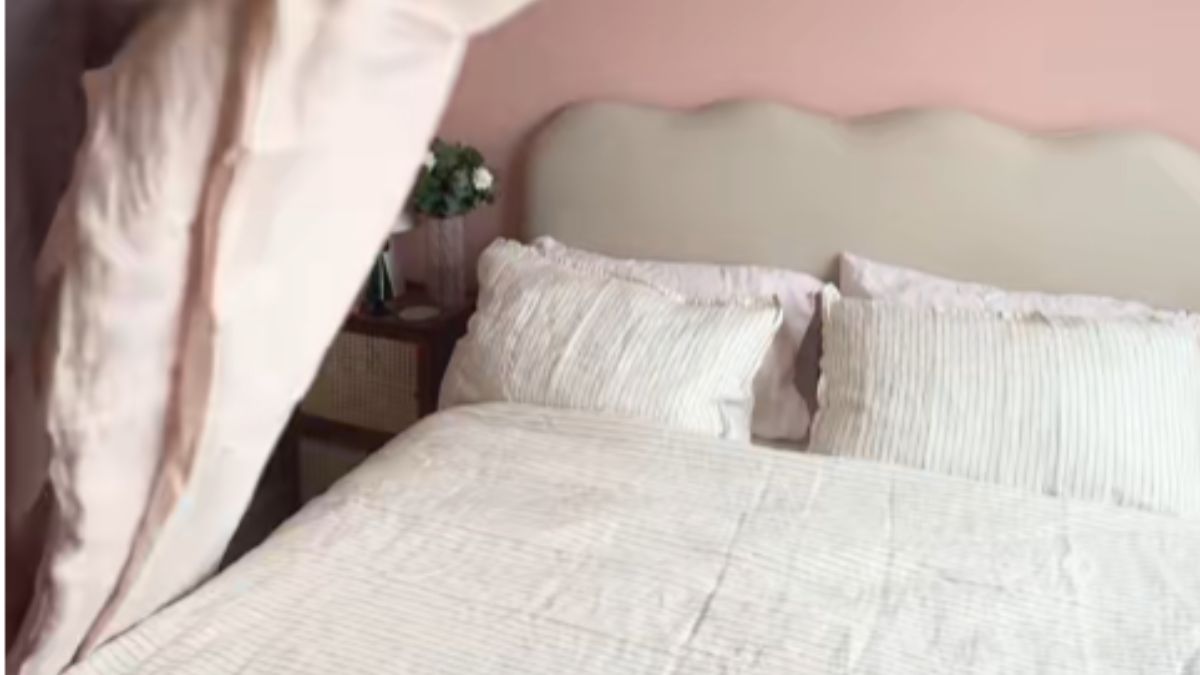
When Erica Stolman Dowdy and her husband first tried the Scandinavian sleep method, they had no idea it even had a name. All they knew was that they had never slept so well in their lives. The California-based couple was staying at a hotel in Copenhagen when they encountered something that immediately set the room apart from any bed they had shared before: instead of one shared duvet, there were two individual ones waiting for them. It was different, but it worked, and they have not looked back since.
The appeal made immediate sense given their mismatched sleep habits. Stolman Dowdy, founder of Fashion Lush, put it plainly: “We’ve been together for 13 years. The days of cuddling in sleep are over.” Her husband likes to wrap himself up tightly in the blankets, while she prefers sleeping with one leg outside the covers entirely. Two separate duvets meant neither of them had to negotiate or compromise for a single night. The solution that had been hiding in plain sight across Scandinavia turned out to be exactly what they needed.
For those who grew up in Denmark, Sweden, or Norway, there is nothing remotely unusual about this arrangement. Christina Richardson, a Swedish-born interior designer now based in the United States, explained to Elle Decor that she genuinely did not know things were done any differently until she began traveling to America. “I wasn’t even aware of any other way before I started traveling to the United States,” she said. In some Scandinavian homes, the setup goes even further, with two separate mattresses placed side by side on a single large bed frame, each person occupying their own fully independent sleep zone.
The phrase “Scandinavian sleep method” has taken on a life of its own online, spreading far beyond its origins through social media and lifestyle content. Creators like Cecilia Blomdahl from Svalbard and Stolman Dowdy herself helped carry the concept to a global audience. Blomdahl has spoken about the particular value of individual duvets during winter months, noting that each person can select the weight, warmth level, and material that suits them best. “You can tailor your sleep schedule to your own needs, instead of making compromises with your partner,” she explained. The pitch is less about separateness and more about the freedom to sleep exactly as your body requires.
@stephkaluza The two duvet life is where it’s at 😌
♬ sing me to sleep – i don't like mirrors
What makes this more than a quirky bedding preference is what it reveals about the way sleep habits can quietly erode a relationship. Dr. Alexandra Solomon, a licensed clinical psychologist, marriage therapist, and host of the Reimagining Love podcast, noted that couples who manage to sleep peacefully together without any friction are genuinely rare. “Couples who don’t have sleep problems are a miracle,” she said. She also pointed out that Americans in particular tend to carry a romanticized idea that sharing a bed seamlessly is simply what loving couples do, which means that struggling with it can feel like a quiet verdict on the relationship itself. “If you’re struggling with that, it starts to sound like a condemnation: something is wrong with us.” In that light, the Scandinavian approach offers something more than comfort; it reframes the whole conversation.
Richardson has even worked with clients who swear by the method: “I’ve had a few clients who use this method and haven’t divorced yet,” she joked. The practical styling challenge of two duvets on one bed is real but entirely solvable. She typically chooses two standard-sized duvets in matching colors and patterns, folds each one in half, and lays them on opposite sides of the bed. The small gap that forms in the middle is easily handled with a well-placed arrangement of decorative pillows and a throw blanket along the foot of the bed. Liza Berglund Laserow of the Scandinavian textile company Nordic Knots takes a different approach, draping both duvets horizontally across the bed and layering a light coverlet over them for a unified, polished look. Her focus is on “proportion, symmetry, and the visual impression of the bed in the room.”
One practical detail worth noting is that the Scandinavian method works best with only a fitted bottom sheet and no top sheet, which means the individual duvets will need to be laundered more frequently. Richardson’s advice to anyone just getting started is to begin with more affordable bedding first. “If it doesn’t work out, you haven’t invested thousands of dollars,” she said, before adding that she doubts anyone who genuinely tries the method would ever want to go back. “You’ll never return,” she concluded.
Sleep researchers have found that even slight differences in body temperature between partners can cause significant sleep disruption throughout the night, with one person’s tossing and turning registering measurably in the other’s sleep data. Scandinavian countries consistently rank among the top in global sleep quality surveys, which might not be entirely unrelated to their bedding philosophy. The duvet itself, as a concept, actually traces its origins to rural Scandinavia, where farmers stuffed cloth sacks with down feathers to survive brutal winters long before the rest of the world caught on.
Have you tried the Scandinavian sleep method, or would you consider giving it a go? Share your thoughts in the comments.




