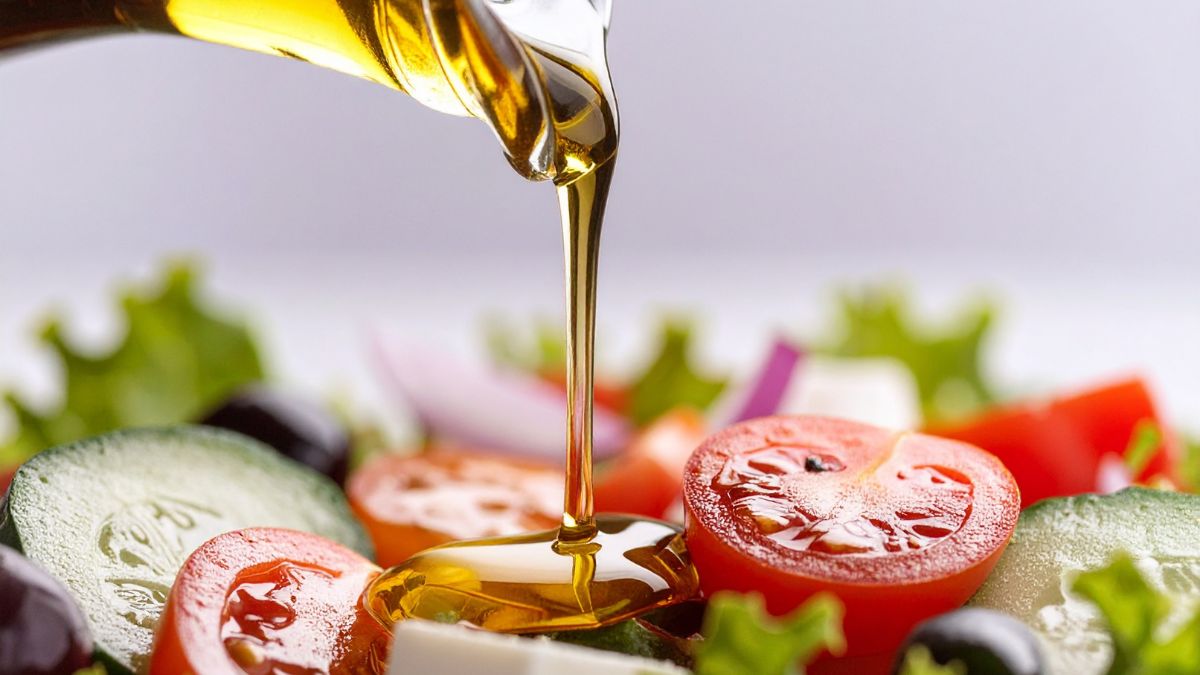
Olive oil has long held a place of honor in conversations about healthy eating, and for good reason. Its connection to heart health, longevity, and disease prevention has been backed by decades of research. But while most people know that olive oil is good for them, far fewer understand that there is actually an upper limit to how much you should be consuming each day. A cardiologist is now drawing attention to that line and explaining why crossing it may not do your heart any favors.
A long-term study that followed participants over 28 years found that consuming a minimum of roughly 7 grams of olive oil per day, which works out to about half a tablespoon, was linked to a meaningfully lower risk of cardiovascular disease and certain types of cancer. The research highlights not just the benefits of including olive oil in your diet, but also the importance of staying within a specific range. According to reporting by Eating Well, the key to getting the most out of olive oil lies in both consistency and precision. More is not always better, and understanding why requires a closer look at what the science actually says.
Dr. Annirudh Balachandran, a cardiologist at Duke University School of Medicine, weighed in on the findings and made clear that piling on extra olive oil does not translate into extra protection for your heart. “Replacing saturated fats with unsaturated fats of plant origin, such as extra virgin olive oil, brings clear health benefits,” he said. He also emphasized that extra virgin olive oil is the superior choice among the available varieties because it undergoes the least processing and retains the highest nutritional value. The type of olive oil you use, not just the amount, matters when it comes to getting the full benefit.
Dr. Balachandran was specific about the recommended daily window. “We recommend a minimum daily intake of about 7 grams, about half a tablespoon, but should not exceed 20 grams, which is approximately one and a half tablespoons,” he explained. He added that “every 10 grams of olive oil within those limits is associated with a lower risk of heart and vascular problems.” This is supported by the well-known PREDIMED study, one of the most influential nutrition trials ever conducted, which found that this kind of risk reduction amounts to roughly 10 percent. Staying within the recommended range appears to be where the real protective effect lives.
When asked why there is a ceiling on the benefits, Dr. Balachandran gave a straightforward answer: “Above 20 grams daily there are no additional proven benefits for heart and vascular health. In the end, excess calories don’t help anyone.” This is an important reminder that even healthy foods contribute to your overall caloric intake, and olive oil is quite calorie-dense. A single tablespoon contains around 120 calories, so going well beyond the recommended amount can quietly add up over the course of a day. Balance remains a central principle of any genuinely heart-healthy diet.
One of the practical challenges with olive oil is that most people pour it freely from the bottle without measuring, making it easy to overshoot the 20-gram upper limit across multiple meals. Even experienced cooks tend to underestimate how much they are actually using. A simple solution that experts suggest is investing in an oil dispenser or pourer that allows for more controlled and measured portions. Models with a cap help preserve the oil’s freshness, aroma, and antioxidant content, which can degrade when the oil is repeatedly exposed to air. This small kitchen upgrade can make a meaningful difference in how well you manage your daily intake.
Olive oil is a cornerstone of the Mediterranean diet, a way of eating that has been studied extensively and is consistently associated with lower rates of heart disease, stroke, and metabolic disorders. Extra virgin olive oil, the least refined grade, is produced purely through mechanical pressing without the use of heat or chemicals, which preserves its natural polyphenols and antioxidants. These compounds, including oleocanthal and oleuropein, are believed to be responsible for much of olive oil’s anti-inflammatory and cardiovascular-protective properties. The smoke point of extra virgin olive oil is around 375 to 405 degrees Fahrenheit, which makes it suitable for low to medium heat cooking as well as raw applications like dressings and dips. Olive trees themselves are remarkably long-lived, with some cultivated trees in the Mediterranean region estimated to be over a thousand years old, and the fruit they produce has been a dietary staple in that part of the world for millennia.
If you have been drizzling olive oil freely and assuming more is better, now you have the numbers to work with — at least half a tablespoon daily, and no more than about one and a half tablespoons, with extra virgin being the gold standard. Share your thoughts on olive oil and your own experience with it in the comments.




