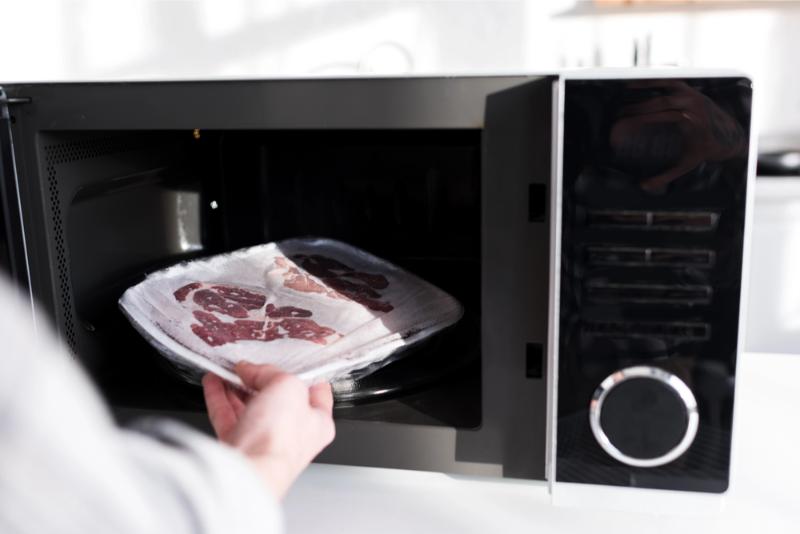
We have all been there — it’s late afternoon, dinner time is fast approaching, and you suddenly realize you completely forgot to take the meat out of the freezer. The microwave seems like the obvious rescue, sitting right there on the counter and promising to fix the problem in minutes. But is tossing a frozen chicken breast or a pound of ground beef into the microwave actually a smart move, or does it come with hidden downsides? The answer is a bit of both, and understanding what really happens during the process can help you make a better call the next time you are caught off guard.
Most modern microwaves come equipped with a dedicated defrost function, which operates at a lower power level and cycles on and off in intervals rather than running continuously. The way it works is fairly straightforward: microwaves excite the water molecules inside the food, and that energy causes the ice to gradually melt. The problem is that this heating does not happen in a perfectly uniform way, meaning that the outer edges or thinner parts of the meat can begin to actually cook before the center has even thawed out. This uneven process is one of the main reasons why microwave defrosting gets a bad reputation among home cooks and food safety professionals alike.
If you do decide to use the microwave, there are a few steps that can make the outcome much better. Running the defrost cycle on the lowest appropriate power setting is a good starting point, and flipping or repositioning the meat at regular intervals helps distribute the heat more evenly across the surface. Keeping each defrost session short and checking on the meat between rounds gives you much more control and reduces the chance that any portion of it will start to overcook. The single most important rule, however, is that meat defrosted in the microwave must go directly onto the heat source immediately afterward. Because some sections may have already warmed into a temperature range where bacteria multiply rapidly, leaving microwave-defrosted meat sitting at room temperature even briefly is a genuine food safety risk.
The biggest thing the microwave has going for it in this situation is pure speed. What would take anywhere from several hours to an entire overnight session in the refrigerator can be handled in just a few minutes on the kitchen counter. That convenience is real, and on a busy weeknight when plans change suddenly, it can genuinely save dinner. The tradeoffs, however, are also real: the texture of chicken and ground meat in particular tends to suffer when exposed to uneven microwave heat, and the margin for error when it comes to food safety is much smaller than with slower methods.
For those who want a faster alternative to the refrigerator without the risks that come with the microwave, the cold water method is a solid middle ground. You place the meat in a tightly sealed zip-top bag and submerge it in a bowl of cold water, swapping out the water roughly every half hour to keep temperatures safe. Depending on the size and thickness of the cut, this method can thaw meat in under an hour while keeping it in a consistently safe temperature zone throughout the process. It takes a bit more attention than either the microwave or the fridge, but many cooks consider it the best balance of speed and quality.
The refrigerator remains the gold standard for defrosting from a food safety and texture standpoint, even if it requires the most planning ahead. Meat kept cold throughout the thawing process stays well within the safe temperature range, and because the transition is gradual, the cell structure of the meat holds up better, which generally means a juicier and more evenly cooked final result. The U.S. Department of Agriculture recommends the refrigerator as the preferred method for this reason, noting that meat thawed this way can even be safely refrozen without cooking it first, which is not the case with other defrosting approaches.
It is also worth knowing that certain cuts are more forgiving than others when it comes to defrosting methods. Thin cuts like chicken cutlets or ground meat patties thaw relatively quickly in cold water or a low-power microwave, while large roasts or whole chickens really do need the full refrigerator treatment to thaw safely and evenly all the way through. Ground meat is particularly sensitive to texture changes from uneven heat, which is why many cooks who frequently use it find it worthwhile to portion it into thinner, flatter freezer bags before storing it, making future defrosting faster and more reliable regardless of which method they choose.
If you have a preferred way of defrosting meat or a trick that has saved dinner more times than you can count, share it in the comments.




