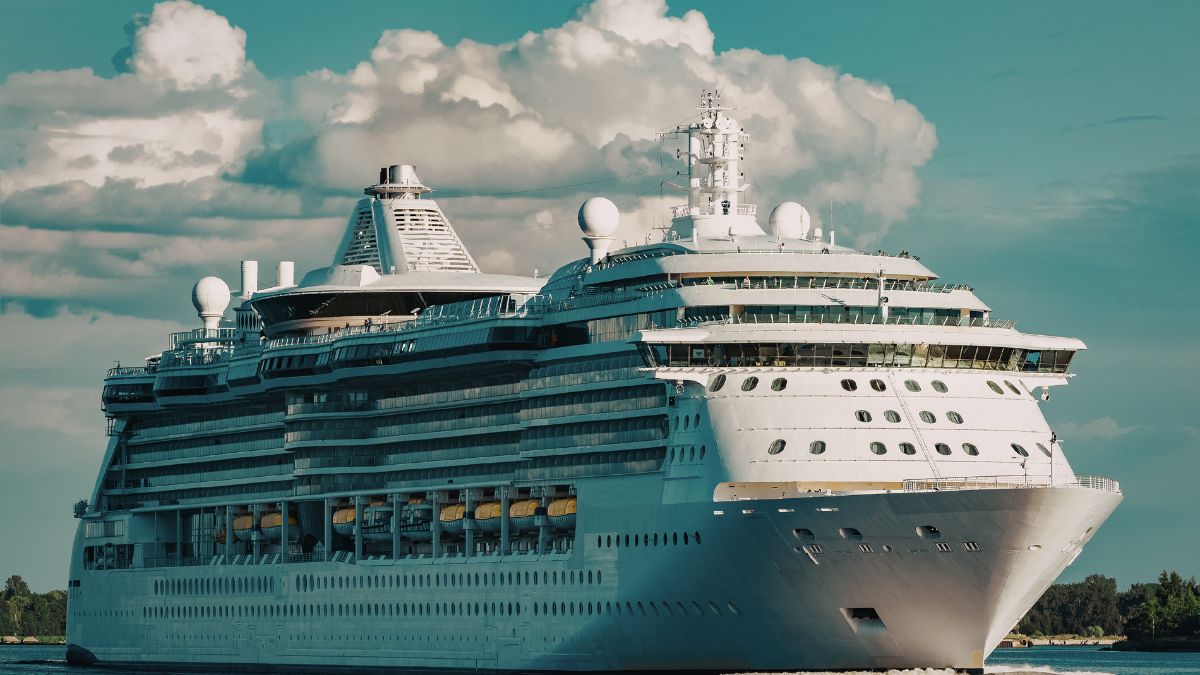
Cruise ship passengers spend their days soaking up sun on deck, sampling buffets, and watching the ocean pass by, largely unaware of the intricate world operating just behind the scenes. While guests are busy relaxing, the crew members keeping everything running smoothly have quietly developed a whole vocabulary of their own, one designed to let them communicate freely about their work and the people on board. A former cruise ship employee recently resurfaced on Reddit with an inside look at this crew slang, and the post has gone viral all over again. It turns out the language of life at sea is far more colorful than most passengers ever realize.
The former crew member explained that this informal jargon is used daily by everyone from the people scrubbing decks before dawn to those serving drinks late into the night. He shared six specific terms and noted that passengers who happen to know them might actually make a crew member’s day by dropping one into conversation. “The staff on board use a whole range of slang words and phrases when talking to each other. A passenger would certainly brighten a crew member’s day if they used one of them,” he wrote. He did add a word of caution, however, noting that some terms are warning signals worth recognizing so you know when someone is not to be disturbed.
Perhaps the most memorable term from his list is “banana,” which has nothing to do with the fruit. When a crew member makes a mistake and gets reprimanded by a supervisor, their colleagues will say they “got a banana.” It is a colorful way to describe a dressing-down that keeps the mood light even when the situation is not. Understanding what it means gives passengers a quiet peek into the social dynamics of a ship’s working hierarchy, where a single slip can travel fast through the tight-knit community below deck.
19 Pieces Of Advice From A Former Cruise Ships Employee
by u/CruiseLover188 in Cruise
Just as entertaining is the term “mamagayo,” which refers to a crew member who is skipping out on their responsibilities. “A crew member who spends time in their cabin or is hiding somewhere while on duty is called a mamagayo,” the former employee explained. Every workplace has someone like this, but on a ship where the team is isolated from the rest of the world and working in close quarters for months at a time, this kind of behavior tends to get noticed very quickly. It is the sort of insider word that captures entire workplace dynamics in just four syllables.
When equipment breaks down or gets damaged on the job, the crew has a philosophy for dealing with it that might surprise guests accustomed to the pristine, polished image cruise lines project. Rather than stressing over the loss, crew members simply shrug and say “Company rich,” a shorthand acknowledgment that the corporation behind the massive vessel can handle the cost. It reflects a broader attitude toward the power imbalance between workers and management that runs through several of the phrases the former employee described. Along similar lines, the expression “Mucho Trabaho, Poco Denaro,” meaning “Lots of work, little money,” is reportedly most common among those in the most physically demanding and least well-compensated positions on board.
When a crew member is completely swamped with work and has no time to spare, they will say “I’m lagege,” which signals that they are under serious pressure and probably should not be interrupted. Knowing this term could genuinely be useful for passengers who want to be respectful of the staff’s time during busy stretches of the voyage. The former crew member wrapped up his post with a broader appeal for passengers to treat ship workers with consideration, pointing out that many of them work up to 15 hours a day while spending months away from their families and loved ones.
There is one term on the list that passengers can actively use to make a positive impression, and that is “paisano” for a male crew member or “paisana” for a female one, both meaning fellow countryman or countrywoman in a warm, inclusive sense. “You can’t go wrong using this word when talking to a crew member,” the former employee advised. It signals solidarity and respect, exactly the energy crew members tend to remember long after a particular voyage has ended.
The cruise industry employs roughly 200,000 crew members worldwide on any given day, and the ships they work on are essentially floating cities with their own social rules and unspoken norms that most guests never glimpse. Contract lengths for crew members on major cruise lines typically run between four and nine months, meaning many workers spend more time at sea in a single year than they do at home. The word “mamagayo” itself is believed to have roots in Filipino slang, which makes sense given that Filipino nationals make up one of the largest groups of workers in the global cruise industry.
Have you ever cruised and noticed anything interesting about how the crew communicated? Share your thoughts in the comments.




