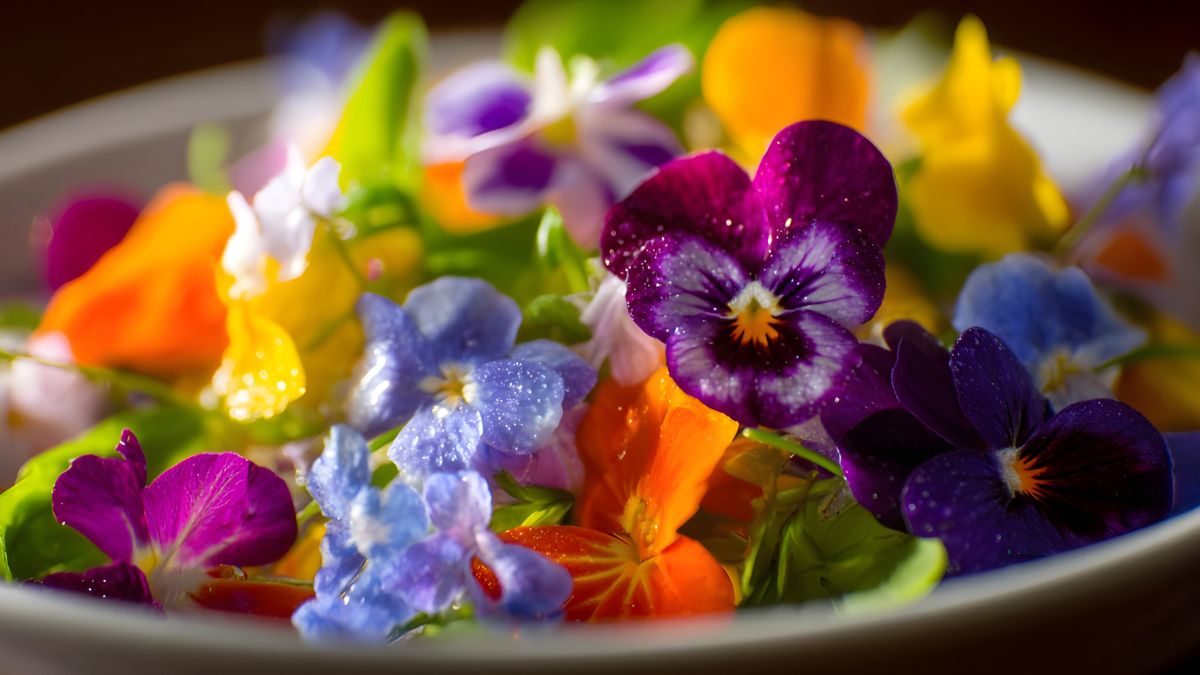
Edible flowers have been part of human diets for centuries, even though most people today think of them purely as plate decoration. Traditional cuisines across the Mediterranean and Asia have long used blossoms for their aroma, color, and medicinal properties. Beyond their visual appeal, many flowers carry distinct flavors ranging from sweetly fruity to mildly bitter or pleasantly spicy. In recent years, modern gastronomy has been rediscovering their value, and interest in cooking with flowers is growing faster than ever.
Not every flower found in nature is safe to eat, and knowing the difference matters quite a lot. Some are entirely edible, others only partially so, and some are outright toxic. Proper identification is absolutely essential before anything ends up on your plate. The basic rule is to only consume varieties you have confidently identified, ideally gathered from clean areas well away from busy roads and pesticide use.
Dandelion is one of the most recognized edible flowers around. Its bright yellow blooms are easy to spot, shaped like tiny suns sitting atop long, hollow stems with no leaves attached. The flowers carry a gently sweet flavor reminiscent of honey, which makes them a natural choice for preparing dandelion syrup, sometimes called dandelion honey. They can also be tossed fresh into salads or dipped in a light batter and pan-fried for a simple treat.
Daisies are another extremely common edible flower that most people walk past without a second thought. Their small white petals surrounding a yellow center grow close to the ground on grassy meadows and open fields. The taste is mild with a faintly nutty quality. In the kitchen they work beautifully as a fresh salad addition, a garnish for soups, or stirred into soft butter and spreads. Candied daisies have also become a charming decoration for cakes and pastries.
Elderflower holds a particularly special place in culinary tradition. It blooms in late spring and early summer, identifiable by its large, flat clusters of tiny white blossoms with an intensely fragrant aroma. The plant grows as a shrub or small tree along forest edges and open meadows. Elderflower is widely used for making syrups, juices, and aromatic drinks, and the blossoms are also famously delicious when dipped in batter and fried into light, golden fritters served as dessert.
Violets are small, fragrant purple flowers that grow in shaded woodlands and meadows. They are easily recognized by their heart-shaped leaves and their delicate, distinctive scent. The flavor is gently sweet and very aromatic, making violets a favorite in confectionery. They are most often candied, used to flavor sugar, or placed as decorative accents on desserts and pastries where both their color and perfume add something truly special.
Marigold brings vivid bursts of orange and yellow to both gardens and wild sunny spots. The petals have a slightly sharp, faintly bitter taste that makes them an interesting addition to salads, risottos, and soups. Because of their intense color, marigold petals are sometimes referred to as the poor man’s saffron, capable of giving dishes a warm, golden hue that looks as luxurious as it is affordable.
Zucchini flowers are among the most celebrated edible blossoms in Mediterranean cooking. Large, yellow, and funnel-shaped, they grow directly from the zucchini plant and have an exceptionally delicate, mild flavor. The most classic preparation involves stuffing them with cheese, meat, or vegetables before frying them in a thin batter, though they can also be stirred into soups or light vegetable dishes for a subtle, fresh note.
Roses are celebrated primarily for their scent, but their petals are entirely edible when sourced from plants that have not been treated with chemicals or pesticides. The petals are soft, fragrant, and carry a gently sweet flavor. In the kitchen, they are used for making jams, syrups, jellies, and flavored sugars, and they frequently appear in a wide range of pastries and desserts. Rose-infused teas are also a beloved classic in many parts of the world.
Lavender is instantly recognizable for its narrow spikes of tiny purple flowers and its powerfully aromatic scent, thriving in sunny, dry conditions particularly common across Mediterranean landscapes. Because its flavor is so intense, it is used in very small quantities in cooking. It makes its way into cookies, cakes, honey, and flavored sugars, lending dishes a distinctive floral character that is unlike anything else. Chamomile, with its white petals and yellow center, looks similar to a daisy but carries a more pronounced, calming aroma. It is most beloved as a tea, though the flowers can also be used to infuse syrups, creams, and light desserts with a soft, gentle floral note.
The violet family has been used in perfumery and medicine since ancient Egypt, and violet-scented products were reportedly among Napoleon Bonaparte’s personal favorites. Lavender was historically used by the Romans to scent their bathwater, which is actually where the word “lavender” comes from, derived from the Latin “lavare,” meaning to wash. Elderflower syrup was once considered a folk remedy across Europe and was believed to ward off colds and sore throats long before anyone thought to turn it into a trendy cocktail ingredient.
Have you ever tried cooking with edible flowers? Share your experience in the comments.




