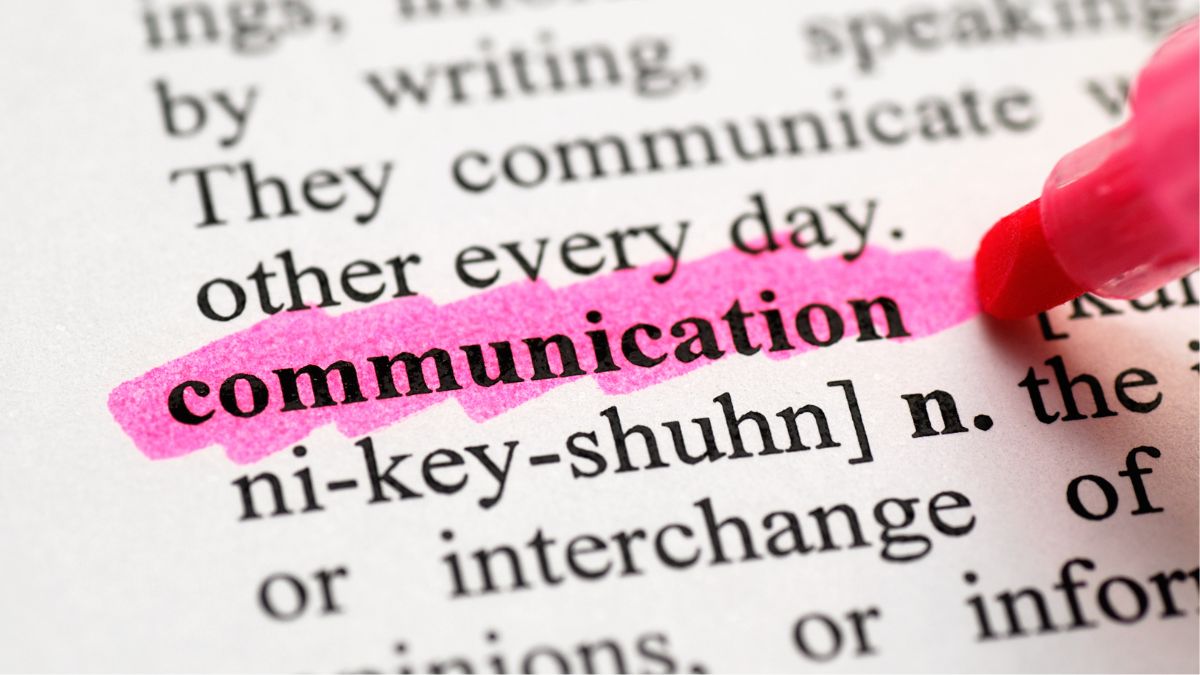
The words and phrases people choose in everyday conversation reveal far more about their thinking than most realize. Certain expressions have become so overused or imprecise that they signal a lack of critical thought, vocabulary depth, or situational awareness to listeners. Speakers who rely on these verbal crutches often undermine their own credibility without knowing it. Whether in professional settings, social conversations, or public speaking, word choice shapes how intelligence and competence are perceived. Cutting these phrases from daily speech is one of the simplest ways to communicate with greater authority and clarity.
“I Could Care Less”

This phrase is one of the most widespread grammatical mistakes in casual English speech. The intended meaning is a complete lack of concern, yet the words literally suggest that some level of care still exists. The correct expression is “I couldn’t care less,” which logically conveys total indifference. Using the incorrect version signals inattention to language and can quietly erode a speaker’s credibility. It is a small error that attentive listeners notice immediately.
“Irregardless”
Irregardless is not a standard word in formal English, despite its widespread use in casual conversation. The correct term is simply “regardless,” meaning without concern for or despite the circumstances. Adding the prefix “ir” creates a double negative that cancels the intended meaning entirely. Its use is often associated with someone attempting to sound more emphatic or formal while achieving the opposite effect. Most style guides and dictionaries flag it as nonstandard or erroneous.
“Literally”

The word literally has been so thoroughly overused that it has nearly lost its original meaning in everyday speech. It is meant to indicate that something is factually and precisely true, not figurative or exaggerated. Saying things like “I literally died laughing” drains the word of all communicative value and signals imprecision in language use. Constant misuse of the word suggests a limited expressive vocabulary. Replacing it with more accurate descriptors makes speech considerably sharper and more credible.
“To Be Honest”

Prefacing a statement with “to be honest” implies that honesty is the exception rather than the standard in a person’s communication. Listeners may unconsciously begin to question the sincerity of everything said before and after the phrase. It adds no meaningful information and instead introduces unnecessary doubt about the speaker’s general truthfulness. The phrase is often used as a filler without the speaker realizing its unintended implication. Straightforward speech without such qualifiers tends to project more confidence and integrity.
“Very Unique”

The word unique means one of a kind, making any modifier attached to it logically redundant. Something cannot be very unique, somewhat unique, or extremely unique since uniqueness already represents an absolute state. Adding intensifiers to absolute adjectives is a common grammatical error that signals imprecision in thinking. Other examples of this pattern include “very dead,” “completely perfect,” and “absolutely essential.” Speakers who understand absolute adjectives communicate with noticeably more precision.
“Per Se”

Per se is a Latin phrase meaning in itself or intrinsically, and it is frequently misused as a vague conversational filler. Many speakers insert it into sentences where it adds no clarity and often creates confusion about the actual meaning. Saying “it’s not bad per se” when the intended meaning is simply “it’s not bad” introduces unnecessary ambiguity. The misuse often signals that a speaker is reaching for sophistication without a clear understanding of the term. Precise language choices always outperform borrowed phrases used incorrectly.
“I’m Not Racist But”

Any sentence that begins with a disclaimer denying bias immediately signals that a biased statement is about to follow. Listeners recognize this rhetorical pattern quickly and tend to discount the credibility of everything that comes after it. Prefacing an opinion with this phrase does not neutralize it and often heightens the perception of the bias being disclaimed. The same applies to “I’m not sexist but” or any variation of the structure. Thoughtful communicators express nuanced opinions without relying on preemptive disclaimers.
“Supposably”

Supposably is a real but rarely applicable English word that is almost always used incorrectly in place of “supposedly.” Supposedly means according to what is generally believed or assumed, which is the intended meaning in nearly every instance of casual use. Using “supposably” in its place suggests the speaker has picked up a word phonetically without understanding its actual definition. This type of error is particularly noticeable to careful listeners and readers. Using the correct word in its place requires only a small adjustment with a meaningful impact on perceived intelligence.
“Expresso”

Espresso is consistently mispronounced and misspelled as “expresso” in everyday settings, despite no such word existing in English or Italian. The error likely stems from associating the drink with speed or the English word “express,” but the original Italian term contains no x. Ordering or discussing coffee with this mispronunciation signals a lack of attention to widely available information. In professional or sophisticated social settings, it is a minor but noticeable slip. The correct pronunciation is a simple and easy adjustment to make.
“I Seen”

“I seen” is a grammatically nonstandard construction that omits the required auxiliary verb in the past perfect tense. The correct forms are “I saw” for simple past or “I have seen” for the present perfect. This error is extremely common in casual regional speech but stands out sharply in professional or formal contexts. Repeated use of nonstandard verb conjugation can significantly affect how a speaker is perceived in terms of education and attention to language. Correcting this habit takes awareness but produces an immediate improvement in spoken grammar.
“Conversate”

Conversate is not a standard English verb, yet it frequently appears in casual speech as a substitute for “converse” or “have a conversation.” The correct verb form is simply to converse, while the noun form is conversation. The invention of “conversate” follows a back-formation pattern that creates an unnecessary and incorrect word. Its use tends to be noticed immediately by those with a strong command of English vocabulary. Replacing it with the correct verb requires no effort and immediately elevates the quality of speech.
“Could of”

“Could of” is a phonetic spelling error that arises from the contracted spoken form of “could have,” which sounds like “could’ve” in natural speech. The grammatically correct written and spoken form is always “could have,” not “could of.” The same error appears with “should of” and “would of,” both of which are equally incorrect. Writing or saying these forms signals a disconnect between spoken and written language comprehension. Recognizing the contraction behind the sound is the key to correcting this deeply common mistake.
“Pacifically”

Pacifically is a real English word that refers to something done in a peaceful manner, but it is widely and incorrectly used in place of “specifically.” The two words sound vaguely similar in casual speech, which leads to frequent substitution by those unfamiliar with the correct term. Saying “I pacifically told him not to do that” introduces an unintended meaning that contradicts the speaker’s intent. This error is particularly noticeable because the two words belong to entirely different semantic fields. Using the correct word requires only a moment of attention to the distinction.
“Myself”

Myself is a reflexive or emphatic pronoun that is frequently misused as a substitute for “me” or “I” in everyday speech. Sentences like “Contact John or myself for more information” are grammatically incorrect since the reflexive pronoun has no antecedent to refer back to. This misuse often stems from a mistaken belief that “myself” sounds more formal or polished than the simpler pronouns. In reality, it signals a misunderstanding of basic pronoun function to anyone familiar with English grammar. The correct choice is almost always the simpler “me” or “I.”
“At the End of the Day”

This phrase has been overused to the point of becoming nearly meaningless in professional and casual speech alike. It is typically used to signal a concluding point or ultimate truth but adds little substance to the actual argument being made. Frequent reliance on it can suggest that a speaker lacks more precise language to express their reasoning. Audiences in business and media contexts have grown particularly weary of the expression. Replacing it with a direct statement of the actual conclusion being drawn produces a far stronger communicative effect.
“It Is What It Is”

Few phrases signal intellectual disengagement as clearly as “it is what it is” in a conversation where analysis or problem-solving is expected. The expression communicates acceptance of a situation without offering any reflection, solution, or meaningful insight. While occasionally appropriate in informal settings, its overuse marks a speaker as someone unwilling or unable to think critically about a situation. It has become a conversational escape hatch rather than a substantive contribution to discussion. Replacing it with an actual observation or response demonstrates far greater communicative intelligence.
“Just Saying”

Appending “just saying” to the end of a statement is often used as a way to deflect responsibility for a provocative or critical comment. It signals that the speaker wants the impact of their words without accountability for them. Listeners generally see through the disclaimer and associate it with passive-aggressive or evasive communication styles. The phrase adds no informational value and weakens the speaker’s apparent conviction. Owning a statement fully and directly always projects greater confidence and maturity.
“Acrossed”

“Acrossed” is not a word in standard English, though it is commonly heard in certain regional dialects as a mispronunciation of “across.” The word across is already complete and requires no additional sound to function correctly as a preposition or adverb. The addition of a d sound at the end likely arises from analogy with past tense verb endings in spoken language. Its use tends to attract immediate notice from educated listeners in any formal or semiformal context. The correction is as simple as dropping the final consonant.
“Utilize”

Utilize is frequently used when the simpler and more appropriate word “use” would communicate the same meaning with greater clarity. The two words are not always interchangeable since utilize specifically implies making practical or effective use of something not originally intended for that purpose. In most casual and professional contexts where speakers reach for it, “use” is the correct choice. Overusing utilize often signals an attempt to sound more technical or intelligent that backfires by making speech feel inflated. Choosing the more precise and simpler word is always the stronger option.
“Whole Nother”

“Whole nother” is a linguistic blend of “whole” and “another” that inserts a modifier in a position that does not grammatically exist in standard English. The correct phrasing is “a whole other” or simply “another,” depending on the intended meaning. Despite being widely understood in casual speech, it reads as nonstandard and informal in most contexts. Its use signals an unawareness of the correct grammatical structure of the phrase. It is one of those expressions that passes unnoticed in casual settings but stands out sharply in more formal ones.
“For All Intensive Purposes”

The correct expression is “for all intents and purposes,” meaning in every practical sense or in effect. The misheard version “for all intensive purposes” renders the phrase meaningless since purposes are not described as intensive in standard English. This type of error is known as an eggcorn and occurs when a phrase is learned phonetically rather than from reading or careful attention. Using the incorrect form signals that the speaker absorbed the expression passively without ever examining its actual words. Knowing the correct form is a reliable marker of linguistic attentiveness.
“Nucular”

Mispronouncing “nuclear” as “nucular” is one of the most recognized pronunciation errors in the English language. The correct pronunciation places the stress on the first syllable and follows the standard phonetic spelling of the word. Despite being used by several prominent public figures over the decades, it has never been accepted as a standard variant. In scientific, academic, and professional contexts, the mispronunciation is particularly noticeable and undermining. The correct pronunciation is straightforward once a speaker takes the time to examine the word’s actual spelling.
“Unthaw”

Unthaw is used colloquially to mean defrost or thaw, but its literal meaning is the direct opposite. The prefix “un” negates the root, making “unthaw” technically mean to freeze again rather than to melt. Despite widespread use, the word creates a logical contradiction that careful speakers prefer to avoid. The correct and unambiguous term is simply “thaw,” which communicates the intended meaning without confusion. Choosing the simpler and logically consistent word always produces clearer communication.
“Orientate”

In American English, the correct verb is “orient,” meaning to align or familiarize oneself with a new situation or environment. “Orientate” is a back-formation that appears more commonly in British English but is considered nonstandard or unnecessarily complex in most American contexts. Many speakers use it under the mistaken impression that it sounds more formal or educated. The noun “orientation” is entirely correct and separate from the issue with the verb form. Sticking to “orient” in American English contexts demonstrates a clean command of standard usage.
“Litrally”

Beyond the well-documented misuse of “literally” in meaning, the word is also frequently mispronounced with syllables swallowed or compressed into something closer to “litrally.” This casual mispronunciation compounds the existing problem of overuse and incorrect application. Clear enunciation of commonly spoken words is a basic marker of communicative care and education. Speakers who take the time to pronounce words correctly are consistently perceived as more credible and articulate. Restoring both the correct pronunciation and the correct meaning of literally is a double improvement in speech quality.
Which of these phrases have you caught yourself using without realizing it? Share your thoughts in the comments.




