Onions serve as a staple ingredient in kitchens around the world, appearing in soups, sauces, stews, salads, and as a flavorful base for countless recipes. Many cooks assume the slicing technique makes little difference, yet the method of cutting directly influences the final flavor, texture, and even how the onion behaves during cooking. Breaking the onion cells releases enzymes and sulfur compounds that create its signature aroma and taste. The extent of cell damage determines whether the result turns out mild and sweet or sharply pungent.
Finer cuts, such as mincing the onion into tiny pieces, expose a greater number of cells and trigger more intense chemical reactions. This approach works wonderfully as a foundation for sauces, soups, and stews because the small fragments soften quickly and blend seamlessly into the dish. The onion essentially melts away, enriching the overall flavor without leaving noticeable chunks behind. Cooks often reach for this technique when they want subtle depth rather than distinct bites of onion.
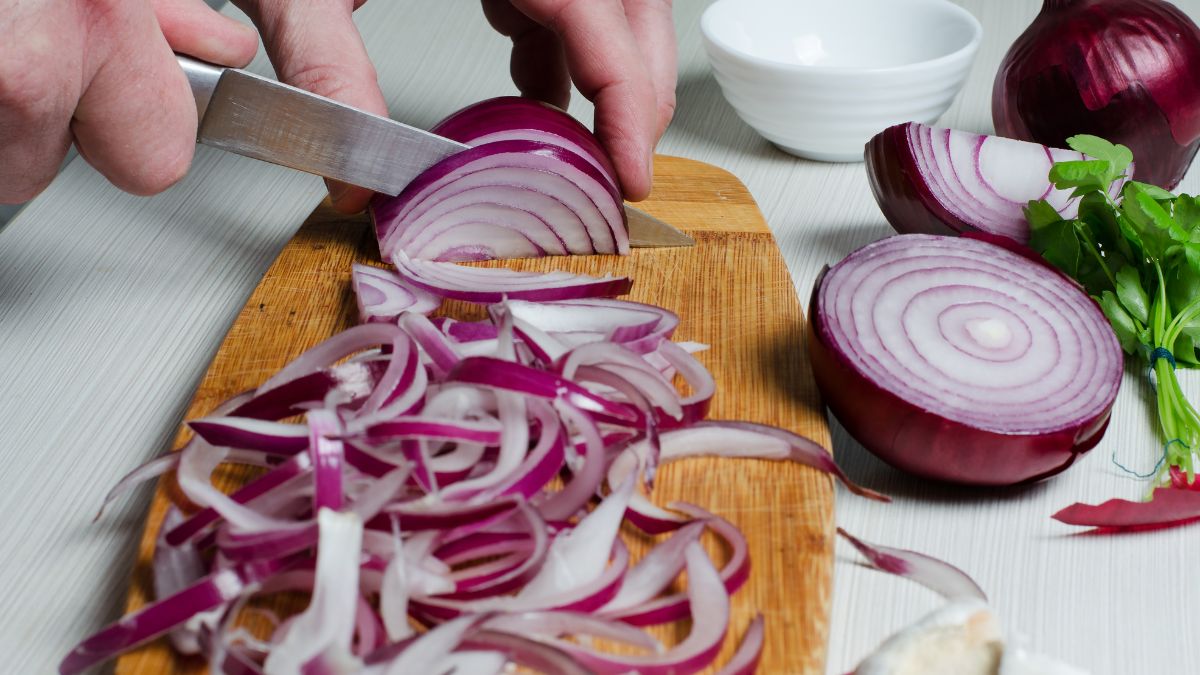
Slicing the onion into thin half-moons or strips preserves more of its structure during preparation. These pieces hold up better in stir-fries, wok dishes, or fresh salads, where they contribute a pleasant crunch and remain visible as a separate element. The larger surface area means slower breakdown in heat, allowing the onion to retain some of its crisp texture while still releasing its aromatic qualities. This method suits recipes that benefit from layered flavors and contrasting mouthfeel.
Larger chunks prove ideal for roasting or slow-cooked meals like braises and casseroles. With bigger pieces, the onion softens gradually and develops natural sweetness through caramelization over time. The substantial fragments add body and texture to the finished dish instead of disappearing completely. Home chefs appreciate this option when building hearty, comforting plates that highlight the onion as a supporting player with its own gentle presence.
The science behind these differences lies in the onion’s defense mechanism. When cells rupture, an enzyme called alliinase mixes with sulfur-containing amino acids to produce compounds like syn-propanethial-S-oxide, which heightens pungency. More aggressive chopping accelerates this process and intensifies the sharp notes, while gentler or coarser cuts moderate the reaction for sweeter, milder results. Heat further transforms these volatiles, turning harsh edges into rich, caramel-like depths that elevate the entire meal.
Reducing the eye-watering effect during prep also ties into cutting habits. An extremely sharp knife minimizes cell crushing and limits the release of irritating vapors. Chilling the onion briefly in the refrigerator beforehand slows the enzymatic activity, and working quickly on a stable surface helps too. These small adjustments keep the focus on flavor rather than discomfort.
Mastering onion cuts opens up new possibilities in everyday cooking. Experimenting with different sizes and shapes lets you fine-tune both taste and texture to match the recipe at hand. Whether building a delicate sauce or a robust roast, the right technique makes onions work harder for you.
What is your favorite way to cut onions for different dishes, and have you noticed big flavor shifts when you switch techniques? Share your thoughts in the comments.




