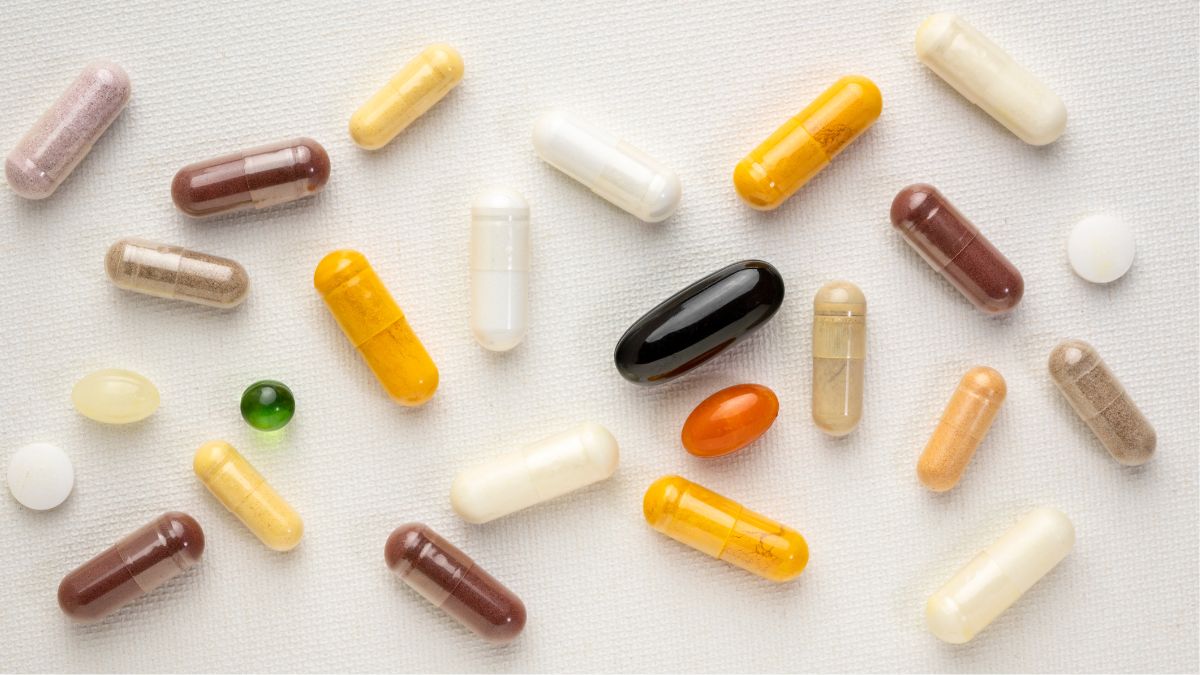
Dietary supplements have earned a well-deserved reputation as helpful tools for supporting overall health, but most people assume that taking more of a good thing can only be beneficial. The reality is more complicated. Certain supplement pairings can actively work against each other in the body, reducing how much of each nutrient actually gets absorbed and, in some cases, creating risks that are more serious than simply wasting money on vitamins.
One of the most commonly overlooked conflicts is between calcium and iron. According to Dr. Jennifer Warren, medical director at Mochi Health, the two minerals share the same absorption pathways in the intestines, meaning they essentially compete for entry into the body. “Calcium and zinc can block the absorption of iron because they compete for the same absorption routes in the intestines,” she explained. This is especially important for anyone managing iron-deficiency anemia, where getting full absorption from each dose genuinely matters. Dr. Warren recommends taking iron in the morning with water or citrus juice, since vitamin C actively boosts iron absorption, and waiting at least two hours before taking any other mineral supplements. If iron on an empty stomach causes nausea, a small amount of food can help, though calcium should still be taken separately.
Calcium and zinc run into the same problem. Dr. C. Vivek Lal of the Heersink Institute for Biomedical Innovation at the University of Alabama at Birmingham explained that “zinc supports the immune system and wound healing, while calcium helps meet daily needs for bone health,” but taking them together means the body absorbs less of both. His practical solution is simple: take calcium with meals and schedule zinc at a different time, either between meals or at a point in the day when calcium-rich supplements are not already in the mix. It is also worth noting that certain forms of calcium, like calcium citrate, can be taken without food, while others, like calcium carbonate, work better alongside a meal.
Zinc and copper represent another pairing worth separating. Both minerals rely on similar transporters in the small intestine, and as nutritionist Helen Tieu pointed out, they end up in direct competition during the absorption process. Research indicates that problems typically arise with prolonged use of very high zinc doses. Studies have shown that consuming 60 milligrams or more of zinc per day can disrupt copper absorption significantly, potentially leading to copper deficiency, which can in turn cause anemia and muscle weakness. The tolerable upper intake level for zinc in adults is 40 milligrams per day, and staying within that limit is a meaningful safeguard. Tieu recommends spreading these minerals throughout the day or opting for a balanced multivitamin that includes both in moderate amounts.
Fish oil and ginkgo biloba are another combination worth approaching with caution. Both have blood-thinning effects on their own, and stacking them raises the potential for excessive bleeding. Dr. Lal explained that “ginkgo and high doses of fish oil reduce platelet function, the blood cells that help with clotting,” and that combining them amplifies that risk. He added that the same caution applies to other supplements with blood-thinning properties, including garlic, ginger, turmeric, and ginseng. This matters most for people who already take prescription blood thinners like warfarin, and anyone scheduled for surgery should speak with their doctor about all supplements they are using well in advance.
Activated charcoal deserves special attention because it interferes not just with other supplements but potentially with prescription medications as well. It works by binding to substances in the digestive tract, which sounds helpful in certain contexts but becomes a problem when it latches on to vitamins and minerals before the body can absorb them. “Activated charcoal binds minerals and vitamins, preventing their absorption,” Dr. Lal noted. Long-term use can lead to genuine nutritional deficiencies. His recommendation is to use it only short-term and for a specific purpose, and always to leave a gap of at least two to four hours between activated charcoal and any medications or other supplements.
As Dr. Warren summed up, “these interactions can lead to dangerous complications, including reduced medication effectiveness, nutritional deficiencies, and other unwanted effects.” The safest approach is to build in timed gaps between competing nutrients, stay within recommended upper intake levels, take advantage of combinations that help rather than hinder absorption, and consult a doctor or pharmacist whenever there is any uncertainty about a particular pairing.
The global supplement industry is now worth well over $150 billion annually, yet studies consistently show that a large share of users have never discussed their supplement routines with a healthcare provider. Ginkgo biloba, one of the most widely sold herbal supplements in the United States, has been in medicinal use for thousands of years and was originally derived from one of the oldest tree species on Earth, with some individual ginkgo trees living over a thousand years. Iron absorption is so sensitive to timing that even a cup of coffee or tea consumed within an hour of taking an iron supplement can reduce absorption by up to 60 percent, which is one of the more dramatic examples of how much context surrounds a seemingly simple pill.
What supplement combinations have you been taking, and have you ever noticed unexpected effects? Share your experience in the comments.




