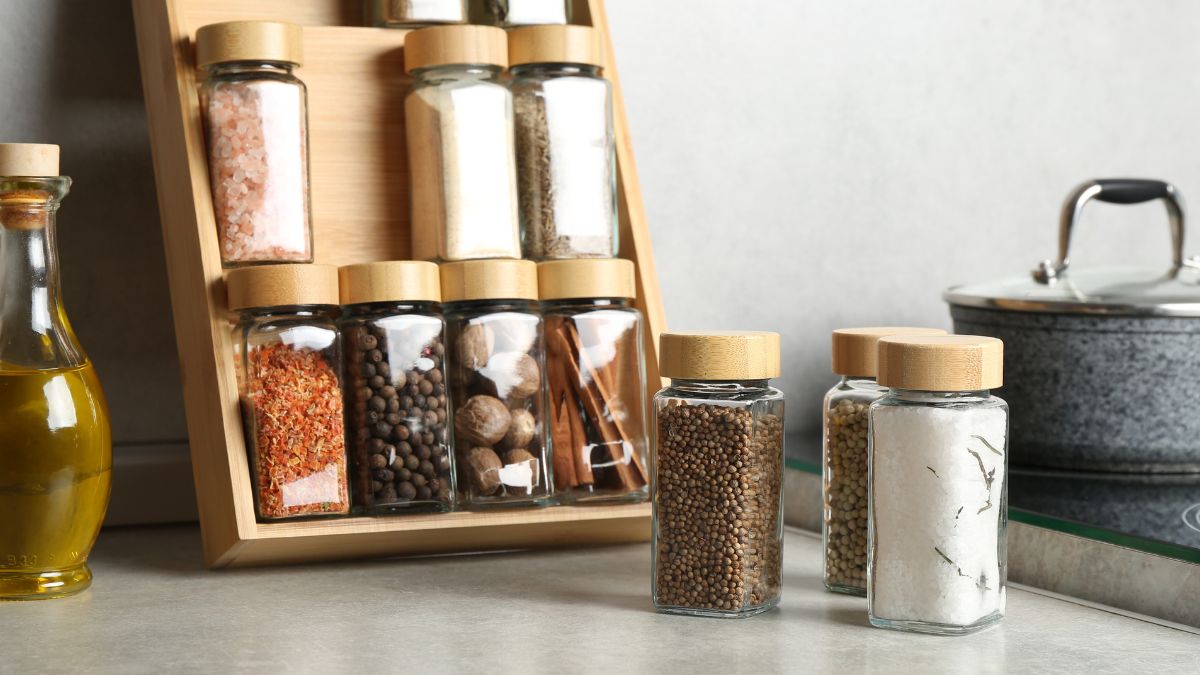
Most people would guess the kitchen sink, the refrigerator handle, or maybe the trash can if asked to name the germiest spot in their kitchen. The answer, however, is far more surprising, and it has been hiding in plain sight on your countertop this entire time. Research has revealed that the surface most likely to harbor illness-causing germs is actually your spice jars, those little containers you reach for almost every time you cook. It is a finding that has real consequences for home cooks, and understanding why it happens is the first step toward doing something about it.
The stakes are higher than most people realize. According to the study, roughly one in five foodborne illnesses can be traced back to home kitchens, meaning that a significant portion of people who get sick from bacteria, viruses, or parasites picked up that contamination right in their own home. The research, published in the Journal of Food Protection and reported on by Simply Recipes, set out to map exactly how pathogens travel during a typical cooking session, and what they found was both illuminating and a little unsettling.
To conduct the study, researchers recruited 371 participants and asked each of them to prepare turkey burgers using raw ground turkey in their own kitchens. Before the cooking began, the meat was treated with a harmless tracer microorganism called MS2, which allowed scientists to follow its path without posing any actual health risk to participants. Once the meal was finished, researchers took swabs from 12 different surfaces throughout each kitchen to assess how far and wide the contamination had spread.
The highest concentration of MS2 turned up on the spice containers. The study identified four key reasons for this pattern. First, spice jars are almost always within arm’s reach of where raw meat is being handled. Second, most participants did not wash their hands after touching the raw turkey before grabbing a jar to season it. Third, those same contaminated hands touched the jars multiple times throughout the cooking process. Fourth, and perhaps most critically, the jars were rarely if ever wiped down or sanitized after use.
The lead takeaway from Benjamin Chapman, the study’s author, is that handwashing needs to happen not just before you start cooking and after you finish, but repeatedly throughout the process, particularly after any contact with raw meat. This kind of mid-task handwashing is something most home cooks skip entirely, treating the pre-meal wash as a sufficient precaution when in reality it only covers the very beginning of a much longer chain of contact.
Cleaning the jars themselves is just as important, and Chapman recommends making it a routine part of cooking rather than an occasional deep-clean task. The process is straightforward and takes less than a minute. Fill a bowl or the sink with warm water and add a small amount of dish soap, then dampen a clean cloth, wring it out thoroughly, and wipe down each jar. Follow that with a spritz of kitchen disinfectant or a sanitizing wipe, and if the jar is left damp, dry it off with a clean cloth or paper towel. Done consistently, this habit dramatically reduces the chance that the spice rack becomes a reservoir of whatever was in your raw meat.
It is also worth thinking about the layout of your cooking space. Keeping spice jars further from the prep area where raw meat is handled can reduce the likelihood of reaching for them mid-task with contaminated hands. Some cooks pre-measure their seasonings into small dishes before they start working with raw proteins, which eliminates the problem almost entirely. Small adjustments in routine and spatial awareness can make a meaningful difference in keeping cross-contamination at bay.
The MS2 tracer used in the study also showed up on other surfaces, including refrigerator handles and kitchen faucets, which makes intuitive sense given how often cooks touch both during meal prep. But spice containers consistently topped the charts, which is what makes them the most important surface to address. Most people instinctively clean their cutting boards and wash their sink after handling raw meat, but the spice rack almost never makes that mental checklist.
The bacteriophage MS2 is so small that roughly 100 trillion of them could fit into a single grain of sugar, making it an almost invisibly mobile tracer. The Journal of Food Protection, where the spice jar study was published, has been in circulation since 1938, making it one of the oldest continuously published food safety journals in the world. Raw poultry is one of the most common vehicles for Salmonella contamination in home kitchens, with the Centers for Disease Control and Prevention estimating it causes over a million illnesses in the United States every year.
Have you ever thought about how often you clean your spice jars, and will this change your kitchen routine? Share your thoughts in the comments.




