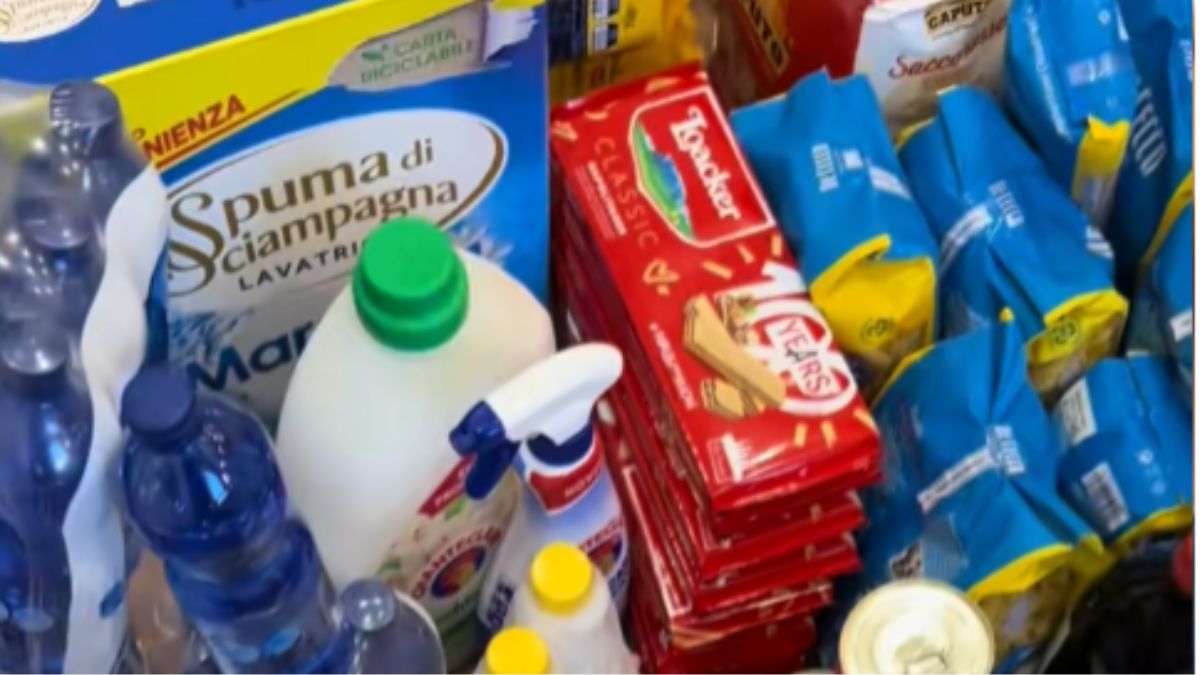
A TikTok video showing the results of a cross-border grocery haul has taken the internet by storm, igniting a passionate conversation about just how dramatically food prices vary across Europe. The woman behind the viral clip, Rebeka Balcan, lives in Austria but made the trip to an Italian supermarket specifically to stock up on staples, and the final bill at the register turned out to be the most talked-about part of the whole adventure. What she paid for an overflowing cart full of groceries had viewers from across the continent doing the math on their own weekly shops, and many did not like what they found.
In the video, Balcan displayed her receipt alongside a cart packed with an impressive variety of items. The haul included multiple packages of pasta, several types of cheese, crushed tomatoes, pasta sauces, cookies, juices and energy drinks, olive oil, cleaning supplies, detergents, and fabric softener. For everything in that cart, she paid a total of 326 euros, which converts to roughly $355. The sheer volume of what she brought home for that amount is what stopped people mid-scroll, and the comment section quickly turned into a lively Europe-wide price comparison thread.
Viewers were eager to know exactly where she had shopped, and Balcan did not keep them waiting. She pointed them directly to the store responsible for the wallet-friendly receipt, answering simply: “Iper Tosano.” The Iper Tosano chain is a large-format Italian hypermarket known for carrying a wide range of products at competitive prices, and it has developed a reputation among cross-border shoppers from neighboring countries who make regular trips specifically to take advantage of the pricing.
The comment section quickly became a window into just how stark the differences in grocery costs can be depending on where you happen to live. One commenter offered a sobering perspective, writing: “Ugh, that would cost me around 800 euros in northern Italy.” A commenter from Romania estimated that the same basket of goods would run about 700 euros back home. Someone from Slovenia weighed in as well, suggesting the haul would cost closer to 600 euros there. Not all the comments were serious, though. One user poked fun at the contents of the cart with a lighthearted jab: “Pasta and energy drinks, truly a healthy diet.”
Another commenter attempted a rough breakdown of the most expensive items, speculating: “I think the parmesan and olive oil together were around 100 to 130 euros, and everything else made up the rest.” That kind of informal itemizing struck a chord because it highlighted how premium Italian staples like aged cheese and quality olive oil, which can cost significantly more in other European markets, are often much more affordable when purchased in Italy itself. The proximity to production and the country’s deep-rooted food culture play a major role in keeping those prices in check locally.
@rebecabalcan Worth it? 👀 I live in Austria and go to Italy for shopping about once a year, so of course I stock up on pasta, sauces, and a few other things. I don’t eat like this every day — these are just occasional treats. 🙂 #italy #trip #foodlovers #foryoupage❤️❤️ #viralvideos ♬ original sound – Rebeca ✨
The video resonated far beyond the usual grocery content because it touched on something many households across Europe are actively navigating right now. Inflation has made everyday shopping a noticeably heavier lift for families in numerous countries, and seeing someone essentially solve that problem by simply crossing a border underscored how uneven the economic reality of daily life can be within the same continent. For those living close enough to an Italian border, the math may well favor packing the car and making the trip a regular habit.
Italy is one of the world’s largest producers of olive oil, yet Italians themselves consume more olive oil per capita than almost any other nation, which helps keep domestic prices lower than what you would find in countries where the product must be imported. The pasta aisle in an Italian supermarket is a category unto itself, with some stores stocking well over 200 distinct shapes, many of them regional varieties that rarely make it onto shelves outside the country. Cross-border shopping trips to stock up on food are so common in parts of central Europe that some hypermarkets along the Austrian-Italian border actually print their weekly promotions in both German and Italian to cater to both sides of the customer base.
Have you ever crossed a border just to save money on groceries? Share your experience in the comments!




