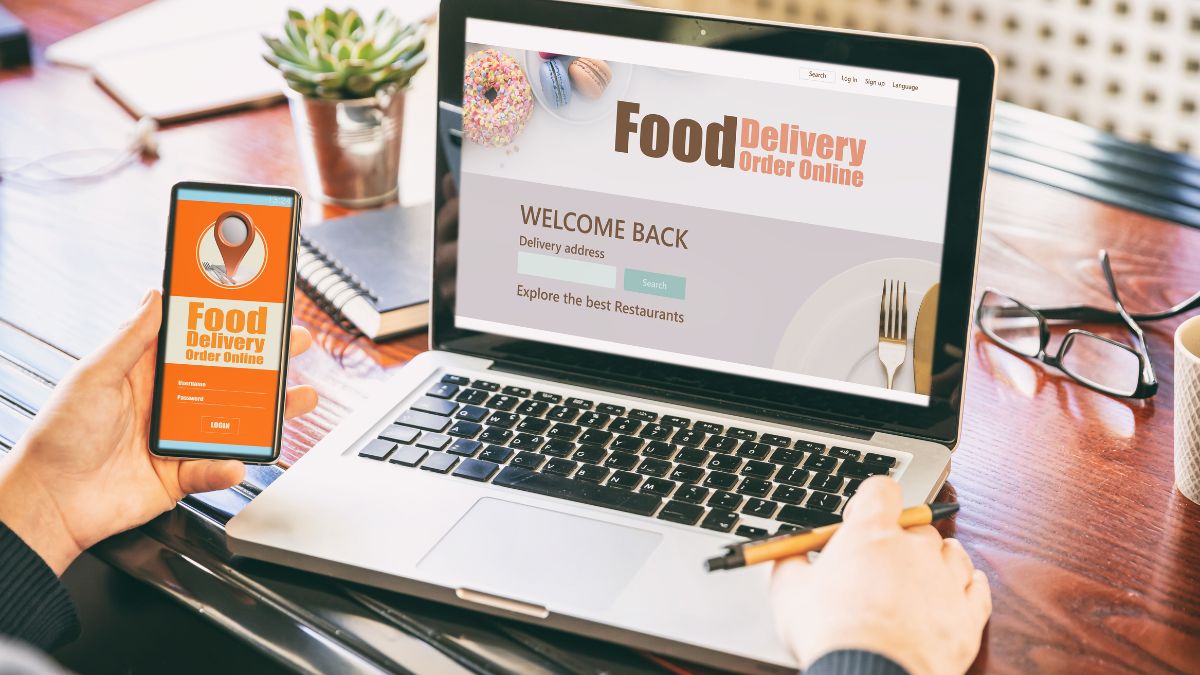
The promise of delivery apps is seductive and simple: restaurant food at your door, effortlessly summoned through a few taps on a screen. What the glossy interfaces and seamless user experience carefully obscure is a layered architecture of charges, markups, and pricing manipulations that transform a reasonably priced meal into an exercise in financial erosion by the time the confirmation screen appears. The companies behind these platforms have invested significant resources in interface design, behavioral psychology, and fee structures specifically engineered to maximize the gap between what customers expect to pay and what they actually spend. Most of the inflation happens in places the average user never thinks to look, buried in defaults, obscured by presentation, and normalized through repetition until the true cost of convenience becomes invisible. These are the twenty-four sneaky ways delivery apps are quietly making your dinner significantly more expensive than it needs to be.
Menu Price Inflation

The most fundamental and least discussed price manipulation on delivery platforms is the systematic inflation of menu item prices above what the same restaurant charges for dine-in or direct takeout orders. Restaurants operating on delivery platforms are charged significant commission fees by the apps, typically ranging from fifteen to thirty percent of the order value, which many restaurants partially recover by listing their delivery menu prices at a meaningful premium above their standard prices. The customer who assumes they are paying restaurant prices for restaurant food is in fact paying a marked-up version of those prices before any delivery fee, service fee, or tip has been added to the order. This base-level inflation is invisible because most customers have no direct point of comparison between delivery menu prices and the restaurant’s own pricing, particularly for establishments they have never visited in person. The practice is entirely legal, rarely disclosed, and represents the foundational layer of price inflation on which all subsequent fees are then calculated and compounded.
Delivery Fee Variability
Delivery fees on major platforms are not fixed costs transparently related to distance or driver compensation but dynamic variables adjusted algorithmically based on demand levels, customer location, time of day, weather conditions, and in some cases the platform’s assessment of individual customer price sensitivity. The same order from the same restaurant to the same address can carry a substantially different delivery fee on a Tuesday afternoon compared to a Friday evening, with the difference representing pure margin capture rather than any change in the actual cost of delivery. Customers who have learned to expect a certain delivery fee from previous orders are frequently surprised to find it has increased without any apparent reason, a variability that is designed to be accepted as normal fluctuation rather than recognized as dynamic pricing strategy. The delivery fee is also calculated as a flat charge rather than a percentage, meaning that its proportional impact is highest on smaller orders and creates implicit pressure toward larger order values that generate more revenue across every subsequent fee category. Understanding delivery fees as dynamic revenue tools rather than cost-recovery mechanisms reframes the entire economics of any individual order.
Service Fee Opacity
The service fee, typically presented as a percentage of the order subtotal and described in vague terms related to platform operation and support, is one of the least transparent charges in the delivery app ecosystem and one that has grown steadily as a proportion of total order cost across the industry. Unlike the delivery fee, which can at least be nominally linked to the logistical act of transporting food, the service fee has no clear functional correlate and is essentially a platform usage charge whose rate is set entirely by the company’s revenue targets rather than by any underlying cost. The label varies across platforms, appearing variously as a service fee, platform fee, or regulatory response fee, with the terminological diversity itself functioning to prevent customers from making direct comparisons across platforms or tracking increases over time. Service fees are applied to the inflated menu price rather than the restaurant’s actual price, meaning that the base inflation compounds into every subsequent percentage-based charge in a way that multiplies its effect across the entire order. Regulatory response fees, a specific variant that appeared following legal actions against platform pricing in certain markets, represent perhaps the most transparent example of platforms passing business costs directly to consumers under labels designed to attribute the charge to external forces rather than company decisions.
Small Order Fees
Delivery platforms frequently impose additional charges on orders falling below a minimum value threshold, framed as small order fees that appear to reflect the genuine economics of low-value deliveries but function primarily as behavioral nudges toward larger order sizes that generate more revenue across every fee category. The minimum order threshold is typically set at a level that requires customers to add items they may not particularly want in order to avoid the fee, with the cost of unwanted additional food frequently exceeding the fee itself and producing more total revenue for both the platform and the restaurant. The fee amount is calibrated to be annoying enough to influence behavior without being large enough to prompt order abandonment, a balance refined through behavioral data across millions of transactions. Customers who comply with the nudge by adding items to reach the threshold have not avoided paying more but have redirected their additional spending from a visible fee into invisible food items, an outcome that feels like a victory and functions as a defeat. The small order fee is one of the most elegantly designed behavioral manipulation tools in the delivery app pricing arsenal because it converts consumer resistance into consumer compliance.
Default Tip Settings

The default tip percentage pre-selected by delivery platforms at the moment of checkout is consistently set at the higher end of the suggested range, requiring an active opt-down decision from customers who would prefer to tip differently rather than an active opt-up from a lower default. Behavioral economics research consistently demonstrates that default settings capture the majority of users who proceed through checkout without actively reconsidering pre-selected values, meaning that default tip positioning is one of the most powerful and least visible revenue-influencing mechanisms available to platform designers. The tip is calculated on the inflated menu price rather than the restaurant’s actual price, meaning that even a customer who tips the same percentage as they would in a restaurant is tipping on a larger base amount and paying more in absolute terms. The social and ethical framing of tipping creates additional psychological pressure that makes opting down from the suggested default feel like an active choice to underpay workers rather than a correction of an algorithmically inflated suggestion. Platforms that present tipping as mandatory or near-mandatory for certain order categories have further normalized a charge that was originally discretionary and converted it into a de facto additional fee with a morally loaded label.
Surge Pricing Windows
The application of surge pricing during high-demand periods, including weekend evenings, major sporting events, severe weather, and holidays, multiplies delivery fees and sometimes service fees during precisely the moments when customers are most motivated to order and least likely to abandon the transaction in response to elevated costs. Surge pricing on delivery platforms borrows the conceptual framework of ride-sharing dynamic pricing but applies it in a context where the customer is typically already committed to not cooking and the emotional cost of abandoning an order is higher than the rational cost assessment would suggest. The surge is typically disclosed somewhere in the checkout flow but is presented in ways that minimize its salience, appearing as a modified fee figure without prominent labeling of the percentage increase it represents relative to the standard rate. Customers who order regularly during surge windows without awareness of the pricing mechanism are paying a consistently higher price for identical service without any awareness that a lower price exists at different times. Surge pricing converts the convenience of delivery from a fixed-cost decision into a variable one whose true cost is only apparent to customers who have taken the time to compare prices across different ordering conditions.
Reduced Promotions Visibility

Promotional discounts, first-order offers, and platform credits that would reduce the total cost of an order are frequently buried in navigation paths that require deliberate seeking rather than appearing contextually at the point where they would most naturally influence checkout behavior. A customer completing an order who has an available credit, an applicable promotional code, or an active cashback offer may proceed to pay full price simply because the promotion’s existence was not surfaced at the moment of payment in a way that made its application effortless. The asymmetry between the prominence given to fee additions and the obscurity afforded to fee reductions in the checkout interface reflects a deliberate design philosophy oriented toward revenue maximization rather than customer transparency. Promotional programs are marketed aggressively in acquisition contexts to attract new customers and retain existing ones while their actual redemption is structurally impeded through interface decisions that reduce uptake without technically preventing access. The customer who feels that they never seem to benefit from the promotions they signed up for may be correct in their perception without understanding that the promotions’ reduced utility is an engineered outcome rather than an administrative oversight.
Membership Upselling
Subscription membership programs offered by delivery platforms are marketed primarily through the lens of their delivery fee waiver benefit while systematically obscuring the full economic calculation required to assess whether the membership generates net savings for any individual customer’s actual ordering patterns. The delivery fee waiver creates a compelling psychological anchor because delivery fees are the most visible and most resented component of the total charge, making their elimination feel like a significant benefit even when the subscription cost combined with remaining fees, inflated menu prices, and service charges produces a total spend that equals or exceeds non-member ordering costs. Members who have paid for a subscription develop a sunk cost orientation toward the platform that increases order frequency and reduces comparison shopping with competing services or direct restaurant ordering, both of which represent ordering behaviors that would more reliably reduce total food spending than platform membership. The membership program is most financially beneficial to the platform when it successfully increases customer lock-in and order frequency rather than when it produces the net savings its marketing implies. Customers who have joined a delivery subscription without subsequently calculating whether their actual usage patterns produce positive returns from the membership are paying for the feeling of savings rather than savings themselves.
Restaurant Ranking Manipulation
The order in which restaurants appear in search results and category listings on delivery platforms is influenced by factors including the commission rate the restaurant pays the platform, whether the restaurant has paid for promotional placement, and algorithmic signals related to order volume and revenue generation rather than purely by relevance, proximity, rating, or quality. Customers who reasonably assume that the restaurants appearing at the top of their search results represent the best matches for their search criteria are in fact seeing a commercially curated selection that reflects the platform’s revenue interests as much as their own preferences. Higher-commission restaurants appear more prominently, are featured in recommendation modules, and receive algorithmic advantages that collectively translate into a larger share of customer attention and orders, a commercial relationship whose influence on the customer’s decision-making process is never disclosed at the point of browsing. The customer who selects a restaurant from a prominent position in a sponsored or commission-influenced ranking without awareness of these mechanisms may be making a choice that is simultaneously good for the platform’s margins and suboptimal for their own value. Search result integrity on delivery platforms is a consumer protection issue that has received significantly less regulatory attention than equivalent manipulation in other digital marketplace contexts.
Reorder Default Exploitation
The reorder function, which allows customers to recreate a previous order with a single tap, is designed to minimize friction in the repeat purchase process in ways that simultaneously minimize the opportunity for customers to notice price changes, fee increases, or available alternatives that might influence a more deliberate ordering decision. Menu prices, delivery fees, and service charges may have changed since the original order was placed, meaning that a customer who taps reorder without reviewing the updated total is effectively consenting to an unknown price rather than the remembered price of the original transaction. The convenience of the reorder function is genuine and the time savings are real, but the design choice to present reorder as a single-tap confirmation rather than a price-reviewed recreation of the original order reflects a prioritization of conversion rate over consumer information. Regular customers who rely heavily on the reorder function for habitual orders may be systematically unaware of cumulative price increases applied incrementally across successive orders in ways that would be visible if each order were built from scratch. The most loyal and habitual customers of delivery platforms are frequently the ones paying the most above market rate precisely because their loyalty has been converted into automated ordering behavior that bypasses price awareness.
Estimated vs Final Totals
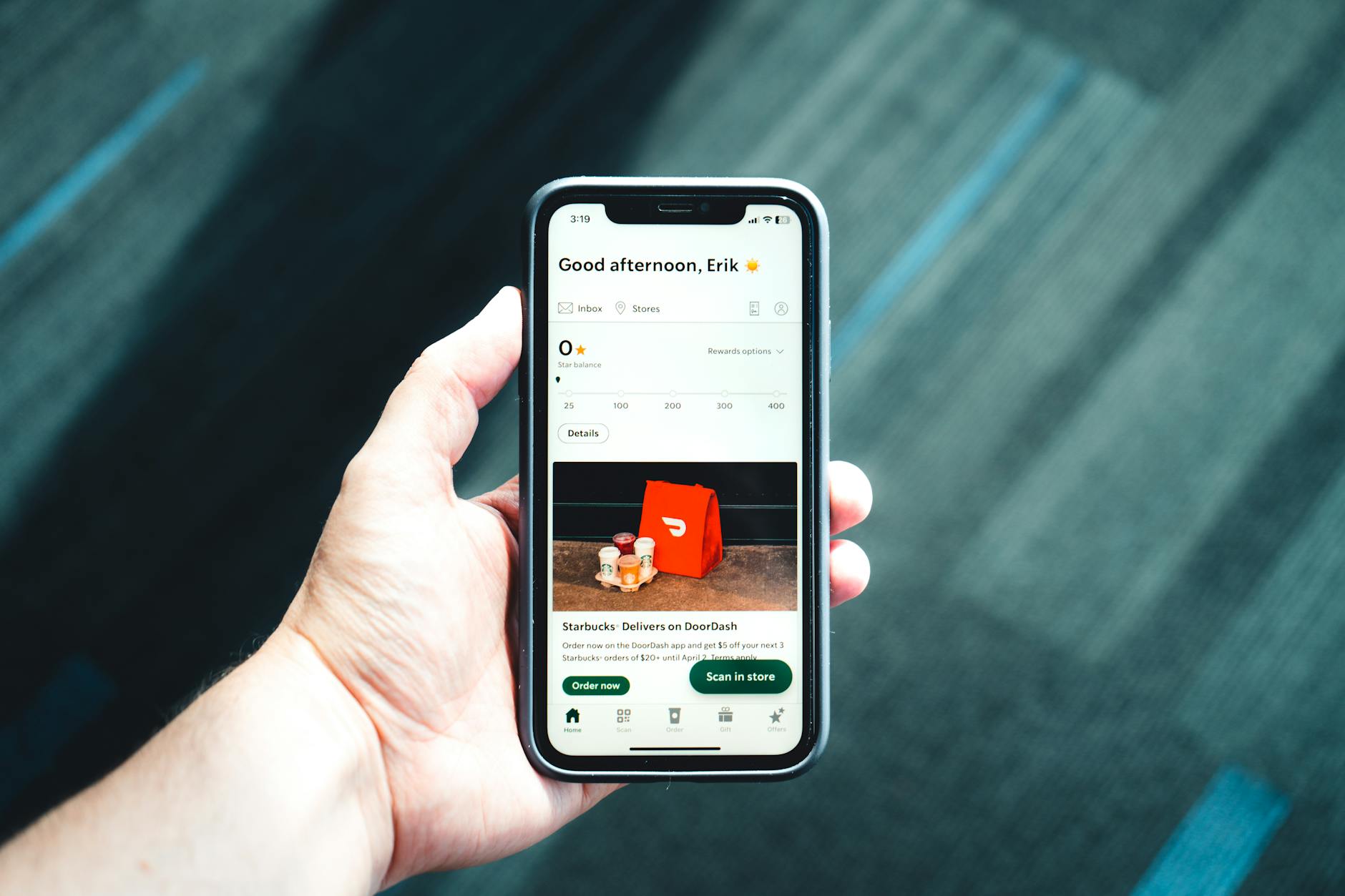
The order total displayed during the checkout process is frequently presented as an estimate that adjusts upward between confirmation and final charge, with the adjustment attributed to factors including revised distance calculations, updated tax assessments, or post-order fee corrections that the customer has no practical ability to review before the charge is processed. The gap between estimated and final totals is typically small enough per transaction to fall below the threshold of active complaint while being large enough across millions of daily transactions to represent significant additional revenue for the platform. Customers who have noticed that their final charges are consistently slightly higher than the estimated totals shown at checkout have identified a real pattern rather than an error, but the per-transaction magnitude is calibrated to discourage the effort of formal disputation. The practice of presenting estimated rather than final totals at the point of confirmation is a deliberate design choice in a regulatory environment where final-price disclosure at checkout is the norm for other categories of consumer digital commerce. Normalizing the estimated-to-final gap as an inherent feature of delivery pricing rather than a disclosure failure has been one of the more successful framing achievements in the industry’s relationship with consumer expectations.
Packaging Fee Additions

Fees nominally attributed to packaging, utensils, or environmental compliance are increasingly appearing as separate line items in delivery order summaries, having previously been absorbed into menu prices or delivery fees in ways that made them invisible to customers reviewing their total. The externalization of packaging costs into a discrete visible charge is presented as a transparency measure but functions as a price increase that benefits from the psychological accounting advantage of appearing to be a small, justified, and externally mandated cost rather than a platform revenue decision. Environmental packaging fees in particular carry a framing that makes consumer resistance feel socially irresponsible, converting what is effectively an additional platform or restaurant charge into a stated contribution to sustainability goals whose actual implementation and verification are not disclosed. The cumulative effect of multiple small named fees, each individually small and individually justifiable in isolation, is a total charge that is significantly higher than the menu price and delivery fee framework that customers use as their primary mental model of what delivery orders cost. Named fee proliferation is one of the most effective strategies for increasing average order revenue without increasing any single charge to a level that triggers active resistance.
Cashback Complexity

Cashback and rewards programs offered by delivery platforms create the impression of ongoing value return to loyal customers while embedding redemption conditions, expiry timelines, minimum order thresholds, and category restrictions that reduce actual redemption rates far below the rates that would be required to produce the implied savings. Points and credits that expire before the customer reaches the redemption threshold, cashback that applies only to specific menu categories or partner restaurants, and minimum order values required for redemption all function as friction mechanisms that capture the loyalty-building psychological benefit of a rewards program while minimizing its financial cost to the platform through structural impediments to actual use. Customers who track their rewards balance as a running measure of the value they are accumulating from platform loyalty are frequently measuring an aspirational figure rather than a realizable one, with the gap between accumulated and redeemed rewards representing a liability on the platform’s books that structural complexity is engineered to keep perpetually unrealized. The rewards program is most financially valuable to the platform when it successfully increases ordering frequency and platform preference without requiring the delivery of the net savings it implies. Understanding cashback complexity requires treating rewards programs as retention tools rather than as genuine value return mechanisms.
Price Comparison Barriers
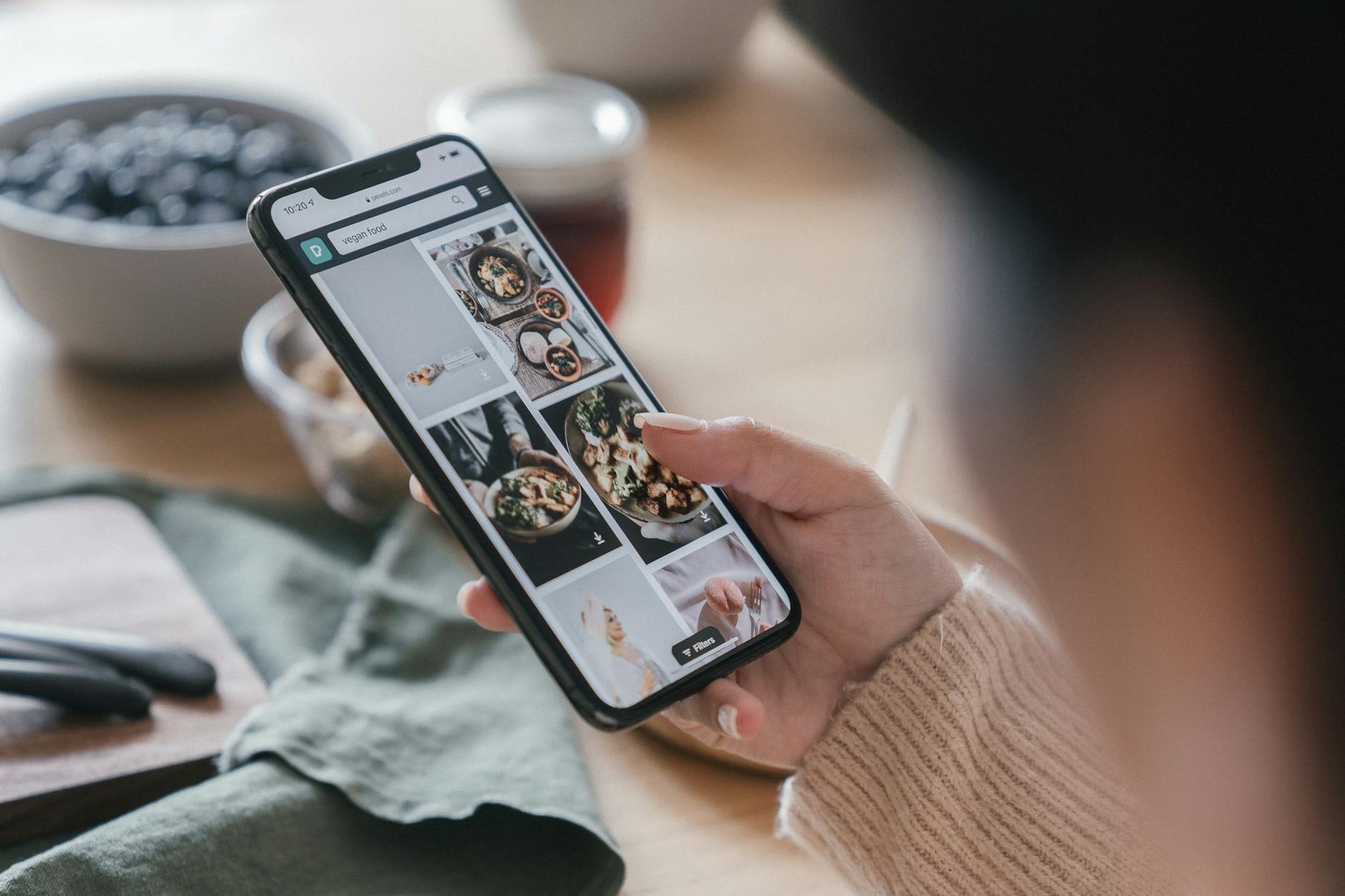
The interface design of delivery platforms actively impedes the price comparison behavior that would allow customers to make informed decisions about whether a particular platform, restaurant, or order composition represents good value relative to available alternatives. Finding a restaurant’s direct ordering option, comparing prices across competing delivery platforms for the same restaurant, or identifying whether collection would eliminate fees are all actions that require deliberate effort and platform navigation that the user experience is specifically designed not to facilitate. The restaurant search function within a platform returns only restaurants contracted with that platform, the pricing displayed is specific to that platform’s arrangement with each restaurant, and the checkout flow is optimized for conversion rather than informed decision-making. A customer who wanted to make a fully informed comparison before placing any delivery order would need to visit multiple platforms, the restaurant’s own website, and potentially make a phone call before having the information needed to identify the lowest total cost option for their intended meal. The cognitive cost of genuine price comparison is deliberately set high enough that most customers abandon the process before completion, a design outcome that is not accidental.
Contactless Tip Defaults

The shift toward contactless payment and fully app-mediated ordering has removed the moment of in-person social interaction that previously governed tipping decisions for restaurant collection orders and replaced it with an app-mediated prompt that applies the same default tip framework used for delivery to order types where tip norms are genuinely less established. Collection orders, where the customer travels to the restaurant and no driver is involved, increasingly prompt tip requests upon checkout using the same percentage-based defaults designed for delivery, creating a social pressure context in which declining to tip requires an active decision against a pre-selected amount. The extension of delivery tip defaults into collection, dine-in, and counter service contexts represents a significant expansion of tip capture that is enabled entirely by the app’s role as the payment intermediary and the behavioral inertia of default settings. Customers who tip at delivery rates on collection orders because the app presented the option in the same way and the social pressure of the checkout moment prevented active reconsideration are paying for a service element that did not occur. The normalization of tipping prompts across all restaurant interaction types, regardless of the service model involved, is one of the more consequential behavioral shifts enabled by app-mediated payment.
Alcohol Markup Layering

Alcoholic beverages added to delivery orders are subject to the same commission-driven menu price inflation as food items, the same delivery and service fee percentages, and the same tip calculation on inflated base prices, making the effective markup on a delivered bottle of wine or six-pack of beer substantially higher in percentage terms than the markup applied to the same items in a retail or restaurant context. The price of alcohol in delivery contexts is rarely compared to retail price by customers who are primarily focused on food selection, meaning the full extent of alcohol-specific markup frequently goes unnoticed within the larger order total. Minimum order values for alcohol delivery are often set higher than those for food-only orders, creating additional pressure toward larger total orders that compound fee calculation across every percentage-based charge. In markets where platform alcohol delivery has expanded rapidly, the convenience premium on delivered alcohol has reached levels that would prompt immediate consumer resistance if applied to any food category with equivalent price transparency. Adding alcohol to a delivery order is among the highest cost-per-unit purchasing decisions available to the average consumer and one that is rarely recognized as such at the moment it is made.
Estimated Delivery Time Inflation

Delivery time estimates displayed on platform listings are systematically inflated beyond actual delivery times in many market conditions, a practice that serves two specific commercial functions simultaneously. Inflated time estimates reduce customer abandonment rates by front-loading the expected inconvenience of waiting, then converting the experience into a positive surprise when food arrives earlier than the stated estimate, generating goodwill that increases satisfaction scores and repeat order rates regardless of the objective delivery quality. Simultaneously, inflated time estimates provide operational buffer that reduces the frequency of late delivery penalties and complaints, protecting the platform’s performance metrics and the restaurant’s rating without requiring any improvement in actual delivery speed. Customers who select a restaurant partly on the basis of its estimated delivery time are potentially making decisions based on a figure calibrated for operational and psychological rather than informational purposes. The estimated delivery time is one of the most influential decision factors for customers selecting between comparable restaurants and one whose accuracy is the least independently verifiable before the order is committed.
Reduced Restaurant Ratings

Restaurant quality ratings displayed on delivery platforms are calculated from review pools that include delivery experience factors such as packaging quality, delivery temperature, and courier timeliness alongside assessments of the food’s actual quality, producing composite scores that do not accurately reflect the restaurant’s performance in its own controlled environment. A restaurant that consistently produces excellent food may carry a lower platform rating than its actual quality warrants because delivery-specific variables outside its control have degraded the customer experience and produced negative reviews attributed to the restaurant rather than to the delivery process. Customers who use platform ratings as proxies for restaurant quality are therefore making decisions based on a metric that conflates the restaurant’s skill with the platform’s logistical performance, potentially avoiding excellent restaurants and selecting mediocre ones on the basis of operationally contaminated data. The rating system’s conflation of food quality with delivery quality serves the platform by making all quality-related feedback flow through the platform review system rather than directly to restaurants through independent channels. A restaurant’s platform rating is at best a measure of the complete delivery experience and at worst a platform operations metric wearing the costume of a food quality assessment.
Subscription Tier Confusion
Delivery platforms that offer multiple subscription tiers with different fee structures, benefit levels, and applicable restaurant categories create a decision environment of sufficient complexity that customers frequently cannot accurately assess which tier, if any, represents genuine value for their individual usage patterns. The complexity is not incidental but engineered to prevent the clear cost-benefit calculation that would allow customers to make fully informed subscription decisions, replacing it with a simplified narrative about the most prominent benefit of each tier that omits the conditions and limitations that govern its practical value. Customers who upgrade to a higher subscription tier in response to marketing of a specific benefit they want frequently discover that the benefit applies only to a subset of restaurants, order sizes, or delivery windows that do not match their primary ordering patterns. The cognitive effort required to understand the full implications of each subscription tier is set at a level that makes most customers default to marketing-led tier selection rather than genuinely informed comparison. Subscription tier confusion is a deliberate feature of platform design that maximizes subscription revenue by making accurate self-assessment of the optimal tier genuinely difficult for the average consumer.
Promotional Price Anchoring
The display of a crossed-out original price alongside a current discounted price for menu items or delivery fees is a price anchoring technique that creates the perception of savings by reference to a prior price that may never have been the standard rate or may have been the standard rate only for a brief period specifically designed to establish the anchor. Customers who see a delivery fee shown as reduced from a higher crossed-out figure experience a psychological savings even when the displayed discounted price is identical to the rate charged on the majority of orders that do not feature the promotional display. Price anchoring through crossed-out figures is among the most thoroughly documented and consistently effective pricing psychology techniques available in digital commerce and is applied with particular sophistication in delivery app checkout flows where the customer is already in a committed decision state. The customer who feels they are receiving a deal based on the presence of a crossed-out price on their checkout screen has responded to a visual signal whose relationship to genuine discount value is at best uncertain and at worst entirely fabricated. Understanding promotional price anchoring as a visual persuasion technique rather than as a factual record of price reduction is a prerequisite for evaluating whether any displayed discount on a delivery platform represents real savings.
Dark Pattern Upsells

The checkout flow on delivery platforms incorporates multiple stages at which additional items, upgrades, or services are presented as opt-out rather than opt-in additions, requiring the customer to actively notice and decline each upsell rather than actively choose to accept it. Suggested additions including drinks, sides, desserts, and platform credits appear in visually prominent positions with accept-by-default interfaces that capture customers moving quickly through checkout, generating incremental order value from additions the customer did not initiate and might not have chosen under a neutral presentation. The term dark pattern describes interface designs that use visual hierarchy, default settings, and friction asymmetry to guide user behavior toward outcomes that serve the platform rather than the user, and delivery app checkout flows contain several of the most well-documented examples of this design category in commercial use. Customers who review their order confirmation and find items they do not recall adding have encountered the practical output of opt-out upsell design, an experience common enough to have generated significant regulatory interest in several markets. The cumulative value of dark pattern upsells across a platform’s daily transaction volume represents a revenue stream generated entirely through interface manipulation rather than customer demand.
Geographic Price Discrimination

Delivery platforms apply different pricing structures to different geographic areas based on assessments of local market conditions, competitive intensity, and estimated price sensitivity of the customer population in each zone, meaning that two customers ordering the same meal from the same restaurant pay different effective prices based solely on their address. Customers in neighborhoods identified as having higher disposable income, lower alternative food access, or reduced competitive delivery options are charged higher fees or face higher minimum order thresholds than customers in more price-competitive markets, a form of geographic price discrimination that is enabled by the platform’s data infrastructure and invisible to users who have no basis for comparison. The practice is legally permissible in most markets and structurally impossible for individual customers to detect without access to comparative pricing data across multiple addresses. Geographic price discrimination represents one of the most sophisticated applications of the platform’s data advantage over individual consumers, converting location-based vulnerability into a reliable revenue premium. Customers in less price-competitive geographic markets are paying more not because their delivery costs more but because the platform’s data indicates they are less likely to comparison shop or switch platforms in response to elevated pricing.
Cart Abandonment Recovery
When a customer adds items to a delivery cart and then closes the app without completing the order, the platform’s cart abandonment recovery systems deploy promotional offers, push notifications, and limited-time fee reductions specifically calibrated to convert the abandonment into a completed transaction, creating the impression of a spontaneous saving that is in fact a targeted commercial intervention. The abandoned cart discount is typically set at the minimum reduction likely to produce conversion based on the platform’s behavioral data, meaning the customer who returns to complete their order in response to the notification is paying more than the platform would have accepted had the customer negotiated or simply waited longer. Cart abandonment recovery turns the customer’s natural decision hesitation into a commercial opportunity that benefits the platform while creating the subjective experience of getting a deal. The discount offered through cart abandonment recovery is almost invariably smaller than the cumulative price inflation across the rest of the order that the customer did not identify or challenge during their initial browsing session. Understanding that cart abandonment discounts represent floor pricing rather than genuine savings reframes the entire abandonment recovery experience as a negotiation that the platform consistently wins.
If any of these pricing mechanisms have changed the way you think about your next order, share your thoughts and experiences in the comments.




