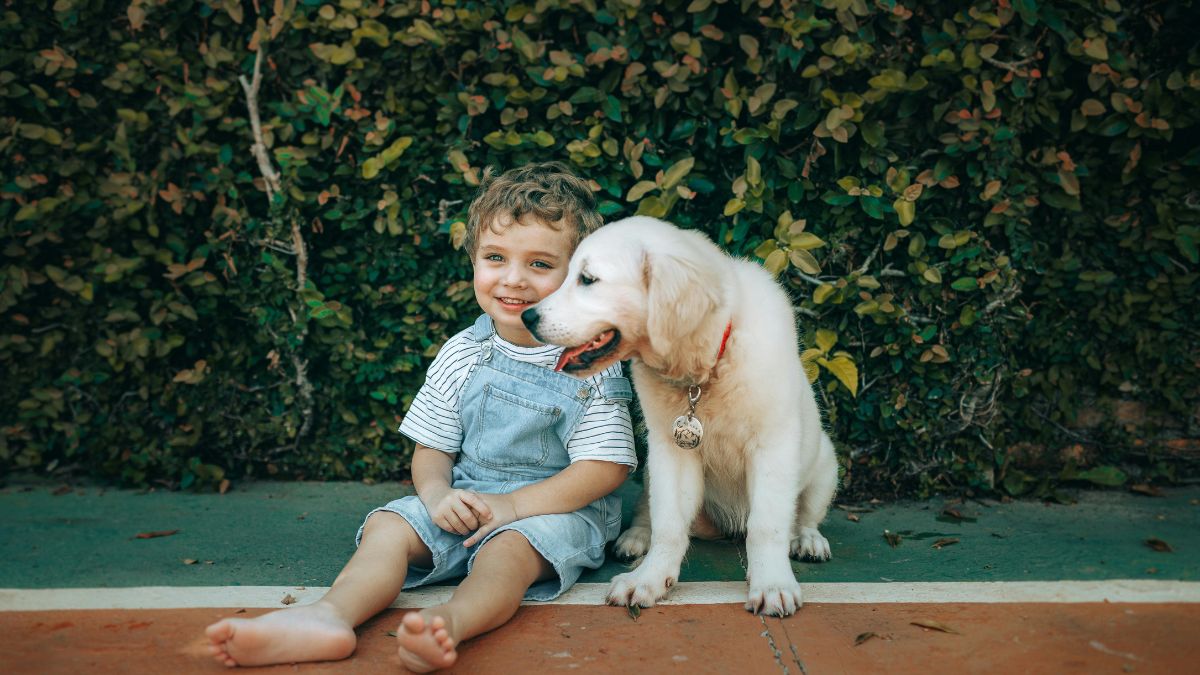
After months of relentless begging from the kids, many parents find themselves seriously considering adding a dog to the household. The search for the right breed almost always follows the same script: playful, gentle, easy to train, and good with children. And almost inevitably, one name rises to the top of the list — the golden retriever. It is easy to see why. These dogs have built a reputation over generations as the quintessential family companion, and that reputation is not entirely undeserved.
Golden retrievers are widely regarded as one of the friendliest and most loyal breeds around. They are intelligent, eager to please, and genuinely affectionate with the people they love. But being a popular family dog and being the right dog for every family are two very different things, and experts are quick to point out that distinction. Before rushing to the nearest breeder or rescue, there is quite a bit worth knowing about what life with a golden retriever actually looks like on a daily basis.
Dog trainer Dion Studinski puts it plainly. “Golden retrievers can be fantastic with children,” he says, “but these are big, energetic dogs. They can accidentally knock over a small child, which is why supervision and clear boundaries are essential. The dog needs proper training, and the children need to understand how to behave around a dog.” His point is not to discourage families from the breed, but to make sure expectations are grounded in reality rather than nostalgia or social media clips of golden puppies rolling around on lawns.
The age of the children in the household matters considerably. Very young kids and high-energy golden retrievers can be a challenging combination, particularly in the early years when puppies are at their most boisterous and least predictable. Studinski notes that the breed tends to adapt well to the general chaos of family life once properly trained. “In a home with kids, noise, and constant activity, it matters that a dog can adjust,” he explains. “A well-raised golden retriever can handle that kind of environment. But that does not mean it is easy. It means that with the right training, socialization, and leadership, the dog has the potential to be an excellent family companion.”
Perhaps the most overlooked question when considering a golden retriever is not whether the breed is a good fit but whether the family’s schedule can actually accommodate one. Studinski has a direct way of framing this for busy households. “For families with packed schedules, the real question is not ‘Is this a good dog?’ but rather ‘Do we have time for a dog?’” he says. “Many people underestimate just how demanding a golden retriever puppy can be in the first two to three years. These are active dogs full of energy, and you have to count on daily interaction, consistent training, and regular exercise.” Without that commitment, even the most naturally sweet-tempered breed can develop behavioral problems.
The day-to-day demands of golden retriever ownership extend beyond walks and playtime. These dogs shed heavily and require regular brushing to keep their coats manageable. They also tend to struggle when left alone for extended periods, which can lead to anxiety or destructive behavior in dogs that are otherwise perfectly well-adjusted. Studinski also raises a concern that applies to many popular breeds. “The quality of breeding varies enormously,” he warns. “Poorly bred golden retrievers can struggle with anxiety, hyperactivity, or significant health issues.” Choosing a reputable breeder or going through a responsible rescue organization makes a meaningful difference in the kind of dog a family ends up with.
The bottom line is that golden retrievers have earned their reputation for a reason, but the reputation alone should not be the deciding factor. They can be wonderful with children, adaptable to a lively household, and deeply devoted to their families. They can also be a lot of work, especially in those first formative years that set the tone for the dog’s entire life. Families willing to put in the time, maintain consistent routines, and approach dog ownership as a long-term commitment will likely find the breed lives up to every glowing thing ever said about it.
Golden retrievers were originally bred in Scotland in the mid-1800s specifically for retrieving waterfowl during hunts, which explains their natural love of swimming and their notoriously soft mouths. The breed’s instinct to carry things gently is so strong that many golden retrievers will greet guests at the door holding a toy, not out of playfulness alone, but because carrying something is simply what their genetics are telling them to do. Golden retrievers have also consistently ranked among the top five most popular dog breeds in the United States for decades, which is both a testament to their temperament and a reminder that demand for them remains extremely high, making the quality of any given dog highly dependent on the care taken during breeding.
Do you have a golden retriever at home, or are you thinking about getting one? Share your experience in the comments!




