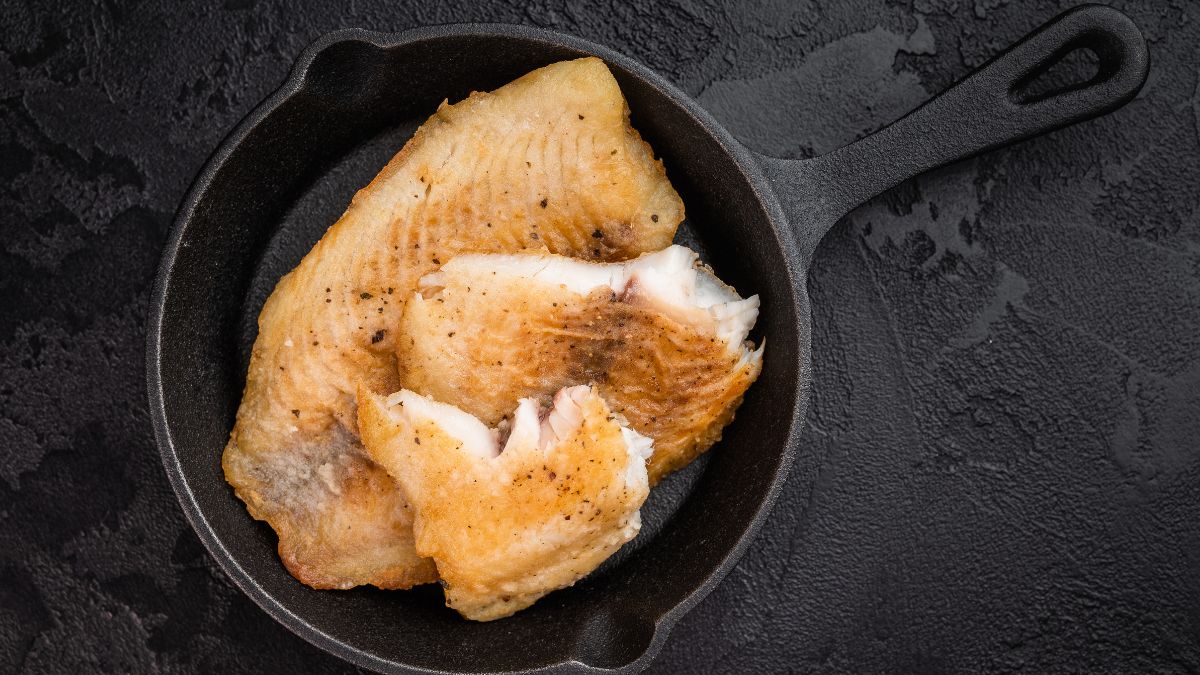
Few kitchen frustrations rival the moment a beautiful piece of fish tears apart in the pan, its skin clinging stubbornly to the surface instead of releasing with a satisfying, golden crunch. The good news is that this is almost entirely avoidable, and it comes down to a handful of techniques that professional chefs rely on consistently. The Guardian consulted several culinary experts on the matter, and their advice points to the same two fundamentals: high heat and low moisture.
The first and most critical step happens before the pan even touches the stove. Moisture is the enemy of crispy fish skin, and any water left on the surface of a fillet will turn to steam during cooking, making the skin go limp and unpleasant rather than crisp. The fix is straightforward: pat the skin thoroughly dry with paper towels or a clean kitchen cloth. Then wrap the fillet in another sheet of paper towel or a fresh cloth and let it sit for a few minutes to draw out any remaining moisture. This small act of patience makes an enormous difference in the final result.
Mitch Tonks, founder of the Rockfish restaurant chain, puts it plainly: “The secret to perfectly crispy fish skin is heat.” But he is equally emphatic about what comes before the heat. Once the fillet is thoroughly dried, Tonks salts it generously, which further draws out surface moisture while beginning to season the flesh. He also notes that if you are cooking on a ridged grill pan, the right approach is to rub the oil and salt directly into the skin before the fish ever meets the pan.
Choosing the right pan and fat matters just as much as the drying step. Rick Toogood, head chef at Prawn on the Lawn, and Jack Stein, culinary director at the Rick Stein restaurants, both recommend placing a sheet of parchment paper on the bottom of the pan to act as a barrier between the fish and the surface. Stein favors sunflower oil for its high smoke point, while Toogood likes to add a small knob of butter alongside the oil for flavor. Whatever fat you choose, it must be genuinely hot before the fish goes in, because adding fish to lukewarm oil is a near-guaranteed recipe for sticking and a ruined piece of protein.
The pan itself should be brought to a high heat before any fat is added. Once you see the oil beginning to shimmer and release wisps of smoke, it is time to lower the fillet carefully into the center of the pan, skin-side down. You should hear an immediate, assertive sizzle. From there, Tonks advises pressing the fillet down gently with a fish spatula for the first few seconds of cooking. “Press it down like that for the first few seconds so it doesn’t curl,” he explains, pointing out that fresh fish has a natural tendency to contract and bow when it first hits heat.
Once the fillet is settled flat in the pan, resist every impulse to move it. Leave it completely undisturbed until approximately 80 percent of the flesh has turned opaque, which you can observe by watching the color change creep up from the edges. When the skin has crisped up properly, the fillet will release from the pan on its own and lift away cleanly. If you feel resistance when you try to slide a spatula underneath, the fish is telling you it is not ready yet. Forcing it at this stage is how skin tears and fillets break apart. Once it releases naturally, flip it briefly to finish the flesh side, which needs only a short time to complete cooking through.
The method rewards patience at every stage, from the drying to the waiting, but the payoff is a fillet with deeply golden, shatteringly crisp skin and perfectly cooked flesh underneath.
Fish skin contains a surprisingly high concentration of omega-3 fatty acids, sometimes rivaling the flesh itself, which means leaving it on and cooking it properly is actually the more nutritious choice. The Maillard reaction, the same chemical process responsible for the crust on a seared steak, is what creates that golden color and complex flavor on fish skin, and it can only happen when surface moisture has been driven off and the temperature is high enough. Some Japanese chefs traditionally use a blowtorch to finish the skin side of fish after gentle poaching, achieving that signature crispness without any risk of the flesh overcooking.
What is your go-to trick for getting perfectly crispy fish skin? Share your thoughts in the comments.




