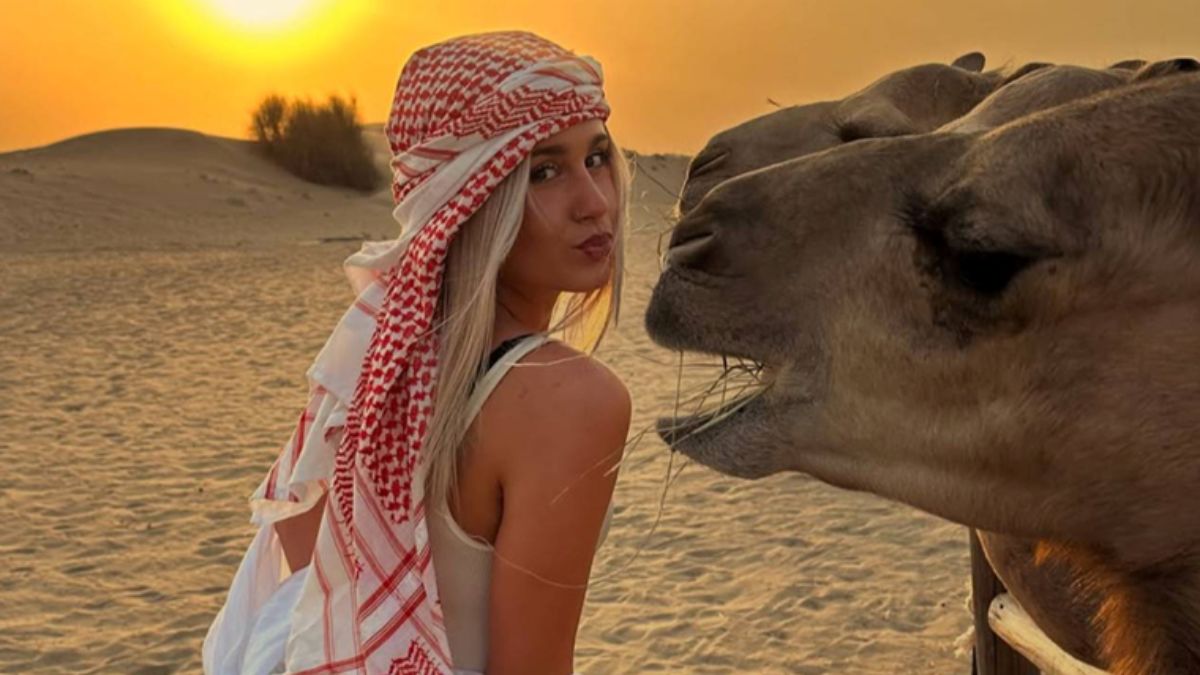
Something strange has been unfolding across social media feeds. Influencers based in Dubai began flooding TikTok and Instagram with nearly identical videos, and sharp-eyed users were quick to notice the pattern. The carefully curated content that once showcased sun-drenched beaches, luxury hotel suites, and lavish parties had given way to something altogether different. Shaky, handheld footage of smoke rising over skyscrapers had briefly surfaced after tensions with Iran flared, only to disappear just as fast.
In place of that raw footage, a new and suspiciously uniform trend emerged. Creators began posting clips that opened with a question along the lines of “You live in Dubai, aren’t you scared?” followed by slow-motion footage of the country’s leader, Sheikh Mohamed bin Zayed Al Nahyan, accompanied by text reading “No, because I know who protects us.” The scripted similarity between posts triggered widespread accusations online that content creators were being paid participants in an orchestrated government PR campaign designed to project calm and stability.
David Haigh, a British lawyer who was once detained in Dubai, believes the situation may carry darker undertones than a simple paid promotion deal. Haigh, who has stated that he was sexually and physically abused during his detention a decade ago, issued a stark warning about the consequences facing influencers who stray from the approved narrative. He made clear that “absolutely no content that could damage Dubai’s reputation” is permitted to be published. Writing in the Daily Mail, Haigh spelled out the scope of the restrictions: “That means no photos of missile damage, no footage of interceptor rockets shooting down drones, no sound of explosions, no panicked selfie videos filmed in basements, bunkers, or safe rooms.” He added that even rescue workers had previously been jailed for posting photographs from emergency scenes, and that “no one is exempt” from these rules.
His warning did not stop there. “Those who fail to comply will find out what it means to upset the Emirates,” Haigh wrote, adding that at least one person had already been arrested for filming a missile strike and that those detained now face a fate he described as “more terrible than anything they can imagine.”
@julisjoking Seeing this happen around us feels surreal. 😓 There's a lot going on right now, and it's easy to feel overwhelmed. But in moments like this, all we can really do is stay calm, stay informed, and trust that the authorities are handling the situation. 🤲🕊️ Focus on what's in our control – being with our families, checking in on loved ones, and keeping faith. Some things are bigger than us, and that's when we choose trust over panic. Stay safe everyone. ❤️ #iran #dubai #war #middleeast #news ♬ orijinal ses – snowbo.art
The real-world consequences of these restrictions became evident when a 60-year-old British man was arrested after allegedly recording Iranian projectiles while vacationing in the Gulf. It remains unclear whether the footage was ever shared publicly, which may factor into whether formal charges are pursued. However, if prosecutors choose to apply the UAE’s strict cybercrime laws, the man could face up to two years in prison and a substantial fine. Authorities have reportedly also warned the broader creator community in the UAE that posts deemed harmful to “public order” or “national unity” could result in penalties exceeding approximately $63,000, in addition to potential imprisonment.
The pressure has visibly taken a toll on those living and working in the city. One female influencer revealed that she had deleted a video showing burning debris outside her apartment building, explaining that creators “have to be very careful about what they say.” British content creator Ben Moss spoke openly about the anxiety the legal environment creates, telling the Daily Mail: “I feel completely safe here thanks to the UAE’s air defense, but the laws sometimes worry me so I always try to present everything positively. I’m much more afraid of being fined or jailed for posting the wrong content than I am of Iranian missiles and drones.”
The phenomenon is not limited to the UAE. In neighboring Qatar, which has also been targeted in the regional conflict, more than 300 people were detained for “filming and spreading videos, spreading rumors, and publishing misleading information” connected to the war. The Kuwaiti government went a step further, issuing a blanket ban on publishing any content related to the conflict, as reported by ABC News.
The UAE’s cybercrime law, officially known as Federal Decree-Law No. 34 of 2021, covers an extraordinarily wide range of online speech, including content that “threatens social peace” or undermines “national unity” — terms broad enough to catch almost any unflattering post. Dubai is home to an estimated 500,000 social media influencers and content creators, making it one of the densest concentrations of digital talent anywhere in the world. The UAE does not have a jury system, meaning all criminal cases are decided solely by judges appointed by the government.
What do you think about the pressure influencers in conflict-adjacent regions face to shape their content — share your thoughts in the comments.




