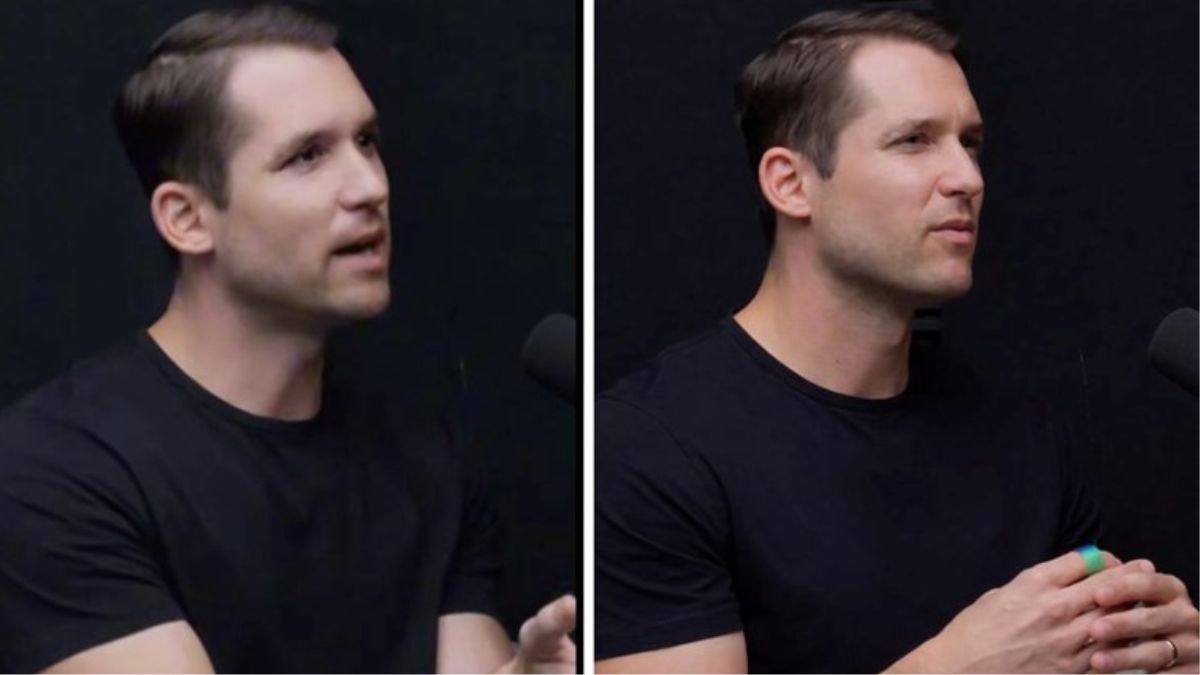
Most people assume that catching a liar requires some kind of special training or expert-level intuition, but one attorney says the secret is far simpler than that. Jefferson Fisher, an American lawyer, communication expert, and author with more than 1.5 million followers on TikTok, has shared what he believes is the most effective tool for exposing dishonesty in any conversation. His advice has resonated widely online, earning thousands of likes across his social media posts. According to Fisher, you don’t need to be a human lie detector to spot when something doesn’t add up.
Fisher, who regularly shares communication tips drawn from his legal career on his TikTok account @Justaskjefferson, explains that the key to catching a liar lies in how they react to uncertainty. His central insight is that liars cannot tolerate loose ends. “Liars hate unresolved situations,” he says, explaining that dishonest people are driven by an urgent need to make you accept their version of events quickly and completely. They want the story wrapped up, put to rest, and never revisited. The moment you signal that you’re not fully buying it, things change.
The technique Fisher recommends is deliberately simple. Instead of confronting someone directly or pushing back with questions, you just pause the conversation. You say something like, “You know what, something about this just isn’t sitting right with me. Can we come back to this later?” That’s it. What happens next, Fisher says, tells you almost everything you need to know. “Truth doesn’t need an excuse,” he points out, and people who are being honest will have no problem with a delay.
The reaction from someone who is lying, however, tends to be immediate and disproportionate. Fisher describes how dishonest people will often escalate the moment they sense they’re not being believed outright. “They’ll push back hard: ‘What do you mean? Are you saying you don’t believe me? Are you calling me a liar?’” he explains, noting that the defensiveness itself becomes revealing. In contrast, a truthful person is likely to respond calmly, even cooperatively, saying something along the lines of “Take all the time you need. I’ll tell you exactly what happened. You can check with anyone.” Liars, Fisher emphasizes, do not like complications. They need resolution immediately because every moment the story stays open is a moment it can unravel.
Beyond this single technique, Fisher has also shared a broader framework for identifying dishonest people from the start of an interaction. He identifies three key warning signs. The first is what he calls “bestie bombing,” where someone tries to manufacture an intense sense of closeness far too quickly. “Oh my God, we are literally the same person. I feel like we’ve been best friends forever and we just met,” is how he describes it, noting that confident, secure people simply don’t behave that way. The second red flag is excessive flattery that feels hollow or strategic rather than genuine. Fisher points out that most people have an instinct for insincerity and can sense the difference, much like the way everyone can recognize a fake laugh without being taught how.
@justaskjefferson This is how to catch a liar in action
♬ original sound – Jefferson Fisher
The third warning sign Fisher highlights is a consistent lack of interest in you as a person. If someone monopolizes every conversation and never once turns the focus toward what you think, feel, or experience, that self-absorption can be a signal that the relationship is more transactional than it appears. Taken together, these three patterns form a useful picture of someone whose motives may not be entirely straightforward. Fisher’s second video on the topic attracted more than 30,000 likes, suggesting that his followers found the framework just as useful as his one-sentence technique.
What makes Fisher’s advice particularly compelling is that it asks nothing dramatic of the person using it. There’s no confrontation, no accusation, and no need to announce that you’re suspicious. The delay does the work for you, creating just enough space for a liar’s own anxiety to surface.
Research on deception has found that liars tend to experience significantly higher cognitive load than truth-tellers, meaning the mental effort of maintaining a false story in real time is taxing enough that it affects behavior in ways observers can often detect. Interestingly, studies have shown that people are better at identifying deception through written text than through face-to-face interaction, largely because visual cues like eye contact and body language can actually distract from the verbal inconsistencies that matter most. The phrase “the truth will out” traces back to Shakespeare’s ‘The Merchant of Venice,’ written around 1596, which suggests humans have been philosophizing about liars being their own undoing for a very long time.
Have you ever used a technique like this to spot a liar, and did it work? Share your experience in the comments.




