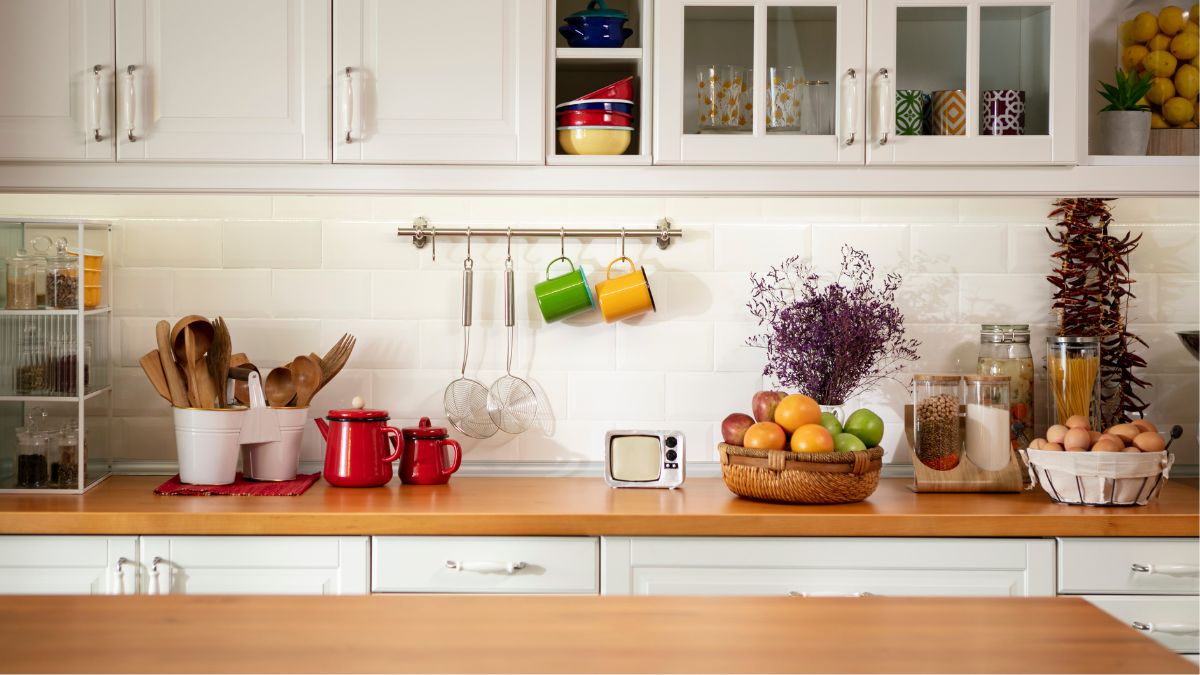
A cluttered kitchen can make cooking feel like a chore rather than a pleasure. Over time, countertops and cabinets fill up with items we keep meaning to use, gadgets bought in bursts of culinary ambition, and containers that multiply faster than we notice. According to Simply Recipes, there are six categories of kitchen items most people can throw out or donate right now, without a moment’s regret, and doing so will free up space, reduce visual noise, and make the whole room feel easier to be in.
The first culprits are unused specialty ingredients. That jar of harissa or bottle of black truffle oil purchased for one ambitious recipe back in 2022 and never touched again is taking up valuable cabinet space. Even pricey pantry items have a shelf life, and if you cannot think of at least two realistic meals you would actually make with an ingredient this month, it is time to let it go. Holding onto something out of guilt about what it cost is not the same as getting value from it.
Old spices and dried herbs are another category worth ruthlessly revisiting. Ground spices tend to lose their potency after about six months to a year, while whole spices like peppercorns and cinnamon sticks can hold their aroma for three to four years. The easiest test is to rub a pinch between your fingers and take a sniff. If the scent is faint or flat, those spices are doing absolutely nothing for your cooking and are simply occupying shelf space.
Dull or redundant knives are a surprisingly common source of kitchen clutter. The old saying that a dull knife is more dangerous than a sharp one holds true because a blade that cannot cut cleanly requires more force, which makes it far more likely to slip. Most home cooks genuinely only need three knives to handle everything: a chef’s knife, a paring knife, and a serrated bread knife. If a knife block or drawer is jammed with pieces from a budget set that struggles to slice a tomato, those knives are creating hazard, not helping.
Lidless containers are one of the most universal kitchen headaches. Nearly every household has a stack of plastic containers missing their matching tops, and the truth is simple: a container without a lid is just an awkward piece of plastic. If the matching lid has not turned up by now, it is almost certainly gone for good. Tossing the container and reclaiming that drawer or shelf space is a decision you will not regret.
Takeout containers deserve a harder look too. Clear plastic tubs from restaurant deliveries seem sturdy and reusable, and the instinct to keep them is understandable. The problem is that they accumulate at a remarkable pace, and most people realistically only need a small handful on hand for sending leftovers home with guests. It is also worth knowing that black plastic containers in particular are often made from recycled electronic waste and may pose a health risk over repeated use, which is a compelling reason to stop holding onto them.
Finally, mugs are among the most quietly multiplying objects in any kitchen. They arrive as travel souvenirs, conference freebies, holiday gifts, and children’s art projects, and they keep coming. Yet most people consistently reach for the same two or three favorites every single morning. Any mug that has gone untouched for a year is a prime candidate for donation, where someone else can actually enjoy it.
The habit of holding onto things just in case can quietly erode the functionality of a kitchen until the space stops feeling like somewhere you want to spend time. Decluttering does not have to mean throwing things out carelessly; donating items in good condition means someone else gets use out of them while you get your space back.
The average American home contains roughly 300,000 items, and the kitchen tends to be one of the densest rooms for accumulation. Studies on cluttered environments have found that visual chaos actually raises cortisol levels, meaning that stack of mismatched lids may quite literally be raising your stress levels every time you open that cabinet. And here is the detail that tends to derail even the most committed declutterers: smell is the most reliable indicator of spice freshness, but most people test by opening the jar and sniffing the air above it rather than actually crushing the spice, which is far less accurate.
What is the item in your kitchen that you know you should throw out but keep holding onto? Share your thoughts in the comments.




