
The reading habits of highly effective leaders rarely resemble the straightforward cover-to-cover approach most people learned in school. Behind many of the world’s most consequential decision-makers lies a deeply personal and often unconventional relationship with the written word. Some annotate obsessively, others read backwards, and a surprising number treat books as raw material to be dismantled rather than stories to be consumed. What unites these habits is not their strangeness but their intentionality and the results they consistently produce.
Bill Gates

Reading with a dedicated notepad beside every book is a habit that Bill Gates has described as essential to his retention process. He fills margins with questions and writes summary notes at the end of chapters to consolidate what he has absorbed before moving forward. The practice forces active engagement with the material rather than passive reception of information flowing across the page. Gates has noted that he rarely considers a book properly read unless he has written responses to it as he goes. This dialogue between reader and text transforms the experience from consumption into a genuine intellectual workout.
Index Cards

Carrying a pocket-sized stack of index cards at all times to capture ideas triggered by reading is a habit shared by a surprisingly large number of high-performing executives and thinkers. The physical act of transferring a thought from a book margin to a separate card creates a secondary layer of processing that deepens retention. Leaders who use this system often sort their cards by theme at the end of each week creating a personally curated archive of insights drawn from diverse sources. The limitation of the card’s small surface area forces a discipline of compression that strengthens the ability to distill complex ideas into actionable language. Many attribute significant strategic decisions to connections first noticed while reviewing accumulated index card collections.
Rereading Classics

Returning to the same small group of books every year rather than constantly consuming new titles is a reading philosophy practiced by a number of consistently high-performing leaders. The argument is that a great book offers a different experience to a different version of the reader and that the apparent repetition is in fact a new encounter each time. Leaders who follow this practice often report that passages which seemed unremarkable in earlier readings become deeply relevant as their experience and responsibilities evolve. The discipline of rereading also guards against the illusion of breadth that comes from consuming large quantities of new material without achieving comparable depth. A short list of repeatedly visited texts often produces more lasting intellectual transformation than an impressive annual reading count.
Elon Musk

Approaching books as reference systems rather than linear narratives is a reading orientation that Elon Musk has described in multiple interviews about his self-education process. He has spoken about reading technical textbooks in fields outside his formal training by moving directly to the sections most relevant to the problem he was currently trying to solve. This non-sequential engagement treats the book as a database to be queried rather than an argument to be followed from introduction to conclusion. The approach demands a working knowledge of subject architecture and the ability to identify which section contains the information needed without the scaffolding of sequential reading. Many engineering and business leaders apply a similar reference-style engagement to technical and scientific material as a way of accelerating applied learning.
Sleep Reading

Reading for exactly thirty minutes immediately before sleep as a deliberate cognitive ritual is a practice reported by a significant number of leaders who describe it as one of their most productive reading sessions of the day. Sleep researchers have noted that material processed immediately before sleep is subject to memory consolidation processes that occur during the night. Leaders who use this window intentionally select conceptually demanding material rather than light reading to take advantage of the consolidation effect. The consistency of the ritual trains the mind to shift into a receptive and focused state at the same time each evening. Several executives credit pre-sleep reading with insights that arrived fully formed in the morning having apparently been processed overnight.
Spine Breaking

Aggressively breaking the spine of every new book to make it lie completely flat during reading is a physical habit that some leaders describe as a psychological commitment device. The deliberate destruction of the book’s pristine condition signals an intention to use the text rather than preserve it creating a permission structure for heavy annotation and folding. Leaders who practice this habit often describe a relationship with books that is fundamentally utilitarian treating them as tools rather than objects to be admired. The flattened book also has a practical dimension making it easier to write in margins and hold open during meals or meetings. The visual transformation of a cracked and annotated volume is, for many of these readers, the clearest evidence that a book has been genuinely engaged with.
Warren Buffett

Spending up to eighty percent of each working day reading across newspapers, annual reports, industry publications, and books is a practice Warren Buffett has consistently cited as the foundation of his investment decision-making. He has described reading as the process by which he builds the knowledge base necessary to recognize patterns and anomalies in financial information that others miss. The volume of material he consumes daily far exceeds what most professionals would consider sustainable but his decades-long commitment to the practice has produced a compounding effect in understanding that he considers irreplaceable. Buffett has advised young professionals to read five hundred pages per day making the case that knowledge accumulates like compound interest over time. The investment philosophy for which he is famous is inseparable from the reading discipline that generates it.
Color Coding

Using a different color of pen or highlighter for each category of insight found in a book is a system that several highly organized leaders apply to create a visual map of every text they read. One color might mark strategic insights while another captures questions the text raises and a third identifies ideas with immediate practical application. The finished book becomes a personally annotated reference document where any category of information can be located at a glance without rereading. Leaders who use this system often flip through color-coded books during meetings or planning sessions to retrieve relevant insights quickly. The initial investment of attention required by the system pays dividends every time the book is reopened as a working resource.
Backward Reading

Reading the final chapter or conclusion of a non-fiction book before starting from the beginning is a counterintuitive habit practiced by a number of leaders who argue that knowing the destination improves comprehension of the journey. With the conclusion already understood every argument encountered in the preceding chapters can be evaluated in terms of how effectively it builds toward the established endpoint. This approach transforms reading from a process of discovery into a process of critical assessment which many leaders find more intellectually engaging and more useful for retaining structured arguments. The habit also eliminates the anxiety of uncertainty that some readers experience when navigating dense material without knowing where the argument is headed. Several strategic thinkers describe backward reading as the single adjustment that most improved their ability to evaluate the quality of an author’s reasoning.
Oprah Winfrey

Reading with an explicit intention set before opening the first page is a practice Oprah Winfrey has described as central to how she engages with books throughout her extraordinarily diverse career. She approaches each text with a specific question she is hoping the book will help her answer or a particular area of her life or work she hopes it will illuminate. This intentional framing acts as a filter that makes certain passages resonate with unusual clarity because they speak directly to the prepared question. The practice prevents the passive drift that affects unfocused reading and ensures that each book is entered as a purposeful conversation rather than a casual browse. Leaders who adopt this habit frequently report higher retention and more immediate applicability of what they read.
Reading Aloud

Reading particularly dense or important passages aloud in an empty room is a habit that a number of leaders describe as transformative for material they need to understand at a structural rather than surface level. The engagement of the auditory system alongside the visual creates a dual-channel processing experience that many find dramatically improves comprehension of complex arguments. Reading aloud also forces a slower pace than silent reading which allows ideas to settle rather than being swept past by the momentum of the page. Leaders who use this technique often report that hearing their own voice speak an argument reveals weaknesses or contradictions in the reasoning that silent reading obscures. The practice has particular application for legal, philosophical, and technical texts where precision of language is central to meaning.
Nassim Taleb

Maintaining a strict personal library policy of keeping only books that have not yet been read rather than displaying finished volumes is a philosophy that Nassim Taleb has written about as an antidote to the illusion of knowledge. The presence of unread books rather than read ones serves as a constant reminder of the vastness of what remains unknown. This orientation toward the unread transforms the library from a monument to past achievement into an active representation of future intellectual territory. Taleb argues that a collection of books one has already consumed communicates the wrong relationship with knowledge suggesting mastery rather than ongoing inquiry. The habit is as much a philosophical posture as it is a practical reading strategy and it shapes the emotional relationship a reader maintains with their own accumulating ignorance.
Dual Reading
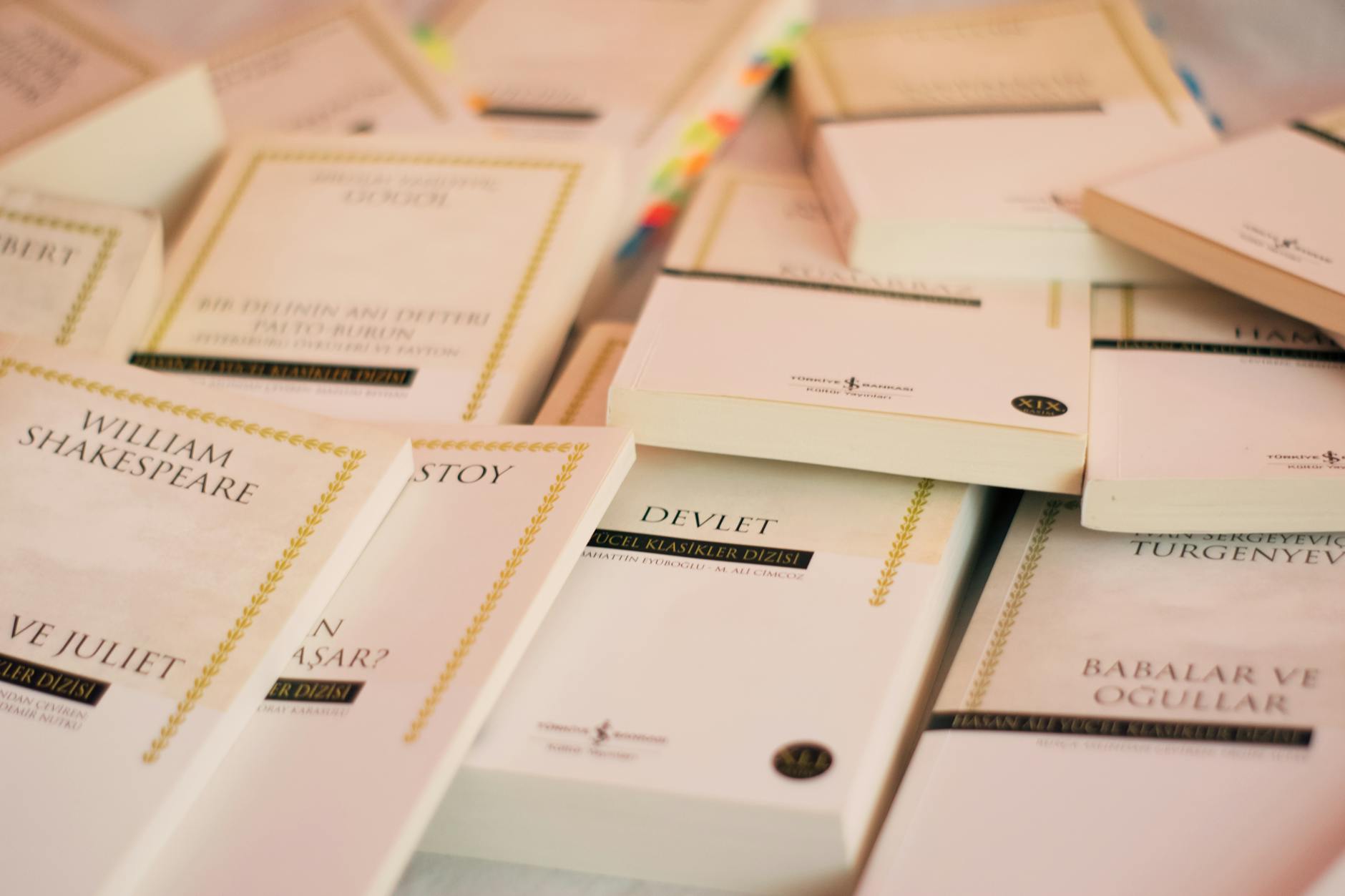
Reading two entirely unrelated books simultaneously and alternating between them within the same sitting is a habit practiced by leaders who use the deliberate cognitive disruption to generate unexpected connections. The friction of switching between unrelated subjects forces the brain to find structural similarities and analogical bridges between domains that would never naturally intersect. Many of the most creative strategic insights reported by leaders who use this method arrive in the transitional moment between one book and the other. The practice requires a tolerance for incompleteness that some readers find uncomfortable but those who persist often describe it as the most generative reading habit in their repertoire. A business strategy text read alongside a book on evolutionary biology or ancient history frequently produces more original thinking than either text would generate in isolation.
Theodore Roosevelt

Reading at least one book per day during periods of relatively normal schedule demand is a habit historically attributed to Theodore Roosevelt who maintained this pace even during his years in the White House. Contemporary leaders who aspire to comparable reading volume typically structure their day around protected reading blocks that are treated with the same inviolability as external appointments. The discipline required to maintain a high daily reading volume forces a prioritization of content that itself becomes a form of intellectual training. Leaders who commit to significant daily reading targets report that the habit reshapes their relationship with leisure time transforming passive hours into productive ones. The cumulative effect of sustained high-volume reading over years and decades produces a breadth of reference that influences decision-making across every domain.
Destruction Method

Physically dismantling a book by tearing out chapters and reading them in a deliberately randomized order is a habit practiced by several unconventional thinkers who use it to override the author’s intended argumentative sequence. By removing the structural scaffold of the original organization the reader is forced to evaluate each section on its own terms rather than through the interpretive frame established by preceding chapters. This destructive engagement produces a genuinely different intellectual experience with the same material and often surfaces insights that sequential reading would have organized away. Leaders who use this method describe it as particularly effective for identifying which sections of a book contain genuinely original ideas versus which sections exist primarily to support a predetermined conclusion. The physicality of the destruction also creates a memorable sensory experience that many readers find improves long-term retention.
Five-Book Rule

Never reading a book in isolation but always reading it as part of a self-assembled cluster of five titles on the same subject is a discipline practiced by leaders who use comparative reading to build robust rather than author-dependent understanding. Any single author’s perspective on a subject carries inherent biases, blind spots, and structural limitations that become invisible when that author’s framework is the only one the reader has encountered. Reading five perspectives on the same topic simultaneously allows the reader to triangulate toward a position informed by genuine intellectual diversity. The disagreements between authors on the same subject are often more instructive than any individual argument and the five-book method makes those disagreements visible. Leaders who use this approach consistently report that their understanding of a subject feels qualitatively more reliable than knowledge built on single-source reading.
Morning Pages

Reading for two hours before checking any form of digital communication is a morning practice described by a significant number of high-performing leaders as the habit most responsible for the quality of their thinking. The brain in its early morning state before the fragmentation of digital input has a quality of focused receptivity that many describe as their most intellectually productive window. Leaders who protect this window for reading rather than consuming news or messages report that the ideas encountered in morning reading have a disproportionate influence on the strategic thinking they apply throughout the rest of the day. The practice requires a degree of discipline that conflicts with the default behavior most people exhibit upon waking but those who establish it consistently describe it as non-negotiable. Several executives credit their most significant professional insights to books read before the day’s digital noise began.
Charlie Munger

Building and maintaining a mental model library drawn from reading across every major academic discipline is an intellectual practice that Charlie Munger has described as the foundation of his approach to business and investment decisions. The concept involves treating each discipline as a source of fundamental frameworks that can be applied far outside their original domain. A mental model drawn from physics applied to human behavior or an ecological principle applied to market dynamics produces the kind of cross-disciplinary insight that reading within a single field can never generate. Munger has argued that the person who reads only within their area of professional expertise operates with a systematically limited set of analytical tools. The deliberate construction of a cross-disciplinary mental model library through broad and intentional reading is, in his view, the single most powerful intellectual investment a person can make.
Annotation Marathon

Rereading a book immediately upon finishing it with the sole purpose of annotating passages that were missed or misunderstood during the first pass is a double-reading discipline practiced by leaders who treat comprehension as a two-stage process. The first reading establishes context and the second reading uses that context to unlock layers of meaning that were not accessible on initial encounter. Complex philosophical, scientific, or historical texts in particular yield significantly different material on second reading when the full architecture of the argument is already understood. Leaders who practice this method describe the annotated result as a fundamentally different document from the one they opened for the first time. The investment of double reading time is repaid through a depth of engagement with the material that single reading rarely achieves.
Question Journaling

Writing three questions generated by each chapter before proceeding to the next is a reading discipline that forces a quality of engagement with the text that most readers never achieve through conventional page-turning. The requirement to produce genuine questions rather than summaries demands that the reader identify gaps, tensions, and unexplored implications in the author’s argument. Leaders who practice this method describe it as dramatically slowing their reading pace while dramatically increasing what they retain and apply. The accumulated questions from a single book often form the basis of subsequent reading choices as the reader pursues answers across multiple sources. Several executives describe their question journals as among the most valuable intellectual resources in their possession because they represent a personally curated map of their own evolving areas of inquiry.
Random Page

Opening a book to a completely random page each morning and reading for fifteen minutes regardless of context or continuity is a deliberately disorienting practice used by some leaders as a creativity and pattern-recognition exercise. The absence of narrative context forces the brain to work harder to extract meaning from the isolated passage creating a more active form of engagement than sequential reading typically demands. Leaders who practice this habit describe it as a way of keeping familiar texts perpetually surprising and of encountering ideas from angles the original reading sequence never provided. The exercise also functions as a low-pressure entry point into difficult texts that might otherwise resist a sustained linear approach. Several creative executives describe random page reading as a reliable method for breaking through periods of strategic stagnation.
Physical Library

Organizing a personal library not by author or subject but by the emotional or intellectual state in which each book should be read is an idiosyncratic system practiced by several leaders who describe their collection as a mood-responsive intellectual resource. Sections might be organized around categories such as books for periods of strategic uncertainty, books for recovering from failure, or books for moments requiring creative expansion. This organization system requires a level of self-knowledge about one’s own reading needs that most people never develop. The practical effect is a library that functions as a precision tool for specific cognitive and emotional states rather than a general archive of accumulated reading. Leaders who maintain this kind of personally curated organization report that they use their books more frequently and more purposefully than before adopting the system.
Deadline Reading

Setting a fixed external deadline for finishing a book and communicating that deadline to a colleague or assistant creates an accountability structure that several high-performing leaders describe as the only reliable way to complete dense or challenging material. The social commitment transforms reading from a private and infinitely deferrable activity into a professional obligation with real consequences for non-completion. Leaders who use this method often schedule a brief conversation with their accountability partner immediately after finishing the book to discuss its key ideas which adds a second layer of motivation and retention benefit. The practice borrows principles from project management and applies them to intellectual development treating reading goals with the same seriousness as business objectives. Those who adopt deadline reading consistently report completing more challenging and more transformative books than they managed through self-directed reading alone.
Socratic Discussion

Reading a book in tandem with a trusted colleague or peer and scheduling regular conversations to debate its arguments is a collaborative reading practice used by several leadership pairs and small executive teams. The commitment to discussion creates an obligation of genuine understanding that solo reading without accountability rarely generates. Arguments that seemed clear and convincing during private reading often reveal their weaknesses when subjected to a probing conversation with someone who has read the same material from a different perspective. Leaders who use this practice describe the discussions as frequently more valuable than the books themselves because the dialogue surfaces implications and contradictions the text alone could not. Several significant organizational decisions have been attributed to insights that emerged during leadership reading discussions rather than from the books that prompted them.
Bedtime Briefing

Having a personal assistant or trusted team member prepare a two-page written summary of a key book each week to be read as a bedtime briefing is a time-management reading strategy used by leaders operating under extreme schedule pressure. The summary reading is followed by a personal decision about whether the full text warrants the investment of dedicated reading time based on the quality and relevance of the condensed version. Leaders who use this system describe it as a way of maintaining intellectual breadth without sacrificing the depth they reserve for the books that genuinely merit it. The practice also develops the summarizing skills of the team member responsible for preparation creating a secondary benefit that compounds over time. Critics of the approach argue that summary reading sacrifices the texture and nuance of the original but proponents counter that it is a rational allocation of finite cognitive resources.
What is the most unusual reading habit you have developed or witnessed that genuinely changed the way you think? Share your experience in the comments.




