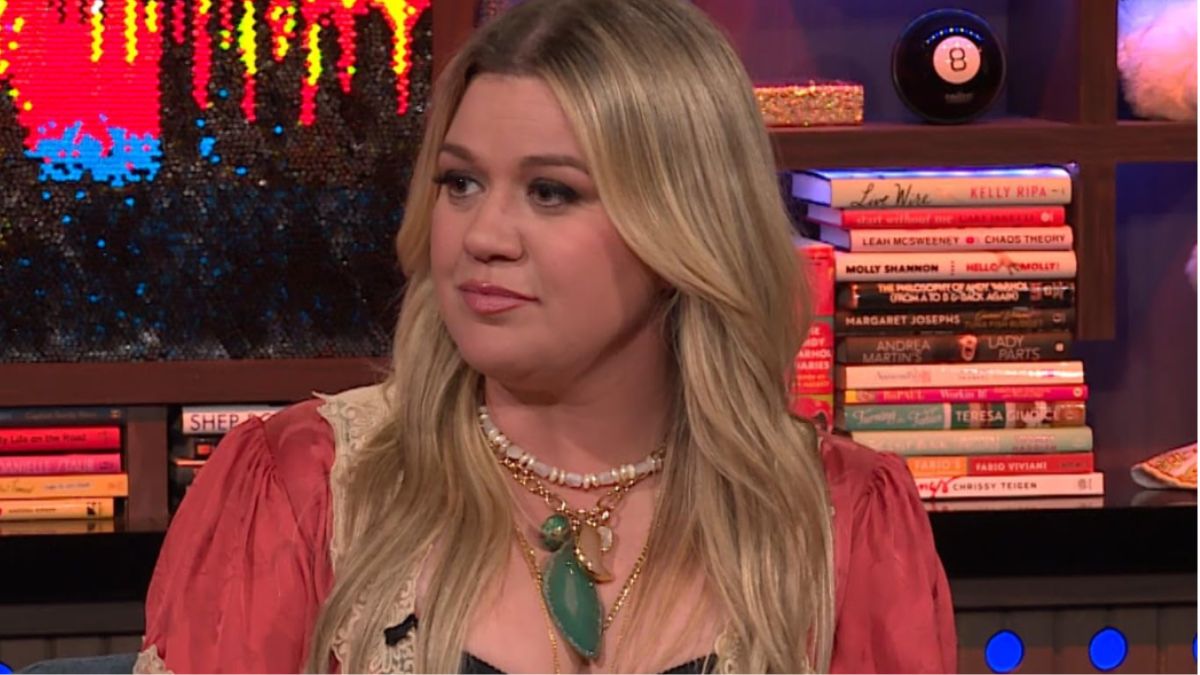
Reality television has long dangled eye-catching prize packages in front of hopeful contestants, but Kelly Clarkson is pulling back the curtain on what those numbers actually mean once the cameras stop rolling. During a recent episode of ‘The Kelly Clarkson Show,’ the pop star made a candid admission that stopped her guests in their tracks and sparked a broader conversation about how the entertainment industry really works behind the scenes.
The moment unfolded when Clarkson welcomed actor Daniel Radcliffe and Daniel Rausch, the Season 4 winner of ‘The Traitors,’ onto her talk show. When Rausch mentioned that he had yet to see a single cent of his $220,800 prize, Clarkson was quick to note that his experience sounded all too familiar. Rather than expressing shock, she leaned in with a story of her own that dated back more than two decades.
“Probably weren’t even born when I was on American Idol,” she told Rausch, before setting the record straight. “They were like, ‘You won a million dollars.’ But I actually didn’t.” Clarkson, who won the very first season of ‘American Idol’ back in 2002, explained that the prize was never handed to her as a lump sum. Instead, she was told it represented an investment in her career. “They lied. I didn’t get a million. It was a million-dollar investment in me,” she said, making clear the distinction between receiving money and having money spent on your behalf.
Both Radcliffe and Rausch were visibly surprised by the revelation. It is a reminder of something that often gets lost in the excitement of reality television finales: the fine print rarely matches the fanfare. Large prize figures tend to serve as promotional tools, and the reality for winners is often far more complicated and far less lucrative than what audiences are led to believe.
The missing prize money was not even the full extent of Clarkson’s grievances from that era. She also recalled being told she would receive a car as part of her winner’s package, a detail that mattered quite a bit to her at the time. “They said you get a car, and I really needed one because mine was broken down and I couldn’t afford to fix it,” she said. The car never arrived. What made it sting even more was what happened next season. “Clay Aiken, who didn’t win Season 2, got a car,” she recounted, adding with characteristic humor that she had told Aiken directly: “I’m going to fight you. He was like, ‘Yeah, in Season 2 they gave one to my mom, too.’ And I was like, ‘Now I’m really going to fight you.’”
Daniel Radcliffe, who entered the entertainment world at an unusually young age himself through the ‘Harry Potter’ franchise, offered a sympathetic take on the situation. He suggested that early winners of long-running franchises deserved some form of retroactive recognition as those shows grew in value and reach. “There should be a system where if you win Season 1 of something, you retroactively get what the prize becomes,” he said. Clarkson pushed back gently but firmly, pointing out that the issue was not about future prize values at all. “No, that was supposed to be the prize then, okay? That was supposed to be the prize at the time!” she said.
Before closing out the conversation, Clarkson offered Rausch a piece of hard-won advice born from lived experience. “That’s why I’m telling you, you might never see that money,” she said. “But I hope you got enough TV time out of it.”
Despite the less-than-glamorous behind-the-scenes reality of her win, Clarkson’s career took off in ways that few reality competition winners have managed to replicate. She went on to release a string of massive hits and became one of the most recognized voices in pop music, earning multiple Grammy Awards and selling millions of records worldwide. In more recent years she has built a second career as a television host, with ‘The Kelly Clarkson Show’ earning her additional Emmy recognition.
The prize money for the first season of ‘American Idol’ was actually structured as part of a recording contract deal rather than a straightforward cash award, which is why the “million dollars” never translated into a direct payment. Reality competition prizes across the industry are frequently subject to taxes, installment schedules, and contractual conditions that can significantly reduce what a winner ultimately pockets, with some estimates suggesting contestants may take home less than half the advertised amount after deductions.
Have you ever been surprised to learn how reality TV prize money actually works? Share your thoughts in the comments.




