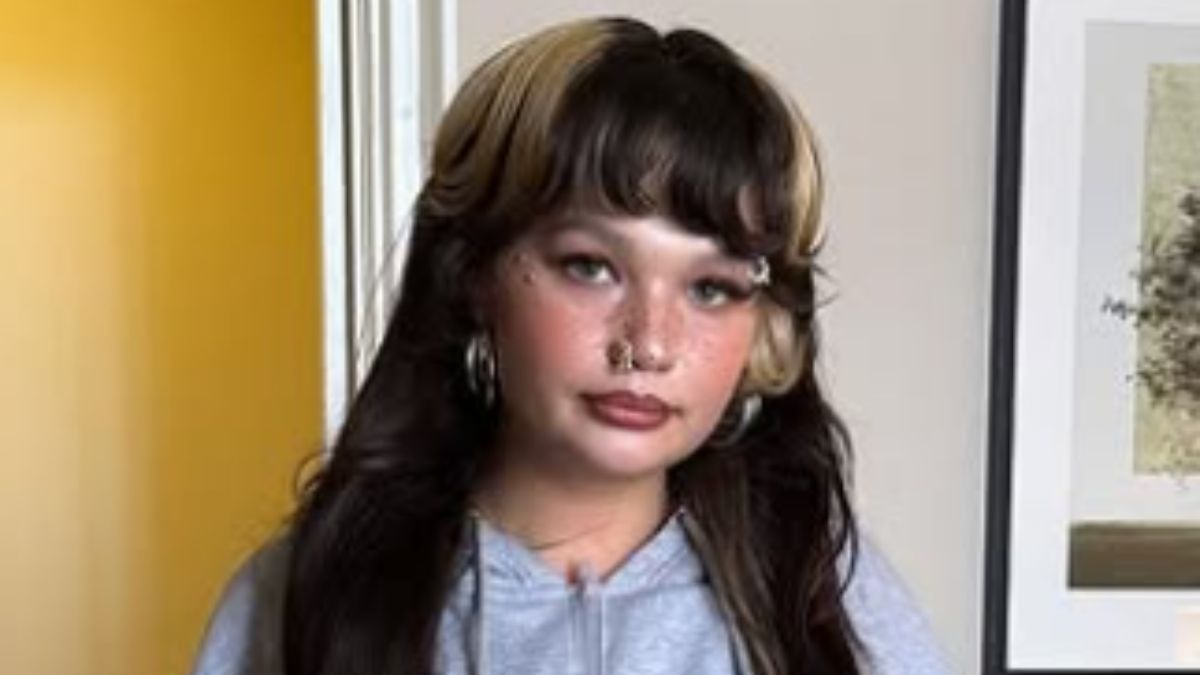
British singer Lola Young is finally speaking openly about the incident that shook her fanbase last year, when she suddenly collapsed mid-performance during a show in New York. For the first time since the frightening moment, Young has come forward with a candid explanation of what truly happened that night and the difficult road that followed. In a revealing new interview with Rolling Stone, she confirmed what many had suspected but few had heard from her directly. Her honesty about the experience has since resonated widely with fans and mental health advocates alike.
The collapse took place in September of last year at the All Things Go music festival, where Young was performing her song “Conceited” when she lost consciousness on stage. Members of her crew quickly carried her off and the show came to an abrupt halt, leaving the crowd deeply concerned. In the days that followed, Young cancelled all remaining scheduled concerts, citing the need to focus on her recovery. The decision, while clearly necessary, opened her up to a wave of criticism and online negativity that she did not anticipate.
Young addressed that backlash head-on in her Rolling Stone conversation, saying “There was a lot of hate, but you know what? F*** it. I had to make the decision to step back.” She did not shy away from identifying the root cause either, making it clear that her addiction had played a direct role in what happened that night. Rather than offering vague explanations or deflecting, she spoke bluntly about the dangerous place she had found herself in before the collapse. Her willingness to name the problem openly has been praised by many who see it as an act of real courage.
The singer went even further in describing just how close she came to a much worse outcome. “What else could I do? Die? My addiction was leading me right there. I was hurting myself, but I was still going out on stage and performing,” she said. Despite the trauma tied to that night, Young has expressed genuine gratitude for the moment, describing the collapse as a pivotal turning point that steered her toward recovery and a healthier future. It is a perspective that speaks volumes about the mindset shift she has undergone since then.
Young had previously sought treatment for cocaine addiction, and she has also recently shared that she no longer consumes alcohol. Earlier this year, she took home her first Grammy Award, a major milestone that she celebrated entirely sober. The win marked not only a professional triumph but a personal one as well, coming on the heels of one of the most turbulent chapters of her life. It was a moment that seemed to symbolize just how far she had come.
@eva_3777 🚨 SHOCKING: 24-year-old UK singer Lola Young COLLAPSES on stage while performing “Conceited” at the All Things Go Festival in New York 😱🎤 #LolaYoung #AllThingsGo #Vaccine ♬ 原创音乐 – Eva_3777
Beyond her addiction struggles, Young has also been open about living with schizoaffective disorder, a diagnosis she received at the age of 17 and disclosed publicly in 2022. “It’s hard to put into words how much that diagnosis affected my life and my outlook on the world,” she said at the time. “I struggled to accept that part of myself and I’m still learning how to live with it. I have to remind myself that I’m just an ordinary person and that I am, like everyone else, capable of extraordinary things. My mental health issues don’t define who I am. It’s my superpower.” She has also spoken about how the unpredictable nature of the condition makes touring especially challenging, with manic episodes sometimes lasting as long as a month and often bringing with them feelings of guilt, shame, and deep isolation.
Schizoaffective disorder is a chronic mental health condition that combines symptoms of schizophrenia, such as hallucinations or delusions, with mood disorder symptoms, including those associated with depression or bipolar disorder. It affects roughly 0.3 percent of the population and can vary significantly in how it presents from person to person. Treatment typically involves a combination of antipsychotic medications, mood stabilizers, and psychotherapy. Because of the overlap in symptoms, it is often misdiagnosed initially, making early and accurate identification a key focus among mental health professionals. The condition can make maintaining a consistent daily routine or a demanding career like touring particularly difficult without strong support systems in place.
Substance use disorders, which Young has also navigated, frequently co-occur with conditions like schizoaffective disorder, a phenomenon clinicians refer to as a dual diagnosis or co-occurring disorder. Research consistently shows that individuals with serious mental health conditions are at higher risk of developing addiction, partly as a means of self-medication. Recovery in these cases is typically most effective when both the mental health condition and the substance use are treated simultaneously and with coordinated care. Organizations like the Substance Abuse and Mental Health Services Administration (SAMHSA) in the United States provide resources and support specifically for people dealing with this kind of complex combination of challenges.
If Lola Young’s story has resonated with you, or if you have thoughts on public figures speaking out about addiction and mental health, share them in the comments.




