
The human brain did not evolve in the presence of artificial light sources capable of mimicking daylight at ten o’clock at night, and the consequences of this mismatch between ancient neurobiology and modern technology are only beginning to be fully understood by researchers. Every evening that a person spends in front of a screen, the brain is receiving a set of signals that conflict directly with the biological programming developed over hundreds of thousands of years of human evolution. The neurological changes that result from this conflict are not dramatic or immediately perceptible in the way that an injury or illness would be, but they are measurable, cumulative, and in many cases significantly more consequential than most screen users appreciate. Understanding the specific mechanisms through which evening screen exposure alters brain structure and function is the first step toward making genuinely informed decisions about how the final hours of each day are spent.
Melatonin Suppression

The blue light spectrum emitted by smartphone, tablet, and computer screens directly suppresses the pineal gland’s production of melatonin, the hormone that signals the brain to initiate the sleep transition process, with research demonstrating that even moderate evening screen exposure can delay melatonin onset by ninety minutes or more in regular users. This suppression is not a minor inconvenience but a fundamental disruption of the circadian signaling cascade that governs sleep architecture, immune function, cellular repair, and metabolic regulation across the entire body. The brain that is chronically deprived of its normal melatonin signaling pattern undergoes measurable changes in the timing sensitivity of its circadian clock mechanisms that compound over months and years of repeated disruption. Chronobiologists studying the relationship between artificial light exposure and circadian biology consistently identify evening screen use as one of the most significant sources of circadian disruption in the contemporary population.
Dopamine Dysregulation

The variable reward structure of social media feeds, video recommendation algorithms, and notification systems is specifically engineered to stimulate dopamine release in patterns that neurologists recognize as structurally similar to those produced by other forms of compulsive reward-seeking behavior. Evening exposure to these stimulus patterns is particularly consequential because the brain’s natural dopamine modulation during the pre-sleep period is part of a neurochemical sequence that prepares the reward circuitry for the overnight consolidation processes that maintain its sensitivity and calibration. Regular evening engagement with high-dopamine screen content gradually raises the stimulation threshold required for the reward system to register satisfaction during ordinary non-screen activities the following day. Neuroscientists studying reward pathway adaptation in heavy screen users have documented measurable reductions in resting dopamine receptor sensitivity that parallel patterns observed in other forms of behavioral reward dysregulation.
Prefrontal Cortex Fatigue

The prefrontal cortex, which governs executive function, impulse control, decision quality, and emotional regulation, operates on a finite daily energy budget that evening screen engagement continues to draw from at a point when the brain’s restorative processes should be initiating. Decision-making research consistently demonstrates that prefrontal function degrades measurably with cumulative daily cognitive load and that evening screen activities requiring continuous judgment, social evaluation, and information processing extend this depletion into the period when neural restoration should be beginning. The chronically fatigued prefrontal cortex that results from regular evening screen depletion shows measurable differences in next-morning function compared to the same brain following an evening of low-stimulation activity before sleep. The downstream consequences of reduced prefrontal capacity include impaired emotional regulation, reduced impulse control, and diminished quality of complex decision-making that affect every domain of the following day’s functioning.
Amygdala Sensitization

The amygdala, the brain’s primary threat detection and emotional reactivity center, is specifically activated by the conflict-laden, emotionally provocative, and threat-adjacent content that engagement-optimized digital platforms systematically surface in evening feeds because this content type generates the highest interaction rates. Regular evening amygdala activation through screen content creates a sensitization pattern in which the threat detection circuitry becomes progressively more reactive to lower-intensity stimuli over time as the neural pathways involved in this activation are repeatedly strengthened. Sleep research has demonstrated that an activated amygdala at the point of sleep onset impairs the quality of emotional processing that occurs during REM sleep specifically disrupting the overnight emotional regulation function that healthy sleep is meant to perform. The person whose amygdala has been regularly sensitized by evening screen content wakes with an emotional reactivity baseline that is measurably elevated compared to the one they would carry following undisturbed pre-sleep neurochemistry.
Memory Consolidation Interference
The brain uses the period between the day’s final experiences and sleep onset to begin the preliminary stages of memory consolidation, transferring information from short-term hippocampal storage toward longer-term cortical encoding in a process that evening screen engagement directly disrupts through both its attentional demands and its neurochemical effects. Information consumed during evening screen sessions competes with the day’s earlier experiences for consolidation processing resources creating a situation where the most important learning and memory formation of the day is displaced by the last content consumed before sleep. Sleep researchers studying memory encoding efficiency have documented that the quality and quantity of memories consolidated overnight is meaningfully reduced in individuals whose final pre-sleep period involves active screen engagement compared to those who allow a screen-free consolidation window before sleep. The student who reviews material earlier in the evening and then spends two hours on their phone before sleeping is partially overwriting the consolidation process that was intended to encode what they studied.
Cortisol Disruption

The natural cortisol rhythm follows a precisely timed daily arc that begins its evening decline several hours before sleep and reaches its lowest point in the early sleep period before beginning the gradual rise that produces the morning alerting effect preceding natural waking. Evening screen engagement, particularly content that produces stress responses, social comparison anxiety, or emotional arousal, stimulates cortisol production at a point in the daily cycle when the brain’s biological programming requires the opposite signal. The brain that receives regular evening cortisol stimulation through screen content gradually recalibrates the sensitivity of its cortisol signaling system in ways that flatten the natural daily arc making the morning alerting effect less distinct and the evening wind-down less complete. Endocrinologists studying HPA axis function in populations with high evening technology use have documented measurable cortisol rhythm distortions that are associated with the full range of health consequences linked to chronically disrupted stress hormone cycling.
Attention Span Compression

The interaction design of contemporary digital platforms is specifically optimized for brief attention capture and rapid content cycling and regular evening engagement with these systems trains the brain’s attentional networks to expect and require novelty stimulus at intervals that are dramatically shorter than those demanded by sustained real-world tasks. Neuroplasticity research has established that attentional capacity is not a fixed trait but a malleable neural characteristic that responds to the patterns of demand placed on it and that regular exposure to rapid content cycling reshapes the attentional network’s baseline expectations in ways that persist beyond the screen session itself. People who engage heavily with short-form video content, rapid-scroll social feeds, or notification-dense applications in the evening report measurable difficulty sustaining focus on single-task activities the following morning compared to their own baseline on days following lower-stimulation evenings. The attention span compression effect is one of the most personally noticeable consequences of evening screen habits because its impact on work quality, reading capacity, and conversational depth is experienced directly and repeatedly.
Sleep Architecture Disruption

Beyond the melatonin suppression mechanism, evening screen engagement disrupts the brain’s sleep architecture at a structural level by altering the sequence and duration of sleep stages in ways that reduce the restorative value of the hours spent unconscious regardless of their total quantity. The slow-wave sleep stages that dominate healthy early-night sleep and that are responsible for physical restoration, immune function, and declarative memory consolidation are specifically reduced in duration and depth in individuals whose pre-sleep brain state has been maintained in high arousal by screen engagement. The REM sleep periods that provide emotional processing, creative association, and procedural memory consolidation are similarly affected with timing shifts that compress their total duration within a fixed sleep window. Sleep scientists who study architecture rather than simply duration consistently emphasize that the quality of sleep following evening screen engagement is structurally different from the same duration of sleep following low-stimulation pre-sleep activity in ways that total sleep time measurements entirely fail to capture.
Neural Pathway Reinforcement

Every evening spent engaging with screen content strengthens the specific neural pathways associated with screen-seeking behavior through the basic neuroplastic principle that neurons which fire together wire together creating progressively lower activation thresholds for screen-directed attention and progressively higher thresholds for alternative evening activities. The brain that has spent hundreds of evenings directing its attentional resources toward screens has physically restructured the relative strength of competing neural circuits in ways that make screen engagement feel more natural and rewarding while making book reading, conversation, or quiet reflection feel effortful and unstimulating by comparison. This pathway reinforcement is not a metaphor but a literal physical change in synaptic strength and dendritic connectivity that neuroscientists can observe through neuroimaging studies comparing heavy and light screen users. The person who finds it genuinely difficult to spend an evening without screens is experiencing a neuroplastic reality rather than a simple preference and this distinction is important for understanding why behavioral change in this area requires sustained effort rather than simple decision.
Circadian Rhythm Phase Shifting
Regular evening light exposure from screens pushes the brain’s master circadian clock toward a later phase setting in a process called phase delay that shifts the timing of all circadian-regulated biological processes including sleep onset, hormone release, immune activity, and cellular repair toward a schedule misaligned with the natural light-dark cycle. The suprachiasmatic nucleus, the hypothalamic structure that coordinates circadian timing throughout the brain and body, is exquisitely sensitive to light timing signals and receives the blue light information delivered by screens as instruction to reset the biological clock to a later position. Populations with high evening screen use show measurably later average circadian phases than those with lower evening screen exposure and this population-level phase delay is associated with the full spectrum of health consequences linked to chronic circadian misalignment. Chronobiologists describe the resulting misalignment between the socially required wake time and the biologically preferred wake time as social jetlag, a condition with measurable cognitive, metabolic, and mood consequences that affect daily function in ways most sufferers attribute to other causes.
Emotional Regulation Impairment

The pre-sleep period is neurologically significant for emotional regulation because it represents the brain’s final opportunity to process and contextualize the day’s emotional experiences before the overnight consolidation that determines how those experiences are encoded into long-term memory and integrated into the emotional response framework. Evening screen engagement that replaces this natural emotional processing time with externally generated emotional stimulation from social feeds, news content, or dramatic entertainment prevents the brain from completing the self-directed regulatory work that healthy emotional processing requires. Psychologists studying the relationship between pre-sleep cognitive activity and next-day emotional regulation have documented measurable differences in emotional reactivity and stress tolerance between individuals who engage in reflective pre-sleep activity and those whose final waking period is occupied by external screen content. The chronic displacement of natural emotional processing by evening screen engagement creates an accumulated emotional regulatory deficit that manifests as increased emotional reactivity, reduced frustration tolerance, and impaired stress management in daily functioning.
Default Mode Network Suppression

The default mode network, a set of brain regions that activate during mind-wandering, self-reflection, creative ideation, and the integration of disparate experiences into coherent narrative understanding, requires periods of undirected mental activity to perform its most important functions and evening screen engagement systematically prevents these periods from occurring. Research into default mode network function has established that the creative insights, self-understanding, and integrative thinking that people experience as sudden realizations or spontaneous ideas are products of default mode processing that requires mind-wandering time to generate. The brain that moves directly from a full day of directed attention to an evening of screen engagement to sleep without any default mode activation period is missing a neurologically essential processing window that contributes to psychological integration, creative capacity, and sense of narrative self. Neuroscientists studying the relationship between technology use and default mode network activation have documented measurable suppression of default mode activity in heavy screen users that correlates with reduced scores on measures of creative thinking and psychological wellbeing.
Stress Response Sensitization

The stress response system’s evening sensitivity is directly affected by the content encountered during screen use because the brain’s threat evaluation circuits do not fully distinguish between threats encountered in digital content and threats encountered in physical reality in their initial neurochemical response. News content, social conflict, disturbing imagery, and anxiety-inducing information consumed during evening screen sessions activates the sympathetic nervous system’s stress response at a point when the parasympathetic nervous system should be establishing the physiological calm that healthy sleep preparation requires. Repeated evening activation of the stress response through screen content gradually lowers the activation threshold of the stress circuitry creating a sensitization effect that makes the system more reactive to lower-intensity stress stimuli throughout the following day. Psychophysiologists studying autonomic nervous system patterns in evening screen users have documented elevated sympathetic arousal indicators at sleep onset that reflect the residual activation of stress pathways stimulated by pre-sleep screen content.
Neuroinflammatory Signaling

Emerging neuroscience research has identified a relationship between sleep disruption and neuroinflammatory signaling, with studies indicating that the glymphatic system responsible for clearing metabolic waste products from the brain operates primarily during deep sleep stages that are reduced in duration and quality by evening screen exposure. The accumulation of neural metabolic byproducts including proteins associated with neurodegenerative conditions that results from impaired glymphatic clearance represents a longer-term neurological consequence of chronic sleep disruption that extends well beyond the immediate effects of individual screen sessions. Animal research has demonstrated measurable increases in neuroinflammatory markers following experimentally induced sleep architecture disruption of the type associated with evening blue light exposure. Neurologists studying the long-term brain health implications of chronic sleep disruption consistently identify the glymphatic clearance impairment mechanism as among the most significant and least publicly understood consequences of the sleep quality reductions associated with modern screen habits.
Interoceptive Awareness Reduction

Interoception, the brain’s capacity to perceive and interpret internal body signals including hunger, thirst, fatigue, physical discomfort, and emotional body states, depends on attentional resources that evening screen engagement systematically redirects toward external content and away from internal monitoring. The regular practice of external attentional redirection during evening hours gradually reduces the brain’s interoceptive sensitivity creating a condition in which internal body signals must reach higher intensity before they are registered by conscious awareness. Research into interoceptive capacity in populations with high technology use has documented measurable reductions in body signal awareness that are associated with impaired hunger regulation, reduced emotional awareness, and diminished capacity to recognize the early signals of physical stress and fatigue. The person who cannot tell they are tired until they are exhausted, or hungry until they are ravenous, may be experiencing the accumulated interoceptive deficit of years of evening attentional redirection toward screens rather than any inherent limitation in their body awareness capacity.
Social Comparison Processing
The social comparison content that populates most social media platforms activates specific neural circuits involved in self-evaluation, status assessment, and social positioning that generate measurable neurochemical responses including stress hormone release and reward circuitry activation depending on whether the comparison outcome is favorable or unfavorable. Evening activation of social comparison processing is neurologically consequential because self-evaluation activity during the pre-sleep period influences the emotional content of the overnight consolidation process determining in part whether the sleeping brain reinforces positive or negative self-referential neural patterns. Longitudinal neuroimaging research has documented structural changes in brain regions associated with self-referential processing in adolescents and young adults with heavy social media use that correlate with self-reported emotional wellbeing measures. The evening social media scroll that produces a sequence of social comparisons is not a neutral information-gathering activity but a neurochemically active self-evaluation process whose effects on brain structure accumulate with repetition.
Executive Inhibition Weakening

The capacity for executive inhibition, the brain’s ability to suppress automatic responses, resist impulses, and override habitual behaviors in favor of considered choices, is specifically dependent on prefrontal cortex resources that evening screen engagement depletes through both direct cognitive demand and the sleep quality reductions that compound across nights of disrupted rest. Studies of inhibitory control performance in participants with varying evening screen habits have documented measurable differences in next-morning inhibition capacity that affect everything from dietary choices to emotional response management to adherence to intended behavioral plans. The weakened executive inhibition that results from chronic evening screen depletion creates a self-reinforcing pattern in which the reduced capacity to resist screen engagement the following evening is itself a product of the previous evening’s screen-induced depletion. Behavioral neuroscientists studying this cyclical pattern describe it as a depletion loop that progressively erodes the voluntary control capacity required to interrupt the habit pattern generating it.
Temporal Perception Distortion
Extended evening screen engagement distorts the brain’s time perception mechanisms in ways that create a systematic underestimation of elapsed time that researchers have documented consistently across different screen activity types and user demographics. The neural mechanisms responsible for time perception rely on the regular sampling of internal state changes and external environmental shifts that screen engagement suppresses by creating a constant-stimulation environment that reduces the variability signals the temporal perception system uses as its reference points. The practical consequence of this distortion is the widely reported experience of intending to spend thirty minutes on a device and discovering that two hours have elapsed, a phenomenon that reflects a genuine neurological effect rather than simply poor self-monitoring. Chronopsychologists studying time perception distortion in digital environments have documented that the degree of distortion correlates with the engagement optimization quality of the platform being used, with algorithmically optimized feeds producing the most severe temporal underestimation effects.
Cognitive Flexibility Reduction

Cognitive flexibility, the brain’s capacity to shift between different mental frameworks, consider multiple perspectives simultaneously, and adapt thinking strategies to changing task demands, is dependent on the kind of varied and self-directed mental activity that is displaced by the passive content consumption that characterizes most evening screen use. Neuropsychological assessments of cognitive flexibility in populations with different evening screen habits have documented measurable differences in set-shifting capacity and mental adaptability that correlate with the proportion of evening time spent in passive screen consumption versus self-directed mental activity. The neural networks responsible for cognitive flexibility require regular activation through genuinely novel problem-solving and adaptive thinking challenges to maintain their functional strength and screen-based passive consumption does not provide this activation regardless of the content’s informational density. Educational neuroscientists who study learning capacity consistently identify cognitive flexibility as one of the executive functions most sensitive to the specific pattern of attentional demand that contemporary screen habits impose.
Empathy Circuit Modification

Neuroimaging research has documented functional changes in brain regions associated with empathic processing in individuals with heavy social media use patterns, with studies identifying reduced activation in neural networks associated with affective empathy when participants are exposed to descriptions of others’ physical and emotional pain following periods of high social media engagement. The mechanism proposed by researchers involves both the emotional numbing effect of high-volume exposure to distress content and the dehumanization tendency associated with text and image-based social interaction that lacks the embodied cues that activate the full empathic response in face-to-face human contact. Evening screen engagement that involves high volumes of social content consumption may be specifically consequential for empathy circuit function because the emotional processing that occurs during subsequent sleep partially encodes the emotional response patterns practiced during the pre-sleep waking period. Social neuroscientists studying the relationship between technology use patterns and empathic capacity have called for longitudinal research designs that can track the cumulative rather than simply acute effects of screen-based social interaction on the neural infrastructure of human connection.
Hypothalamic Disruption
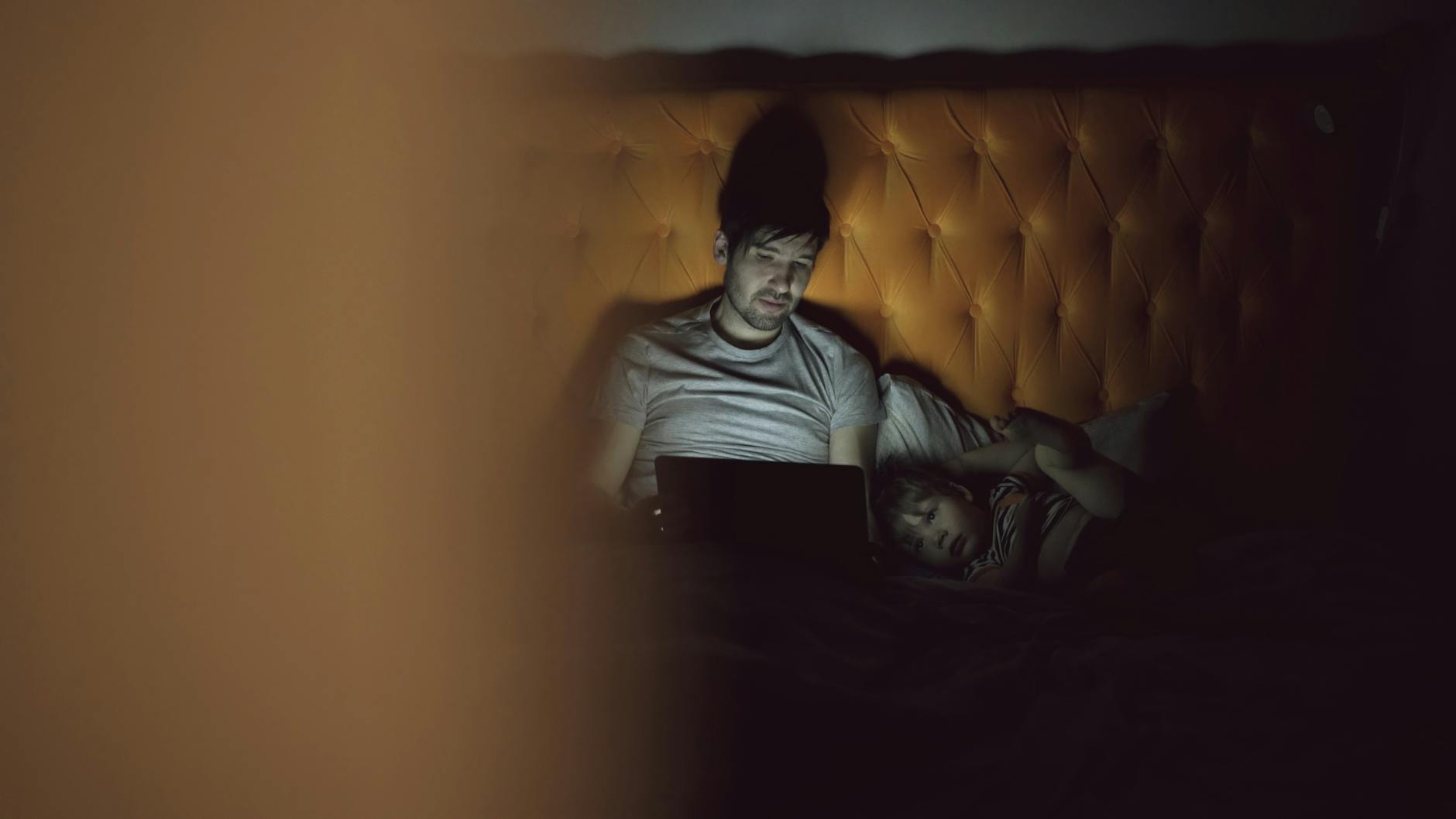
The hypothalamus, which coordinates the brain’s regulation of sleep, appetite, temperature, hormonal release, and autonomic function, receives light timing information directly from the retina and uses this input to synchronize its regulatory outputs with the external environment in ways that evening screen light systematically misdirects. The hypothalamic disruption produced by regular evening screen exposure affects not just sleep initiation but the entire coordinated package of physiological changes that the hypothalamus orchestrates in preparation for sleep including body temperature reduction, growth hormone release initiation, and autonomic nervous system transition toward parasympathetic dominance. Research into hypothalamic function in individuals with high evening screen exposure has documented blunted regulatory transitions that produce measurable physiological differences in sleep onset body temperature, nocturnal growth hormone pulse timing, and autonomic balance at sleep onset. Neuroendocrinologists emphasize that the hypothalamic disruption produced by evening screen habits represents a systemic physiological impact that extends far beyond the subjective experience of taking longer to fall asleep.
Neurogenesis Impairment

Adult neurogenesis, the generation of new neurons in the hippocampus that supports learning capacity, memory flexibility, and emotional resilience, is directly dependent on sleep quality with research demonstrating that the deep sleep stages most disrupted by evening screen habits are specifically associated with the neurochemical environment that supports new neuron survival and integration. The relationship between sleep architecture and hippocampal neurogenesis has been established through animal research and the neurogenic consequences of chronic sleep disruption represent a structural brain health impact that extends beyond functional impairments to the cellular renewal processes that maintain hippocampal capacity over time. Populations with chronically disrupted sleep show measurable differences in hippocampal volume and function that researchers attribute partly to the accumulated neurogenic deficit produced by years of inadequate deep sleep. Neuroscientists who study the long-term brain health implications of sleep disruption identify impaired neurogenesis as the mechanism most likely to explain the relationship between chronic sleep insufficiency and accelerated cognitive aging that has been documented in epidemiological research.
Reward Anticipation Elevation

The anticipatory reward state produced by pending notifications, unresolved social interactions, and incomplete content sequences on digital platforms creates an elevated neural reward anticipation that persists into the sleep period and interferes with the deactivation of arousal systems that sleep onset requires. The brain that has been conditioned to expect intermittent reward delivery through screen engagement maintains a vigilant monitoring state for reward signals even in the absence of the screen itself creating a physiological arousal that is experienced subjectively as difficulty quieting the mind at bedtime. Sleep researchers studying pre-sleep cognitive arousal have documented that the specific rumination content most commonly reported by poor sleepers has shifted over the past decade toward technology and social media-related anticipatory thinking at a rate that correlates with increased smartphone use in the hours before bed. The notification that has not yet been checked, the comment thread that has not been resolved, and the video series that has not been completed are each maintaining a low-level reward anticipation circuit activation that the sleeping brain must work against rather than with during its transition to rest.
Share your own observations about how your evening screen habits have affected your sleep, mood, or mental clarity in the comments.




