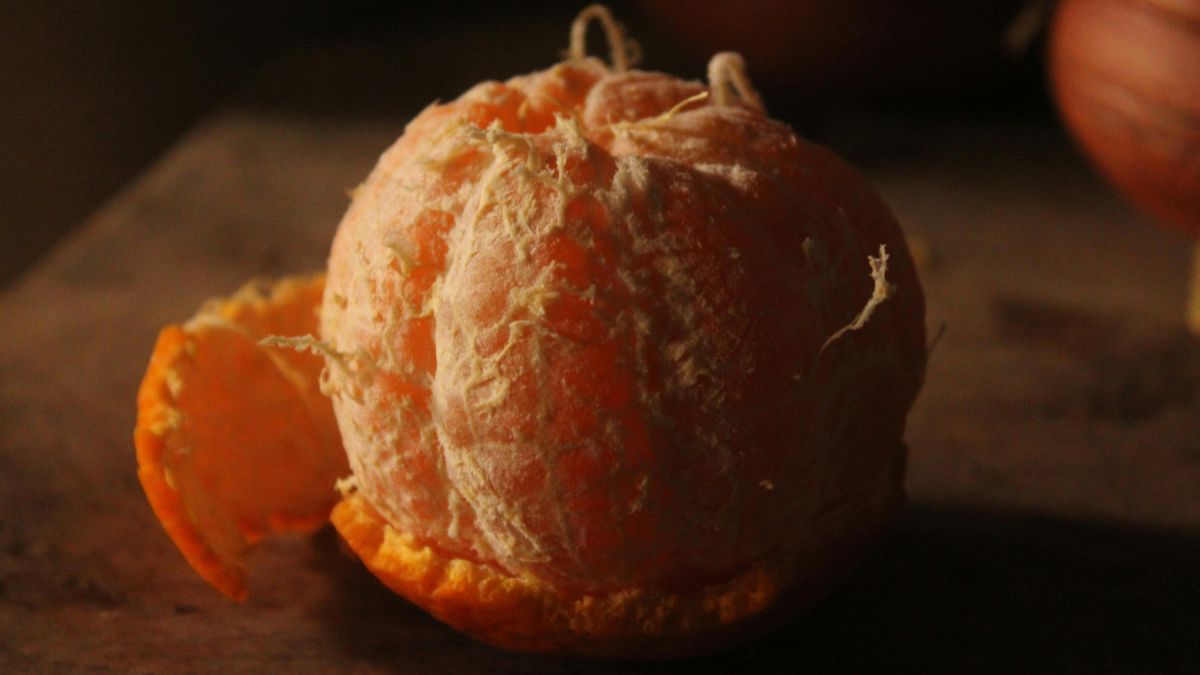
Most people who peel an orange go straight for the juicy flesh, stripping away as much of the white, spongy layer underneath as they possibly can. The bitterness, the texture, the way it clings stubbornly to every segment — it all feels like something to get rid of. But that instinct might actually be costing you a meaningful nutritional boost. According to Health, that often-discarded white layer is far more valuable than most people realize.
The white, spongy portion of an orange sitting just beneath the peel and between the individual segments is officially known as the albedo, though it’s more commonly called the pith. Registered dietitian Avery Zenker explained it plainly to Health, saying that this layer “is called albedo or pith.” It accounts for roughly a quarter of the entire orange by composition and is made up primarily of dietary fibers including cellulose and pectin. Pith isn’t unique to oranges either — lemons, limes, grapefruits, and pomelos all have it in varying amounts.
Far from being nutritional dead weight, the pith packs a genuine health punch. Zenker put it directly, stating that “the white part of the orange is quite healthy, providing fiber, antioxidants and vitamin C,” and went on to note that “it’s even richer in some nutrients than the fruit itself, so you’ll get more nutrients if you eat the pith, not just the orange flesh.” That’s a pretty compelling case for rethinking your peeling habits. The pith’s nutritional profile is driven largely by its high fiber content, its plant compounds, and a modest but real contribution of vitamins and minerals.
When it comes to fiber specifically, the pith delivers on two fronts. Insoluble fiber adds bulk to stool and keeps things moving smoothly through the digestive system, while soluble fiber does something quite different inside the body. Registered dietitian Jennifer Pallian clarified how one key component works, explaining that “pectin, a component of the white part of the orange, is a soluble fiber that binds water in the digestive tract and creates a gel-like substance in the intestines.” That gel-like effect slows the digestion process, which in turn smooths out blood sugar spikes after meals and can help the body clear out excess cholesterol more effectively.
The pith is also a meaningful source of antioxidants, particularly flavonoids like hesperidin and carotenoids like beta-carotene. Research has actually found that both the colored outer rind and the white pith contain higher concentrations of flavonoids than the juicy interior flesh. Hesperidin in particular has been linked to improved cardiovascular health by supporting blood vessel function and reducing inflammation throughout the body. Higher intake of beta-carotene, meanwhile, has been associated with a reduced risk of age-related macular degeneration and certain types of cancer.
Vitamin C and potassium round out the pith’s nutritional contributions, though the exact amounts vary from fruit to fruit and aren’t as precisely quantified as those found in the flesh. Still, every little bit counts, and leaving the pith intact rather than carefully removing it gives your body more of both. It’s worth noting that most of the vitamin C in an orange is concentrated in the flesh, but the pith offers an additional, if smaller, dose of this essential antioxidant that supports immune function, collagen production, and cellular protection.
The main drawback of eating the pith comes down to two things — taste and pesticide exposure. The bitterness is real and tends to be especially noticeable when eaten alongside the sweetness of the flesh. On the pesticide side, Pallian pointed out that “pesticide residues generally accumulate in the peel, not in the flesh,” and studies suggest that removing the peel can cut pesticide levels by somewhere between 82 and 100 percent depending on the specific compound. If that’s a concern, opting for organic citrus is one way to reduce exposure while still leaving the pith intact.
Ultimately, eating the pith is a personal call, not a nutritional requirement. Pallian acknowledged that “although the pith contains fibers like hemicellulose, pectin and cellulose, as well as flavonoids like hesperidin, the juicy interior of the orange still has significant nutritional value even when the peel and pith are removed.” But for those who don’t mind the bitter edge, Zenker offered a practical takeaway: “if you want to get the most out of it, consuming the pith can be a simple way to get more fiber and antioxidants from an orange.”
Oranges belong to the Rutaceae family and are believed to have originated in Southeast Asia thousands of years ago before spreading through trade routes to the Middle East, Europe, and eventually the Americas. Today they are one of the most widely cultivated fruits in the world, with Brazil, China, and the United States leading global production. The flavonoid hesperidin found in orange pith has been studied extensively in nutritional science and is sometimes sold as a standalone supplement for cardiovascular support. Pectins extracted from citrus fruits are also widely used in the food industry as natural gelling agents in jams, jellies, and other processed foods.
If you’ve been ditching the white part of your orange your whole life or you’re already a pith enthusiast, share your thoughts in the comments.




