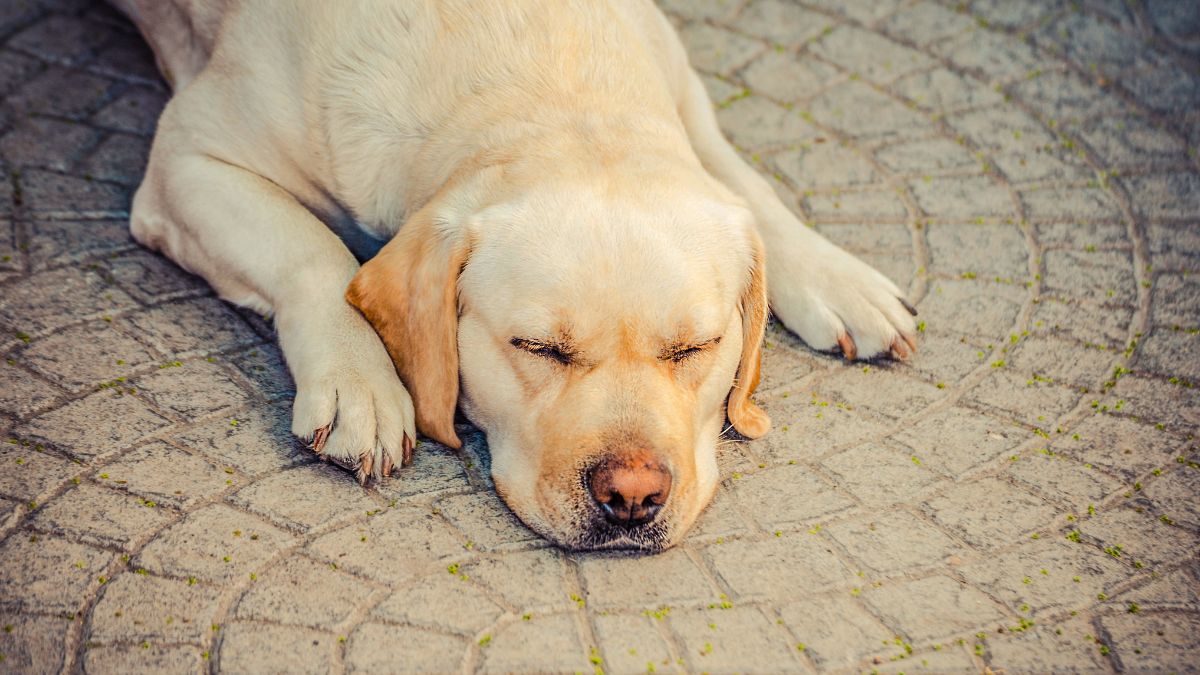
Most pet owners know their animal’s daily rhythm almost instinctively. They know when their dog is ready for a walk the moment he opens his eyes, when their cat shows up for breakfast at the exact same time every morning, and what a typical, uneventful day looks like for their furry companion. That familiarity is actually one of the most powerful tools an owner has, because when something shifts, even slightly, it tends to stand out immediately. A sudden increase in sleep is one of those changes that often catches people off guard and leaves them wondering whether to worry or let it go.
The truth is that increased sleep on its own does not automatically point to illness. Dogs and cats naturally spend a significant portion of their day resting, far more than humans do. The real concern arises when that sleepiness is new, noticeably pronounced, and persists beyond what is normal for that specific animal. Even more telling than the hours slept is how the pet behaves during the hours it is actually awake.
A quieter day here and there, or a longer nap following an exciting outing or a vigorous play session, is rarely a reason to panic. The situation becomes more serious when a dog or cat stops showing interest in the things it normally loves, whether that is a walk around the block, mealtime, play, or simply curling up next to its owner. When that enthusiasm disappears and the animal seems withdrawn even when it should be alert, excessive sleep may be masking something more significant going on inside the body.
Cats present a particular challenge in this regard because they are exceptionally skilled at concealing pain and weakness. In many cases, the only visible sign that something is wrong is not a dramatic symptom but a quiet withdrawal, more time spent sleeping, less time spent climbing to favorite perches, or a sudden preference for hiding. Because cats are so good at masking discomfort, even subtle behavioral shifts deserve attention rather than dismissal.
Increased sleep is rarely the root problem itself but rather a symptom that can accompany a wide range of health conditions. Among the issues that can present this way are pain and general physical discomfort, anemia, infections of various kinds, heart disease, digestive troubles, metabolic disorders, dental problems, and the chronic conditions that often come with aging. When the extra sleep is accompanied by other changes like a reduced appetite, labored breathing, vomiting, diarrhea, or an unusual desire to hide, the picture becomes more urgent and a veterinary visit should not be delayed.
Senior pets often do become less active and sleep more as part of the natural aging process, and many owners simply accept this as normal. Experts caution, however, that new changes in older animals should not automatically be chalked up to old age without investigation. If an aging dog or cat is suddenly sleeping considerably more, struggling to get up, eating less, or avoiding its usual spots in the home, the cause could be arthritis, dental pain, or another treatable condition rather than aging itself.
The line between monitoring and acting becomes clear when the change lasts more than a day or two or when it arrives alongside other worrying signs. Refusing food or water, hiding from family members, visible difficulty moving, signs of pain, vomiting, loose stool, disorientation, or a complete loss of interest in surroundings are all signals that a vet should be contacted without much delay. In more urgent cases, such as sudden and severe weakness, collapse, seizures, difficulty breathing, or suspected poisoning, waiting is not an option and emergency veterinary care is needed right away.
The most important benchmark is not an average across all pets but the individual animal itself. Some dogs and cats are naturally more low-key and sleep-oriented than others, so the question is always whether the current behavior represents a meaningful departure from that particular pet’s norm. One long sleep after an active day is almost never cause for alarm, but a pattern of unusual fatigue, paired with any change in eating, mood, or movement, is the body’s way of communicating that something needs attention. Small shifts in routine are often the earliest and only warning sign that something is wrong.
On a broader level, it helps to understand a bit about how sleep works in companion animals. Adult dogs typically sleep anywhere from 12 to 14 hours a day, while cats can sleep between 12 and 16 hours, with some reaching even more depending on age and breed. Puppies, kittens, and senior animals tend to need the most rest of all. Lethargy, which is distinct from normal sleep, refers to a state of low energy and reduced responsiveness even when the animal is awake, and it is recognized in veterinary medicine as a clinical sign that warrants evaluation. Unlike fatigue caused by exercise or excitement, pathological lethargy does not resolve after a good rest and tends to worsen over time if the underlying cause goes untreated. Understanding this distinction helps owners communicate more clearly with their veterinarian and get to the right diagnosis faster.
If your pet has recently started sleeping far more than usual, share your experience and what you noticed first in the comments.




