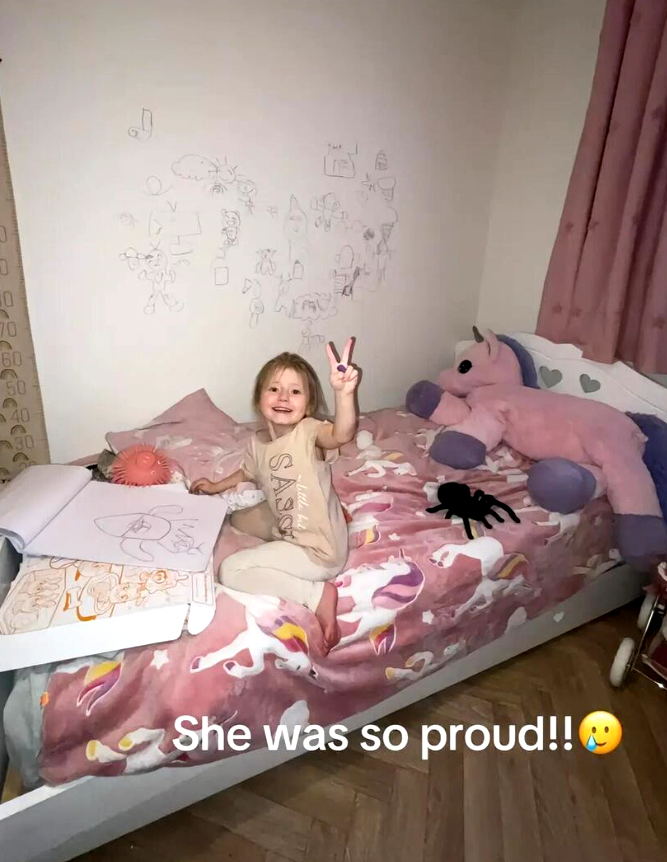
A mother in the UK faced a common parenting challenge when her young daughter covered an entire bedroom wall with colorful drawings. Amelia Edwards, a 31-year-old from the West Midlands, discovered the artwork when her then four-year-old excitedly pulled her into the room. The little girl had created over a dozen images including clouds, a smiling sun, animals, people, ice cream, and unicorns. Rather than reacting with anger or frustration, Edwards chose praise and preservation, a decision that later sparked widespread online admiration.
The moment unfolded vividly in Edwards’ memory. She was on the stairs when her daughter rushed out shouting with joy. “I was on the stairs when she came running out of her bedroom shouting ‘Mom, mom, come see what I made,’” Edwards recalled. Her own mother followed along, and upon entering the room, Edwards stood speechless at the sight of the extensive doodles beside the bed.
What stood out was Edwards’ calm and positive response. Her mother laughed first and commented that the drawings were actually impressive. This helped Edwards stay composed. When she spoke, she told her daughter the artwork was beautiful and allowed her to explain each part proudly.
The child pointed out details with enthusiasm. She described how the unicorn represented her teddy bear and why she included a spider because she liked them. Edwards saw the thought and creativity behind it all. She gently explained that drawing belongs on paper, not walls, but decided against immediate punishment.
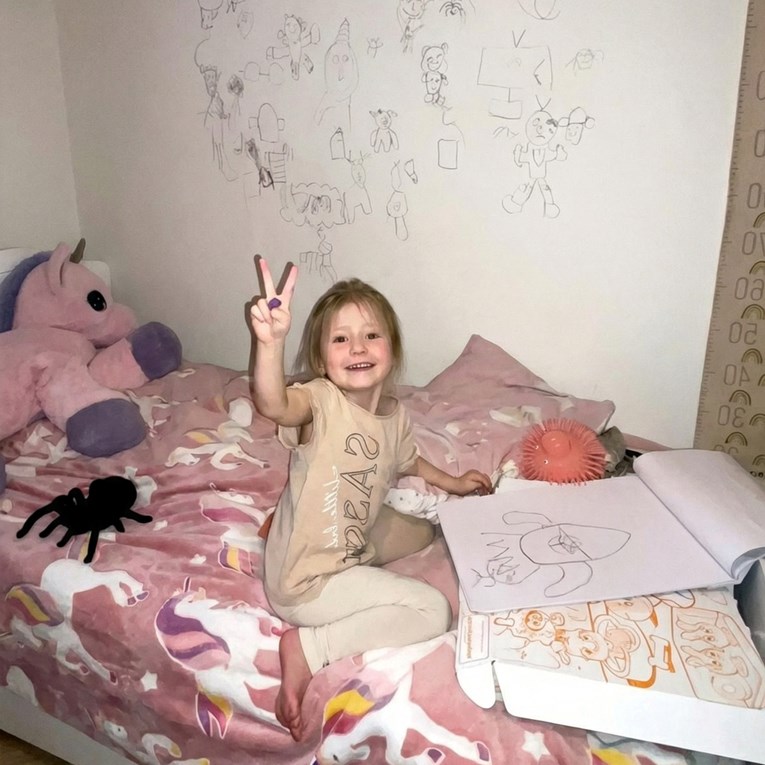
Instead, the family embraced the creation. They redecorated the room with pink elements and cream wallpaper, leaving the drawn section untouched. They even framed it with pink paint to highlight it as a special feature. Years later, the drawings remain on the wall, with the girl, now seven, having added to them occasionally over time.
Edwards shared the story on TikTok under the handle @ameliajayneedwards in early January. The video showed her daughter sitting proudly in front of the preserved art before revealing the updated room. It quickly gained traction, amassing nearly two million views. Comments poured in, igniting discussions about different parenting approaches.
Many viewers praised the encouragement of creativity. One user shared a similar experience from childhood, noting how allowed wall drawing created lasting memories with visiting friends adding their own touches. Another reflected on nearly scolding her own child for the same act but feeling glad she held back. “I was terribly scolded when I did this as a child, so when my daughter did the same, I almost exploded, but I’m so glad I didn’t,” the commenter wrote.
Not everyone agreed with the choice. Some argued children need clear boundaries to learn right from wrong. Edwards acknowledged the debate, responding playfully to a question about whether she would frame drawings in the living room by saying absolutely not. She emphasized that parenting styles vary and her priority was maintaining connection over strict discipline in that moment.
“Of course some people disagreed with my decision and that’s okay. Everyone parents differently. For me in that moment, it was more important to preserve closeness than to give a lesson,” Edwards explained. She noted her daughter has not drawn on walls since, though she remained highly creative. Reading positive comments together with her child brought unexpected joy and boosted Edwards’ confidence as a parent.
This story highlights the impact of positive reinforcement in everyday mishaps. It turned a potential conflict into a celebration of a child’s imagination. The viral response showed how such moments resonate widely, offering inspiration for handling similar situations with patience and warmth. Edwards’ approach fostered open dialogue about trying new things without fear.
Child development experts often stress the value of artistic expression in early years. Drawing helps young children develop fine motor skills, problem-solving abilities, and emotional outlets. Providing safe spaces for creativity, like large paper pads or designated boards, can prevent unwanted surfaces from becoming canvases. Studies indicate that praising effort over outcome builds intrinsic motivation and self-esteem in kids.
Encouraging imagination also supports cognitive growth. Free drawing allows children to explore ideas, tell stories, and process experiences. Many psychologists recommend responding to creative acts with curiosity rather than criticism to nurture confidence. Balanced guidance, as Edwards provided by setting future boundaries, teaches respect for property while honoring individuality.
What are your experiences with children’s unexpected creative moments, and how did you respond? Share your thoughts in the comments.




