
Professional declutterers and organization consultants operate within a carefully maintained public image that prioritizes aspirational aesthetics, brand partnerships, and broadly palatable advice designed to appeal to the widest possible audience. What rarely surfaces on their social media feeds or in their sponsored content are the blunter, more psychologically complex, and occasionally counterintuitive strategies they actually use with private clients behind closed doors. These are the methods that produce dramatic results precisely because they challenge the feel-good narratives and Pinterest-worthy systems that dominate the organization industry. The distance between what professionals post and what they actually practice is a product of commercial incentives, audience sensitivity, and the uncomfortable reality that truly effective decluttering involves confronting deeply personal patterns of behavior. These are 25 controversial home organization tricks that professional declutterers use privately but almost never share publicly.
Trash Bags First

The single fastest way to create immediate visual and psychological momentum in an overwhelmed space is to move through every room with a trash bag before any sorting or categorizing begins. Professional declutterers use this approach with clients whose paralysis stems from the sheer volume of visible clutter because the act of removing obvious waste creates enough cleared surface area for the real work to begin. This step bypasses the decision fatigue that comes from evaluating every item from the outset and gives the nervous system a tangible sense of progress within minutes. The method is rarely posted publicly because it appears crude and unsystematic despite being one of the most effective psychological tools in professional practice.
Sunk Cost
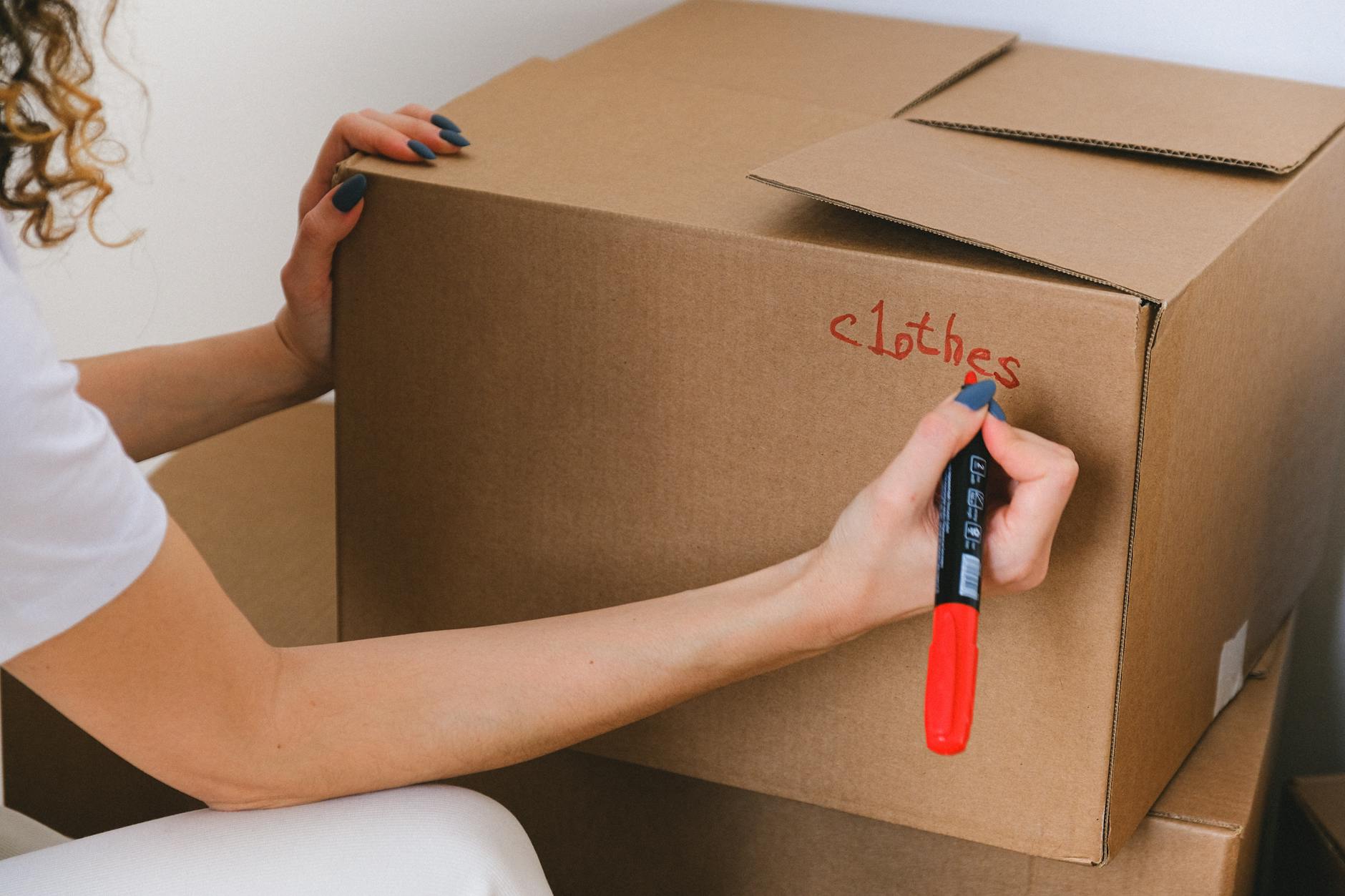
Declutterers privately acknowledge that the single greatest obstacle to client progress is sunk cost thinking and they address it directly in ways that would be considered confrontational in a public-facing format. The money already spent on an unused item is gone regardless of whether the item stays or leaves and professional organizers repeat this principle bluntly and repeatedly during working sessions with clients. Keeping objects to honor past spending decisions guarantees future costs in the form of storage space, mental load, and the emotional weight of surrounding oneself with evidence of purchases that did not serve their intended purpose. Public content almost never addresses sunk cost psychology with the directness that private client sessions require.
Photo Method

Photographing a sentimental object before donating it is a strategy professional declutterers use constantly but rarely promote publicly because it tends to generate significant backlash from audiences who feel it trivializes emotional attachment. The photograph preserves the memory and the visual reference while allowing the physical object to leave the home and serve someone else rather than occupying space indefinitely. Many clients report that once a photograph exists they never actually look at it which reveals that the attachment was to the idea of the object rather than its physical presence. This insight is one of the most useful in professional decluttering practice and one of the least welcome in public discourse.
One In Zero Out

The popularized one-in-one-out rule is considered by many professional declutterers to be insufficient for households that are already significantly over-capacity and they privately apply a one-in-zero-out or even one-in-two-out policy until baseline order is established. This more aggressive version of the rule acknowledges that equilibrium maintenance only works once equilibrium has actually been achieved rather than as a tool for reaching it. Clients are rarely told this publicly because it sounds punitive and contradicts the consumption-friendly messaging that supports the organizational product industry. Honest practitioners know that consumption habits must be interrupted entirely before organizational systems can function as designed.
Staging Rooms

Professional declutterers routinely recommend temporarily staging a room as if preparing it for a real estate sale as a psychological reframe that helps clients see their space through the eyes of a stranger rather than a long-term occupant. This exercise consistently produces dramatic decision-making acceleration because the emotional ownership that makes objects feel necessary dissolves when the home is mentally repositioned as a product being evaluated by an outsider. The staging mindset removes nostalgia and habit from the evaluation process and replaces them with functional and aesthetic criteria that are far easier to act on. The technique is rarely shared publicly because it implies that clients should relate to their homes in a transactional way that conflicts with the warmth-centered branding of the organization industry.
Expiration Audit

A comprehensive expiration date audit conducted across the entire home including pantries, bathrooms, medicine cabinets, craft supplies, cleaning products, and makeup generates an astonishing volume of discardable items with zero emotional resistance. Professional declutterers use this technique early in the process specifically because it produces results without requiring any of the emotionally demanding evaluative work that causes clients to stall. Expired items remove themselves from consideration and the volume that leaves the home in this single pass consistently surprises clients who believed they were relatively organized. The audit is not widely promoted because it implies that clients have been living with significant waste and the industry prefers messaging that is encouraging rather than confrontational.
Duplicate Elimination

Most households contain between three and ten times more of certain categories of objects than they could realistically use in a lifetime and professional declutterers address this through blunt duplicate counting rather than gentle sorting exercises. Counting all instances of a single category and displaying them together in one location produces an immediate visceral reckoning with accumulation that no amount of organized storage can replicate. Seventeen spatulas, forty-three pens, and twenty-two tote bags arranged on a single surface communicate excess in a way that abstract decluttering advice never achieves. This technique is kept out of public content because the quantities it typically reveals would embarrass most audiences and undermine the aspirational tone that social media organization content depends on.
Guilt Items

Professional declutterers identify guilt items as a specific and distinct category requiring their own targeted strategy because they behave differently from other clutter and resist conventional keep-or-donate decision frameworks. Gifts from deceased relatives, inherited objects, and items purchased during significant life events carry emotional weight that has nothing to do with their functional value and everything to do with their symbolic role in a person’s narrative identity. Practitioners privately advise clients that keeping an object out of guilt does not honor the person who gave it and that releasing it with deliberate acknowledgment is a more meaningful form of respect than indefinite storage. This nuanced and emotionally direct conversation rarely appears in public-facing organization content because it touches on grief, obligation, and family dynamics that audiences find uncomfortable.
Room Rotation
Rather than organizing the entire home simultaneously professional declutterers privately use a room rotation strategy that keeps clients away from completed spaces entirely until all rooms have been processed to prevent psychological regression and re-cluttering of cleared areas. Returning to a completed room before the whole home is finished consistently triggers a backslide as the emotional momentum that drove decision-making fades and familiar attachment patterns reassert themselves. The rotation creates a one-directional flow through the home that protects earlier work and maintains psychological forward motion throughout the entire project. This operational discipline is not glamorous enough for social media content and conflicts with the spontaneous weekend organization projects that generate audience engagement.
Inherited Clutter

A significant proportion of clutter in the average home consists of objects that were never chosen by the current occupant but were inherited, gifted, or defaulted into the household through family circumstances. Professional declutterers address inherited clutter as a separate psychological category because the guilt and obligation attached to these items requires explicit permission-giving that most clients cannot provide for themselves. Practitioners privately tell clients that they did not sign a contract of indefinite storage when they accepted an inherited object and that the original owner’s intent was almost never perpetual obligation. This direct reframing is considered too blunt and too culturally sensitive for broad public audiences in an industry that prioritizes inclusive and gentle messaging.
Rebuy Test

The rebuy test asks a client whether they would purchase a specific item again today at its current replacement cost and is one of the most diagnostically powerful tools in professional decluttering practice. An immediate hesitation or negative response reveals that the only reason the item remains in the home is inertia rather than genuine valuation. The test cuts through the narrative justifications that clutter accumulates over time and replaces them with a clean present-tense evaluation of actual utility and desire. Professional declutterers rarely share this technique publicly because it implicitly criticizes past purchasing decisions and audiences respond negatively to content that highlights their own consumption errors.
Storage Unit Reality

Professional declutterers privately advise clients that a storage unit is almost never a solution and is almost always a postponement of a decision that will eventually need to be made anyway but at greater financial and emotional cost. The monthly cost of a storage unit paid over several years frequently exceeds the replacement value of its contents making it one of the most economically irrational responses to excess possessions available. Items placed in storage units are accessed on average fewer than two times per year and most clients report being unable to accurately inventory what their unit contains within six months of filling it. This perspective is too commercially inconvenient to share widely in an industry that operates alongside a storage facility sector generating over forty billion dollars annually.
Visual Noise

Professional declutterers treat decorative objects including candles, frames, figurines, and ornamental collections as visual noise that generates measurable cognitive load and increases perceived disorder even in otherwise organized spaces. The industry publicly celebrates decorative styling and curated shelfies because they are visually compelling and commercially useful for product partnerships but privately many practitioners recommend radical reduction of decorative items as the single highest-impact change a client can make to the felt experience of their home. Neurological research on attention and environment supports the position that visual complexity in domestic spaces increases stress hormones and reduces the sense of calm that organization is meant to create. The decorative object industry and the organization industry are deeply commercially entangled in ways that make this advice professionally inconvenient to share.
Wardrobe Math

Professional declutterers privately calculate clients’ cost-per-wear on clothing items as a concrete financial reframe that cuts through the emotional reasoning that keeps unworn garments in rotation. A dress purchased for two hundred dollars and worn once costs two hundred dollars per wear while a thirty-dollar garment worn forty times costs less than one dollar per wear and the comparison produces a decisive shift in how clients assign value to their wardrobe. This mathematical approach is avoided in public content because it explicitly highlights financially poor decisions and audiences respond negatively to content that quantifies their past mistakes in currency. The same calculation applied across a full wardrobe audit is one of the most psychologically effective tools available to professional declutterers working with clients who intellectually understand excess but cannot emotionally act on it.
Paper Myth

The paperless lifestyle promoted in virtually all mainstream organization content is described privately by professional declutterers as aspirational fiction for the majority of households because the behavioral and systemic infrastructure required to maintain it does not exist for most clients. Paper clutter returns to homes through mail, receipts, school communications, medical documents, and financial paperwork at a rate that outpaces any filing system for clients who have not simultaneously transformed their intake habits. Practitioners privately recommend aggressive opt-out campaigns across all physical mail sources as the only meaningful intervention and acknowledge that no organizational system for paper works long-term without dramatically reducing incoming paper volume first. The paperless ideal is perpetuated because it sells products and generates content without requiring the industry to address the behavioral root causes of paper accumulation.
The Junk Drawer
Professional declutterers privately maintain that eliminating the junk drawer entirely is a mistake and that a well-managed single catch-all location is a psychologically necessary pressure valve in any functional household system. The junk drawer does not represent organizational failure but rather an honest acknowledgment that not every object fits neatly into a categorical system and that forcing every item into a labeled container creates a rigidity that collapses under real household conditions. Practitioners who publicly advocate for junk drawer elimination are designing for photography rather than for the lived reality of families and individuals navigating complex daily lives. A contained, intentional, and periodically reviewed catch-all zone is a feature of a realistic system rather than evidence of its inadequacy.
Seasonal Ruthlessness

Professional declutterers apply a seasonal ruthlessness principle that most public-facing content avoids in which any item that was not used during its relevant season is released without exception at the season’s end. A set of outdoor entertaining supplies that went unused through an entire summer, holiday decorations that stayed in their boxes, and sports equipment that sat untouched through its entire relevant window are all evaluated by this single criterion rather than through speculative future-use reasoning. The rule removes the most common justification for retention which is the assertion that the item will definitely be used next time and replaces it with the evidence of what actually happened. This zero-tolerance seasonal approach is rarely shared publicly because it produces significant discomfort and conflicts with the optimistic forward-looking framing that makes organization content emotionally palatable.
Kid Item Autonomy

Professional declutterers privately involve children in decluttering decisions from a much younger age than public content recommends and do so with substantially less parental override because the psychological ownership of the process produces more durable results than adult-imposed systems. Children whose belongings are organized and reduced without their meaningful participation consistently resist and undermine the resulting systems because they experienced no agency in creating them. Practitioners encourage parents to allow children to make final decisions about their own possessions including decisions the parents disagree with because the goal is a system the child will maintain rather than a curated space the parent finds aesthetically satisfying. This approach is commercially difficult to share publicly because it challenges parental authority narratives and conflicts with the aspirational children’s room content that drives significant engagement in the organization space.
Rehousing Illusion

The rehousing illusion describes the professional declutterer’s observation that most clients instinctively reach for a new organizational product as a first response to disorder when the actual problem is volume rather than inadequate containment. More bins, more baskets, and more drawer dividers applied to excess possessions produce temporarily tidier excess rather than genuine organization and the underlying problem reasserts itself within weeks. Practitioners privately tell clients to declutter first and purchase storage solutions only after the final volume of retained items is known because buying containment before culling almost always results in purchasing containers that are the wrong size, wrong quantity, or entirely unnecessary. This insight directly conflicts with the product recommendation ecosystem that funds most organization content creators and is therefore rarely stated plainly in public forums.
Moving Simulation

The most extreme decluttering acceleration technique used by professional practitioners involves asking clients to simulate the experience of moving house by imagining they must pack every item they own with the explicit intention of transporting it to a new location. The cognitive and physical weight of imagining packing, labeling, transporting, and unpacking each object in the home produces decisions in minutes that weeks of conventional sorting exercises fail to generate. Objects that clients would not bother to wrap, pack, and carry reveal themselves immediately through this exercise as objects that are not genuinely valued. The moving simulation is kept out of public content because it is psychologically intense and produces emotional responses during sessions that are difficult to convey in the aspirational format that organization content typically adopts.
Aspirational Items

Professional declutterers identify aspirational items as among the most difficult and most important category of possessions to address because they represent not what a client is but what a client has told themselves they will someday become. The home gym that has never been used, the language learning software still in its packaging, the bread maker purchased during a domestic ambition phase, and the art supplies bought during a creative renaissance that never arrived all represent investments in an identity that may no longer reflect genuine priority or direction. Keeping aspirational items that generate guilt rather than motivation creates a home environment that constantly communicates personal failure to its occupant. Professional declutterers address this category with unusual directness in private sessions because its psychological impact on daily life is disproportionate to the physical space the objects occupy.
Floor Clearing

Professional declutterers privately treat floor space as the single highest-priority surface in any room and focus exclusively on clearing it before addressing any other surface, shelf, or storage area in the decluttering sequence. Floor clutter creates a disproportionate sense of disorder relative to the same volume of objects stored on shelves or in drawers because it physically occupies the space through which people move and creates a constant low-level stress response in the nervous system. The visual and physical experience of standing in a room with clear floor space produces an immediate shift in psychological state that no amount of neatly labeled shelving can replicate while the floor remains covered. This floor-first sequencing principle is absent from most public organization content because it is unglamorous and produces a raw intermediate stage that is difficult to photograph attractively.
Replacement Threshold

Professional declutterers apply a replacement threshold test to objects retained for emergency or contingency purposes by asking whether the item could be replaced within twenty-four hours for under twenty dollars if the need actually arose. The majority of objects kept under the logic of emergency utility fail this test immediately and the backup blender, the spare curtain rods for curtains that no longer exist, and the collection of mismatched power cables all reveal themselves as objects whose contingency value exists only in imagination. Genuine emergency preparedness items that are irreplaceable or expensive occupy a legitimate retention category while most objects kept under vague contingency reasoning do not meet the threshold. This practical test is rarely shared publicly because it requires clients to challenge their own reasoning in ways that feel personally critical rather than gently encouraging.
Negotiated Zones

In multi-person households professional declutterers privately negotiate designated zones where individual household members are permitted to maintain their possessions without external judgment as a conflict management strategy rather than an organizational ideal. These zones are not presented in public content because they contradict the vision of a wholly harmonious and uniformly curated home that organization media sells. The negotiated zone acknowledges that people within a shared household have genuinely different tolerance levels for clutter and that sustainable systems must accommodate this variation rather than imposing a single standard. Forcing uniform decluttering standards across all members of a household is one of the most reliable ways to create resistance, resentment, and system collapse within weeks of implementation.
Habit Over Systems

The most privately held conviction among experienced professional declutterers is that no organizational system sustains itself without the underlying daily habits that support it and that selling systems without addressing habits is the central commercial deception of the organization industry. A beautifully designed pantry organization system collapses within months in a household where groceries are put away carelessly, where no one checks existing inventory before shopping, and where the mental model of the system is not shared by everyone who uses the space. Practitioners who work with repeat clients frequently discover that the organizational systems from previous engagements have entirely disintegrated not because the systems were poorly designed but because no behavioral change accompanied them. The habit conversation is the most important and least commercially convenient conversation in professional decluttering because it implies that no product purchase or single organizing session resolves the underlying issue.
If any of these behind-the-scenes truths resonate with your own experience of organizing your home share your thoughts in the comments.




