There is nothing quite like the anticipation of a new package arriving at your door, especially when it contains something as simple and personal as a fresh pair of slippers. For one longtime Amazon customer, that excitement curdled fast the moment he tore open the box. What he found inside set off a wave of frustration that thousands of online shoppers instantly recognized as their own.
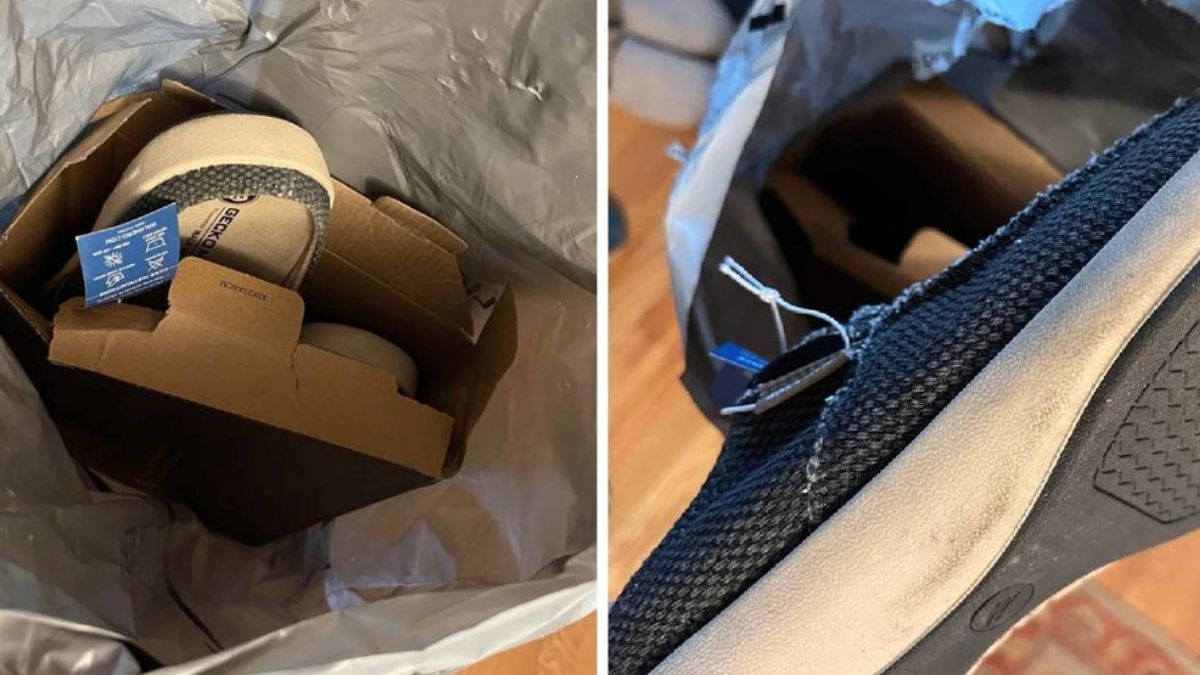
The Reddit user known as dolcezzo1 explained that he had placed the order because his old slippers had simply worn out. He noted that his household had been loyal Amazon Prime members for at least a decade, shopping on the platform regularly and without much concern. This order, however, gave him pause even before he got a proper look at the shoes. The box itself arrived visibly damaged and torn, and the slippers inside were stuffed in a way that immediately struck him as off.
A closer inspection confirmed his suspicions. “I looked at the bottom of one slipper and it was damn dirty and scratched,” he wrote in his post. He concluded without hesitation that the pair had been worn by a previous customer, returned to the warehouse, and then relisted and sold as brand new. To make matters worse, he had paid a new price for what was clearly a used product. He described the whole experience as “simply disgusting” and turned to the Reddit community to ask whether others had run into the same problem.
The response was swift and telling. Commenters flooded in to share their own frustrations, and it quickly became clear that dolcezzo1 was far from alone. “Yes, that’s exactly why I canceled my Amazon,” one user wrote, indicating the experience had been enough to cost the platform a subscriber entirely. The sentiment that Amazon’s quality control had slipped was a recurring theme throughout the thread.
Has selling used as new become normal at Amazon?
by u/dolcezzo1 in amazonprime
Other users described similar issues with different product categories. One commenter recounted purchasing a used lamp listed in “like new” condition, only to receive it without any packaging, visibly scratched, and completely nonfunctional. “It used to be better,” the commenter added, expressing a nostalgia for an earlier era of the platform when such incidents felt less common. The disappointment was compounded by the fact that the “like new” label had once carried some weight as a reliable condition rating.
A female commenter shared perhaps the most pointed response of all. She wrote that the week of the post had marked her last attempt to buy clothing through Amazon, explaining that what arrived was unworn but looked nothing like the product photos and felt cheap given the price she paid. She had already stopped buying shoes on the platform years prior after receiving what she described as disgustingly worn shoes sold as new ones. Her conclusion was blunt: “They should hire people to inspect returns, but they’re too stingy to pay them.” It was a diagnosis that many other commenters seemed to agree with, as the thread filled with similar accounts of returned merchandise making its way back into circulation without adequate review.
As for dolcezzo1 himself, he did not follow up in his post to clarify whether he had sent the slippers back or requested a replacement. Whether he pursued a refund or simply absorbed the disappointment, his story had already done something larger: it had given a name and a face to a frustration simmering quietly among millions of regular Amazon shoppers who have started to wonder what “new” actually means anymore.
Amazon processes an estimated 7,500 returns every single minute in the United States, which means the sheer volume of merchandise cycling back through fulfillment centers makes individual inspection nearly impossible at current staffing levels. There is actually an entire secondary market built around Amazon customer returns, with major retailers like Walmart and liquidation platforms reselling these returned pallets, sometimes to unsuspecting buyers who have no idea the item was originally purchased, used, and sent back. The FTC has fielded thousands of complaints specifically related to used items being sold as new on Amazon’s third-party marketplace, a problem that has only grown as the platform expanded to allow millions of independent sellers with minimal oversight.
Have you ever received a used product listed as new when shopping online? Share your experience in the comments.




