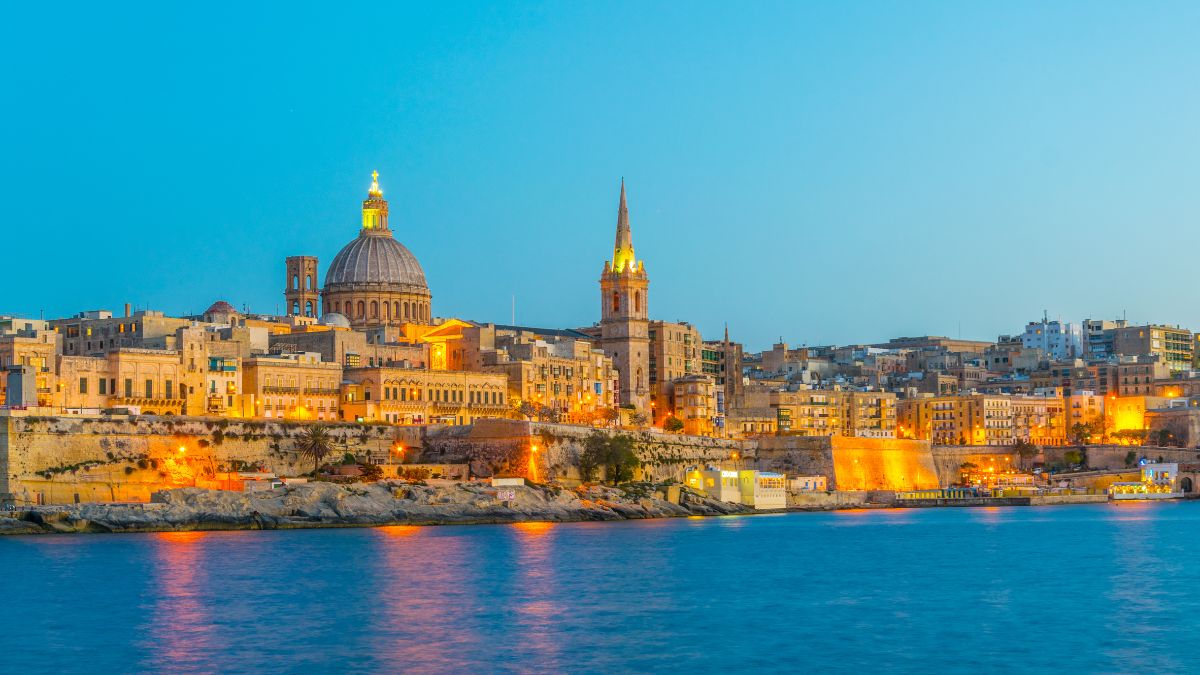
What would it take for you to stop driving for five years? For young people in Malta, the answer might just be a check for roughly $27,000. The Maltese government has launched an unusual incentive program aimed at reducing the number of cars on the island’s increasingly congested roads, and the idea is surprisingly straightforward. Drivers between the ages of 18 and 30 are invited to voluntarily surrender their driver’s license for a period of five years in exchange for a generous financial reward.
The program works by distributing payments of approximately $5,400 per year to each participating driver, adding up to around $27,000 over the full five-year span. According to data published by the Maltese transport agency, the annual budget set aside for the initiative totals roughly $5.4 million, which is enough to fund up to 1,000 participants. The driving force behind the program is a desire to ease the growing strain on Malta’s road network, where traffic congestion has become a persistent and worsening problem. Malta is one of the most densely populated countries in the world, and its small geographic size makes traffic management particularly challenging.
Malta’s Minister of Transport, Chris Bonett, has so far declined to share precise figures about the number of applicants who have enrolled in the scheme. He did, however, indicate that interest has been meaningful, stating that the total value of submitted applications has already surpassed 50 percent of the entire budget allocated for the program. When pressed for more detail, Bonett offered a measured but optimistic statement, saying “There is interest. We are currently reviewing a number of applications and, as soon as we have results, we will publish everything.” His cautious tone suggests the government is being thorough in its vetting process before announcing official enrollment numbers.
Participation in the program does come with some important conditions that applicants should be fully aware of before signing up. Once enrolled, a driver cannot get behind the wheel for the entire five-year period, and anyone who breaks that agreement before the time is up will be required to repay the full amount of money they received. After successfully completing the five years, participants are eligible to get their license back, but they are not simply handed it with no strings attached. They must first complete a minimum of 15 hours of supervised driving at a certified driving school before they can legally return to the road.
Applications for the program remain open through the end of June, giving eligible young drivers a window to weigh the offer before the deadline passes. Whether the prospect of giving up personal vehicle use for five years feels like a reasonable trade-off largely depends on individual lifestyle and commuting needs. For those who live near public transportation or work from home, the deal may be genuinely attractive. For others who rely on a car daily, the restrictions could be a dealbreaker regardless of the payout.
Malta is an archipelago in the central Mediterranean Sea, located just south of Sicily, and it covers a total area of roughly 122 square miles, making it one of the smallest and most densely populated nations in the European Union. Despite its compact size, the country has one of the highest rates of car ownership per capita in Europe, which helps explain why traffic congestion is such a pressing policy concern. The country joined the European Union in 2004 and uses the euro as its official currency. Malta’s road network, while extensive relative to the island’s size, regularly faces bottlenecks particularly around the capital city of Valletta and in the surrounding urban areas. Initiatives aimed at reducing car dependency have become a priority for the government as it tries to align with broader EU sustainability and emissions reduction targets. Public transportation on the island is operated through a bus network that connects most towns and villages, though many residents still prefer the convenience of private vehicles.
Programs that financially incentivize citizens to change transportation habits are not entirely new in Europe. Various cities have experimented with cash-for-clunkers schemes, electric vehicle subsidies, and public transit incentives, but a direct payment in exchange for surrendering a driver’s license for a defined period is a notably bold and unconventional approach. Whether Malta’s experiment proves effective in meaningfully reducing traffic will likely be watched with interest by transport planners and policymakers across the continent.
Would you hand over your driver’s license for five years in exchange for $27,000, and do you think more countries should try programs like this? Share your thoughts in the comments.




