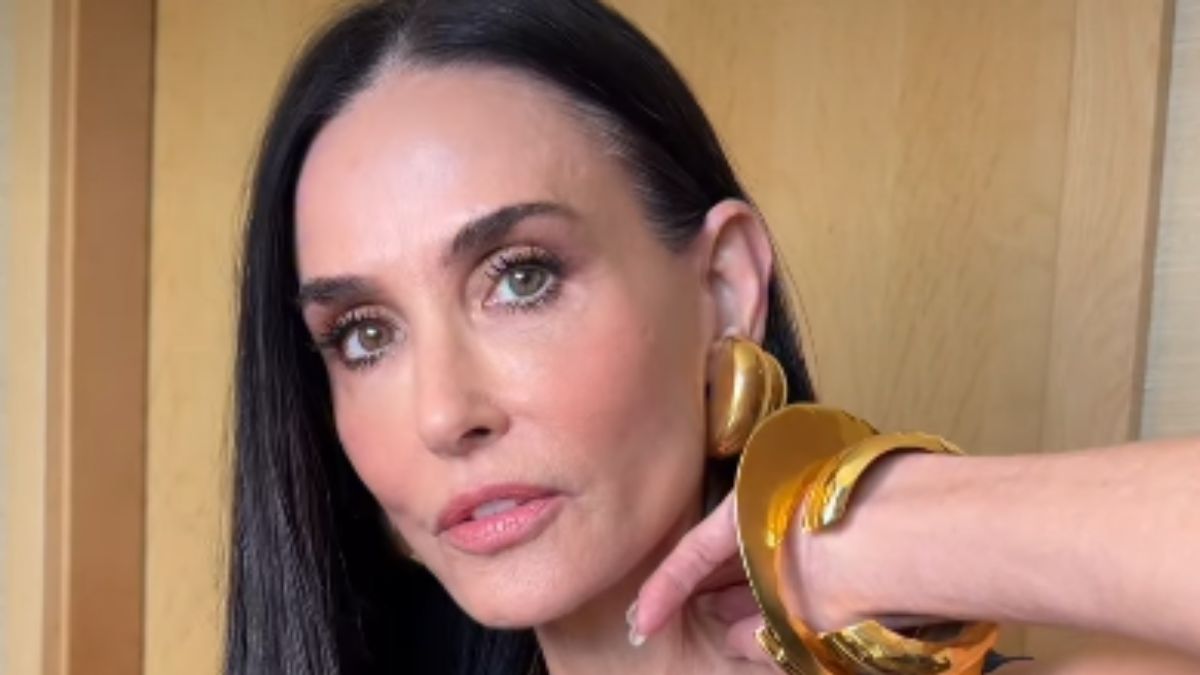
Most people wonder whether sociopaths are born or made, and the debate has long divided both researchers and the general public. Kanika Batra, a model and author who openly speaks about living with antisocial personality disorder, has her own clear answer to that question. She believes the vast majority of sociopaths simply come into the world that way, shaped less by their environment and more by their biology. According to LadBible, Batra has gathered a massive following on social media precisely because of her willingness to discuss her condition with unusual candor.
Batra, who grew up in Australia and now lives in Barcelona, received her diagnosis at 21, though she insists her traits were present long before any doctor put a label on them. In her view, a sociopath is someone who “has no empathy, feels no remorse or guilt.” She has been open about spending years masking her condition and carefully observing others who might share similar traits. Her unique position as someone living with the disorder gives her perspective that most psychological discussions tend to overlook.
One of the most common misconceptions she pushes back against is the idea that people can self-diagnose as sociopaths simply because they once behaved badly. “Many people think they are sociopaths because they did something wrong and wonder if that makes them one. The answer is no,” she explained. “Most people still feel empathy, guilt, and conscience. We don’t.” This distinction, she argues, is fundamental to understanding what the condition actually means versus how it gets sensationalized in popular culture. You can watch video here.
When it comes to identifying others with antisocial personality disorder, Batra says she relies on one particular observation above all else. “The first thing I notice are the eyes. They look soulless. When I’m angry, my eyes look like that too,” she said. She even admitted to having learned to blink more frequently over the years because her intense, steady gaze tended to unsettle people around her. She also noted that individuals like her can hold prolonged eye contact with ease, largely because they do not experience the same stress responses that most people do in social situations.
Her self-description is strikingly candid throughout. She has called herself “the most manipulative person you will ever meet” and claims she can “lie better than anyone.” Yet she is quick to separate herself from the impulsive, violent archetype that often gets attached to the label. She describes herself as patient and calculating rather than reactive, saying she can spend “a year or two planning revenge” without ever doing anything that might cost her her freedom or reputation. It is a portrait of control rather than chaos.
Perhaps the most unexpected part of Batra’s story is her perspective on love and relationships. She describes love not as a feeling but as a deliberate act. “I will decide to love someone and act accordingly,” she explained. “I will do what is in the best interest of that person because I see them as part of my life. If someone attacks or hurts a person who is with me, I will stand by them no matter what.” She frames this as a different but not necessarily lesser form of connection, one built on decision-making rather than emotion.
She also notes that certain traits she carries actually work in her favor. She says she does not fear rejection or abandonment the way most people do, and she is able to make decisions without the burden of emotional weight clouding her judgment. “I show love through actions, not words. I think that’s a more effective approach than relying solely on feelings,” she concluded.
Antisocial personality disorder, which is often used interchangeably with the term sociopathy in popular discourse, is classified as a Cluster B personality disorder in the Diagnostic and Statistical Manual of Mental Disorders. It is characterized by a persistent pattern of disregard for the rights of others, deceitfulness, impulsivity, and lack of remorse. Research suggests it affects somewhere between 1% and 4% of the general population and is diagnosed significantly more often in men than in women, though experts believe the disorder may simply present differently across genders. The condition is typically diagnosed in adulthood, though symptoms often trace back to childhood behaviors such as conduct disorder. Genetics, early trauma, and neurological differences in areas of the brain related to impulse control and empathy are all considered contributing factors, and most clinicians view the disorder as arising from a complex interplay of nature and environment rather than one alone.
If Kanika Batra’s account made you rethink what you thought you knew about sociopathy, share your perspective in the comments.