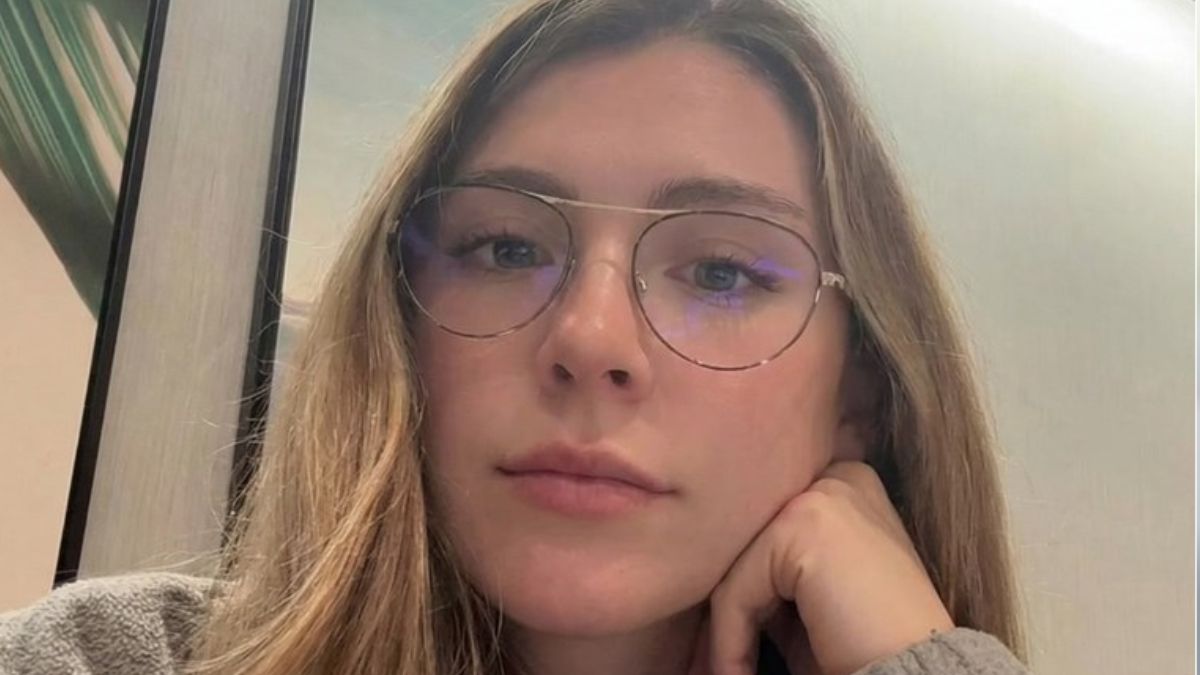
A chance remark from a complete stranger set TikTok user Brooke Fontana on a health investigation that would change how she understood years of mysterious symptoms. Fontana had been living with a handful of unexplained physical complaints for some time, but it was an offhand observation from someone she had never met that prompted her to finally connect the dots. She shared the full story in a video posted in late January, recounting the moment that sent her down a research rabbit hole about a condition she had never previously considered. What she discovered surprised her and resonated deeply with thousands of viewers who had experienced similar frustrations with their own health.
The encounter began when a stranger looked at her and said, “Oh, I have seizures too.” Fontana was caught completely off guard. “I thought, ‘Are you talking to me?’” she recalled, adding, “Is it possible that I’m having a seizure without even being aware of it?” The idea seemed strange at first, but something about the comment stuck with her. Rather than brushing it off, she went home and began searching for information online.
While researching, she came across a very specific symptom of focal seizures that immediately grabbed her attention: injuries to the tongue caused by involuntary chewing or jaw clenching during a seizure. Fontana described the moment of recognition as startling. “I had literally been biting off pieces of my tongue in my sleep, and that was right there on the list of symptoms,” she said. The discovery reframed something she had been dealing with for two years without explanation.
Doctors had previously told her the tongue sores were a result of anxiety, and she had been encouraged to purchase a night guard costing around $500. She had accepted that explanation for a long time, not knowing there might be another underlying cause. Fontana also described experiencing random twitching episodes that she had written off as nervous habits. “I just randomly jolt, and I thought it was just some nervous tick,” she explained. Looking back through the lens of this new possibility, the pattern of symptoms suddenly felt like it had a coherent shape.
@brookefontana #epilepsy #epilepsyawareness #idfk #chronicpain #help ♬ original sound – Brookè Fontana
She described the stranger’s comment as the missing piece of a puzzle she had long been trying to solve. “That was the piece that was missing because I’ve been trying to figure out what’s been happening to me for a long time,” Fontana said. Her video struck a nerve online, drawing a flood of responses from people who felt unseen or dismissed by medical professionals while dealing with unexplained symptoms. Many viewers shared their own stories of going years without a diagnosis that accurately reflected what they were experiencing.
A focal seizure is a type of epileptic event that begins in one specific region of the brain rather than affecting the entire brain at once. Because only a localized area is involved, the symptoms can vary widely depending on which part of the brain is impacted. A person might experience muscle twitches in one part of the body, unusual sensations like strange smells or a sense of deja vu, brief confusion, or automatic movements such as repeated chewing or lip movement. Some people remain fully conscious throughout, while others may appear absent or disoriented. Episodes typically last between a few seconds and several minutes and can be associated with epilepsy, brain injuries, infections, or other neurological conditions, though in some cases no clear cause is ever identified.
Fontana followed up with another video in late February after visiting her doctor about the ongoing issues, which included chronic fatigue, the recurring tongue sores, and the twitching episodes. The appointment did not go well. When she asked whether focal seizures might be responsible for the persistent exhaustion she felt every day, she said her general practitioner responded dismissively: “And you think that’s why you’re tired all day…” Despite the frustrating interaction, she was ultimately able to get a referral to a neurologist. The support from her online audience was immediate and strong, with many followers urging her to seek out a physician who would take her seriously. “I’m going to find out what’s happening… I’m going to a three-day EEG,” Fontana told her followers.
Focal seizures were historically called partial seizures, a term that was officially retired in 2017 when the International League Against Epilepsy updated its classification system to better reflect what actually happens in the brain. Tongue biting is considered one of the more telling physical signs doctors look for when evaluating a possible seizure disorder, though it is more commonly associated with generalized tonic-clonic seizures than focal ones. Around 65 percent of people with epilepsy are able to achieve seizure control through medication, yet it takes an average of nearly two years from the onset of symptoms to receive an accurate diagnosis.
If Fontana’s story resonated with you or you have had a similar experience navigating unexplained symptoms, share your thoughts in the comments.