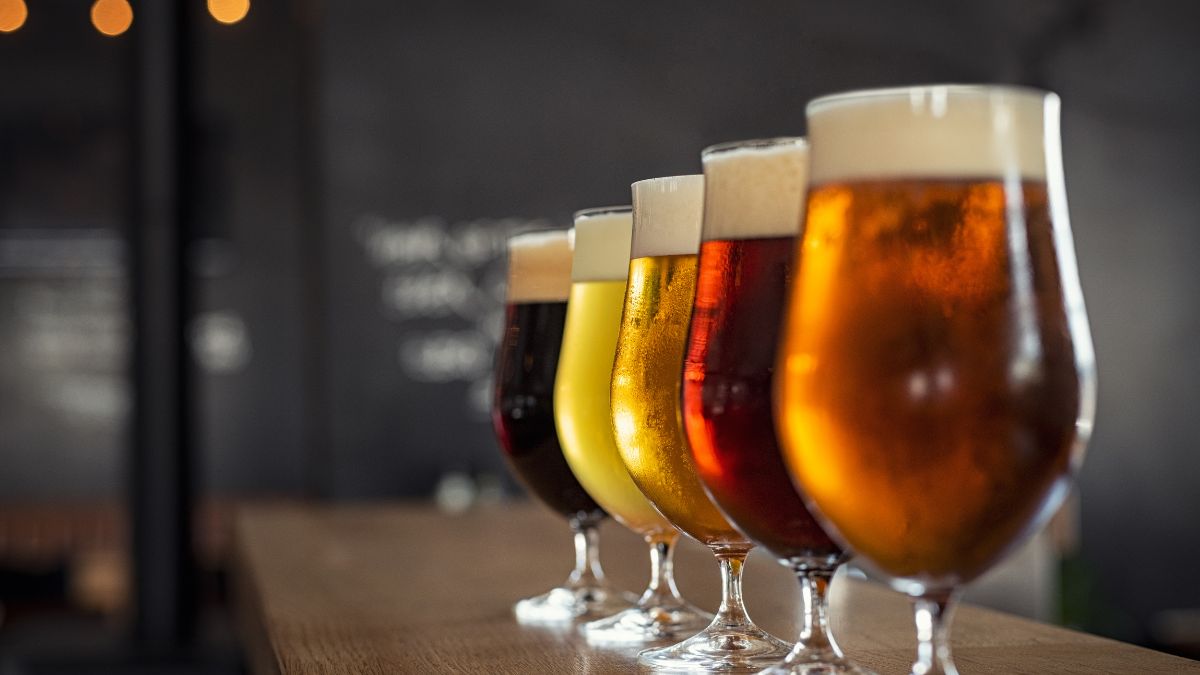
When outdoor gear brand Columbia Sportswear and Portland-based Breakside Brewery decided to team up, nobody expected the collaboration to involve bear droppings. And yet, that is precisely what the two companies cooked up together, quite literally. The result is Nature Calls, a light lager that has been turning heads and raising eyebrows across the craft beer world for its remarkably unconventional origin story. Despite what the backstory might suggest, the beer apparently tastes nothing like its most notorious ingredient.
The partnership is part of Columbia’s “Engineered for Whatever” campaign, a marketing push designed to showcase the brand’s sense of humor and its readiness to tackle anything the great outdoors might throw at it. Joe Boyle, president of the Columbia brand, praised Breakside for their “outstanding beer” and “willingness to experiment,” framing the whole venture with characteristic wit. As Boyle explained the campaign’s philosophy: “If Mother Nature drops bear scat at our feet, we’ll turn it into an ice-cold beer.” It is a tagline that requires a moment to process, but the logic, however absurd, holds together.
When Columbia first approached Breakside with the concept, the brewery’s reaction was predictably skeptical. “When Columbia came to us with the idea of using bear scat, we thought they were joking,” said brewery founder Scott Lawrence. Head brewer Ben Edmunds eventually took the challenge seriously, developing what he describes as “a light, drinkable, low-calorie lager with flavors you could jokingly associate with a bear’s diet: blueberry and honey.” The flavors were not chosen arbitrarily but are a genuine nod to the omnivorous habits of the American black bear, whose diet is rich in berries and other forest forage.
The production process was designed with safety as the central priority, and the bear droppings never came anywhere near the brewing kettle directly. Instead, Columbia collected scat from American black bears and introduced it into water, which was then processed through a certified wastewater treatment facility until it met every standard for safe drinking water. Only after that thorough purification was the water used in brewing. Edmunds confirmed that the water was “very thoroughly filtered and made safe for consumption before we started the rest of our brewing process,” a detail that is likely to reassure anyone tempted to give the beer a try.
The water source itself adds another layer of peculiarity to the story. It originates from the Bull Run watershed, which serves as Portland’s primary municipal drinking water supply and is home to a thriving population of wild animals, including bears, who relieve themselves in the area as a matter of course. In that sense, the Nature Calls water source is not so different from what goes into any municipal tap, just with an unusually direct narrative attached to it. The process also draws comparison to a growing number of breweries that use recycled or reclaimed water, a practice that has steadily gained acceptance in the craft beer industry.
On flavor, Edmunds describes the finished product as a blend of Idaho barley malt, wheat, and corn, with honey and blueberry syrup added after the lagering process. The beer’s low hop profile combined with the high mineral content of the water and its carbonation level gives it what Edmunds calls “a seltzer-like lightness on the finish.” Coming in at 5.1% alcohol by volume, it is designed to be sessionable and approachable, the kind of beer that invites curiosity rather than demanding commitment. “If you’ve ever wanted to say you’ve tried a beer made with bear scat, now’s your chance,” Edmunds offered, and it is hard to argue with the invitation.
Nature Calls is currently available at seven Breakside Brewery locations across Oregon, making it a regional curiosity rather than a nationwide phenomenon for now. The idea of using animal waste in the brewing process is not entirely without historical precedent either. Breweries in Finland and Iceland have long used goose and sheep droppings as fuel for smoking malted barley, a tradition born out of necessity in regions where firewood was scarce. That smoking process adds a distinct character to the finished beer, so in a roundabout way, the connection between animal waste and brewing has existed for far longer than most people realize.
Kopi Luwak coffee, famously made from beans that have passed through the digestive system of Asian palm civets, can sell for upward of $700 per pound, which suggests there is a genuine and lucrative market for beverages with unusual animal-assisted origins. The American black bear, which inspired Nature Calls, can consume up to 20,000 calories a day during the hyperphagia period before hibernation, meaning its diet at that time of year is essentially a non-stop parade of berries, nuts, and honey — exactly the flavor profile Edmunds was going for. Breakside Brewery itself has won multiple medals at the Great American Beer Festival, so the bear scat novelty is backed by a team that genuinely knows how to brew.
Would you be willing to crack open a can of Nature Calls, or is this one experiment too far even for an adventurous beer drinker? Share your thoughts in the comments.