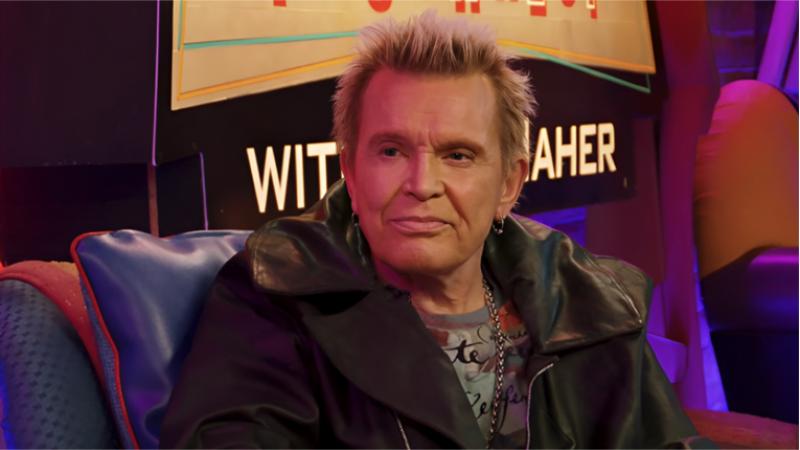
Rock icon Billy Idol has never shied away from talking about the darker chapters of his life, and his most recent candid moment came during an appearance on Bill Maher’s podcast. The veteran punk rock star opened up about his turbulent past with substance abuse, revealing the unconventional and deeply risky method he used to break free from heroin. His admission quickly made waves, not just because of its raw honesty, but because of how bluntly he described a path that no medical professional would ever recommend. Idol discussed everything from his career to the various substances he experimented with throughout his rock and roll years before eventually getting sober.
During the conversation with Maher, Idol explained that when he was trying to kick his heroin habit, he reached for something else entirely. “What do you turn to when you’re trying to get off heroin? Well, something else. I started smoking crack to get rid of heroin. And it worked,” he said. He was quick to acknowledge the absurdity of what he was describing, adding “This is probably the worst advertisement for that, but it worked, I got clean.” The crowd and Maher reportedly laughed along with him as he delivered the line with his signature self-awareness, though the underlying message was anything but a joke.
Idol also reflected on other periods of excess, mentioning that he had gone through what he called a “cocaine phase” and that substance experimentation was woven into the fabric of his lifestyle during the height of his fame. He noted how alarming it is to think about people picking up drug habits later in life, and joked that he was grateful he went through all of it while he was still young enough to have the “energy” for that kind of existence. The conversation carried a tone of someone who has genuinely processed his past and is able to speak about it from a place of distance and clarity. Idol made it clear that all of this happened many years ago, stating simply “It was a long time ago and I’m glad I got out.”
Experts, however, are firm in pointing out that substituting one addictive substance for another is not a recognized or safe method of treating dependency. As reported by Unilad, the American National Institute on Drug Abuse emphasizes that proper treatment helps individuals counteract the effects that addiction has on the brain and behavior, ultimately allowing them to regain control over their lives. For those struggling with opioid dependency, including heroin, medication-assisted treatment is typically considered the first and most effective line of intervention. These treatments are almost always paired with counseling or behavioral therapy, and specialists stress that recovery plans need to be tailored to the individual needs of each person.
Billy Idol’s willingness to speak about his past without sugarcoating it has long been part of what makes him such a compelling figure in rock history. He has addressed his struggles in various interviews over the years, including in his 2014 memoir where he wrote extensively about the excesses of the 1980s rock scene. His story serves as a reminder of just how destructive that era could be, even for those who managed to survive it. The fact that he came through it at all, let alone went on to continue making music, is something many of his fans point to with admiration.
Billy Idol, born William Michael Albert Broad in 1955 in Stanmore, England, rose to fame as the frontman of the British punk band Generation X before launching a hugely successful solo career in the early 1980s. His signature bleached hair, sneer, and leather jacket aesthetic became synonymous with the decade, and hits like “White Wedding,” “Rebel Yell,” and “Eyes Without a Face” cemented his place in rock history. He experienced a serious motorcycle accident in 1990 that nearly cost him his leg and added yet another chapter of physical hardship to an already turbulent life story. Despite everything, Idol has remained active in music, releasing new material and touring well into his later years, showing a resilience that mirrors the gritty spirit of his songs.
Crack cocaine, the substance Idol mentioned, became a major public health crisis in the United States during the 1980s, the same era when Idol was at the peak of his fame. It is a highly addictive smokable form of cocaine that produces an intense but short-lived high, making dependency develop rapidly. Heroin, an opioid derived from morphine, has similarly devastating addictive properties, and dependency on either substance is widely recognized as requiring professional medical treatment for safe recovery. The intersection of these two drugs in a single person’s story highlights how layered and complicated addiction can be, especially within the excess-driven world of the music industry during that period.
Share your thoughts on Billy Idol’s story and his unconventional path to sobriety in the comments.