Professional kitchens operate under a code of ruthless pragmatism that rarely makes it onto the carefully curated feeds of culinary influencers or the glossy pages of food magazines. What actually happens behind the pass, inside the walk-in, and beneath the prep counter is governed by efficiency logic that would horrify the container-store aesthetic crowd and confuse the minimalist organizers. Chefs develop their organizational systems through years of high-pressure repetition, and many of those systems are unconventional, counterintuitive, and completely at odds with the advice dispensed by lifestyle brands. The gap between how food professionals actually organize their working kitchens and what they choose to share publicly is wider than most home cooks realize. Here are 26 controversial kitchen organization methods that professional chefs rely on daily but rarely broadcast, ordered from the most impactful to the quietly indispensable.
Mise en Place Bowls
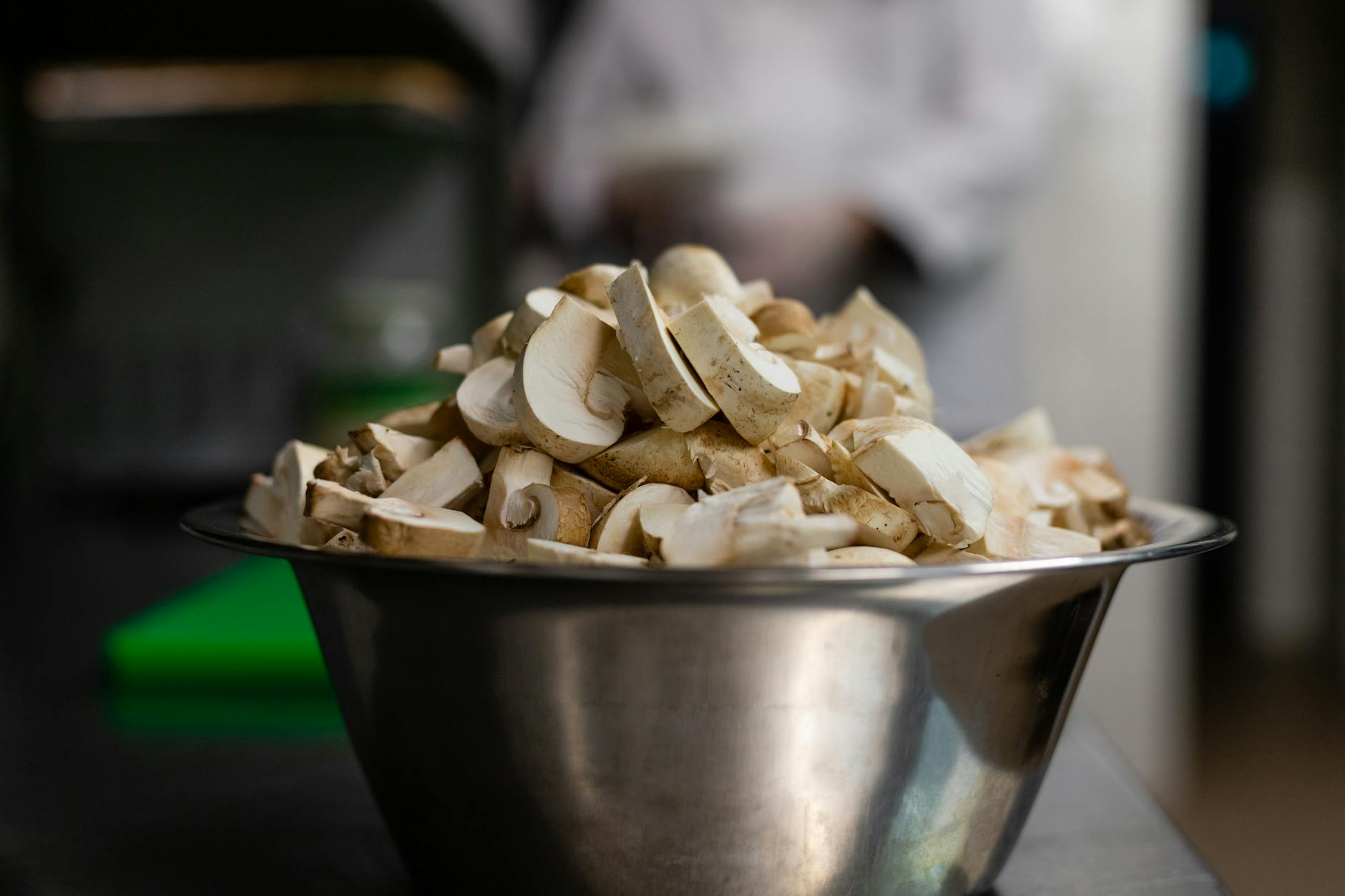
Professional chefs use identical small stainless steel prep bowls in uniform sizes stacked in large quantities rather than the decorative ceramic ramekin collections promoted in home cooking content. The uniformity allows bowls to be grabbed blindly at speed, stacked without thought, and replaced identically after washing without any organizational decision-making required. This system eliminates the visual noise and spatial inefficiency created by mismatched vessel collections, which require conscious arrangement every time they are used or stored. The stainless material means bowls can go from freezer to open flame adjacent without concern and can be sanitized at temperatures that would destroy ceramic glazes. Most professional chefs own between thirty and sixty of a single bowl in two or three standard sizes and nothing else.
Tape Labeling

Every container, tray, vessel, and shelf position in a professional kitchen is labeled with blue painter’s tape and a permanent marker rather than with any permanent labeling system or decorative label maker output. The tape system allows labels to be stripped and rewritten in seconds as contents change, stations rotate, and prep priorities shift across a service week. Professional kitchens change their mise en place configurations constantly and any labeling system that requires more than three seconds to update becomes a liability rather than an asset. The blue color coding of the tape is itself a food safety standard in many kitchens as blue is the one color that does not appear naturally in food and therefore makes contamination immediately visible. Home organizers who invest in permanent printed label systems are building a rigidity into their kitchen that professional logic actively avoids.
FIFO Stacking
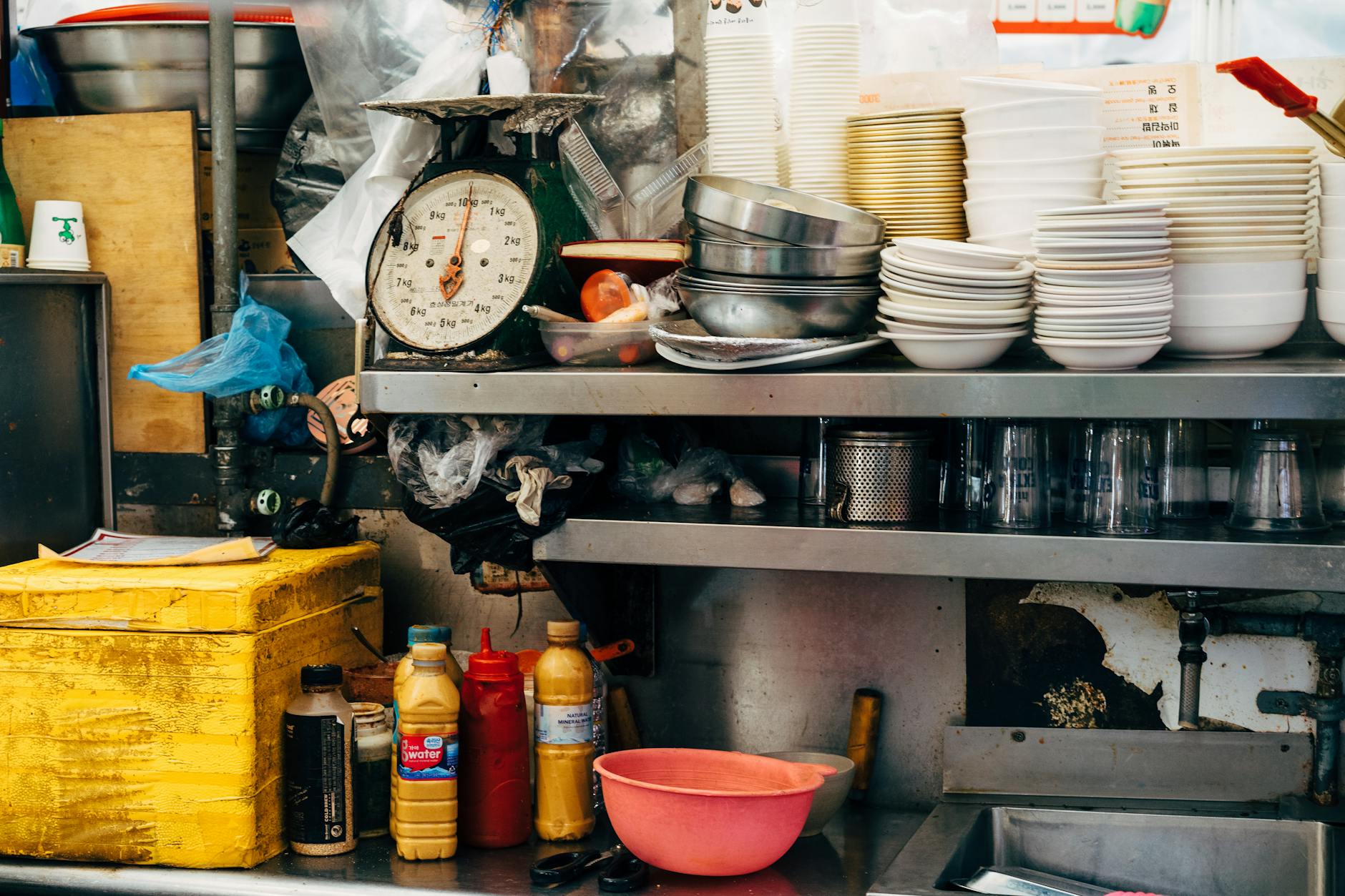
First in, first out stacking means every refrigerator shelf, dry goods bin, and ingredient container is loaded from the back with new stock and depleted from the front, with older product always positioned at the point of use. This system requires the deliberate habit of pulling everything forward before adding new stock, which takes additional seconds but eliminates the spoilage waste that accumulates invisibly in kitchens that load containers from the front. Chefs tape the preparation or opening date directly onto every container using the tape system alongside the contents label creating a dual information display that communicates freshness at a glance. The habit reconfigures the entire relationship to ingredient storage from a passive depositional act into an active inventory management behavior. Home cooks who adopt FIFO stacking consistently report a dramatic reduction in forgotten and spoiled ingredients within the first two weeks of practice.
Speed Rails
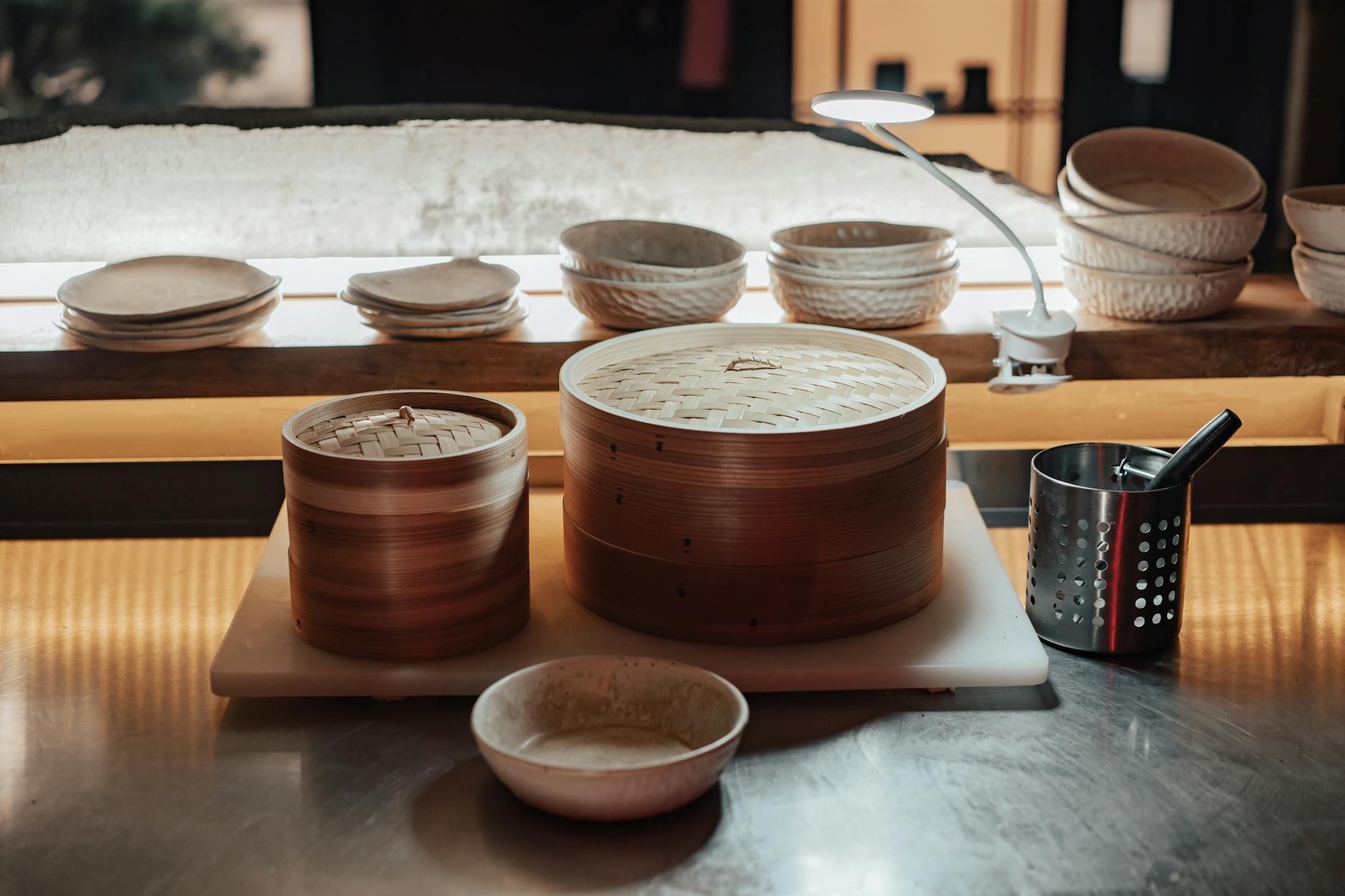
A speed rail is a metal bar mounted at the front edge of a workstation that holds the most frequently reached-for tools including a bench scraper, a single chef’s knife, a thermometer, and a towel in fixed and immediately accessible positions without requiring any drawer opening or surface searching. The concept originates in bar service where bartenders mount bottle rails for zero-search-time retrieval and chefs have transferred the principle to prep and line work. Every second spent searching a drawer or scanning a surface during active cooking represents a compounding inefficiency that speed rail systems eliminate at the point of need. The tools held on the rail change depending on the day’s prep tasks but the principle of zero-search access to the six most critical items remains constant. Home cooks who install a magnetic tool strip at forearm height directly above their primary prep zone are implementing the domestic equivalent of this system.
Sheet Pan Decanting
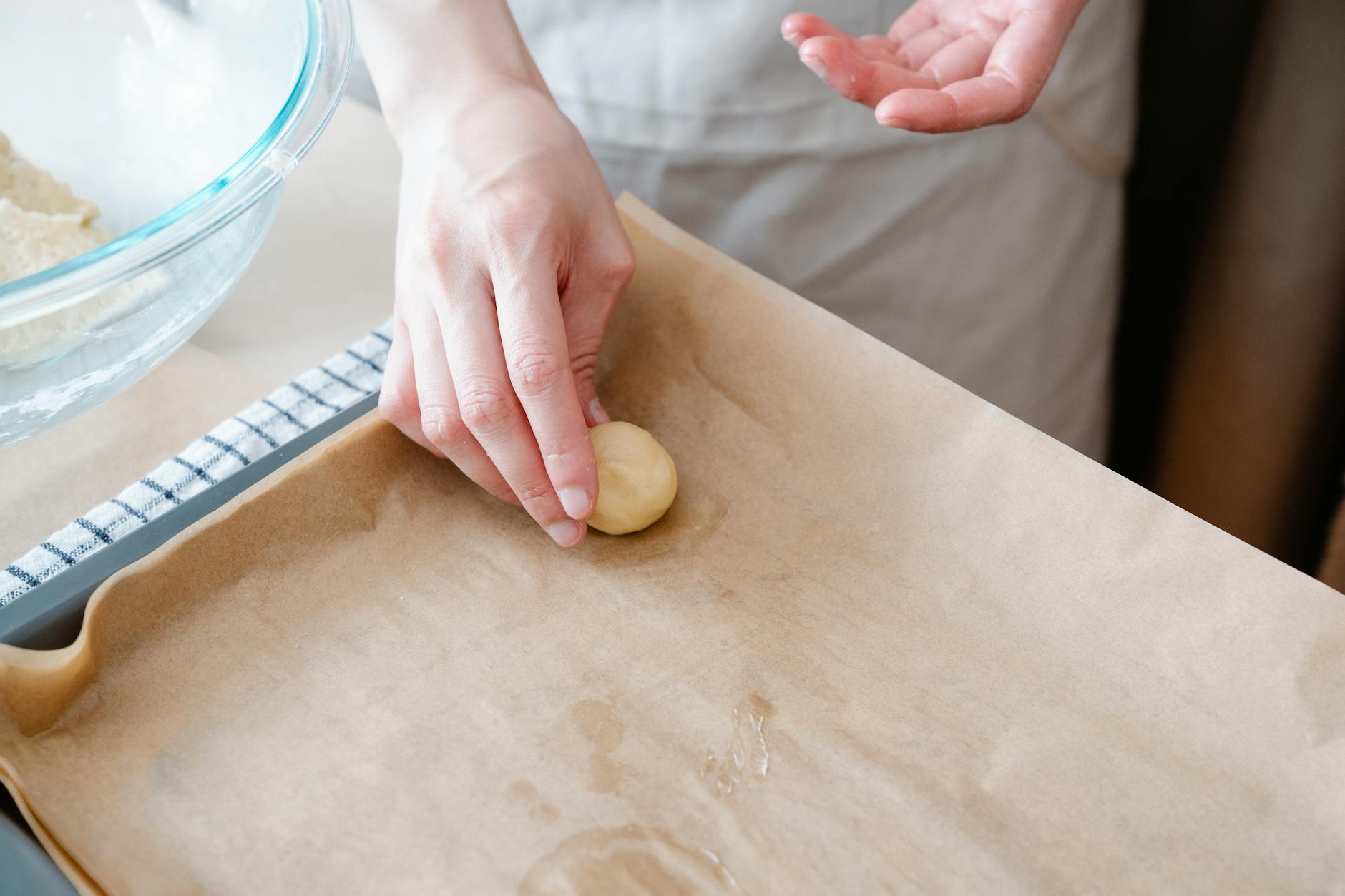
Dry ingredients including flour, sugar, breadcrumbs, spice blends, and coatings are decanted from their packaging into full-size sheet pans with low edges rather than into canisters, jars, or bins when they are actively in use during a prep session. The wide shallow surface area of the sheet pan allows two-handed dredging, rapid measuring, and immediate visual assessment of quantity remaining without the awkward scooping and refilling that canister systems require under time pressure. At the end of a prep session unused contents are funneled back into storage containers in seconds using the pan’s edge as a natural scoop. The same pans used for ingredient staging are used for roasting, cooling, and transport creating a true zero-additional-equipment workflow. Most home cooks own sheet pans and never consider using them for anything other than baking, missing their organizational utility entirely.
Zone Freezing

Professional chefs divide freezer space into rigid functional zones rather than organizing by food category, with zones determined entirely by frequency of access and proximity to the relevant prep station. The most frequently needed frozen items occupy the top shelf nearest the door handle at eye level and the least accessed items are pushed to the back bottom corners regardless of what type of food they are. This access-frequency logic means a frozen herb butter used in every service sits above a whole duck used monthly even though conventional food-category organization would separate them across the freezer. Shelves are never overloaded beyond sixty percent capacity because visual access is considered as important as physical access in professional freezer management. Chefs rebuild their freezer zone map at the beginning of each menu season as frequency patterns change with the dishes being produced.
Knife Magnetic Walls
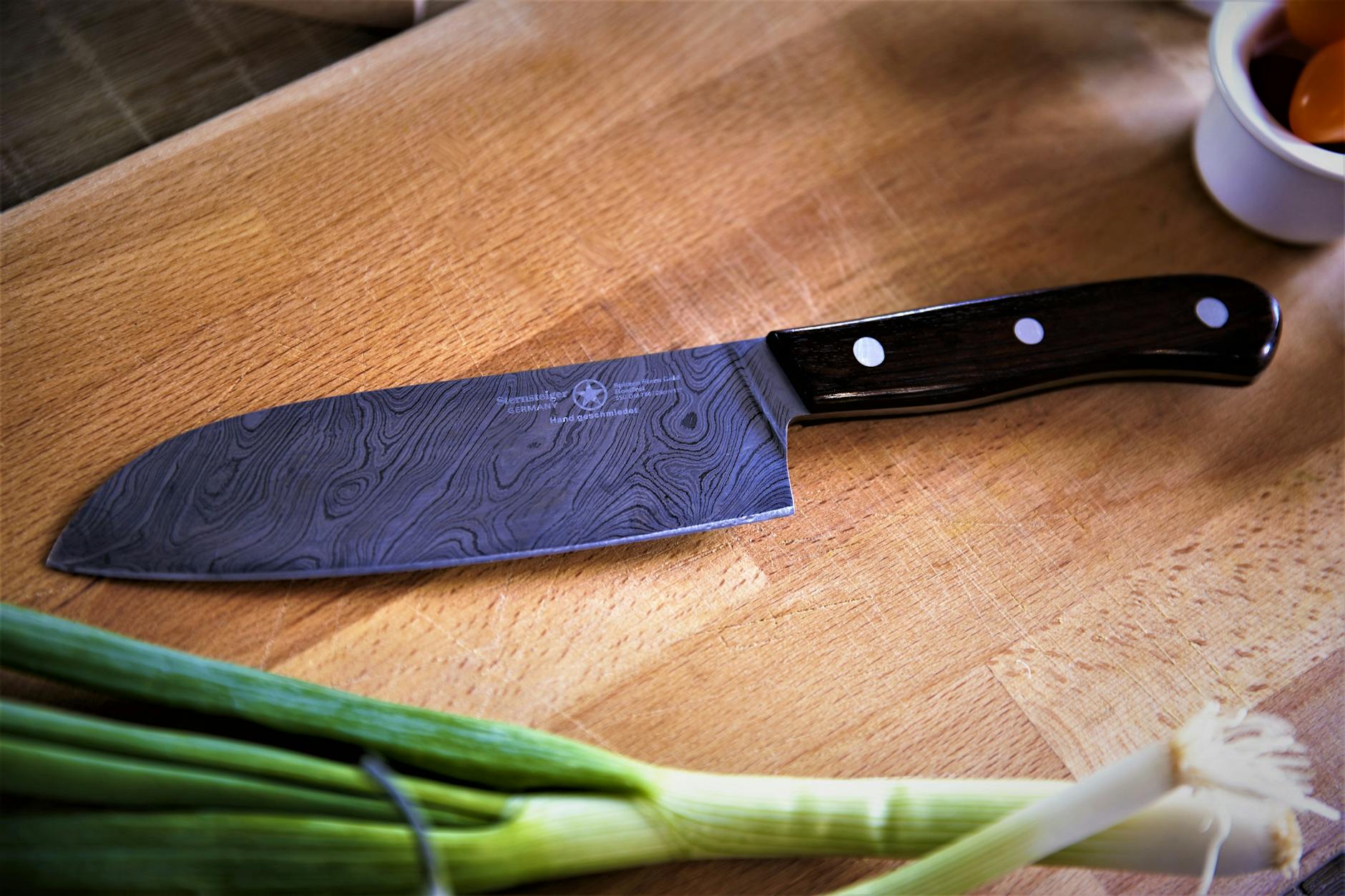
Professional chefs mount their personal knife rolls on magnetic wall strips at eye level directly above their primary cutting board position rather than storing them in blocks, drawers, or protective sleeves between uses. The magnetic wall keeps the blade edge off any surface that could damage it, keeps every knife in constant visual inventory, and eliminates the time-consuming retrieval and replacement cycle that block or drawer storage requires during active prep. The visual exposure of all knives simultaneously allows instant selection of the correct tool without the exploratory handling that accelerates edge wear. Chefs who share a station use colored handle tape or personalized magnetic strip sections to maintain clear ownership boundaries without any labeling or administrative system. The practice of keeping sharp blades on open wall displays violates every home kitchen safety recommendation but in professional practice the opposite logic applies since hidden blades cause more accidental cuts than visible ones.
Clipboard Inventory
A physical clipboard hung inside the pantry or dry store door holds a handwritten running inventory sheet that is updated in real time as ingredients are used, received, or transferred rather than relying on memory, apps, or periodic stock-take events. The physical location of the clipboard at the point of ingredient access creates an unavoidable behavioral prompt to update it every time the storage space is entered. Chefs cross items off rather than erasing them, creating a visible consumption history that informs ordering patterns and reveals waste trends over time. The analog nature of the system is deliberate as a screen-based inventory tool introduces the friction of device retrieval and app navigation into a workflow that benefits from zero-friction recording. Home cooks who implement a clipboard inside a single pantry cupboard report that it fundamentally changes their shopping behavior within weeks.
Color Coded Boards

Professional kitchens maintain a strict color-coded cutting board system in which each board color is permanently assigned to a specific protein or food category and boards are never used outside their designated category regardless of the circumstances. Red boards handle raw red meat, yellow handles raw poultry, blue handles raw seafood, green handles produce, white handles dairy and cooked foods, and brown handles root vegetables in the most widely adopted international system. The boards are stored color-face-out in a vertical rack that makes color identification instant and makes any cross-contamination event immediately visible before it occurs. Chefs who work in home kitchens resist the temptation to consolidate down to one or two boards because the color system removes an entire category of food safety decision-making from active cognition. The system works precisely because it is unconditional and never negotiated on the basis of convenience.
Lowboy Organization

The lowboy refrigerator positioned directly beneath the cooking line is organized on the principle of vertical frequency mapping in which the most-used items occupy the space between knee and hip height and the least-used items are pushed to the lowest shelf requiring a crouch. This ergonomic hierarchy is rebuilt at the beginning of every service based on that specific service’s menu rather than maintained as a static arrangement. Line cooks who reorganize their lowboy as a pre-service ritual report significantly reduced physical movement during service and fewer moments of lost focus caused by reaching and searching at inconvenient heights. The internal organization of each container within the lowboy also follows the principle that every item should be graspable with one hand and scoopable with a single motion. Nothing is stored in the lowboy in its original packaging as original packaging is designed for retail display rather than for one-handed rapid access.
Hanging Utensils
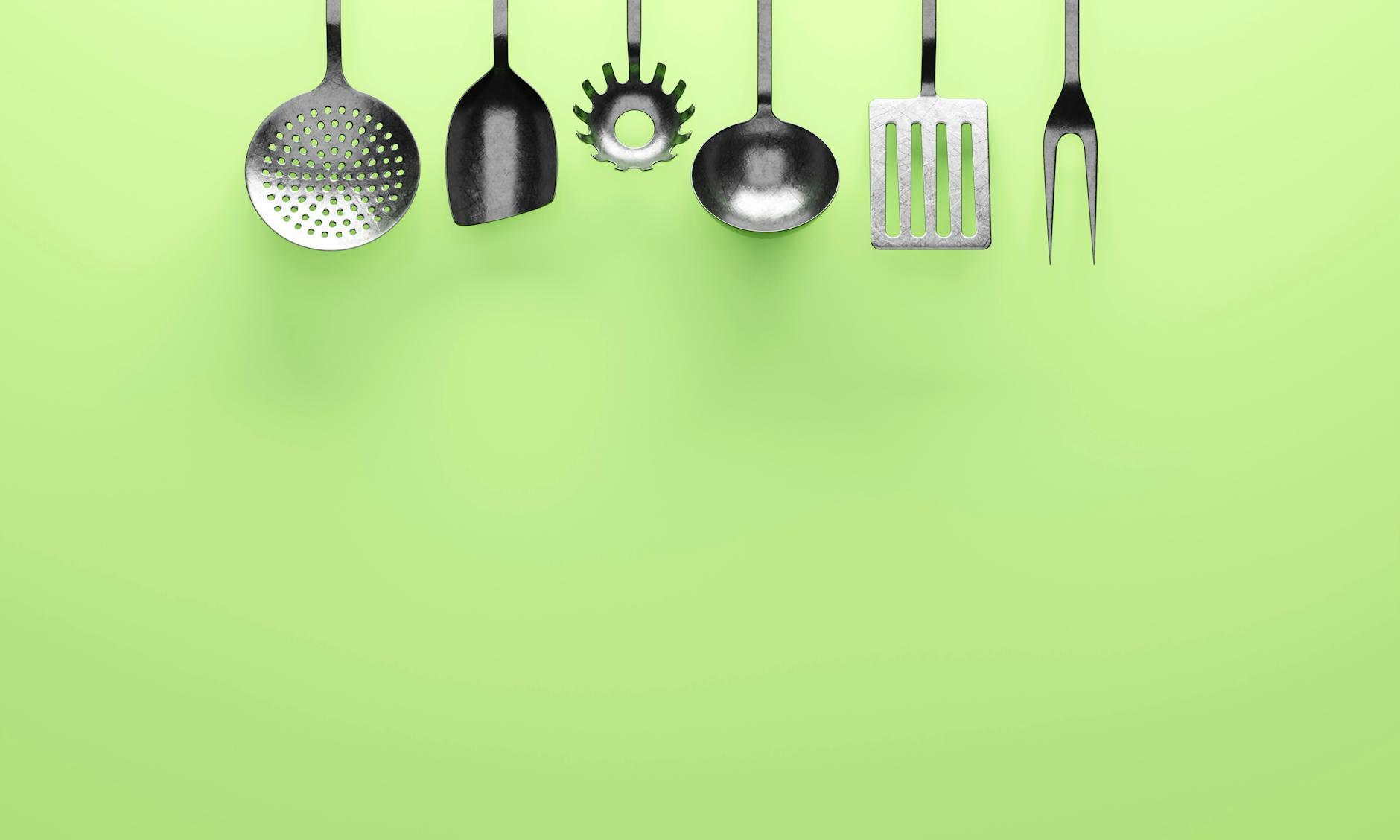
All frequently used utensils including ladles, tongs, spiders, whisks, and slotted spoons are hung on hooks or bars directly above or beside the cooking station at a height where they can be grabbed without lowering the gaze from the cooking surface. The hanging position keeps utensil heads off any surface that could contaminate them between uses and allows instant visual inventory of what is available and what has been taken without any drawer opening or surface scanning. Stations are set up so that the tools required for the specific service are the only tools hanging in the active zone, with infrequently used tools stored lower or further away. The hook positions are assigned by tool type and are never changed mid-service because muscle memory navigation of a fixed hanging array is faster than visual search of a variable one. Home cooks who hang utensils typically do so for aesthetic reasons but chefs hang them for pure retrieval physics.
Protein Dating
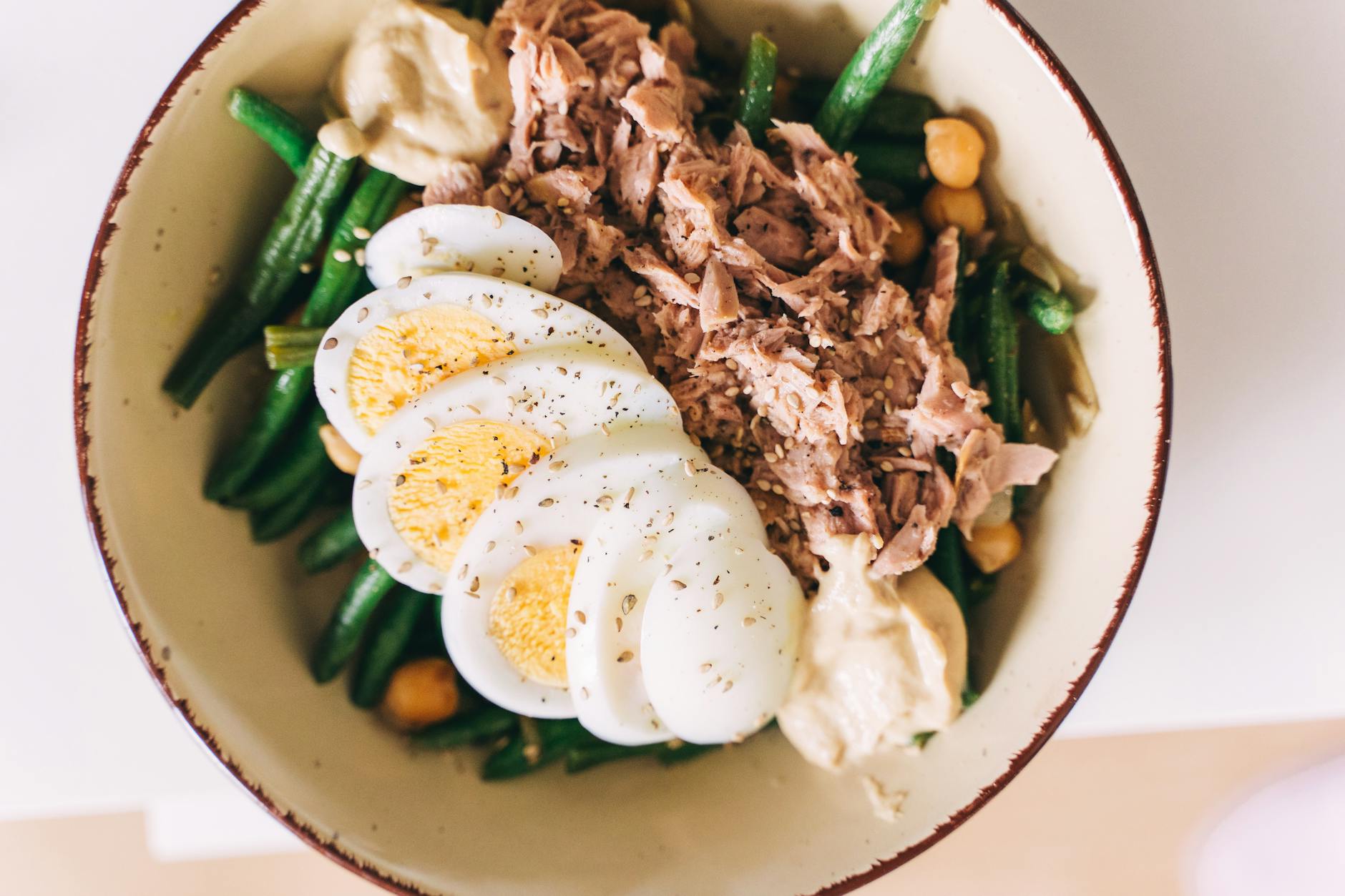
Every raw protein in a professional refrigerator carries a handwritten tag giving the butchery or receipt date, the use-by date calculated from that event, the exact weight at intake, and the initials of the person who prepared or received it. This documentation trail creates individual accountability for every piece of protein in the kitchen and makes spoilage events traceable to specific decisions and specific people rather than anonymous organizational failures. The dating system also creates a chronological visual map inside the protein section of the refrigerator that tells the chef at a glance which items are approaching critical use windows without requiring any physical examination of the product. Home cooks who adopt protein dating using simple masking tape tags report that it changes their relationship to what is in their refrigerator from vague awareness to precise knowledge. The accountability dimension of including initials is unnecessary in a home context but the date and use-by information alone eliminates the most common source of protein waste in domestic refrigerators.
Gravity Dispensers
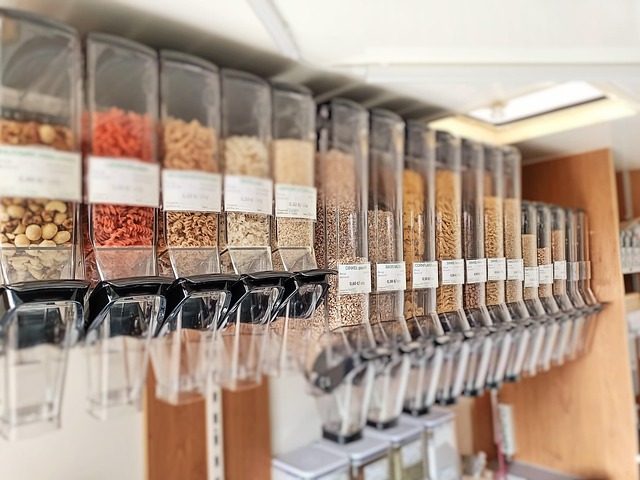
Bulk dry goods including rice, lentils, rolled oats, pasta, and whole grains are stored in wall-mounted gravity-fed dispensers that release a measured portion from a bottom gate with a single hand gesture rather than in sealed containers that require opening, scooping, and resealing. The gravity dispenser system keeps frequently used staples in constant visual inventory through transparent walls while eliminating the multiple-step access ritual that canister storage demands. Dispensers are mounted at hip height above the prep area they serve so that the portion falls directly into the measuring cup or prep bowl below without any intermediate transfer. In professional kitchens gravity dispensers are most commonly found in bakery and pastry sections where flour, sugar, and grain portioning is a high-frequency repeated action across a full production day. The wall mounting also reclaims the counter and shelf space that large canister collections occupy.
Sanitizer Buckets
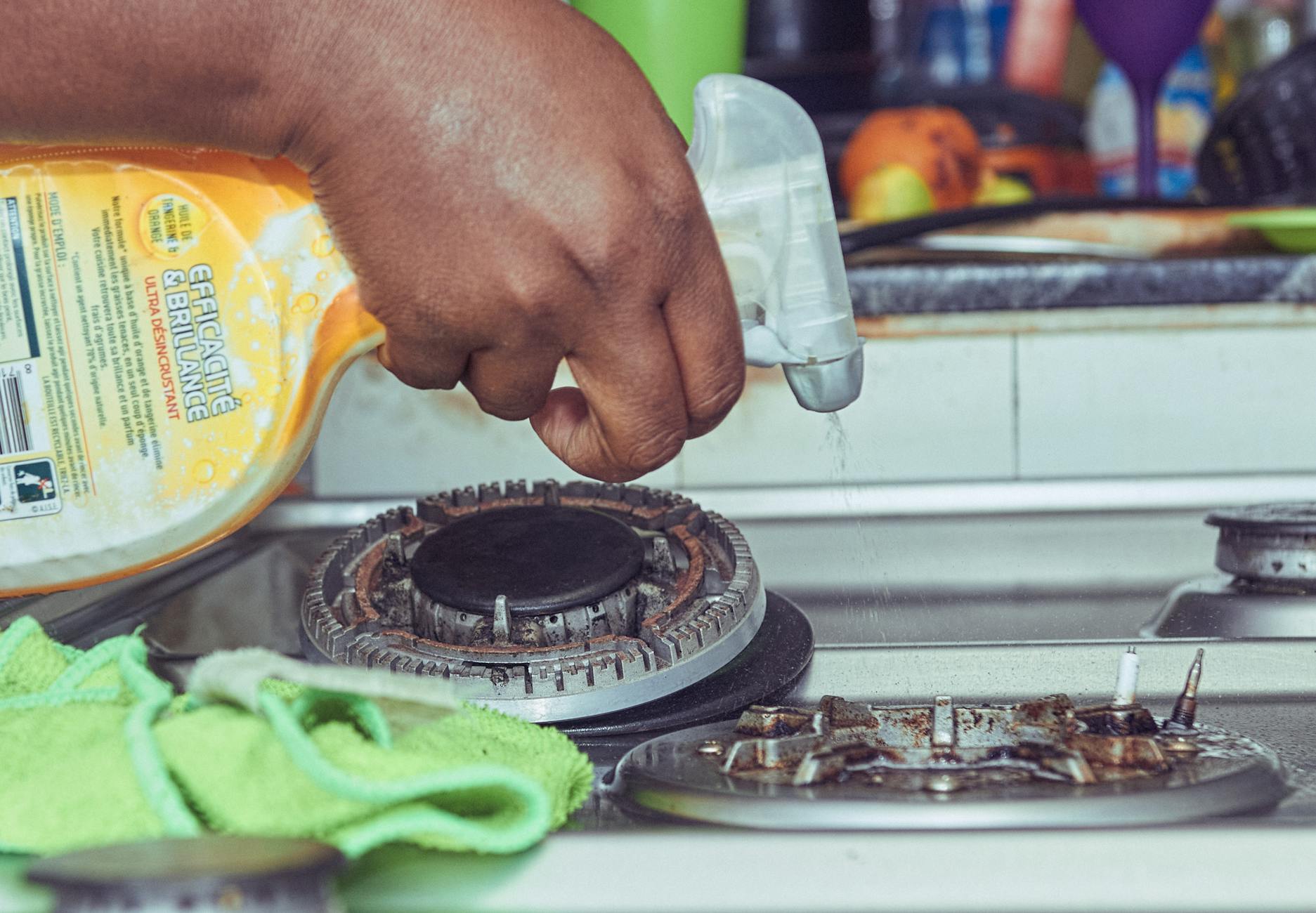
A sanitizer solution bucket containing a measured concentration of food-safe sanitizer and a folded side towel is stationed at every active work zone rather than kept at a central cleaning station. This decentralized sanitation system means that surface wiping between tasks requires no movement away from the station and no interruption of workflow that would otherwise accumulate into significant lost time across a service. The towel lives in the solution rather than on the surface, which keeps it in a continuously sanitized state rather than becoming a contamination vehicle as a dry surface towel would. Station sanitizer buckets are replaced at measured intervals during service as the concentration degrades with use and temperature. Home cooks who place a small sanitizer bucket or spray bottle within arm’s reach of their prep zone rather than under the sink report a significant increase in between-task cleaning frequency.
Waste Bins at Station
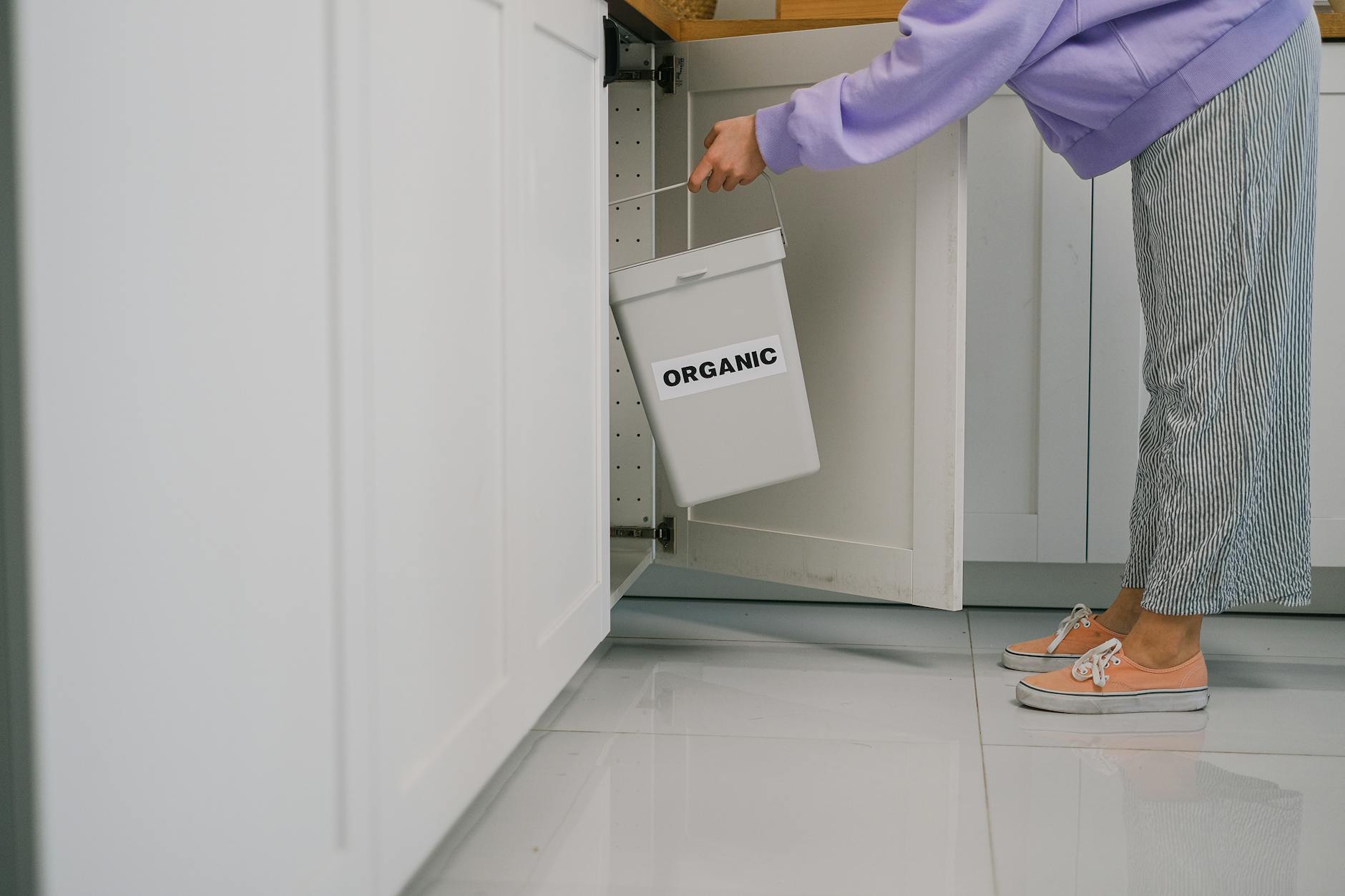
A small waste receptacle positioned at the immediate edge of every cutting board and prep station rather than under the counter or across the room is one of the most functionally significant organizational decisions in professional kitchen design. The zero-distance waste disposal eliminates the interruption of walking to a central bin and keeps the cutting board continuously clear of trim, peels, paper, and packaging that would otherwise accumulate and crowd the working surface. Chefs use hotel pans, plastic quart containers, or small stainless buckets as station waste bins depending on the volume of trim generated by the current task. The close proximity of the waste bin also makes chefs more disciplined about clearing the board between tasks because the action requires no effort. Domestic kitchen design almost universally places the waste bin in an inconvenient location that creates exactly the workflow friction that professional organization works to eliminate.
Decanted Oils

Cooking oils are decanted from their original bulk containers into small squeeze bottles or spouted metal pourers that are stationed directly at the cooking line rather than stored with pantry goods and retrieved per use. Each bottle or pourer is clearly taped with the oil type and is refilled from the bulk supply during pre-service setup rather than during service itself. The small volume held in the line bottle means oil is used continuously and never sits at cooking temperature in the bottle long enough to degrade, while the bulk supply remains stored under appropriate cool and dark conditions. The squeeze bottle format gives the chef precise application control during cooking that pouring from a large container cannot provide. Multiple oil types including neutral fry oil, finishing olive oil, and chili oil are stationed simultaneously allowing immediate flavor decisions without any retrieval action.
Pegboard Walls

Pegboard panels mounted on the walls of prep and storage areas provide infinitely reconfigurable tool and equipment storage that can be physically reorganized in minutes to reflect changing station needs, new equipment acquisitions, or seasonal menu shifts. Unlike fixed hook strips or rigid shelving, pegboard accommodates hooks, shelves, bins, and specialized holders in any configuration and at any height, making it the most adaptable storage surface available to a working kitchen. Chefs outline each tool’s pegboard position with a permanent marker so that missing items are immediately visible as an empty silhouette rather than requiring an inventory count. The practice of outlining tool positions is borrowed from surgical instrument management where missing tool detection is a patient safety requirement and carries the same zero-ambiguity principle into the kitchen context. Home kitchens with pegboard installations almost always fail to adopt the silhouette outlining step which eliminates the primary functional advantage of the system.
Prep Hierarchy Lists
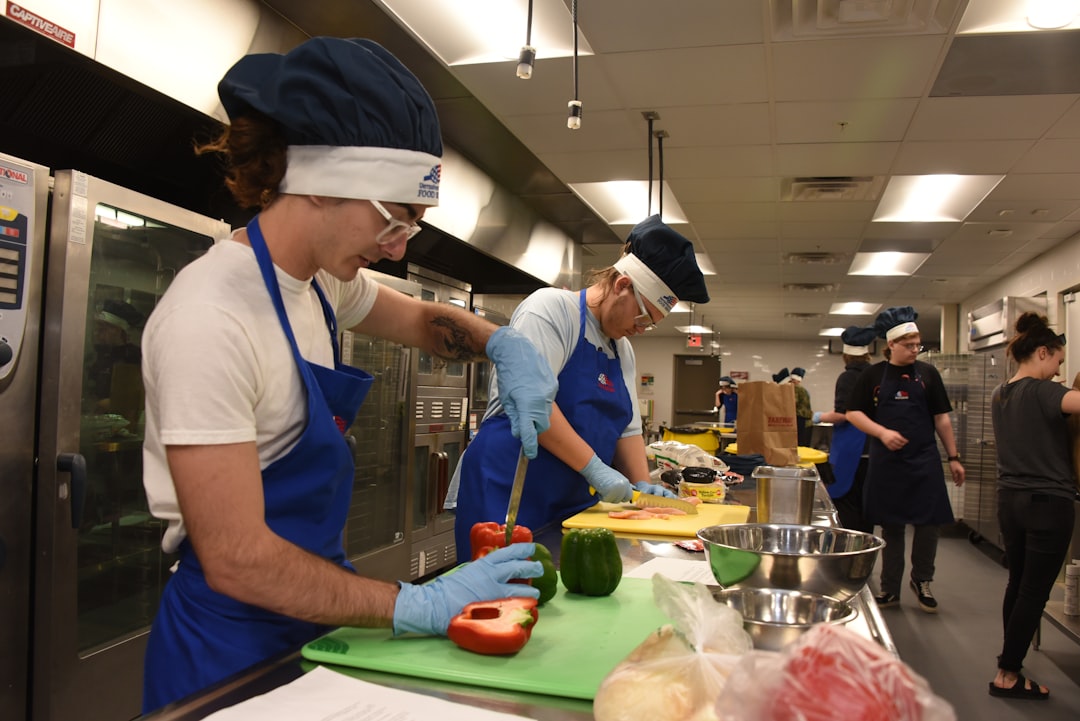
A laminated daily prep hierarchy list is posted at eye level at the prep station showing every item to be prepared in strict order of urgency determined by service time requirements, cooking durations, and shelf stability rather than by the cook’s personal preference or intuitive sequence. The list is written the night before or at opening and functions as an externalized cognition tool that removes all sequencing decisions from the active prep workflow. Chefs who work from a prep list complete significantly more prep volume in equivalent time than those who self-sequence because the cognitive load of deciding what to do next is entirely eliminated. The laminated format allows the list to be checked off with a dry-erase marker and wiped clean for reuse, combining the accountability of a physical checklist with the sustainability of a reusable surface. Home cooks who write a prep sequence before beginning any multi-component cooking project report that the practice transforms their relationship to cooking complexity.
Nesting Container Systems

All storage containers in a professional kitchen are chosen from a single manufacturer’s system specifically because every size nests precisely into every other size, allowing the entire container inventory to occupy a fraction of the space that a mixed collection of containers would require. The uniformity also means that any lid fits any container of the same footprint, eliminating the lid-matching problem that is endemic in domestic kitchens using accumulated containers from multiple sources. Chefs typically use only three container sizes across their entire operation, a choice that sounds restrictive but produces an organizational efficiency that outweighs any flexibility lost from a broader size range. The same container system is used from freezer storage through refrigerated prep to plated component staging, meaning containers move through the workflow without any transfer or decanting events. Home cooks who commit to a single brand and container system and discard everything incompatible with it report an immediate and significant reduction in storage stress.
Cold Towel Rails
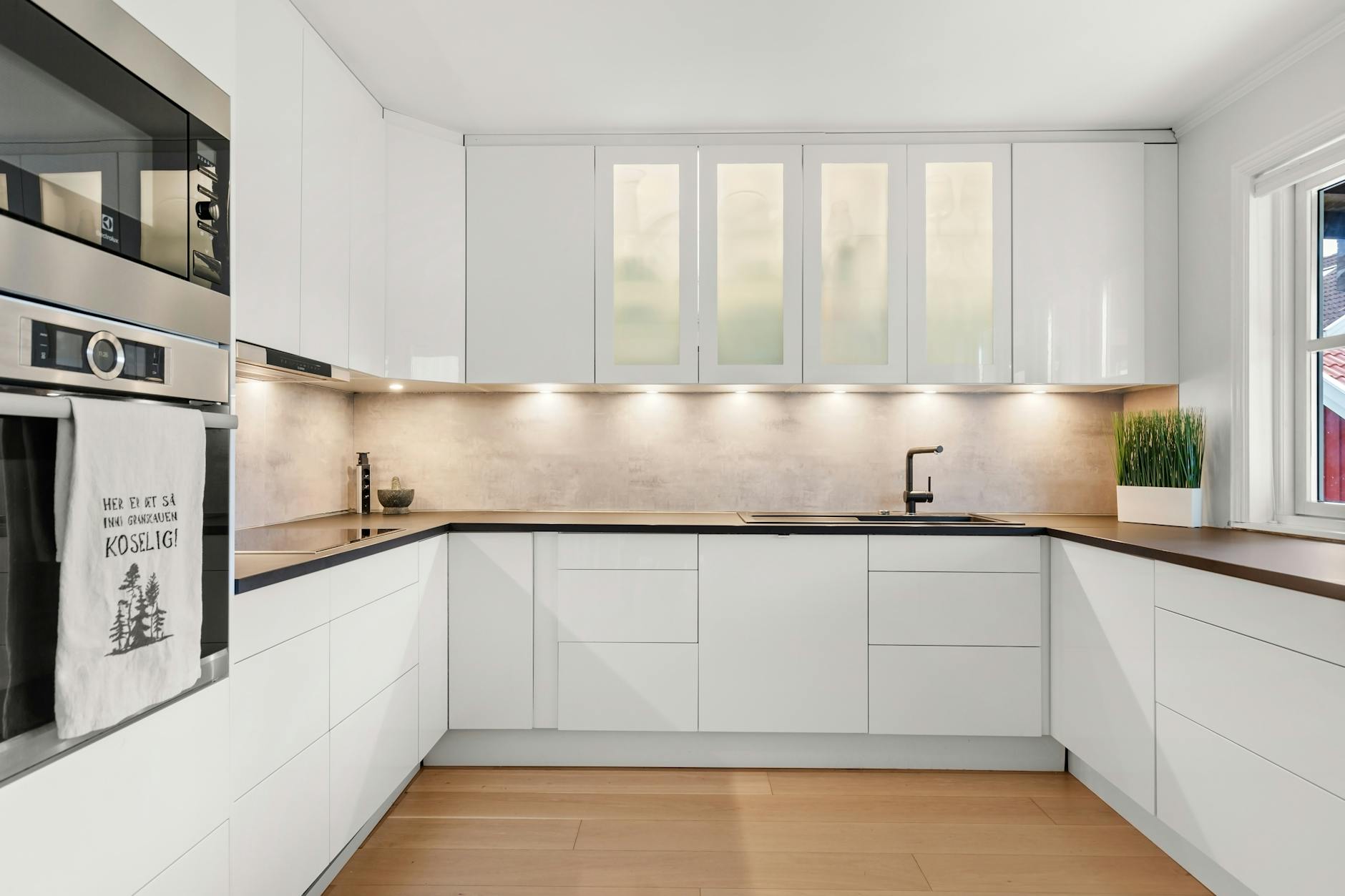
Clean damp towels folded to a standard size are staged on a dedicated rail or bar adjacent to every cooking station rather than tucked into apron strings or laid across surfaces where they become contamination risks. The rail staging keeps towels at a consistent and immediately retrievable position and the standardized fold means the towel can be grabbed and deployed in a single fluid motion without unfolding or adjusting. Separate towel rails are maintained for surface wiping and for heat protection, with the two types distinguished by color or position, never by memory. A chef’s relationship to their towels is a direct proxy for their overall station discipline, and kitchens with well-managed towel systems consistently outperform those where towel handling is improvised. The seemingly minor habit of returning a towel to its rail after every use rather than setting it on the nearest surface is one of the hardest professional disciplines to maintain but one of the most organizationally consequential.
Vertical Storage

Vertical storage of sheet pans, cutting boards, pot lids, and flat trays in purpose-built vertical racks or repurposed file organizers reclaims the significant horizontal shelf and cabinet space that horizontal stacking of these items consumes. A vertical rack holding twelve sheet pans occupies approximately four inches of horizontal shelf depth while providing the same storage as a horizontal stack that would occupy the full depth of the shelf and require the dismantling of the entire stack to access the bottom item. Professional kitchens install vertical storage divisions in every cabinet and shelf section that handles flat or sheet-format equipment as standard practice because the access efficiency advantage is immediately obvious under service pressure. The principle extends to lids, baking molds, wire racks, and any other kitchen item that is flat enough to stand on its edge. Home cooks who convert a single cabinet to vertical sheet pan storage consistently describe it as one of the highest-impact kitchen changes they have made.
Staged Plating Zones
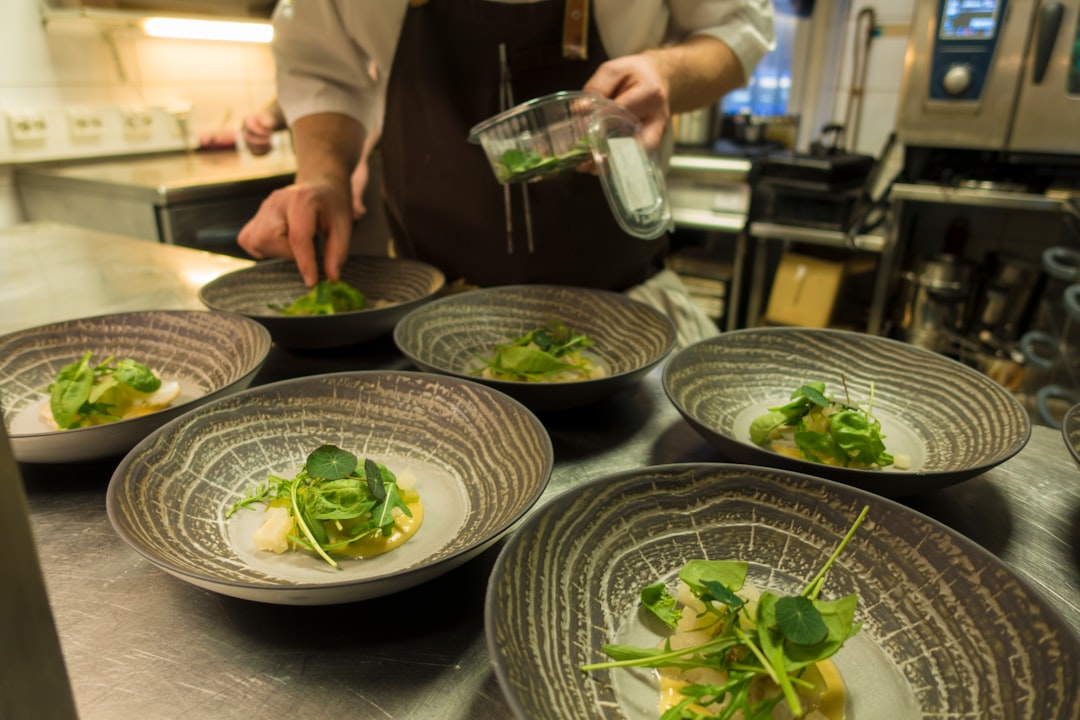
A dedicated plating zone completely separate from the cooking and prep areas is established and kept entirely clear of any ingredient, tool, or equipment not directly related to the plating action currently in progress. This spatial separation enforces the cognitive shift between cooking and plating and prevents the contamination of finished dishes by the activity of active cooking. The plating zone has its own dedicated tools including tweezers, squeeze bottles for sauces, warm plates staged from the oven or heat lamp, and portioning spoons that never migrate to the cooking line. Chefs treat the plating surface as a clean room in miniature and any object placed on it that does not belong to the current plating task is immediately removed. Home cooks who designate even a small section of counter as a dedicated plating zone and treat it with the same discipline report a noticeable improvement in the visual consistency of their finished dishes.
Single Drawer Tools

Each drawer in a professional kitchen station contains tools for a single functional category only, with no mixing of cutting tools with measuring tools, portioning tools with thermometers, or opening tools with tasting equipment. The single-category drawer organization means that reaching into any drawer retrieves only tools of the expected type and eliminates the visual search within the drawer that mixed storage requires. Drawers are also never filled beyond seventy percent capacity because overcrowding makes individual tool retrieval a two-handed operation that single-category organization combined with adequate spacing makes a one-handed reflex. The organizational logic resists the domestic impulse to consolidate tools into fewer drawers in the interest of appearing minimal because professional efficiency favors rapid access over apparent tidiness. Each drawer is also mapped to its station’s primary tasks so that the tools required for the station’s core functions are in the nearest drawer rather than distributed across the kitchen by tool type.
Shelf Liners with Grids

Non-slip shelf liners printed with measured grid patterns are used in refrigerators, lowboys, and dry store shelves to give every container a designated and consistent footprint position that can be referenced by location rather than by label reading. The grid allows chefs to communicate container positions by coordinates during service, a practice that sounds excessive until the alternative of pointing and describing location under pressure is considered. Containers are returned to their assigned grid coordinates after every use creating a spatially consistent environment where the absence of any item is immediately perceptible as a gap rather than requiring a search. The non-slip property of the liner material is itself a food safety feature preventing heavy containers from sliding during rapid retrieval and reducing the risk of spills in a refrigerated environment. The grid system also makes deep cleaning more systematic as each grid section can be cleared, cleaned, and restocked independently without disturbing the entire shelf.
Open Shelving Only
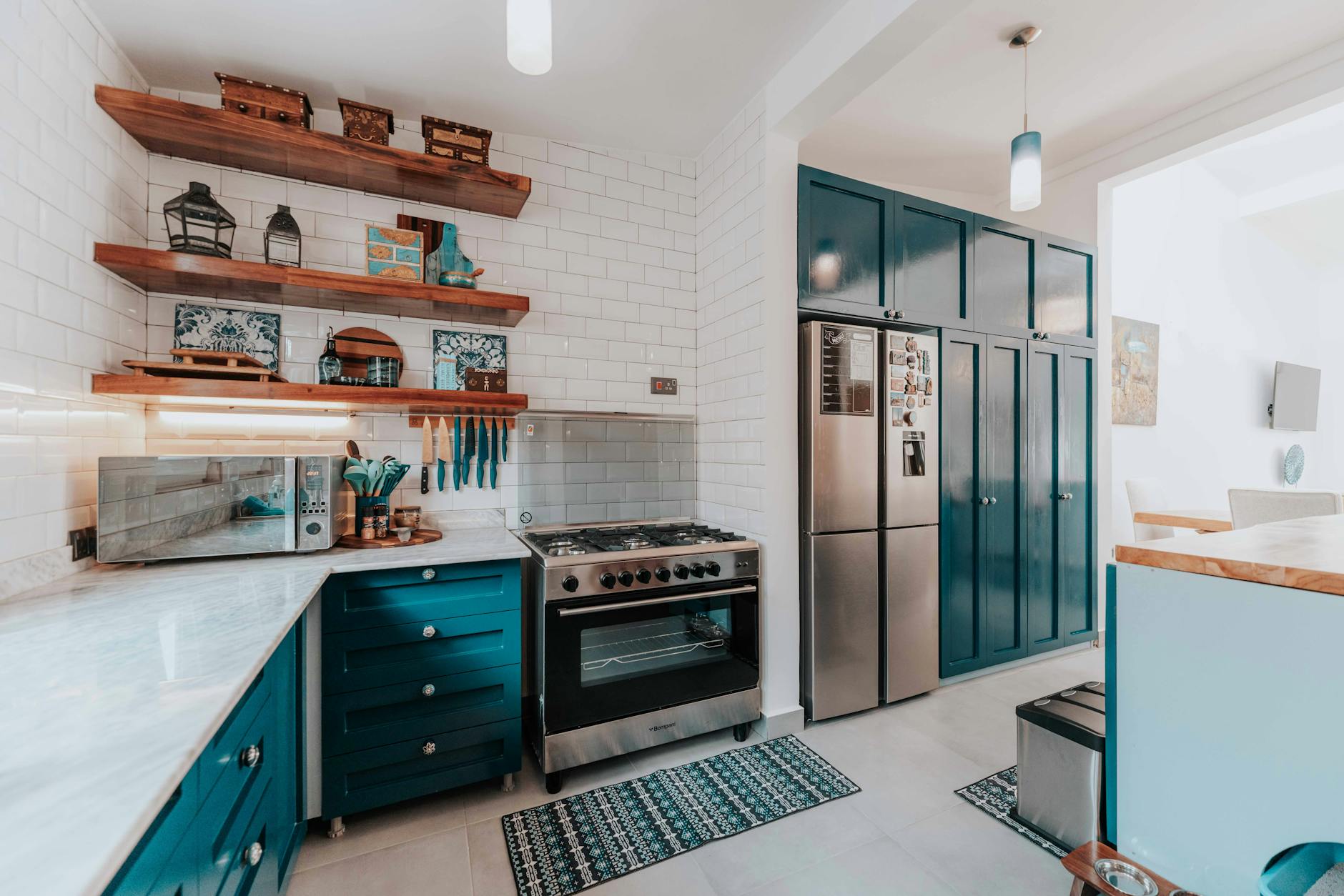
Professional kitchens operate almost exclusively on open shelving with no cabinet doors, drawer fronts, or enclosed storage in active prep and cooking zones, because every door and drawer introduces a physical barrier between the cook and the tool or ingredient that the action of cooking demands to be continuous and unimpeded. The visibility of open shelving means that inventory status, organizational compliance, and cleanliness are permanently and collectively visible to everyone in the kitchen creating a social accountability structure that enclosed storage actively prevents. Chefs who move from restaurant kitchens to domestic kitchens consistently identify closed cabinetry as the single most disorienting organizational difference between the two environments. The aesthetic case for cabinet doors in domestic kitchens is entirely about concealment and has no functional basis in kitchen efficiency logic. Open shelving requires a higher standard of organizational discipline precisely because everything is visible and this required discipline is itself one of its most significant functional advantages.
If any of these methods have changed the way you think about your own kitchen setup, share your take in the comments.