The public narrative surrounding healthy relationships consistently emphasizes radical transparency, unconditional trust, and the principled rejection of anything that resembles testing, evaluating, or strategically observing a partner. What relationship researchers, couples therapists working with private clients, and long-term partnership studies reveal is a considerably more nuanced picture in which the happiest and most durable couples engage in ongoing informal assessment of each other’s character, reliability, and emotional availability through behaviors they would rarely describe as tests but that function precisely as such. The difference between a destructive relationship test and a psychologically healthy one lies not in the act of observation itself but in the intent behind it, the information being sought, and what the observing partner does with what they discover. Human beings are wired to continuously evaluate the safety, reliability, and alignment of their closest relationships and the couples who do this most skillfully tend to produce the most stable long-term partnerships. These are 23 controversial relationship tests that happy couples secretly run on each other and that relationship science suggests may be more valuable than the culture of unconditional trust is willing to acknowledge.
Stress Observation

Deliberately observing a partner’s behavior during periods of genuine external stress including work pressure, family difficulty, financial strain, and health challenges provides information about their character that no amount of harmonious easy-living can reveal. The person a partner becomes when their regulatory resources are depleted, when circumstances are genuinely difficult, and when there is no social performance incentive to manage their behavior is a more accurate representation of their baseline character than the version that shows up for date nights and social occasions. Happy couples who have navigated significant external stressors together report that those periods produced the clearest and most reliable information about their partner’s fundamental values, emotional regulation capacity, and relational priorities. Observing rather than immediately rescuing a partner from stress allows both people to understand each other at a depth that comfortable circumstances never require.
Conflict Initiation

Raising a genuinely held grievance or disagreement on a topic of real importance and then closely observing how the partner responds to the discomfort of conflict provides diagnostic information about their emotional maturity, their capacity for repair, and their fundamental orientation toward the relationship when it is under pressure. A partner who responds to conflict initiation with contempt, stonewalling, immediate escalation, or the weaponization of unrelated grievances reveals a conflict style that will compound over time in ways that profoundly affect relationship quality. Happy long-term couples consistently report that early conflicts were the most revealing experiences of the relationship and that partners who engaged with disagreement in good faith, maintained respect under pressure, and prioritized resolution over winning demonstrated a relational capacity that predicted everything that followed. The willingness to introduce rather than avoid genuine conflict is among the most diagnostic relationship tools available.
Logistical Responsibility

Allowing a partner to take complete ownership of a meaningful shared logistical task including trip planning, a significant household decision, a financial arrangement, or an important social commitment and then observing how they approach it without intervention reveals their relationship with responsibility, their attentiveness to detail, and their consideration of the other person’s needs and preferences in their decision-making process. The partner who plans a shared experience without accounting for the other person’s preferences, who abandons a commitment when it becomes inconvenient, or who expects acknowledgment for minimal effort reveals their default orientation toward partnership through the mundane logistics of shared life rather than through the high-stakes moments that both people are watching carefully. Conversely, a partner who approaches shared logistical responsibility with care, follow-through, and genuine attention to both people’s needs demonstrates a relational attentiveness that is far more predictive of long-term partnership quality than romantic gesture. Happy couples consistently describe logistical reliability as among the most important and most revealing qualities they observed in each other early in the relationship.
Disappointment Response

Creating or allowing a situation in which a partner experiences genuine disappointment and observing their response to that disappointment provides crucial information about their emotional regulation, their attribution style, and the degree to which they hold their partner responsible for managing their emotional states. A partner who responds to disappointment with punishment behavior, extended withdrawal, disproportionate emotional escalation, or the reframing of a minor let-down as evidence of fundamental relational failure reveals an emotional architecture that will be extremely costly to maintain over the long course of a relationship in which disappointment is inevitable and frequent. Happy couples report that observing each other’s disappointment responses early in the relationship was among the most predictive experiences they had because the pattern they observed then remained consistent through everything that followed. The capacity to experience disappointment without requiring the other person to absorb its full emotional cost is one of the most reliable markers of relational maturity.
Social Witnessing

Observing a partner’s behavior in social situations where they believe their partner’s attention is elsewhere or where the social stakes feel low provides a window into their authentic character that monitored interactions cannot replicate. How a partner treats service workers, responds to social outsiders, manages their status performance within a group, handles a peer they find boring, and behaves toward people from whom they want nothing reveals the values architecture that underlies their interpersonal behavior at a fundamental level. Happy couples frequently describe moments of unobserved social witnessing as among the most important information-gathering experiences of their relationship and report that what they observed in these moments either consolidated their confidence in their partner or raised concerns that eventually proved to be valid. The partner who is kind, attentive, and respectful only when it is socially advantageous or when they know they are being observed is demonstrating a values contingency that happy couples learn to identify early.
Boundary Testing

Expressing a clearly stated personal boundary on a matter of genuine importance and then observing how a partner responds to that boundary over time rather than in the immediate moment of its statement reveals their true orientation toward the other person’s autonomy, needs, and non-negotiables. A partner who respects a boundary enthusiastically in the moment of its expression but who gradually erodes it through incremental pressure, reframing, emotional appeal, or the weaponization of the relationship’s intimacy demonstrates a relationship with boundaries that will eventually affect every area of the partnership. Happy couples report that the early testing of each other’s responses to clearly stated boundaries was one of the most consequential forms of mutual evaluation they engaged in because boundary respect proved to be a consistent predictor of how each partner handled the other’s needs across all categories of the relationship. The partner who treats a boundary as a problem to be solved rather than a reality to be honored reveals a fundamental orientation toward control that does not improve with time or with relationship deepening.
Financial Transparency

Introducing a genuine conversation about financial reality including debt levels, spending patterns, savings behavior, financial goals, and money attitudes and observing how a partner engages with that transparency provides information about their relationship with honesty, their financial maturity, and their capacity for the vulnerability that shared economic life requires. Financial incompatibility is among the most commonly cited contributors to relationship dissolution and the couples who navigate it most successfully are those who sought real information about each other’s financial reality early enough to make informed decisions about building a shared economic life together. A partner who responds to financial transparency with judgment, withdrawal, or the strategic deployment of comparative financial information reveals a relationship with money and with honesty that will create compounding difficulties as the partnership deepens into shared financial interdependence. Happy couples who describe their financial relationship as a strength consistently report having had difficult and revealing conversations about money before those conversations were forced by circumstances.
Illness Observation

Observing how a partner behaves when they themselves are ill and how they respond when their partner is ill provides two distinct and equally important windows into their caregiving capacity, their dependency management, and their fundamental orientation toward vulnerability in the relationship. A partner who becomes exceptionally demanding, emotionally dysregulated, or relationally punishing when they are unwell is revealing how they relate to their own vulnerability in ways that will become increasingly relevant as the relationship ages and the statistical inevitability of serious illness becomes more immediate. Conversely, a partner who withdraws, minimizes, or becomes resentful when their partner is unwell is demonstrating a caregiving orientation that will be extremely consequential in the long-term trajectory of the relationship. Happy long-term couples consistently identify illness navigation as one of the most revealing early experiences of their partnership and describe what they observed in those moments as having been profoundly informative about the person they had chosen.
Priority Revelation

Creating a situation in which a partner must make a genuine choice between the relationship’s needs and a competing personal priority and observing both the decision they make and how they make it provides irreplaceable information about where the relationship sits within their actual rather than stated hierarchy of priorities. The partner who consistently discovers that every competing priority outweighs the relationship’s needs is demonstrating an ordering of values that words, reassurances, and romantic gestures cannot override because it is expressed through the behavioral choices that reveal authentic priority rather than performed priority. Happy couples do not expect to always be their partner’s highest priority in every situation but they report that observing each other’s priority decision-making early in the relationship allowed them to understand what they were genuinely choosing and to make their own decisions accordingly. The alignment of actual rather than stated relational priorities is one of the most fundamental compatibilities that happy long-term couples share.
Generosity Observation

Observing a partner’s relationship with generosity across multiple contexts including financial generosity, generosity of time, generosity of attention, generosity of credit, and generosity of interpretation when ambiguous situations arise reveals a character dimension that is among the most consequential for long-term relationship quality. A partner who is generous in early romantic contexts where generosity is socially rewarded but who reveals a fundamentally scarcity-oriented relationship with resources, recognition, and benefit of the doubt in lower-stakes everyday situations is demonstrating the character that will show up in the full complexity of long-term shared life. Happy couples consistently describe their partner’s generosity as one of the qualities they most clearly observed and most deliberately evaluated early in the relationship because they understood intuitively that generosity or its absence would shape the daily texture of everything they built together. Generosity as a character trait rather than a romantic performance is most visible in the small and unwatched moments of ordinary life.
Accountability Observation

Creating or allowing situations in which a partner makes a genuine mistake and then observing how they relate to that mistake including whether they acknowledge it, how they explain it, whether they repair it, and whether they change the behavior that produced it provides diagnostic information about their relationship with accountability that is among the most predictive of long-term relationship health. A partner who responds to their own mistakes with defensiveness, minimization, blame transfer, or elaborate explanatory narratives that position them as the victim of circumstances rather than the author of a choice reveals an accountability style that will affect every conflict, every repair attempt, and every growth opportunity in the relationship. Happy couples report that early observations of how each partner related to their own mistakes and failures were among the most important information they gathered because the patterns they observed remained consistent regardless of how much the relationship deepened or how much time passed. The capacity for genuine accountability without excessive self-punishment is among the rarest and most valuable relational qualities.
Independence Comfort

Deliberately taking independent time, space, and activity and observing a partner’s response to that independence reveals their relationship with autonomy, their attachment security, and their capacity to support a partner’s individual identity within the context of a shared life. A partner who responds to the other’s independence with anxiety, surveillance, guilt induction, or the reframing of normal individuation as relational abandonment is demonstrating an attachment style that will gradually compress both people’s individual identities in ways that create resentment, loss of self, and eventual relational suffocation. Happy couples consistently describe having deliberately tested each other’s comfort with independence early in the relationship and report that partners who responded to their independence with genuine encouragement and security were demonstrating an attachment health that proved to be one of the most important foundations of their long-term partnership. The capacity to want a partner’s individual flourishing as sincerely as one wants the relationship’s flourishing is among the clearest markers of secure attachment.
Secret Keeping
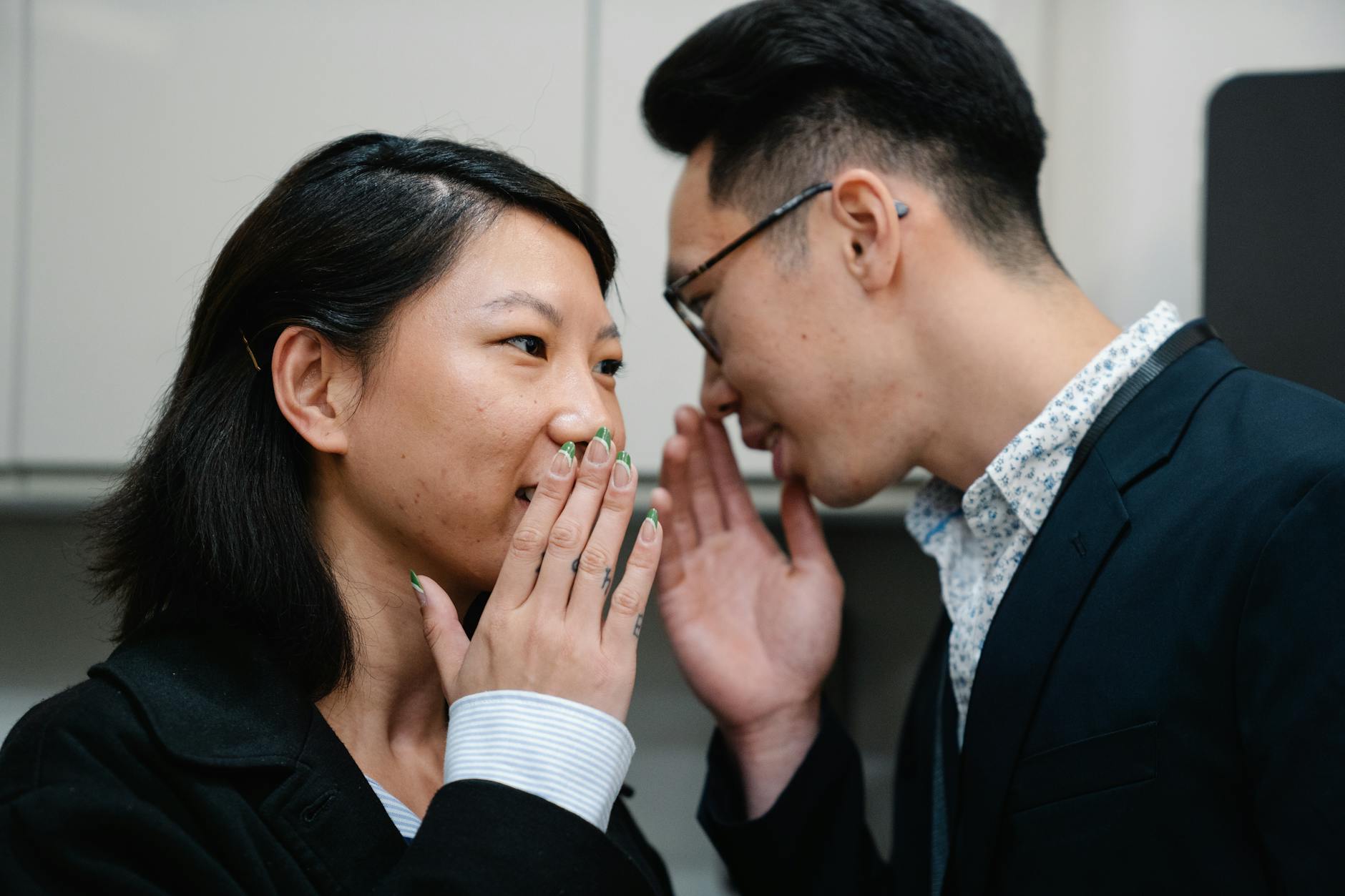
Sharing a piece of genuinely sensitive personal information and observing how a partner manages that information including whether they keep it confidential, how they reference it in private, and whether it appears in later conflicts as ammunition provides crucial information about their relationship with trust, discretion, and the ethical boundaries of intimacy. A partner who shares disclosed vulnerabilities with their social network, who uses intimate disclosures as leverage during disagreements, or who references private information in public contexts to establish status or connection is demonstrating a relationship with the ethics of intimacy that will make genuine vulnerability increasingly unsafe over the course of the relationship. Happy couples consistently identify their partner’s discretion and trustworthiness with sensitive personal information as one of the most important early observations they made because the pattern they observed established whether deep vulnerability was genuinely safe in that relationship. The partner who treats a disclosed vulnerability with the same care they would want their own vulnerabilities to receive is demonstrating a reciprocity of intimacy ethics that happy long-term couples identify as foundational.
Future Orientation

Raising specific and concrete future plans including career changes, geographic moves, family decisions, financial goals, and lifestyle aspirations and observing how a partner engages with those plans reveals their actual rather than performed investment in a shared future and their capacity to hold another person’s individual trajectory with genuine care and flexibility. A partner who dismisses, minimizes, or fails to engage meaningfully with the other person’s future orientation is revealing a relationship investment that does not extend beyond the present moment in ways that will become increasingly consequential as the relationship requires more significant joint navigation of life decisions. Happy couples report that early conversations about future orientation were among the most revealing experiences of the relationship not because they required perfect alignment but because they revealed whether each partner was genuinely curious about and invested in the other person’s life direction. The capacity to hold a partner’s future with enthusiasm even when it creates complexity is one of the clearest expressions of genuine relational investment.
Jealousy Management

Introducing situations that carry mild social jealousy potential and observing how a partner manages that experience reveals their relationship with insecurity, their trust orientation, and their capacity to regulate uncomfortable emotions without converting them into controlling or punishing behavior. A partner who responds to normal social situations involving potential jealousy with surveillance demands, accusatory framing, guilt induction, or behavioral restrictions is demonstrating an emotional management pattern that will expand its scope and intensity as the relationship deepens and the perceived stakes of potential loss increase. Happy couples describe having deliberately observed each other’s jealousy responses early in the relationship as one of the most informative experiences they shared because jealousy reveals the attachment security, trust orientation, and emotional regulation capacity of the person experiencing it more honestly than almost any other emotional state. The partner who can acknowledge jealousy without converting it into a demand on the other person’s behavior is demonstrating an emotional maturity that predicts a great deal about the relationship’s long-term health.
Repair Initiation

Observing which partner initiates repair after a conflict and how they approach that initiation provides critical information about each person’s relationship with pride, their investment in the relationship’s health over their own position, and their capacity to prioritize connection over the satisfaction of being right. A partner who consistently waits for the other person to initiate repair regardless of who was more responsible for the conflict’s escalation is demonstrating a relational pride orientation that will eventually produce chronic disconnection because repair requires someone to move toward vulnerability before the conflict’s emotional charge has fully dissipated. Happy couples report that early observations of each other’s repair initiation behavior were among the most revealing experiences of the relationship because the pattern they observed remained consistent through decades of conflict and reconciliation. The willingness to move toward a partner before it is comfortable or before it is strategically advantageous is among the most reliable expressions of genuine relational commitment.
Emotional Attunement

Deliberately expressing an emotional state through subtle rather than explicit communication and observing whether a partner notices, inquires, and responds provides information about their attunement capacity that is among the most predictive of long-term relationship satisfaction. A partner who consistently misses or dismisses non-verbal emotional signals is not necessarily demonstrating indifference but may be revealing an attunement deficit that will require significant and sustained conscious effort to compensate for across the full complexity of a long-term relationship. Happy couples who describe their emotional connection as one of the strongest dimensions of their partnership consistently report that early attunement observations were among the most important experiences they had because attunement proved to be a relatively stable individual characteristic rather than one that deepened predictably with relationship longevity. The partner who notices and responds to subtle emotional communication is demonstrating an interpersonal sensitivity that shapes the daily felt experience of being known and understood in the relationship.
Value Alignment

Introducing conversations or situations that reveal real rather than performed values around topics including fairness, honesty, loyalty, ambition, family, community, and ethical decision-making and observing a partner’s authentic responses provides the most important category of compatibility information that early relationships generate. Values misalignment is the most durable source of relationship conflict because values are not preferences that can be compromised on or learned through exposure to a partner’s perspective but are the fundamental organizing principles around which people build their identities and make their most consequential decisions. Happy couples consistently report having deliberately sought information about their partner’s real values early in the relationship and describe the alignment they found not as a lucky discovery but as the result of attentive observation and the willingness to take seriously what they observed rather than what they hoped was true. The capacity to see a partner’s values clearly rather than through the distorting lens of attraction is one of the most important skills that happy long-term couples exercise in the early stages of relationship formation.
Gratitude Expression

Observing whether and how a partner expresses genuine gratitude for both significant gestures and ordinary contributions to shared life provides information about their relationship with appreciation, reciprocity, and the attentiveness to the other person’s effort that sustains long-term relational warmth. A partner who consistently fails to notice, acknowledge, or express appreciation for the other person’s contributions to the relationship is not necessarily selfish but may be revealing an attentiveness deficit that will gradually erode the emotional generosity that relationship maintenance requires from both people. Happy couples consistently identify mutual expressed appreciation as one of the most important daily practices in their relationship and describe having observed early in the partnership whether this quality was present, absent, or contingent on the significance of the gesture being appreciated. The partner who notices and acknowledges ordinary effort rather than waiting for grand gestures to prompt gratitude is demonstrating a relational attentiveness that shapes the daily experience of feeling valued in the partnership.
Crisis Character

Observing a partner’s character during genuine external crisis situations including family emergencies, unexpected professional setbacks, health scares, and community disasters provides information about their fundamental orientation toward difficulty that comfortable circumstances structurally cannot reveal. Crisis strips away the social performance layer that most people maintain during the observed portions of their lives and reveals the decision-making priorities, emotional responses, support orientation, and character qualities that constitute their authentic rather than curated self. Happy couples who have navigated significant external crises describe those experiences as having produced the deepest and most reliable knowledge they have of their partner because crisis behavior proved to be consistent with the character pattern they subsequently observed across every other dimension of the relationship. The person who shows up during genuine crisis with clarity, care, and the capacity to prioritize others alongside themselves is demonstrating a character quality that happy long-term couples consistently identify as the most important thing they know about their partner.
Humor Reveals

Observing what a partner finds genuinely funny when their comedic sensibility is not being performed for social approval reveals their relationship with hierarchy, vulnerability, difference, and human dignity in ways that stated values and public behavior cannot access with equivalent honesty. Humor that consistently targets the vulnerable, that requires someone’s humiliation as its structural foundation, or that reveals contempt for categories of people under the protective cover of irony is communicating a values architecture that the partner making the jokes may not even be fully conscious of but that is nonetheless genuine and consequential. Happy couples consistently describe shared humor as one of the most important dimensions of their long-term connection but distinguish between the performed humor of social settings and the authentic comedic sensibility that reveals itself in unguarded private moments. The partner whose private humor reflects the same generosity and dignity orientation as their public behavior is demonstrating a values consistency that happy long-term couples identify as one of the most important forms of relational integrity.
Growth Orientation

Observing how a partner responds to feedback, to evidence that they were wrong, to new information that challenges their existing beliefs, and to the opportunity to change their mind provides information about their relationship with growth that is among the most consequential for long-term compatibility. A partner who responds to these opportunities with defensiveness, identity threat, or the reframing of feedback as attack is demonstrating a fixed orientation toward their own character and beliefs that will make genuine mutual growth, conflict resolution, and adaptive navigation of life’s changes increasingly difficult as the relationship ages and the requirement for flexibility becomes more demanding. Happy couples consistently describe their partner’s growth orientation as one of the qualities they most deliberately observed early in the relationship because they understood that they were choosing not just the person their partner was at the beginning but the person they would continue to become. The capacity to hold one’s own character as something genuinely open to development rather than something to be defended is one of the most important and most revealing qualities a partner can demonstrate.
Long-Distance Communication

Observing how a partner manages communication during periods of physical separation including travel, family visits, and professional commitments reveals their relationship with consistent effort, their attentiveness to the other person’s experience in their absence, and the degree to which they maintain relational investment when the social rewards of in-person connection are temporarily unavailable. A partner whose communication quality, frequency, and attentiveness deteriorates significantly during periods of separation is demonstrating a relational investment that is partly contingent on physical proximity in ways that will become increasingly relevant as life circumstances require the couple to navigate absence. Happy couples describe having observed each other’s communication behavior during early separations as one of the most revealing experiences of the relationship because consistent investment during absence proved to be a reliable indicator of the underlying relational commitment that would sustain the partnership through the full complexity of long-term shared life. The partner who maintains genuine attentiveness to the relationship during separation without being prompted is demonstrating a commitment that does not require the other person’s physical presence to activate.
If any of these patterns reflect dynamics you have experienced in your own relationship share your thoughts in the comments.