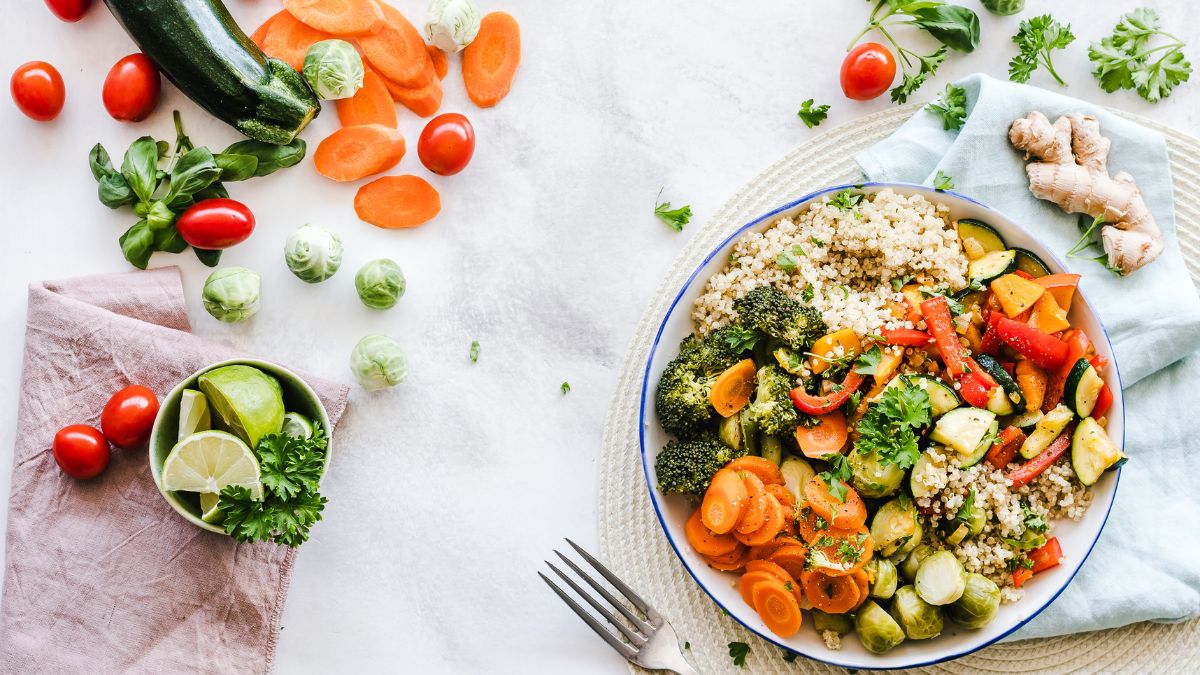
A major new study has found that vegetarians are up to 30 percent less likely to be diagnosed with certain types of cancer compared to meat eaters, though the picture is more nuanced than that headline suggests. Researchers at the University of Oxford analyzed data from roughly 1.64 million meat eaters alongside tens of thousands of pescatarians, vegetarians, and vegans, examining their rates of 17 different cancer types including those of the digestive system, lungs, reproductive and urinary systems, and blood. The findings, published in the British Journal of Cancer, add meaningful weight to the growing body of evidence linking diet to cancer risk, while also surfacing some surprises that researchers say will require further investigation.
When it comes to the specific cancers where vegetarians fared better, the numbers are striking. Compared to meat eaters, vegetarians showed a 21 percent lower risk of pancreatic cancer and a 9 percent lower risk of breast cancer. The data also pointed to a 12 percent reduced risk of prostate cancer, a 28 percent lower risk of kidney cancer, and a 31 percent reduced risk of multiple myeloma, a type of blood cancer. These reductions, while not uniform across all cancer types, represent a consistent pattern that researchers say is likely connected to the dietary habits typical of people who avoid meat.
The leading researcher on the study, Aurora Perez Cornago, offered her explanation for the pattern. “Vegetarians typically consume more fruit, vegetables, and fiber than meat eaters and do not eat processed meat, which may contribute to lower risks of some cancers,” she said. Processed meats such as ham, bacon, and salami have already been linked in prior research to elevated colorectal cancer risk and possibly stomach cancer as well, while red meats like beef, pork, and lamb have also been associated with increased risk. Notably, no such link has been established for white meat like chicken or turkey.
However, the study also found that vegetarians face nearly double the risk of the most common type of esophageal cancer compared to meat eaters. Perez Cornago acknowledged that the team believes this may be linked to deficiencies in certain key nutrients that are more readily available in animal-based foods. “Further research is needed to understand what is causing the differences in cancer risk we observed in our study,” she added. This finding serves as an important counterweight to any oversimplified takeaway that cutting out meat is a straightforward path to cancer prevention.
The news for vegans was also mixed. The analysis found that vegans carry a significantly elevated risk of colorectal cancer compared to meat eaters, with researchers pointing to low average calcium intake as a likely contributing factor. Vegans in the study were averaging around 590 milligrams of calcium per day, well below the recommended 700 milligrams. Cancer Research UK has previously established that calcium plays a protective role against colorectal cancer, estimating that a large glass of milk per day is associated with roughly a 17 percent lower risk. The Oxford team noted, however, that only 93 cases of colorectal cancer were recorded in the vegan group, meaning the finding should be interpreted with caution until larger vegan-specific studies can be conducted.
An interesting inconsistency in the data involves colorectal cancer and vegetarians specifically. Vegetarians did not show a reduced risk of colorectal cancer compared to meat eaters, which the researchers described as “inconsistent” given the well-established connection between processed and red meat and that particular cancer. The team believes this anomaly is likely explained by the fact that the meat eaters in the study had a relatively low intake of processed meat to begin with, reducing the contrast between groups.
Professor Tim Key, professor emeritus of epidemiology at Oxford Population Health and a co-researcher on the study, put the findings in a broader context. He noted that roughly three million people in the United Kingdom are vegetarian and that interest in plant-based eating is growing across many parts of the world. He was careful to temper expectations, observing that while vegetarians do eat more fiber, fruit, and vegetables, the differences seen in the study were not “very large” and may not be fully explained by those dietary patterns alone. “My feeling is that the differences are more likely related to the meat itself than to vegetarians simply eating more healthily,” he said.
Amy Hirst, health information manager at Cancer Research UK, described the study as “high quality” but cautioned against treating its findings as definitive. “More research is needed on larger, more diverse populations to better understand these patterns and their causes,” she said. “When it comes to reducing cancer risk, maintaining an overall healthy and balanced diet is more important than any individual food. Aim to eat plenty of fruit, vegetables, whole grains, and protein sources, and cut back on processed and red meat, alcohol, and foods high in fat, salt, and sugar.”
Multiple myeloma, one of the cancers where vegetarians showed the most dramatic risk reduction in the study, is actually one of the least understood blood cancers and its environmental triggers remain an active area of research, making this particular finding especially notable to oncologists. The esophageal cancer type linked to higher risk in vegetarians, squamous cell carcinoma, is more common in people with low intake of vitamins A, C, and E, which are found in abundance in plant foods but are accompanied in animal products by zinc and B12, nutrients that help with cellular repair. It is also worth knowing that the Seventh-day Adventist Health Studies, one of the longest-running dietary studies in the world, have been tracking vegetarian populations in California since the 1950s and have produced some of the foundational data linking plant-based diets to reduced cancer incidence.
Are you vegetarian, vegan, or someone who has changed their diet for health reasons? Share your experience and thoughts in the comments.