Bank tellers occupy one of the most quietly observant positions in everyday professional life, spending hours behind a counter watching an endless parade of human behavior that ranges from the charmingly oblivious to the genuinely baffling. The training that prepares tellers for customer interaction covers fraud detection, cash handling, and regulatory compliance, but nothing quite prepares them for the rich daily theater of ordinary people navigating financial transactions with varying degrees of preparation and self-awareness. The professional composure maintained behind the counter conceals a private running commentary that experienced tellers share with colleagues during breaks, and the behaviors that reliably generate that commentary follow patterns consistent enough to fill a handbook. The following 24 behaviors are among those most frequently noted by banking professionals as the moments that require the greatest effort to receive with a straight face.
Counting Twice
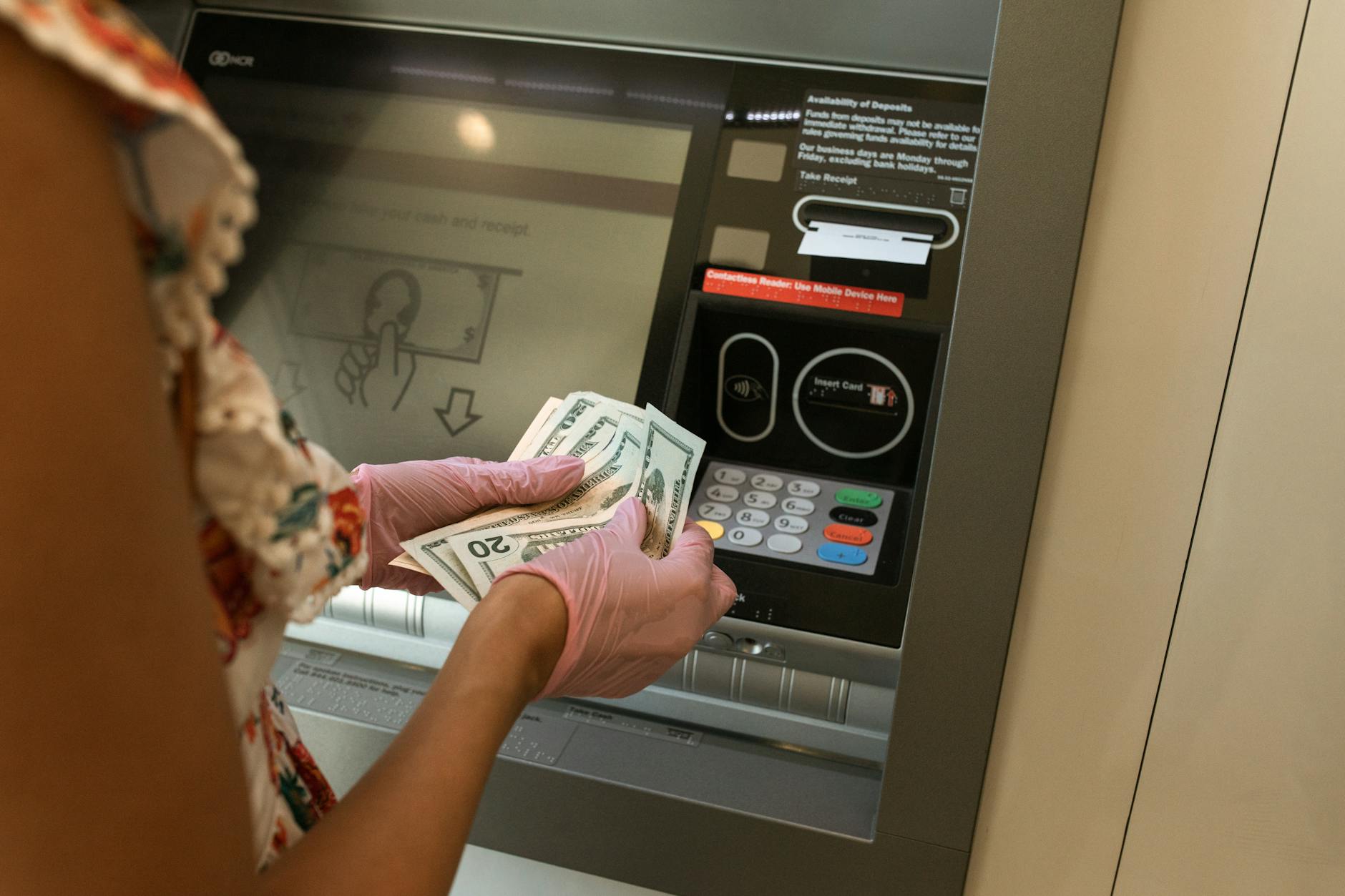
Arriving at the counter and then recounting an already-counted stack of bills with painstaking slowness while the teller waits is one of the most universally reported sources of quiet amusement among banking professionals. The behavior reflects entirely reasonable anxiety about getting the amount right, but it typically occurs after the customer has already counted the money at home, recounted it in the car, and then counted it again in the queue. Tellers note that the recount at the counter almost always produces the same total as the customer’s previous count, making the exercise a monument to financial anxiety rather than an error-prevention measure. The counting process is frequently accompanied by a running verbal tally delivered at low volume directly at the counter surface rather than at the teller, creating a one-sided transaction where the customer is essentially conducting a private audit in a public space. Banking trainers acknowledge that this behavior is among the most endearing rather than frustrating customer habits, as it reflects the same careful approach to personal finances that makes people reliable and low-risk account holders.
Forgotten PIN
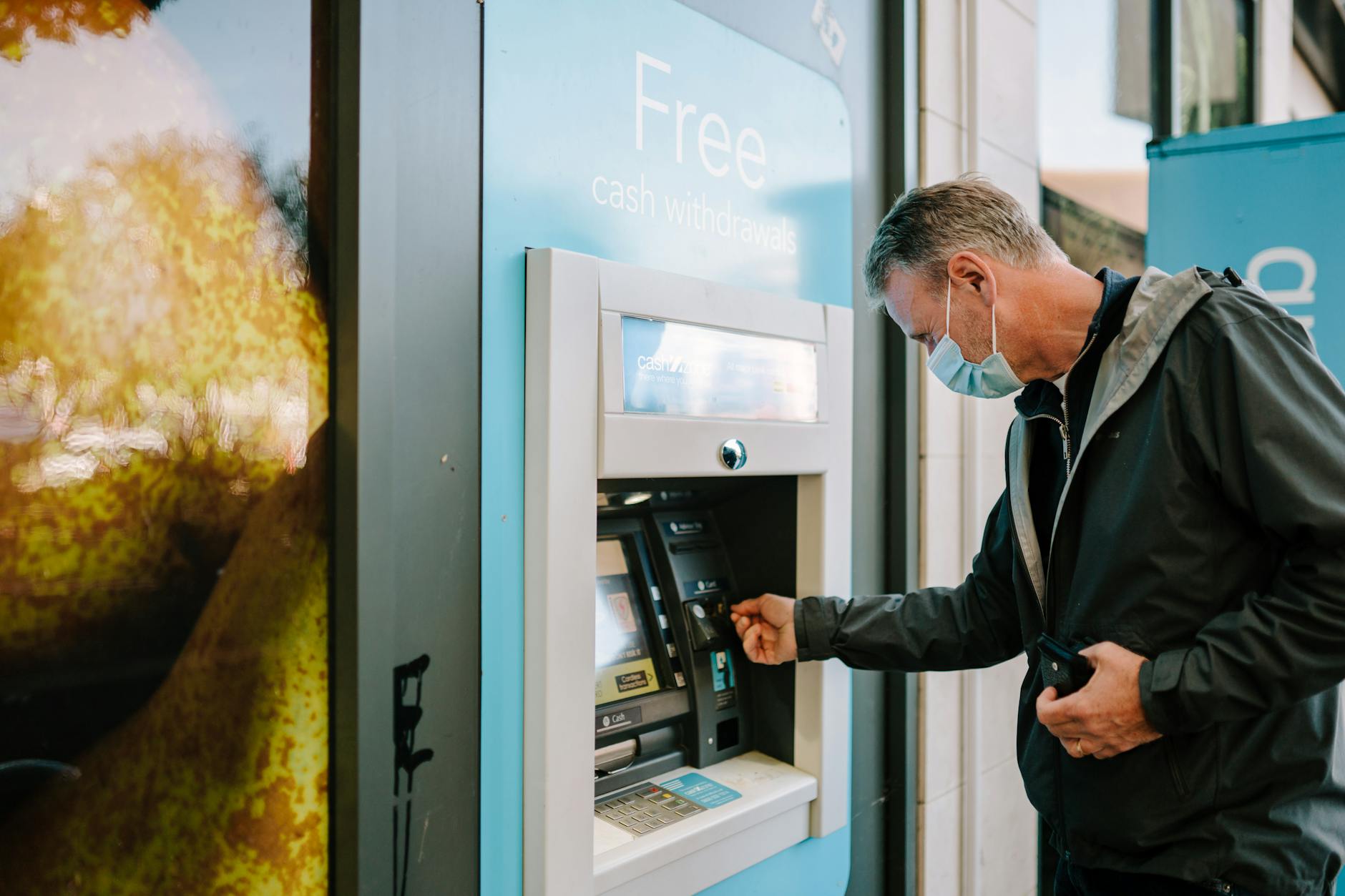
Approaching the card terminal with full confidence and then experiencing a complete PIN amnesia that requires three attempts, a brief period of eyes-closed concentration, and occasionally a whispered consultation with a companion is a scenario that tellers witness multiple times daily. The psychological phenomenon behind PIN forgetting at the counter is well documented and relates to the performance anxiety created by being observed during a normally private authentication process, a dynamic that paradoxically makes the memorized sequence temporarily inaccessible. Tellers report that the forgotten PIN situation is almost always resolved by the customer performing a brief physical mime of their usual PIN-entering motion, as if the fingers remember what the mind has temporarily lost. The whispered companion consultation is particularly noted as a source of quiet amusement, as it involves the customer leaning toward their partner and conducting a security-sensitive exchange at a volume that the teller and immediate queue can hear with perfect clarity. Banking security professionals note that the temporary PIN amnesia under observation is so common that it has influenced the design of customer-facing terminals, with positioning and privacy screens developed partly in response to the performance pressure that standard countertop terminals were creating.
Wrong Bank

Walking up to the counter and beginning to describe a problem with an account before realizing mid-sentence that the account in question is held at a completely different institution is a mistake that tellers receive with practiced patience and internal delight. The confusion typically arises because the customer banks with multiple institutions and the physical similarity of banking environments creates a false sense of having arrived at the correct one. Tellers report that the moment of realization is almost always preceded by a brief pause during which the customer notices something unfamiliar about the counter layout, branding, or the teller’s uniform, and then experiences a visible wave of social embarrassment. The wrong bank situation is particularly common in shopping centers where multiple financial institutions occupy nearby units, and on streets where branches of different banks share similar architectural styles. Branch managers at affected institutions note that this scenario almost always ends with the customer apologizing several times more than the situation requires before making a rapid exit, a response that generates more genuine affection than amusement among staff who encounter it regularly.
Excessive Apology

Apologizing repeatedly and elaborately for entirely routine banking requests is a behavior that tellers encounter constantly and receive with a mixture of amusement and genuine warmth. Customers frequently preface straightforward deposit transactions with extended apologies for taking up the teller’s time, as if the basic function of the institution were somehow an imposition on the professionals employed to perform it. Tellers report that the apology escalation pattern often involves the customer apologizing for apologizing, creating a recursive loop of social anxiety that the teller must navigate while maintaining a neutral and welcoming expression. The behavior is most pronounced among customers completing their first transaction at a new branch, suggesting that the unfamiliarity of the specific environment intensifies the social performance anxiety that banking settings generate in generally conscientious people. Customer experience researchers who have studied banking interactions note that apologetic customer behavior almost always reflects positive underlying traits including social awareness and consideration for others, making it one of the more charming categories of observable counter behavior despite its entertainment value for staff.
Loud Whispering

Attempting to discuss sensitive financial matters in a whisper that is audibly louder than a normal speaking voice is a counter behavior that tellers note with consistent amusement, particularly when the sensitive information being protected is delivered with perfect clarity to the entire immediate queue. The loud whisper typically accompanies requests involving account balances, overdrawn situations, or large cash withdrawals, and seems to be driven by a genuine desire for privacy that the customer believes is being achieved through the reduction in vocal tone. Tellers report that the information conveyed in these whispered transactions is frequently more detailed than what the actual request requires, as the anxiety about the situation leads customers to provide unsolicited financial context that makes the exchange longer and more audible than a straightforward request would have been. The physical lean that accompanies the loud whisper often brings the customer significantly closer to the counter than standard interaction distance, creating an intimacy that both parties are then required to maintain for the remainder of the transaction. Banking privacy architects who design branch layouts note that the loud whisper phenomenon contributed to the development of more private counter configurations at many institutions, as the visual separation of booths and partitions reduces the perceived need for vocal privacy measures that achieve the opposite of their intended effect.
Outdated Checkbooks

Presenting a checkbook that has not been used since a previous decade with an air of complete normalcy is a behavior that younger tellers in particular receive with significant internal reaction, particularly when the check is made out in handwriting that suggests unhurried composition over several minutes. The physical condition of long-dormant checkbooks is frequently notable in itself, arriving at the counter with the particular worn softness of an object that has spent years at the bottom of a bag or drawer, sometimes with the carbon copy pages fused together from ambient moisture. Tellers report that customers presenting very old checks are often entirely unaware that the account linked to the checkbook may have been restructured, renumbered, or closed during the intervening years, leading to discovery conversations that require delicate handling. The handwriting on historic checks is frequently accompanied by detailed memo line notes that provide more narrative context for the payment than a standard business transaction would typically generate. Banking historians note that the persistence of check use in demographics that adopted the habit before electronic payment was available reflects a genuine trust relationship with the physical transaction record that digital alternatives have not fully replicated.
Rehearsed Speeches

Arriving at the counter with a clearly rehearsed explanation for a disputed charge or unusual transaction request and delivering it with the careful pacing of someone who practiced in the mirror is a behavior that experienced tellers identify within the first sentence and receive with considerable private appreciation. The rehearsed speech is typically longer than necessary, covers contingencies that the teller would never have raised, and occasionally includes pre-emptive rebuttals to objections the customer has invented based on anxiety rather than experience. Tellers report that the most elaborate rehearsed speeches are delivered by customers who have had a previous difficult banking experience and have prepared comprehensively for a recurrence that does not materialize, leaving them with a full script and no adversarial audience. The conclusion of a successful rehearsed speech transaction is often marked by a visible physical deflation as the customer releases the tension that the preparation generated, followed by an overly warm goodbye that reflects relief rather than genuine affection. Customer service trainers who work with banking staff note that the rehearsed speech customer is almost always among the most prepared and organized individuals the teller will encounter, and the preparation reflects a conscientiousness about financial affairs that is professionally noted and valued.
Enormous Coin Jars

Arriving at the counter with a large container of unsorted, uncounted loose change and presenting it for deposit with the expectation of immediate processing is a transaction that generates a specific category of teller reaction that blends amusement with the particular resignation of someone about to spend significant time with a coin counting machine. The coins in these containers are frequently of multiple currencies, spanning several decades of circulation, and occasionally include foreign coins, tokens, and items that are not currency in any jurisdiction. Tellers note that customers presenting large coin deposits almost always significantly overestimate the total value of the container, and the gap between expectation and machine-counted reality produces a visible and occasionally dramatic recalibration at the counter. The physical transfer of a large coin jar across a bank counter creates a social theater moment that draws the quiet attention of surrounding customers and staff, particularly when the container is unconventional such as a decorative ceramic pig, a repurposed coffee tin, or an oversized plastic bottle. Financial advisors who have studied informal savings behavior note that coin jar saving is a psychologically effective wealth accumulation method for many people, making the slightly chaotic counter presentation a small price for a genuinely sound financial habit.
Invisible Ink Signing

Attempting to sign a document or receipt with a pen that has run out of ink and continuing to apply pressure through three or four additional attempts before acknowledging the problem is a small counter theater that tellers observe multiple times daily. The sequence is highly consistent across customers and typically involves one light attempt, a second firmer attempt, a brief examination of the pen tip, a third attempt with significant pressure, and finally a look at the teller that requests a replacement without verbal acknowledgment of what has just occurred. Tellers report that the most committed invisible ink signers occasionally produce a faint ghost signature through sheer pressure before accepting that the pen is defunct, and that the relief of producing any mark at all briefly delays their recognition that it is not actually legible. The pen examination that occurs between attempts is invariably inconclusive, as the visual difference between a functioning and an empty ballpoint is rarely apparent to casual inspection, making the diagnostic process entirely theatrical. Stationery procurement managers at banking institutions note that counter pen replacement is a more significant operational consideration than most customers would imagine, with high-traffic branches developing specific restocking protocols based on the documented rate at which counter pens are written to exhaustion.
Losing the Queue

Spending an extended period in the queue and then, upon reaching the front, discovering that a required document, card, or account number is not immediately accessible is a counter moment that tellers receive with patience and a specific kind of weary fondness. The search that follows typically involves multiple pockets, both sides of a wallet, the recesses of a handbag, a phone case, and occasionally a bag that is removed from a shoulder and placed on the floor for excavation while the queue behind extends in silent witness. Tellers report that customers who lose critical items at the front of the queue almost always find them in the last possible location searched rather than the first, a pattern so consistent that it appears to be a universal feature of stressed object retrieval rather than a coincidence. The social performance of the search is accompanied by a verbal commentary directed at the teller that provides ongoing updates on the status of the hunt, as if the teller’s awareness of the situation required continuous narration to be properly understood. Queue management researchers who have studied banking environments note that the lost item at the front phenomenon is one of the most significant contributors to service time variance, and that the average search duration is considerably longer than customers typically estimate when they begin it.
Unnecessary Explanation

Providing an unsolicited and detailed personal explanation for a straightforward cash withdrawal is a behavior that tellers encounter constantly and that reflects the residual social discomfort many people feel about discussing money even in explicitly financial contexts. Withdrawing a specific amount of cash is a transaction that requires no justification under any standard banking policy, yet tellers regularly receive elaborate accounts of the birthday party being funded, the tradesperson who insists on cash, or the particular domestic circumstance that has made an unusual denomination necessary on this specific occasion. Tellers note that the explanation is sometimes so detailed that it outlasts the transaction itself, with the customer continuing their narrative while the cash is counted, verified, and handed over and then completing the story as a kind of conversational coda to the completed financial exchange. The explanations provided are almost always entirely credible and frequently more interesting than the transaction they accompany, creating a brief personal narrative window into the customer’s life that tellers accumulate across thousands of interactions. Banking anthropologists who have studied counter interaction patterns note that the explanation impulse reflects broader cultural attitudes toward money as a morally weighted rather than neutral resource, with many people feeling that its movement requires social justification even in contexts where none is expected or required.
Suspicious Envelope

Presenting a cash deposit in an envelope that has been sealed, labeled, recounted, resealed, and occasionally reinforced with additional tape to a degree that suggests the customer does not entirely trust the structural integrity of standard envelope adhesive is a counter behavior that tellers receive with considerable warmth. The fortress envelope is typically the product of a preparation session conducted at home with great care, and its arrival at the counter represents the culmination of a security protocol that the customer has developed independently and maintains with consistent commitment. Tellers report that the opening of the heavily secured envelope is occasionally complicated enough to require the customer’s assistance, and that the cash inside is sometimes organized in a way that suggests the preparation was even more elaborate than the exterior indicated, with bills sorted by denomination, facing the same direction, and occasionally rubber-banded into sub-groups. The verbal accompaniment to the fortress envelope presentation typically includes a detailed account of the counting that was done at home, offered as advance reassurance that the teller’s own count will confirm the declared total. Consumer behavior researchers note that the high-security personal cash transport behavior reflects the same psychological profile as other careful financial habits and is associated with a lower than average incidence of financial error over time.
Lengthy Goodbyes

Completing a transaction and then conducting an extended farewell that significantly outlasts the business portion of the interaction is a counter behavior that tellers note as one of the more genuinely endearing habits they encounter, even as it creates queue management considerations during busy periods. The extended goodbye typically includes a wish for the teller’s weekend, an inquiry about the teller’s personal plans, a comment on the weather visible through the branch window, and occasionally a brief return to the counter after an initial departure to deliver a final thought that occurred to the customer during the first few steps toward the exit. Tellers report that the extended goodbye customers are almost always regulars who have developed a genuine sense of interpersonal connection with branch staff, and that the warmth in these interactions is entirely mutual even when the timing is challenging. The return to the counter after initial departure is a particular source of affection among tellers, who have developed a specific awareness of the customer type likely to produce it and a readiness to receive the second approach with equal welcome. Community banking researchers who have studied branch loyalty note that the interpersonal connection reflected in extended goodbye behavior is one of the most significant predictors of customer retention in the face of digital banking alternatives, making it a commercially valuable behavior alongside its social charm.
Dress Rehearsal Deposits
Arriving at a deposit slip completion station and filling out multiple slips before settling on a final version that is then presented to the teller with an air of hard-won completion is a counter approach that tellers recognize from the evidence trail of abandoned slips left at the station. The multiple-draft deposit slip habit reflects a perfectionism about financial documentation that leads customers to discard slips containing any error, smudge, or crossing-out rather than presenting anything less than a pristine record of their transaction. Tellers report that the final slip presented after multiple drafts is frequently indistinguishable in content from the discarded versions, with the same information in the same format, the sole difference being the absence of a single corrected digit or a slightly more confident handwriting style. The abandoned draft slips left at completion stations provide tellers with a documentary record of the customer’s decision-making process that is sometimes more detailed than any completed slip, particularly when the drafts include crossed-out amounts that suggest the customer was navigating genuine uncertainty about the transaction. Banking operations managers who have studied branch material consumption note that deposit slip usage rates are significantly higher than transaction volumes would predict, with the difference representing the draft behavior of the perfectionist customer demographic that is otherwise among the most organized and low-maintenance account holders in any branch.
Aggressive Pen Clicking

Clicking a retractable pen with increasing rapidity during a wait at the counter without awareness of the sound being produced is a behavior that tellers and surrounding customers receive with a specific category of patient attention. The clicking typically begins as an absentminded nervous tic and accelerates in direct proportion to the length of the wait, eventually reaching a tempo that functions as an inadvertent ambient percussion track for the entire surrounding area. Tellers report that pen clickers are almost always entirely unaware of the sound they are producing, and that the cessation of clicking upon reaching the counter is immediate and complete, as if the physical act of beginning the transaction discharges the nervous energy that the clicking was managing. The social situation created by nearby customers’ visible reaction to significant pen clicking, which ranges from sideways glances to deliberate positional adjustments, is entirely invisible to the clicker, whose internal focus is directed entirely at the transaction ahead. Behavioral psychologists who have studied waiting behavior in financial environments note that repetitive self-stimulation behaviors like pen clicking during queuing are effective anxiety management tools that operate entirely below conscious awareness, making them genuinely difficult to interrupt without the kind of external prompt that polite public settings rarely provide.
Financial Confessional

Using the bank counter as an opportunity to deliver a candid and unsolicited account of a recent financial mistake, poor investment decision, or spending behavior that the customer clearly feels guilty about is a behavior that tellers receive as an unofficial extension of their professional role. The financial confessional typically occurs during transactions that make the mistake visible such as an overdraft fee payment or a savings account closure, and the accompanying narrative provides context that the teller neither requires nor has any mechanism to officially respond to. Tellers report that the confessional mode produces some of the most remarkably candid disclosures they encounter in professional life, with customers describing financial decisions with a frankness that they would likely not share with close family members. The relief visible in customers who complete a financial confessional suggests that the absence of judgment from a professional stranger in an official context provides a specific kind of absolution that the customer was genuinely seeking. Financial therapists who study the emotional dimensions of money management note that the banking counter confessional reflects the broader cultural phenomenon of money shame, and that the compulsion to explain and justify financial difficulties to an official audience reflects a deep-seated belief that financial struggle requires social accounting.
Forgotten Glasses

Presenting a document for review and then being unable to read it without glasses that are not immediately available is a counter moment that produces a specific sequence of behaviors that tellers can anticipate from the first squint. The sequence typically involves the customer holding the document at arm’s length, then closer, then at arm’s length again, then tilting it toward the available light, before finally acknowledging that the text is not going to resolve itself through repositioning and that glasses are required. Tellers report that the glasses search that follows mirrors the lost item search in its consistent tendency to locate the required object in the final possible location, with the additional complication that glasses cases are often inside other cases or pouches that require their own excavation. Some customers complete this sequence and then, upon locating their glasses, read the document with great concentration before asking the teller to explain what they have just read, having retained the visual input without the conceptual processing that reading requires. Optometrists who have studied the social behavior around vision correction note that the resistance to acknowledging the need for reading glasses in public settings reflects a broader social attitude toward age-related vision change that banking professionals quietly navigate in their counter interactions on a daily basis.
Prolonged Farewells to Cash

Pausing before handing over a significant cash payment and engaging in a brief but visible moment of farewell with the money before releasing it to the teller is a counter behavior that bank staff receive with considerable private delight. The farewell moment ranges from a brief contemplative pause to a more elaborate hesitation that involves looking at the notes, then the teller, then the notes again, as if a renegotiation might still be possible at this late stage of the transaction. Tellers report that the cash farewell is most pronounced when the payment involves freshly withdrawn or particularly crisp notes that the customer has clearly handled with some affection prior to the counter moment. The verbal accompaniment to the cash farewell occasionally includes a direct address to the money itself, with customers making observations about the notes departing as if they were passengers rather than currency. Behavioral economists who have studied the psychological relationship between physical cash and spending decisions note that the tangible reality of paper money activates loss aversion responses that digital payments do not, making the counter cash farewell a live demonstration of one of the most robustly replicated findings in economic psychology.
Form Hoarding

Collecting significantly more deposit slips, withdrawal forms, or informational leaflets from the counter than the immediate transaction requires and then attempting to fold or organize them into a bag or wallet during the transaction is a behavior that tellers observe with quiet amusement at its optimism about future banking preparation. The form hoarder typically takes three to five times the required quantity of each item, driven by a vague sense that having the forms pre-positioned at home will streamline future visits in a way that the immediate disruption to the queue entirely fails to model. Tellers report that form hoarding is frequently accompanied by a verbal explanation about how many upcoming transactions the customer anticipates needing to conduct, delivered with the earnest efficiency planning of someone who is not currently demonstrating efficiency. The forms collected during hoarding episodes are almost never the ones the customer ends up needing on subsequent visits, as transaction types change and form versions are updated, creating a home archive of superseded banking documentation that is more historical than practical. Branch operations managers who track form replenishment note that counter form availability varies significantly by customer demographic, with branches serving populations with strong preparation-oriented habits requiring more frequent restocking than those where customers rely on teller-assisted form completion.
Negotiating Interest Rates
Approaching a standard service teller with the intention of negotiating a better savings or mortgage interest rate, as if the counter were a marketplace where individual haggling produces different outcomes for different customers, is a behavior that tellers are trained to redirect warmly but that generates a specific internal reaction before the redirection occurs. The interest rate negotiation attempt reflects a genuine financial instinct that is not wrong in principle, as negotiating financial product terms is a legitimate and sometimes effective strategy, but the choice of venue and audience is reliably miscalibrated. Tellers note that the customer who arrives with printed competitor rate comparisons and a rehearsed negotiation position is typically among the most financially engaged and informed individuals they encounter, making the misdirection of their energy somewhat poignant as well as amusing. The escalation request that inevitably follows the teller’s explanation that rate decisions are not within counter authority leads to a manager conversation that was always the appropriate first step, turning the negotiation attempt into a longer process than a direct inquiry would have required. Financial advisors who work with banking clients note that the counter negotiation impulse reflects the same healthy financial advocacy that, properly directed, produces genuinely better outcomes for informed customers willing to ask the right questions of the right people.
Emotional Deposits
Becoming visibly and genuinely emotional while depositing money associated with a significant life event, such as a deceased relative’s final check, a settlement from a difficult situation, or a first paycheck from a new career, is a counter behavior that tellers handle with professional discretion and genuine private compassion. The transaction itself is straightforward from a processing perspective, but its emotional weight for the customer transforms the counter into a space of personal significance that the banking environment is not architecturally or procedurally designed to acknowledge. Tellers report that the emotional deposit is one of the counter behaviors they find most affecting, and that the professional composure required to process the transaction without acknowledging the human dimension is among the more emotionally demanding aspects of their role. The verbal context that customers provide during emotional deposits gives tellers a brief and complete glimpse into a chapter of a life that would normally be entirely invisible across the counter, creating a moment of unexpected intimacy in a space defined by transactional routine. Occupational psychologists who have studied the emotional labor demands of retail banking note that the accumulation of these brief intense human contacts across a working day is a significant but rarely acknowledged component of the cognitive and emotional load carried by counter staff.
Premature Packing
Beginning to pack away documents, replace cards in a wallet, and zip up a bag before the teller has completed processing the transaction is a behavior that creates a specific counter dynamic where the customer is simultaneously present and departed. The premature packing typically begins at the moment the customer believes the transaction is essentially complete, even when the teller’s screen activity and body language clearly indicate that several processing steps remain. Tellers report that the premature packer is then required to unpack at least partially when additional information or a signature is needed, creating a reversal sequence that takes longer than simply waiting would have required. The social awkwardness of the unpack is compounded when the required item has been buried beneath everything else during the initial pack, necessitating a counter excavation that both parties must politely pretend is a routine occurrence. Customer flow researchers who have studied checkout and counter behavior note that premature packing is a near-universal behavior that occurs across retail, banking, and healthcare settings and appears to be driven by a desire to signal completion readiness that provides psychological closure before the transaction is actually finished, a tendency that consistently prolongs rather than abbreviates the interaction it is intended to accelerate.
Whispering Account Numbers
Reciting an account number in a whisper so quiet that it requires the teller to lean forward and ask for repetition two or three times, eventually producing a volume barely distinguishable from the original whisper despite the evident effort involved, is a counter interaction that tellers navigate with practiced patience. The extreme whisper for account numbers reflects a genuine and reasonable concern about information security, but its application in a one-to-one counter conversation produces an acoustic situation that requires the sensitive information to be repeated more times than a normal speaking volume would have required. Tellers report that the repeated request for clarification visibly increases the customer’s discomfort about the security of the information, generating a feedback loop where each repetition produces a slightly quieter delivery than the one before it. The solution of writing the number on a piece of paper, which some customers arrive at independently and others require suggestion to consider, invariably produces the information more quickly and with greater accuracy than the whispering protocol. Banking security trainers who develop customer awareness materials note that counter acoustic privacy is a genuinely valid concern that the physical design of modern bank branches increasingly addresses through screen positioning, counter spacing, and sound management, making the customer’s whispered solution to a real problem a reasonable response to a challenge that institutions are independently working to solve.
Over-Explaining Withdrawals
Arriving at the counter to withdraw a round number that requires no explanation and then providing one anyway with a level of detail that suggests the transaction is being submitted for formal approval rather than processed as a standard customer request is a behavior that tellers identify within the opening sentence and receive with gentle amusement. The round number withdrawal explanation typically includes the name of the item being purchased, its approximate value, a brief account of why cash is preferable to a card payment in this instance, and occasionally a character reference for the recipient if the cash is intended as a gift. Tellers note that the explanation is most elaborate when the amount being withdrawn is modest relative to the customer’s account balance, suggesting that the justification impulse is driven by social anxiety about the act of taking money out rather than any concern about the transaction’s financial appropriateness. The conclusion of the explanation is frequently marked by the customer asking whether the withdrawal is fine, a question whose answer has never in the history of standard banking been anything other than affirmative for a customer withdrawing their own funds within standard limits. Consumer psychologists who study financial behavior note that the withdrawal explanation reflex reflects the same relationship between money and moral accountability that produces the financial confessional behavior at other counter moments, suggesting that many people carry a deeply internalized belief that spending requires justification even in spaces where none is institutionally expected or welcomed.
If any of these counter moments felt a little too familiar, share your most relatable bank visit story in the comments.