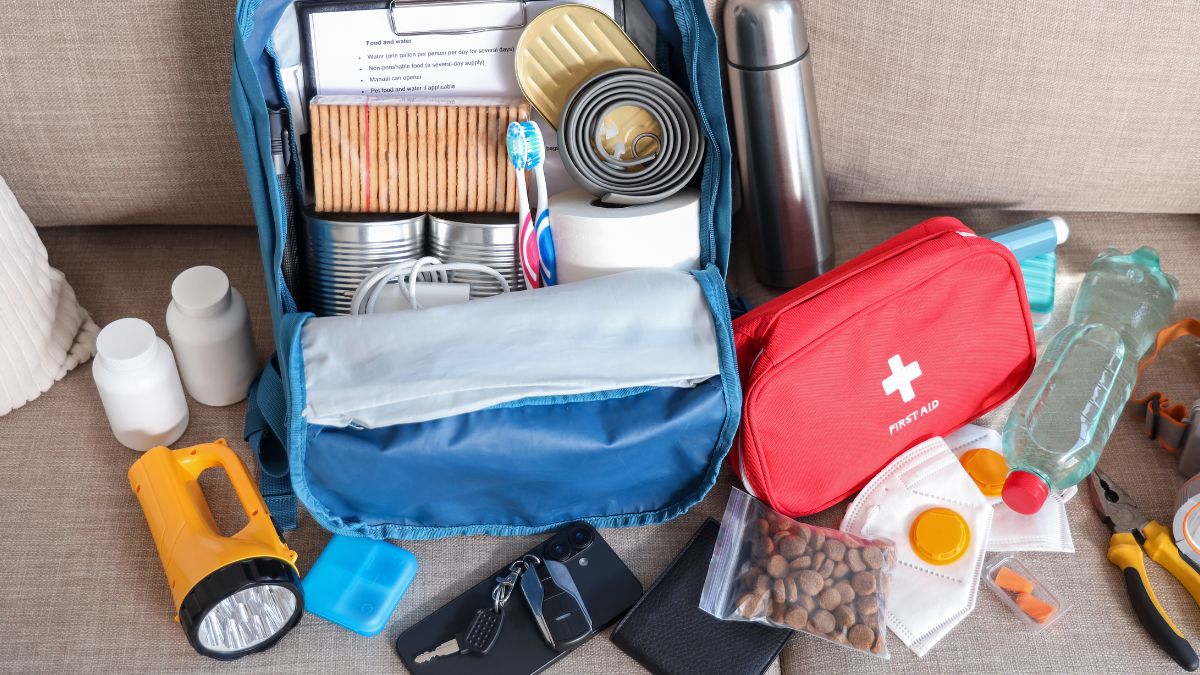
The conversation around emergency preparedness has surged back onto social media in recent months, fueled by growing global tensions. Last summer, the British government released an official document urging citizens to “actively prepare” for conflict in response to rising friction with Russia. That anxiety has since shifted toward the Middle East, where the United States and Israel launched what President Donald Trump confirmed were “major combat operations” against Iran, reigniting widespread discussion about what ordinary people should have on hand if the worst were to happen.
While there are currently no signs that any conflict will escalate to a global level or that Western civilians are being directly targeted, the renewed interest in preparedness is hard to ignore. Governments and emergency management agencies around the world have long recommended that every household maintain a kit capable of sustaining its members for a minimum of 72 hours. The Canadian city of Calgary has published detailed guidance outlining exactly what that kit should include, and the recommendations are both practical and surprisingly easy to assemble.
Water is the single most critical item in any emergency kit. Experts recommend drinking between one and a half to two liters of water per day to prevent dehydration, and while the human body can survive three to five days without water under normal circumstances, that is absolutely not a situation anyone should aim for. Stored water should be rotated regularly, and in a pinch, the water inside a toilet tank or a home water heater is considered usable in emergencies.
Food is the next priority, and the focus should be on canned goods and other items with a long shelf life. Portions during an emergency may be limited, so the goal is to have enough food to sustain household members for at least three days. A manual can opener is essential since electric appliances will not be reliable and should not be counted on during a crisis situation.
Medications deserve serious attention and should not be left as an afterthought. Personal prescription medications and those needed by other family members should either be stored in the kit or kept close enough to grab during an evacuation. The recommendations specifically suggest including vitamins and other items that “will protect you from illness,” as immune health can become harder to maintain during stressful and disrupted conditions.
A well-stocked first aid kit rounds out the medical essentials. At minimum, it should contain sterile gauze, gloves, various sizes of bandages, antiseptic solution, tweezers, scissors, a needle and thread, instant cold packs, and a survival blanket if space allows. Having these supplies available can make a meaningful difference in the critical hours before professional medical help becomes accessible.
Technology and finances both require forward planning too. A portable power bank is not simply a convenience item but a genuine emergency tool, since “if phone lines are overloaded, you can still receive updates and alerts on your mobile device.” Cash in small bills and coins is equally important because contactless payment systems will almost certainly be non-functional during an extended power outage, making physical currency the only viable way to purchase necessities. Important identification documents including a passport and government-issued ID should also be included, with photocopies serving as a reasonable backup.
Beyond these core items, Calgary’s recommendations cover a range of additional supplies that are easy to overlook. Warm clothing, blankets, and sleeping bags should be prepared in case heating systems fail. Entertainment that does not require electricity, such as board games, playing cards, or books, can provide meaningful psychological relief during prolonged disruptions. Households with babies or pets need to plan for their specific needs as well. A dust mask and adhesive tape can help secure a makeshift shelter, while a simple whistle can be used to signal for attention if someone becomes trapped or separated. Personal hygiene items like hand sanitizer and wet wipes round out the kit and help maintain basic sanitation when running water is unavailable.
Perhaps the most overlooked aspect of the entire kit is its portability. All supplies should be stored in a waterproof container with wheels or a durable portable bag, because an emergency kit that cannot be quickly moved and transported entirely defeats its own purpose.
The 72-hour timeframe actually traces back to disaster research showing that in major emergencies, it often takes government and rescue services roughly three days to mobilize and reach all affected individuals. The term “golden 72 hours” has been used by emergency management agencies worldwide precisely because that window is when self-sufficiency matters most. Interestingly, the whistle is one of the most underrated items on any preparedness list, with survival experts consistently pointing out that it requires no energy, works in the dark, and can be heard far more easily than shouting, which drains energy quickly in stressful situations.
What does your household emergency kit look like, and do you think most people are genuinely prepared for an extended disruption? Share your thoughts in the comments.