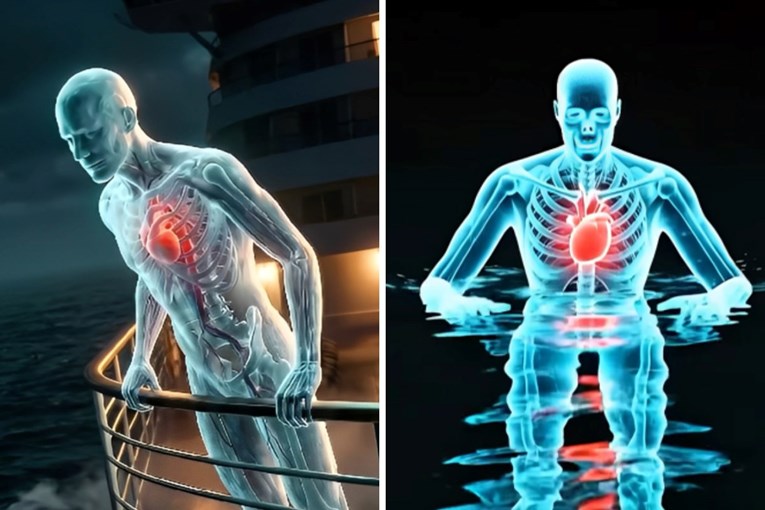
Cruise vacations promise endless luxury and relaxation on vast floating resorts, yet the open ocean holds hidden dangers that few passengers consider. A striking 3D animation shared on Instagram by Axiom 3D brings those risks to life by showing the full sequence of events if someone tumbles from the deck into the sea. Viewers watch as the person strikes the water hard and then faces escalating threats in the isolated darkness. The clip serves as a sobering reminder that even on modern ships equipped with safety features, a fall can quickly turn into a life or death struggle.
The impact alone proves brutal. Hitting the surface at around 31 miles per hour feels much like slamming into concrete, knocking the breath out of anyone unprepared. Cold water shocks the body instantly, triggering panic and making it difficult to stay calm or oriented. Without a life jacket the situation grows desperate right away because flotation becomes a constant battle against exhaustion and waves. Most people underestimate how quickly the human body loses heat in such conditions, especially far from shore.
Once the fall occurs the ship continues onward at full speed, its massive propellers creating enough noise to swallow any cries for help completely. Within roughly ten minutes the vessel vanishes over the horizon, leaving the person utterly alone in open water. Darkness descends fast, and the awareness of more than 9,800 feet of depth below adds to the overwhelming terror. Something brushing against a leg in the blackness only heightens the sense of vulnerability, whether it is marine life or drifting debris.
Rescue efforts follow strict protocols when the incident is noticed immediately. Crew members sound a man overboard alarm on the bridge and broadcast Code Oscar throughout the ship to mobilize the team. The vessel executes a sharp turn and steams back toward the spot at the safest high speed while alerting nearby boats for support. Life rafts and rescue craft launch quickly, and trained lookouts scan the waves from every deck level. Support staff also step in to care for any family or friends left behind during the tense operation.
Statistics highlight how serious these accidents remain despite improved safety measures. Between 2009 and 2019 records show 212 documented cases of people falling from cruise ships, yet only 48 individuals were pulled from the water alive. That low success rate underscores the importance of rapid detection because every minute counts once someone enters the sea. Many incidents likely go unnoticed until it is too late, especially at night or in rough weather when visibility drops.
Modern cruise liners include railings, cameras, and crew training designed to prevent such tragedies, but human error or unexpected slips can still occur on any voyage. The simulation drives home the reality that the ocean offers no second chances once the ship moves on. Passengers who understand these risks tend to stay more vigilant near the edges and appreciate the engineering that keeps millions safe each year.
Cruise travel continues to grow in popularity because it combines adventure with comfort in ways few other holidays can match. Still, stories like this one encourage everyone to respect the power of the sea rather than take it for granted. Awareness remains the best defense against rare but devastating events that can unfold in moments.
What are your thoughts on cruise ship safety after seeing how quickly a fall can escalate. Share them in the comments.