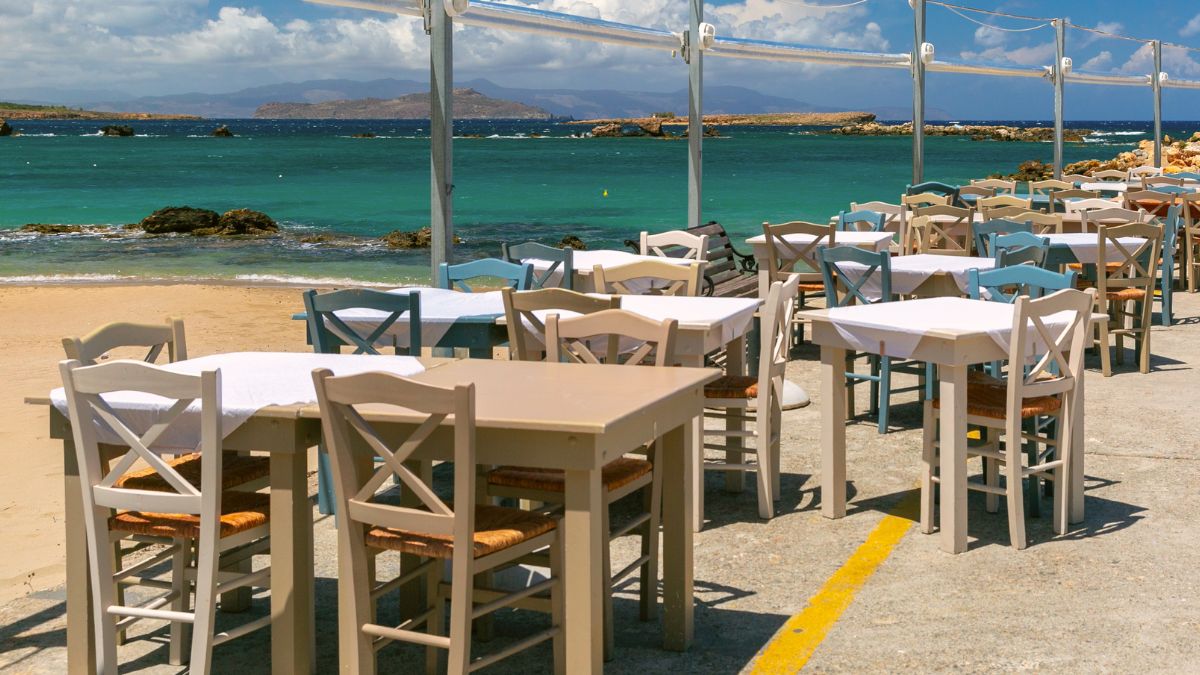
There is a specific kind of dining experience that no restaurant review can fully capture, one where the meal itself is only part of the story and the journey to get there does the rest of the work. The dock and dine concept, in which restaurants are accessible only by boat, has been quietly drawing food lovers and sailors toward remote coastlines for years, and a new large-scale study has now put a definitive number to what many Mediterranean travelers have long suspected. Greece, according to research conducted by the booking platform BoatBooker, leads the world in this category by a significant margin.
The study covered more than a thousand restaurants across 45 countries and applied a specific set of criteria to determine which ones qualified. To be included, a restaurant had to be reachable exclusively by boat, hold an average rating of at least 4.5 stars, and carry a substantial volume of guest reviews confirming consistent quality. The results, reported by Euronews, placed Greece at the top of the global ranking with 349 restaurants meeting all three conditions. That figure represents 34 percent of all qualifying establishments worldwide, a share that reflects not just the country’s geographic advantage as an archipelago nation but also the depth and consistency of its waterfront dining culture.
While strong results appeared across the country, certain island groups stood out as particularly concentrated pockets of quality. The islands of the Saronic Gulf, the Ionian Sea, and the Dodecanese archipelago performed especially well. Among individual destinations, Hydra, Paxos, and Symi were specifically recognized for offering the most stable and consistently high-quality selections of boat-access restaurants. These are islands that have long attracted visitors who want something other than the usual tourist infrastructure, and the data suggests that preference is being rewarded with genuinely excellent food.
The methodology behind the study was built around a central idea that Joris Zantvoort of BoatBooker articulated clearly. “For many travelers, food is one of the most important parts of any trip,” he said. “But in popular tourist destinations, finding a quality restaurant can be challenging. Our goal was to highlight trusted restaurants on islands where a meal is enjoyed in a more relaxed setting, and arriving by boat further enriches the experience.” The framing positions the boat journey not as a logistical inconvenience but as an intentional part of what makes the meal memorable, a kind of built-in decompression that changes how you arrive at the table.
That philosophy resonates with a broader shift in how travelers are thinking about food tourism. The instinct to seek out the well-reviewed urban restaurant in a major gastronomic capital is giving way, at least for a segment of travelers, to a preference for places where the setting does as much work as the kitchen. The study’s findings reinforce this shift, noting that the best dock and dine experiences are not necessarily found in large culinary centers or luxury resorts. Smaller islands and lesser-known regions, the ones that require a bit more effort to reach, are the ones delivering the highest and most consistent satisfaction scores.
The Mediterranean as a whole dominates the category. Greece, Croatia, and Italy together account for more than 70 percent of all restaurants that met the study’s criteria, which underscores the region’s structural advantages: island geography, deeply rooted maritime culture, a tradition of fishing-village tavernas and seafood-forward menus, and climates that make outdoor waterside dining pleasurable for a significant portion of the year. The results confirm that these conditions, taken together, create an environment almost uniquely suited to the dock and dine experience.
One genuinely interesting finding from outside the Mediterranean was the emergence of Indonesia as a notable market in this category. On the Nusa island group, Mambo Beach Restaurant earned the highest individual score of any restaurant in the entire study, demonstrating that the dock and dine concept has appeal and quality well beyond its European stronghold. It is a reminder that the combination of remote island access, fresh local ingredients, and informal waterfront atmosphere is not a Mediterranean invention so much as a universal formula that happens to have found its most concentrated expression there.
Hydra, one of the three Greek islands specifically called out in the study, is one of the very few inhabited islands in the world that bans all motorized vehicles including cars and motorcycles, which means the only way to get around once you arrive is on foot, by donkey, or by boat. Greece is made up of approximately 6,000 islands, of which only around 200 are permanently inhabited, which gives you a rough sense of how much undiscovered waterfront real estate there still is waiting to be explored. And the Dodecanese island group, another standout in the study, takes its name from the Greek word for “twelve,” a reference to the twelve largest islands in the chain, though the group actually contains well over a hundred individual islands and islets depending on how you count them.
Have you ever dined at a restaurant only accessible by boat, and would a dock and dine experience tempt you to visit Greece? Share your thoughts in the comments.