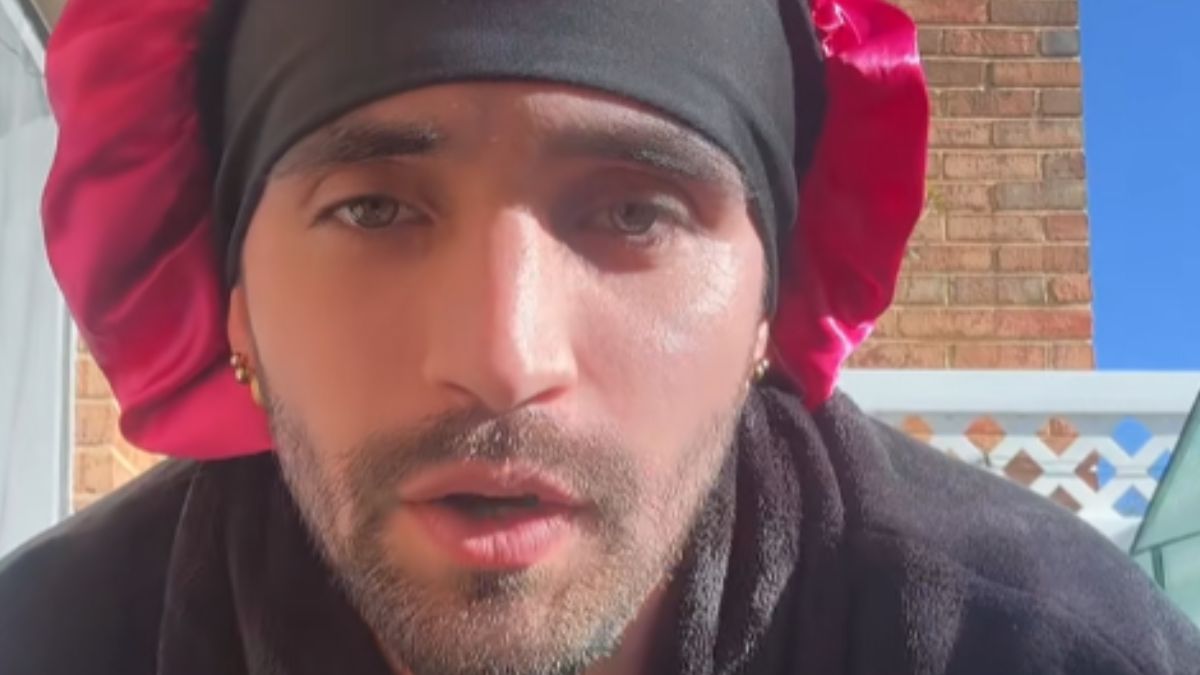
A TikTok video posted by a content creator known as Tripp has sparked a wave of online support after he described a bar encounter that many people found all too familiar. According to Tripp, he overheard a man loudly complaining that a woman he had been talking to refused to go home with him, despite the fact that he had bought her a drink. Rather than ignore the situation or walk away, Tripp decided to address it directly, and what he did next turned into a viral moment that has resonated with hundreds of thousands of viewers.
In the video, Tripp explained his core issue with the man’s attitude clearly and without hesitation. “This is for all the guys who think that buying a woman a drink at a bar means she has to go home with them,” he said. “She doesn’t. She doesn’t owe you anything.” His point was straightforward: the act of purchasing a drink for someone is a gesture, not a contract. The expectation that it creates any kind of obligation is not only logically flawed but also signals a deeply transactional way of thinking about human interaction that Tripp clearly found troubling.
To make his point in a way that was impossible to dismiss, he decided to go beyond words and conduct a small experiment right there at the bar. He ordered two shots, slid one across to the complaining stranger, and the two of them drank together. Then Tripp leaned over and asked the man, with deliberate sarcasm, whether he was now expected to go home with him since he had just bought him a drink. The parallel was obvious and the logic was airtight. The man had no answer, and the audience watching the video certainly did.
@tripptokk10 But I bought you a drink??? #men #respectingboundaries #barconversations #fyp #foryoupage ♬ original sound – Tripp
The response online was overwhelmingly supportive. Commenters praised Tripp for finding a way to make the point that was both clever and non-confrontational, relying on humor and clear reasoning rather than aggression. Many viewers said the video captured something they had witnessed or experienced themselves but never quite seen addressed so directly. The scenario Tripp described is frustratingly common in social settings, and the fact that he chose to engage with it rather than shake his head and move on clearly struck a chord.
The broader conversation the video tapped into has been discussed in various cultural spaces for years. Writer Becca Grimm addressed the topic in a piece for GQ, arguing that buying someone a drink should be understood as a generous gesture with no strings attached. “You can’t be angry if nothing comes of it,” she wrote, adding that nobody owes another person a conversation or companionship simply because they received a free drink. The framing she offered, describing the act as a gift rather than a transaction, aligns closely with what Tripp was trying to illustrate through his bar-side demonstration.
What makes Tripp’s video particularly effective is the method he chose. He did not lecture the man or launch into a lengthy explanation of consent and social dynamics. He simply mirrored the behavior back at him in a way that made the absurdity of the logic immediately visible. Two strangers, one drink each, and suddenly the unspoken assumption that a purchased drink creates a romantic or social debt becomes impossible to defend. It is the kind of teaching moment that works precisely because it does not feel like a lesson until it is already over.
The video also touches on something wider than bar etiquette. It speaks to a persistent cultural script that frames social generosity in terms of expected returns, particularly in romantic or flirtatious contexts. When kindness comes with invisible conditions attached, it stops being kindness at all. Tripp’s point was not that buying someone a drink is wrong, but that attaching expectations to it fundamentally changes the nature of the act and places an unfair burden on the other person. Framing it as a gift, as Grimm suggested, is not just a nicer way to think about it. It is the only honest way to think about it.
The video’s reach speaks to how widely the sentiment is shared. People who have been on the receiving end of exactly this kind of entitled thinking recognized it immediately, and people who had never quite articulated why the behavior felt wrong found Tripp’s demonstration gave them the language to do so. In an era where social media is often criticized for amplifying outrage without generating insight, this particular clip managed to do something rarer: it made a point that actually landed.
The tradition of buying someone a drink as a social gesture dates back centuries, with roots in medieval tavern culture where standing someone a round was a public display of goodwill and community. Research in social psychology has consistently shown that people are far more likely to feel obligated to reciprocate when a gift is given in a one-on-one setting rather than in a group context, which may partly explain why the bar dynamic Tripp described feels so loaded. Interestingly, studies on social reciprocity also suggest that when people feel pressured to repay a favor, their goodwill toward the person who gave it actually decreases rather than increases.
Have you ever witnessed or experienced a situation like the one Tripp described, and how did you handle it? Share your thoughts in the comments.