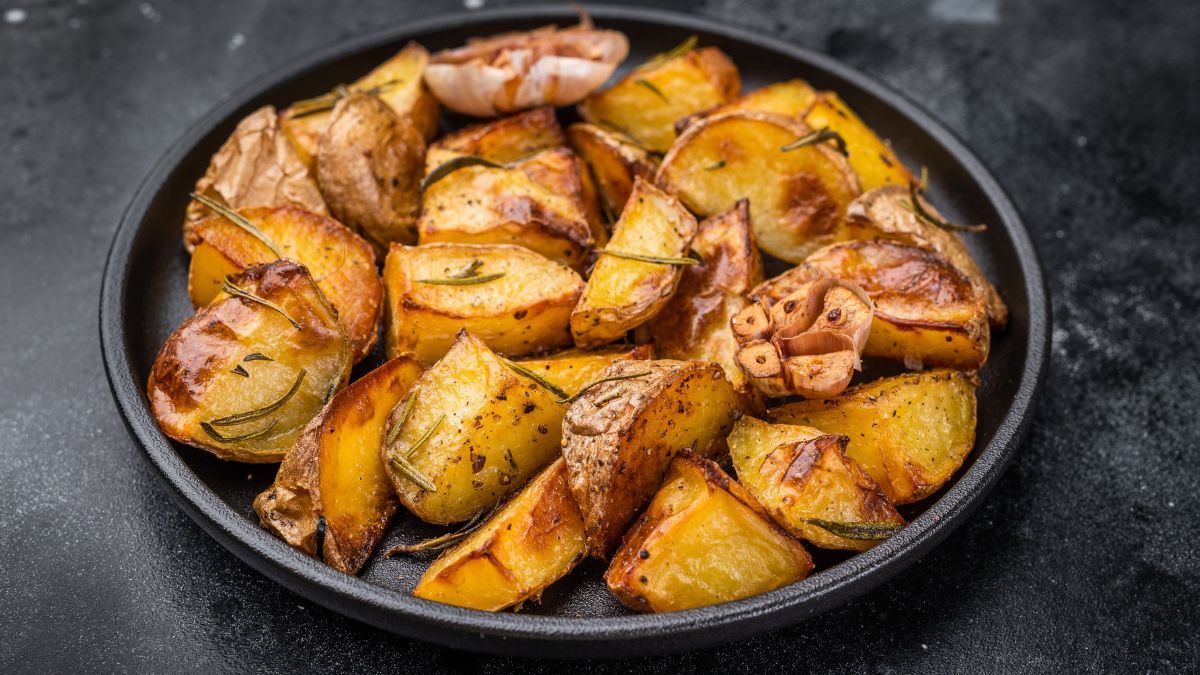
Roasted potatoes are one of the most beloved side dishes in any kitchen, pairing beautifully with everything from a juicy steak to grilled chicken or salmon. Yet despite how simple the concept sounds, achieving that deep golden, shatteringly crispy crust at home often feels frustratingly out of reach. If you have ever pulled a baking tray from the oven only to find pale, soft, and disappointing potatoes staring back at you, rest assured you are far from alone. According to Allrecipes, the secret to restaurant-quality roasted potatoes lies in a single, humble technique that requires no deep fryer whatsoever.
The game-changing ingredient is baking soda, and you add it directly to the water while parboiling your potatoes before they ever see the inside of an oven. This simple addition fundamentally transforms the texture of the potato’s exterior in a way that plain boiling simply cannot. When baking soda is introduced to boiling water, it creates an alkaline environment that actively breaks down the pectin on the surface of each potato piece. That breakdown roughens the outer layer and forms a starchy coating that, once it makes contact with hot oil in the oven, crisps up almost instantly.
Allrecipes writer Ashia Aubourg put this method to the test by stirring half a teaspoon of baking soda into a large pot of boiling water. She boiled the cut potatoes for around eight minutes, then drained them and let the excess moisture steam off before tossing them in avocado oil. The potatoes then went into an oven preheated to roughly 446 degrees Fahrenheit and roasted for 30 to 40 minutes until they developed a deep, even golden color throughout.
The results were genuinely impressive. The potatoes came out with a satisfying crunchy exterior and a soft, fluffy interior, and the crispiness was noticeably more consistent and uniform compared to previous attempts without the baking soda trick. This is precisely the kind of texture that most home cooks struggle to replicate when trying to match what comes out of a professional restaurant kitchen. The baking soda method essentially levels the playing field without requiring any specialized equipment.
That said, the baking soda is not the only factor that determines whether your potatoes turn out exceptional. Oven temperature plays an equally critical role, and cooking at too low a heat will prevent proper browning from ever forming. For the best results, your oven should be set somewhere between 428 and 446 degrees Fahrenheit, so the potatoes begin caramelizing the moment they hit the hot pan. A cold oven or a lukewarm baking sheet will sabotage even the most carefully prepared potatoes.
Drying the potatoes thoroughly after parboiling is another step that makes a significant difference in the final outcome. After draining, you should transfer them to a colander and allow them to sit undisturbed for five to ten minutes so that residual moisture can evaporate from the surface. A dry potato surface browns much faster and achieves a crispier finish than one that still carries excess water into the oven. Skipping this step is one of the most common reasons home cooks end up with steamed rather than roasted potatoes.
For those wondering which type of potato works best, starchy varieties like Russets or Yukon Golds tend to produce the most satisfying results because of their high starch content and relatively low moisture levels. Waxy potatoes, while delicious in salads or stews, often lack the starch needed to build that thick, crunchy outer shell. The size of your potato pieces also matters, as cuts that are too small will dry out before they properly brown, while overly large chunks may not cook evenly throughout.
From a broader culinary standpoint, the science behind this technique connects to basic food chemistry principles that professional chefs have understood for decades. Pectin is a naturally occurring carbohydrate found in the cell walls of many fruits and vegetables, and it acts as a kind of structural glue that holds plant cells together. When pectin breaks down, as it does in an alkaline environment, the surface of the potato becomes more porous and texturally irregular, which is exactly what allows it to absorb fat and form that coveted crust. Baking soda, chemically known as sodium bicarbonate, has a pH of around 8.3, making it mildly alkaline and perfectly suited to trigger this reaction without overwhelming the natural flavor of the potato. This same principle of alkalinity creating crispier surfaces is also famously applied in the preparation of Cantonese roast duck, New York-style bagels, and Bavarian pretzels, all of which rely on alkaline baths or solutions to achieve their distinctive textures and golden finishes.
If you have been chasing the perfect crispy potato your whole life, share your own kitchen tricks and results in the comments.