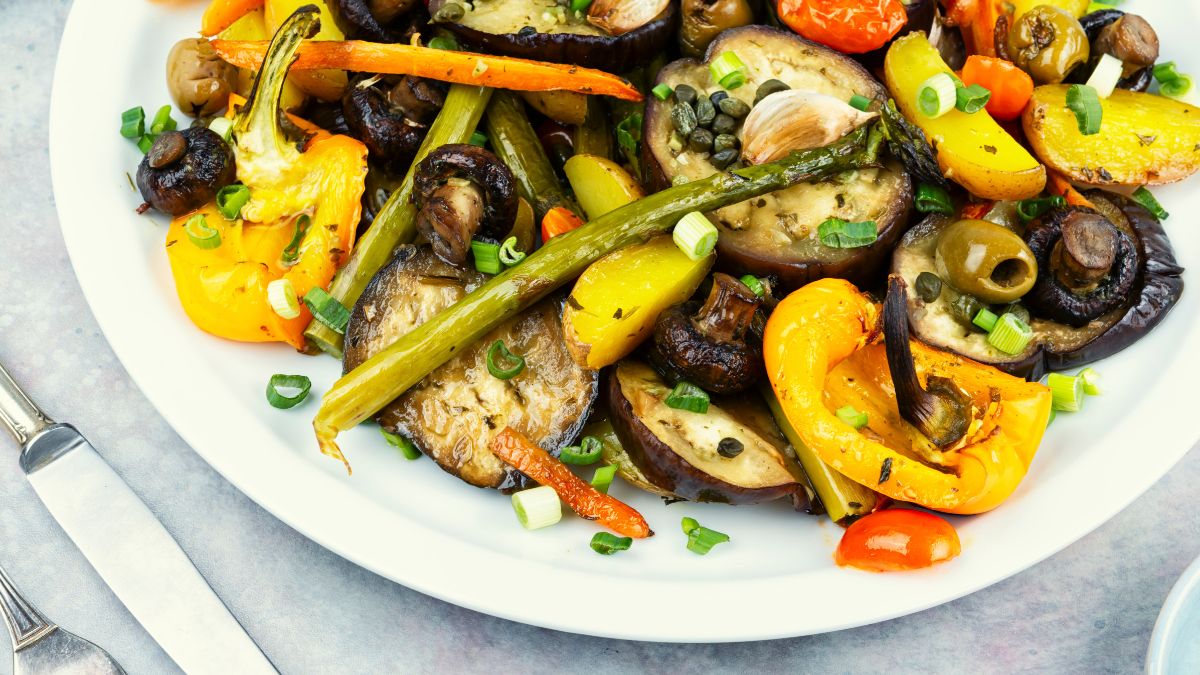
Roasted vegetables are a go-to foundation for fast and nutritious meals, but getting that truly satisfying crunch can sometimes feel elusive. No matter how much oil you use or how long you leave them in, the results can still come out soft and a little limp. Fortunately, there is one surprisingly easy technique that changes the whole game, and it does not require any special equipment. According to Simply Recipes, all you need to do is slide the baking sheet directly onto the oven floor instead of placing it on a rack.
The logic behind this method is more straightforward than it sounds. When you put your baking sheet on the oven floor, that surface functions similarly to a baking stone, absorbing heat throughout the preheat cycle and becoming intensely hot. The moment your vegetable-loaded pan makes contact with it, heat transfers much more aggressively from below, dramatically accelerating the cooking process. The result is those deeply golden, caramelized edges that make roasted vegetables so hard to resist.
Most standard home ovens rely on heating elements positioned at both the top and bottom of the cavity, with racks engineered to promote steady, even air circulation throughout. That uniform airflow is exactly what you want when baking a delicate cake that needs to cook evenly on all sides. However, in certain cooking situations, deliberately concentrating heat in one direction is actually an advantage rather than a flaw. Roasting vegetables is one of those situations where more aggressive bottom heat works entirely in your favor.
A helpful comparison is roasting a pie, where the bottom crust often requires more heat than the filling on top. If you place a pie on a preheated baking sheet, the crust receives that critical burst of bottom heat needed to turn crisp rather than soggy. The same principle transfers seamlessly to vegetables. Positioning the tray directly on the oven floor exposes the underside of each piece to far more intense, direct heat, which helps develop both better color and a firmer, more satisfying texture.
One of the best parts of this approach is that it works with virtually any vegetable you care to roast, from dense root vegetables like carrots and parsnips to softer options like zucchini and bell peppers. It also requires very little hands-on attention, which means you can focus on preparing the rest of your meal while the oven does the heavy lifting. Simply Recipes recommends using a sturdy, heavy-duty aluminum baking sheet for this method, since it is far less likely to warp or buckle under the high temperatures involved. One important caveat is that food should never be placed directly on the oven floor itself, only on the pan, since cleaning burned residue off the oven surface is considerably more difficult than cleaning a sheet pan.
To try this at home, preheat your oven to between 400 and 425 degrees Fahrenheit. Toss your chosen vegetables in a bowl with a drizzle of olive oil, then season generously with salt and pepper. Spread everything out in a single layer on your aluminum baking sheet, making sure the pieces are not crowded together, since overcrowding traps steam and prevents the crispy exterior from forming. Slide the pan onto the oven floor and roast for about 15 to 20 minutes, flipping the vegetables halfway through if you want even browning on both sides. Keep a close eye on them as they finish, since the direct heat can push things from beautifully roasted to burnt fairly quickly.
For anyone nervous about putting a pan directly on the oven floor, the next best option is setting a rack at its lowest possible position. The closer the food sits to the bottom heating element, the more pronounced the crispiness effect will be, even if it is slightly less intense than the full floor method.
Roasting as a cooking technique has been used for thousands of years and involves surrounding food with dry, hot air to develop flavor through a process known as the Maillard reaction, which is the browning of proteins and sugars on the surface of food. The Maillard reaction is responsible for the complex, slightly caramelized flavors that make roasted foods so appealing compared to steamed or boiled alternatives. Moisture is the primary enemy of crispiness, which is why spreading vegetables in a single layer without overcrowding is such a fundamental rule. Olive oil helps conduct heat evenly across the surface of each piece and encourages that golden exterior to develop, while also carrying fat-soluble flavors from any herbs or spices you add to the mix. Dense vegetables like potatoes and beets typically benefit from slightly longer roasting times or being cut into smaller pieces to ensure they cook through before the outside gets too dark.
If you have been settling for mediocre results from your oven-roasted vegetables, give this bottom-of-the-oven trick a try and share how it worked out for you in the comments.